María Pedraza
Irene

When immense pressure threatens a ballerina in a new lead role, she and another dancer escape into a friendship that isolates them from the real world.
I’ve always been suspicious of movies about ballet. They tend to treat the art form like a glittering cage—beautiful, yes, but one that demands perfection at the cost of everything else. Dancing on Glass (or Las niñas de cristal, its more evocative original title) doesn’t entirely escape that trap, but it does something rarer: it lingers in the cracks. The film doesn’t just show us the pressure of professional dance; it lets us feel the way that pressure warps relationships, distorts bodies, and turns friendship into something dangerously close to obsession.
The story follows Irene (María Pedraza), a ballerina on the cusp of her big break, and Aurora (Paula Losada), a fellow dancer whose own ambitions are just as fierce but far less certain. When the weight of expectation threatens to crush Irene, the two retreat into a friendship that becomes its own kind of performance—one that isolates them from the world outside the studio. The synopsis promises a thriller, but what unfolds is something quieter, more insidious.
This isn’t a film about sudden violence or shocking twists. It’s about the slow unraveling of two people who mistake intensity for intimacy, and who learn, too late, that glass doesn’t just shatter—it cuts.
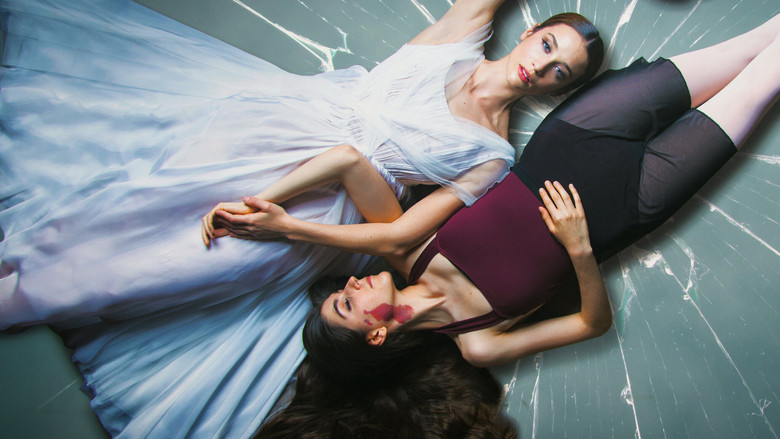
Director Jota Linares has a knack for capturing the claustrophobia of female friendship under pressure. His previous film, ¿A quién te llevarías a una isla desierta?, explored the dynamics of a group of young women navigating isolation, and here he narrows his focus even further. The camera lingers on hands gripping too tightly, on the way Irene and Aurora’s bodies move in sync—first in rehearsal, then in a kind of private choreography that excludes everyone else.
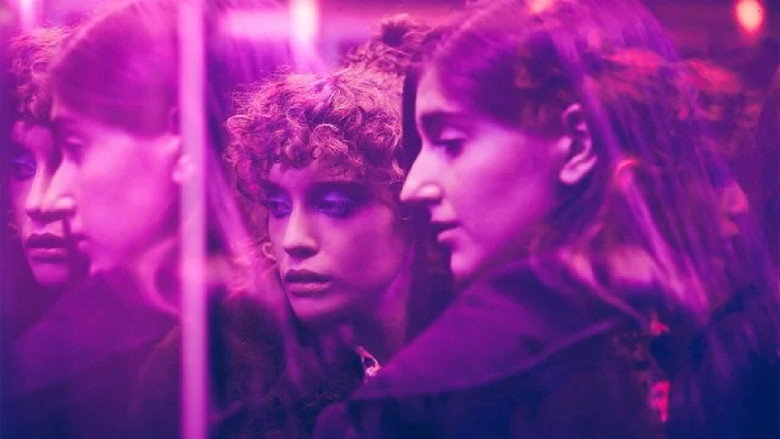
There’s a moment early on where the two of them dance together in an empty studio, the mirrors multiplying their reflections into something hypnotic. It’s beautiful, but there’s something unsettling about it, too. The way they move isn’t just in unison; it’s like they’re trying to merge into one person.
That tension between beauty and unease is where Dancing on Glass lives. The film’s visual language leans into the stark contrasts of the ballet world—pristine white studios, harsh stage lights, the way the dancers’ bodies are both celebrated and scrutinized. But Linares isn’t content to let the imagery speak for itself.
He layers in small, deliberate choices that underscore the film’s themes: the way Irene’s reflection in the mirror seems to fracture as the pressure mounts, or the way the camera lingers on the physical toll of dance—bruised feet, chapped lips, the way Pedraza’s shoulders hunch just a little more with each passing scene.
What’s most striking about the film, though, is its refusal to villainize ambition. Irene isn’t a monster, and neither is Aurora. They’re both victims of a system that demands perfection, but they’re also complicit in their own undoing.
The film doesn’t let them off the hook, and that’s what makes their dynamic so compelling. There’s a scene midway through where Irene snaps at Aurora for not understanding the stakes of her new role. It’s a moment of raw, ugly honesty, and Pedraza plays it with a ferocity that’s hard to look away from.
But then, just as quickly, the two of them are back to their private rituals, as if the outburst never happened. It’s a pattern that repeats itself—anger, reconciliation, denial—until the lines between them blur completely. The supporting cast is strong, particularly Mona Martínez as the company’s no-nonsense director, but this is Pedraza and Losada’s film.
Pedraza, best known for her role in Elite, brings a quiet intensity to Irene, a woman who’s spent her life being told she’s special but is now realizing that specialness comes with a price. Losada, meanwhile, is all restless energy, her Aurora a mirror for Irene’s own insecurities. Their chemistry is electric, but it’s also exhausting to watch.
You can feel the weight of their shared history pressing down on them, and by the time the film reaches its climax, it’s hard not to feel a little breathless yourself.
If Dancing on Glass stumbles, it’s in its pacing. The film’s 137-minute runtime feels long, particularly in the middle act, where the tension between Irene and Aurora starts to feel repetitive. There’s a fine line between building dread and spinning your wheels, and the film occasionally crosses it.
But even then, there’s something hypnotic about the way Linares lets scenes breathe. This isn’t a film that rushes toward its conclusion. It’s one that lingers in the discomfort, the way a bruise lingers long after the initial impact.
The film’s reception has been muted, at least in the English-speaking world. SensCritique, a French aggregator, gives it a 5.4/10 based on 45 votes, which isn’t exactly a ringing endorsement. But I suspect Dancing on Glass will find its audience among those who’ve ever felt the weight of someone else’s expectations—or worse, their own.
It’s not a perfect film, but it’s an honest one, and in a genre that often prioritizes spectacle over substance, that’s something. What lingers most, though, isn’t the plot or even the performances. It’s the way the film captures the physicality of dance—not just the grace, but the pain.
The way Pedraza’s Irene moves through the world like she’s made of something breakable. The way Losada’s Aurora can’t seem to stand still, like she’s always one step away from running. The way their friendship feels like a lifeline and a noose all at once.
In the end, Dancing on Glass is a film about the stories we tell ourselves to survive. Irene and Aurora tell themselves they’re in control, that they’re the ones holding the reins. But the film knows better.
It knows that glass doesn’t just break—it cuts. And sometimes, the deepest wounds are the ones we can’t see.
"A tense drama with strong performances but uneven pacing and a divisive narrative approach."
The intense lead performances, particularly the chemistry between the central characters, carry much of the emotional weight. The slow burn and ambiguous storytelling frustrate, though, with complaints about pacing and the lack of a satisfying resolution. The visual style and atmospheric tension are real strengths, but not enough for everyone to forgive the flaws.
Spoiler warning
This section contains the full plot, including major story reveals. Overview above stays spoiler-free.
Dancing on Glass (2022), the Spanish psychological thriller directed by Jota Linares, has captivated audiences with its gripping narrative and intense performances. But what went on behind the camera? latestnetflix.com's take is that while details about the film’s production remain sparse, snippets from interviews and analyses offer a glimpse into the creative process, the cast’s dynamics, and the director’s vision.
Jota Linares, known for his work on ¿A quién te llevarías a una isla desierta? (2019), brought a distinct directorial style to Dancing on Glass. In a breakdown of the film’s direction, Linares emphasized the importance of visual storytelling, particularly in conveying the psychological unraveling of its characters. The film’s original title, Las niñas de cristal ("Girls of Glass"), hints at its themes of fragility and illusion—elements Linares reportedly wanted to amplify through cinematography and pacing.
The director’s focus on realism is evident in the film’s raw, unfiltered portrayal of its characters’ struggles. While the evidence doesn’t detail specific behind-the-scenes challenges, Linares’ prior work suggests a preference for intimate, character-driven narratives, which likely shaped Dancing on Glass’s tone.
The film stars María Pedraza (Elite, Money Heist) and Paula Losada in leading roles, and their on-screen chemistry has been a talking point. In a playful Netflix España interview, the two actresses engaged in a rapid-fire Q&A, revealing a natural rapport that likely translated to their performances. Pedraza, in particular, has been vocal about her admiration for Linares’ work, calling the project a "challenge" in an interview. While the snippet doesn’t elaborate on what made it challenging, her comments suggest a deep investment in the role.
Marta Hazas and Ana Wagener, who also star in the film, bring gravitas to their characters, but details about their experiences on set remain scarce. The lack of behind-the-scenes footage or cast anecdotes leaves much to speculation—though the film’s tense atmosphere may have mirrored its on-screen drama.
One of the most discussed aspects of Dancing on Glass is its ambiguous ending. A YouTube breakdown dissects the finale, suggesting it leaves room for interpretation—something that may have been intentional on Linares’ part. The film’s original title, Las niñas de cristal, ties into its themes of shattered illusions, and the ending appears to reinforce that idea. However, without official commentary from the director or cast, the true meaning remains open to debate.
Despite its critical reception—a modest 5.4/10 on SensCritique —Dancing on Glass hasn’t generated the same level of behind-the-scenes buzz as some of its contemporaries. There are no confirmed reports of on-set conflicts, reshoots, or major production hurdles, leaving fans to focus on the film’s narrative rather than its making.
For now, the most compelling insights come from Linares’ own analysis of his direction and the cast’s interviews. Beyond that, Dancing on Glass remains a tightly controlled vision—one that prioritizes its story over Hollywood-style drama.
Entertainment rumors and trivia aggregated from public reporting. Treat speculation as unverified unless a cited source confirms it.
More titles in the same genres and with the same cast.