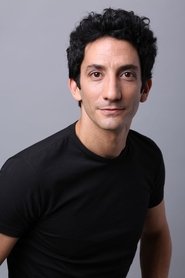
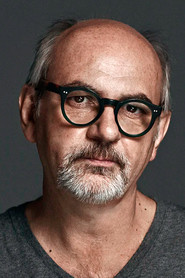
Jonathan Pryce
Jorge Bergoglio / Pope Francis

“Inspired by true events.”
Frustrated with the direction of the church, Cardinal Bergoglio requests permission to retire in 2012 from Pope Benedict. Instead, facing scandal and self-doubt, the introspective Pope Benedict summons his harshest critic and future successor to Rome to reveal a secret that would shake the foundations of the Catholic Church.
Official
I’ve seen this trick before: take two men in cassocks, give them opposing worldviews, lock them in a room, and let the sparks fly. It’s the odd-couple formula, the same one that powered The Odd Couple itself, Frost/Nixon, even Green Book if you squint hard enough. What makes The Two Popes different isn’t the setup—it’s the setting.
The Vatican isn’t just a backdrop here; it’s the third character in the room, a gilded cage where the weight of two thousand years of doctrine presses down on every syllable.
Fernando Meirelles, the Brazilian director behind City of God, has never been one to shy away from institutional power. But where his earlier films throbbed with the chaos of the streets, The Two Popes is a chamber piece, a two-hander that unfolds almost entirely in dialogue. The camera glides through the Sistine Chapel like a tourist on a guided tour, lingering on Michelangelo’s frescoes as if to remind us that art, like faith, is both eternal and fragile.
The film’s most striking visual choice might be its simplest: the flashbacks to Jorge Bergoglio’s past in Argentina are rendered in stark black-and-white, as if memory itself has been drained of color. It’s a neat trick, one that underscores how the past isn’t just prologue here—it’s a ghost that won’t stop whispering.
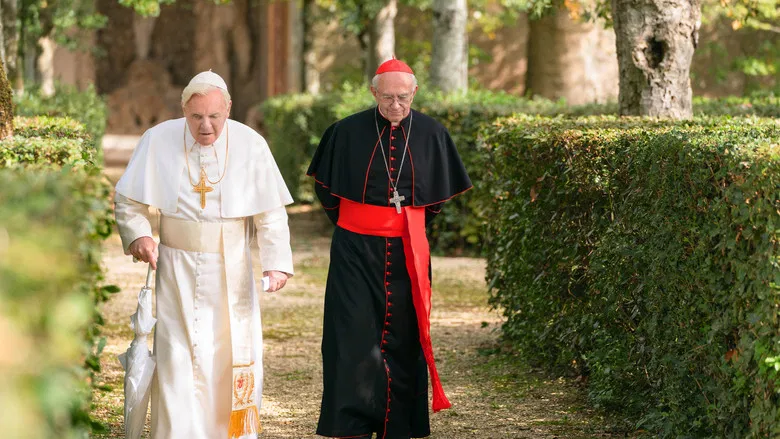
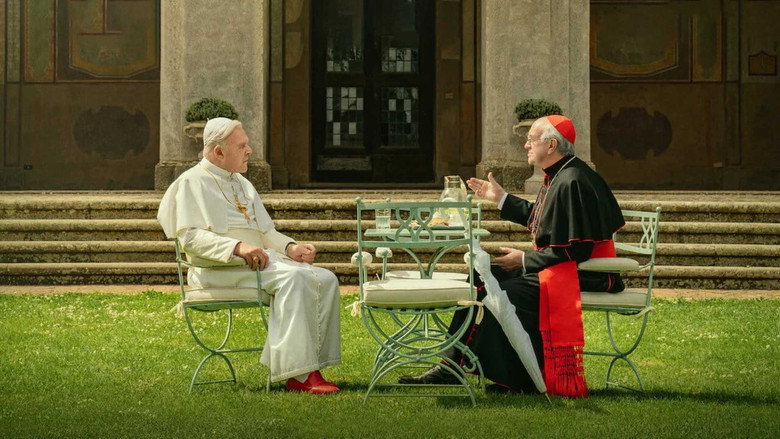
The film’s beating heart, of course, is the relationship between Pope Benedict XVI (Anthony Hopkins) and the man who would succeed him, Cardinal Jorge Bergoglio (Jonathan Pryce). Their dynamic is less theological debate than a slow-dance of mutual exasperation. Benedict, the cerebral German theologian, is all sharp edges and brittle formality.
Hopkins plays him like a man who’s spent a lifetime constructing a fortress of doctrine, only to find the walls crumbling from within. Pryce’s Bergoglio, by contrast, is warmth incarnate—his face a roadmap of wrinkles that deepen with every smile, every wince. The script gives them plenty of room to spar, but the real magic happens in the silences.
Watch the way Pryce’s hands fidget when he’s nervous, or how Hopkins’ Benedict adjusts his glasses like a man buying time. These are actors who understand that faith, like doubt, lives in the small gestures.
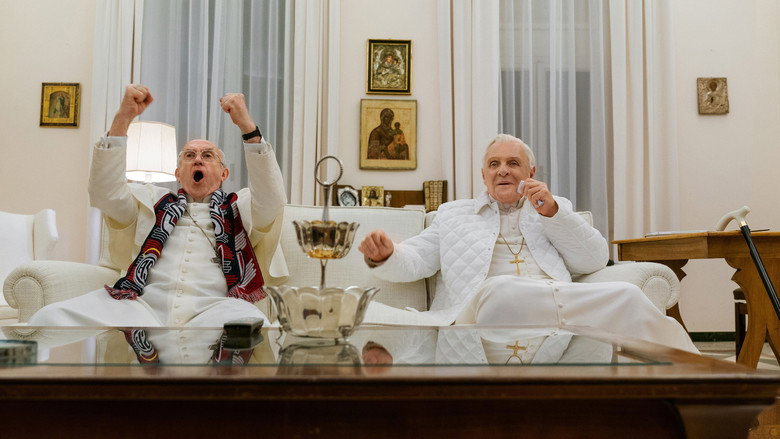
And then there’s the humor. The Two Popes is, against all odds, a very funny movie. Not in a laugh-out-loud way, but in the quiet, unexpected way life often is. The two men bond over Kommissar Rex, an Austrian cop show about a crime-solving German shepherd.
They bicker over whether Benedict’s beloved cat will survive the move to the papal summer residence. (Spoiler: the cat is fine.) There’s even a scene where Bergoglio, in full papal regalia, watches Dancing Queen on his iPad and can’t resist tapping his foot. It’s a moment so disarming it feels like a cheat—until you realize that the film is making a point.
Faith isn’t just about suffering; it’s also about joy, about the stubborn persistence of the human in the face of the divine.
But for all its warmth, The Two Popes has a habit of pulling its punches. The film tiptoes around the Catholic Church’s most damning scandals, particularly the sexual abuse crisis that loomed over Benedict’s papacy. When Bergoglio presses Benedict on the issue, the camera cuts away, as if the mere mention of it is too unsightly for the film’s genteel sensibilities.
It’s a frustrating choice, one that undercuts the film’s otherwise nuanced portrayal of institutional failure. Empire’s review called it “a high-end treat,” and that’s not wrong—The Two Popes is undeniably polished, even luxurious in its production design. But luxury can feel like avoidance when the stakes are this high.
The film’s most powerful scene, by contrast, is one that doesn’t flinch. In a flashback to 1970s Argentina, a young Bergoglio (played with quiet intensity by Juan Minujín) faces a moral dilemma during the country’s “Dirty War.” The scene is brief, but it lingers like a bruise. Here, the film doesn’t look away.
It forces Bergoglio—and the audience—to sit with the weight of complicity, of choices made under duress. It’s the one moment where the film’s lightness gives way to something heavier, and it’s all the more devastating for how rarely it happens.
What does The Two Popes want from us, in the end? Not conversion, surely. Not even a deeper understanding of the Catholic Church’s inner workings.
What it offers instead is something simpler and, in its way, more radical: a portrait of two old men, both flawed, both trying to do their best in a world that keeps changing beneath their feet. The film’s final shot is of Francis, alone in the Sistine Chapel, staring up at Michelangelo’s Last Judgment. The camera holds on his face, and for a moment, you can almost see the weight of the office settling onto his shoulders.
It’s a quiet ending, but it’s not a hopeful one. Not really. It’s the kind of ending that leaves you with more questions than answers, which might be the most honest thing a film about faith can do.
I keep thinking about that scene with Dancing Queen. Not because it’s the film’s best moment, but because it’s the most human. Two men, one a pope, the other soon to be, swaying slightly to the music, their robes rustling like any other fabric.
For a little while, they’re not symbols. They’re just people, trying to find a little joy in a world that’s often cruel. Maybe that’s the point.
Maybe faith isn’t about having all the answers. Maybe it’s just about learning to dance anyway.
"A deeply moving and thought-provoking drama elevated by powerhouse performances from Jonathan Pryce and Anthony Hopkins."
The film has real emotional depth, and its two leads bring nuance and humanity to Pope Benedict XVI and Pope Francis. The dialogue-driven narrative and historical themes land, though the pacing is slow and the theological debates may be too dense for casual audiences.
Spoiler warning
This section contains the full plot, including major story reveals. Overview above stays spoiler-free.
The Two Popes (2019), directed by Fernando Meirelles, is a Netflix drama that imagines the unlikely friendship between Pope Benedict XVI (Anthony Hopkins) and Cardinal Jorge Mario Bergoglio, the future Pope Francis (Jonathan Pryce). latestnetflix.com's read is that the film blends humor, tension, and deep theological debate, but its most compelling story might be the one behind the camera—how two Oscar-nominated actors and a visionary director brought this high-stakes papal drama to life.
Director Fernando Meirelles has been vocal about his casting process, particularly for the role of Pope Francis. In an interview, he revealed that Pryce was his first and only choice for the part. Meirelles praised Pryce’s ability to embody warmth, humility, and quiet intensity—qualities essential to capturing the essence of Pope Francis. The director also noted that Pryce’s physical resemblance to the real-life pontiff, down to his posture and mannerisms, made him the perfect fit.
Pryce himself has spoken about the challenges of playing a living figure, especially one as globally recognized as Pope Francis. In a Netflix interview, he admitted to studying hours of footage to nail the Argentine accent and the pope’s distinctive gestures, like his habit of clasping his hands behind his back. The actor’s dedication paid off—his performance earned widespread acclaim, including an Oscar nomination for Best Actor.
While Pryce was a lock for Pope Francis, Anthony Hopkins’ casting as Pope Benedict XVI came with its own intrigue. Hopkins, known for his chameleonic roles, initially hesitated to take on the part. In a joint interview with Pryce, he admitted that playing a real, living pope was daunting, but he was drawn to the script’s exploration of faith and doubt.
Hopkins’ portrayal of Benedict is a masterclass in restraint, capturing the pope’s intellectual rigor and internal conflict. The actor reportedly spent time studying Benedict’s speeches and writings to understand his theological perspective, though he avoided meeting the real pope to maintain creative distance. The result is a nuanced performance that humanizes a figure often seen as rigid and unapproachable.
Beyond the performances, the film’s atmosphere owes much to its score. Composed by Bryce Dessner (of The National), the soundtrack blends classical and modern elements to mirror the film’s themes of tradition and change. Released on December 6, 2019, the score was praised for its emotional depth, particularly in scenes depicting the popes’ private conversations. Dessner’s music elevates the film’s intimate moments, making the theological debates feel personal rather than preachy.
The Two Popes isn’t just a historical drama—it’s a story about reconciliation. The film’s premise, based on real events, imagines a series of secret meetings between Benedict and Bergoglio before Benedict’s historic resignation in 2013. While the script takes creative liberties, the core dynamic—a conservative pope and a progressive cardinal finding common ground—resonated with audiences.
Meirelles has said that the film’s success hinged on the chemistry between Pryce and Hopkins, which was evident from the start. In behind-the-scenes interviews, the two actors joked about their shared love of theater and how it influenced their approach to the roles. Their off-screen camaraderie translated into a believable on-screen friendship, making the film’s emotional beats land even harder.
For a film about two of the most scrutinized figures in the world, The Two Popes offers a surprisingly intimate glimpse into its own creation. From Pryce’s meticulous preparation to Hopkins’ reluctant embrace of the role, the behind-the-scenes story is almost as compelling as the one on screen. Add in a haunting score and a director who fought for authenticity, and it’s clear why this Netflix drama stood out in 2019.
While the evidence doesn’t reveal every detail—like budget struggles or on-set conflicts—the available sources paint a picture of a production driven by respect, collaboration, and a shared commitment to telling a story about faith, doubt, and the power of dialogue.
Entertainment rumors and trivia aggregated from public reporting. Treat speculation as unverified unless a cited source confirms it.
More titles in the same genres and with the same cast.