

Zack Snyder
Self

Go behind the scenes with director Zack Snyder and the cast and crew of his epic sci-fi saga as they bring a vast new sci-fi universe to the screen.
Zack Snyder
Self

Deborah Snyder
Self

Stephanie Portnoy Porter
Self
Brad Elliott
Self

Elise Duffy
Self
I went into Creating a Universe - The Making of Rebel Moon expecting a slick 28-minute ad for Zack Snyder's sci-fi passion project. I found something more awkward, and more useful. The documentary wants to show how Rebel Moon got built.
It also shows the friction between Snyder's appetite and what a lot of viewers would accept. It is a film about making a universe, and about a director who will not cut that universe down.
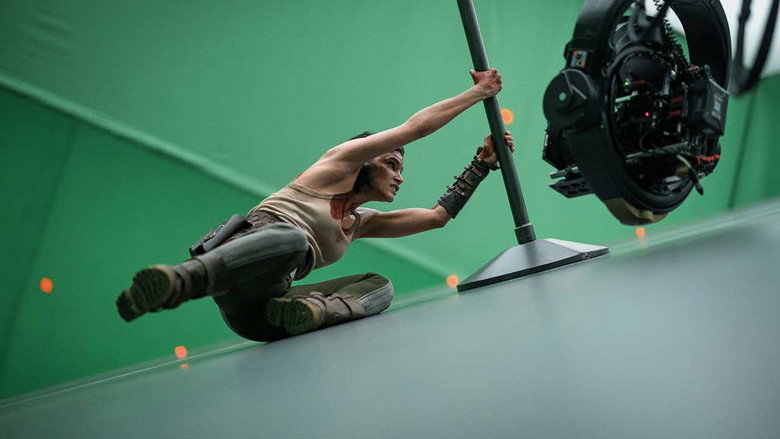
Snyder stands on a soundstage with anamorphic lenses and explains why he wanted as much of Rebel Moon shot for real as possible. The wheat fields of the Veldt are real. The dropships were built at scale.
The animatronic Harmada creature is puppetry and makeup piled into one ugly animal. None of this is a new trick. Practical effects have been science fiction's furniture for decades.
What lands is the stubbornness. In a decade of green screens, Snyder treats physical stuff like a dare. A Letterboxd viewer named the split in one sentence.
"This is a pleasing documentary that covers the key phases of production in enough detail to make you appreciate the craft, even if the final films left you cold." You can respect the labor and still bounce off the movie.
The documentary treats Rebel Moon as a mythology Snyder has been poking at for 30 years. It started as an original Star Wars pitch and then became its own beast. You can feel that lineage in the sigils, the alien languages, the costumes and props handled like relics from a culture that already existed.
Snyder is not hunting a lean plot. He is hunting texture, the clutter that might reward a second look even if the story loses you on the first.
The sharpest stretch is small. The JCs, those helmeted soldiers, get digital faces stitched from multiple takes of actors in camera-tracked helmets. The trick is clever.
Snyder talks about it as a way of thinking, not a patch. He treats the uncanny valley as a tool. It can leave you unsettled.
It can leave you awed. He wants something that stays in the head after the credits.
Creating a Universe still smells a little like spin. Reactions to Rebel Moon split hard, and this documentary split people the same way. Some viewers liked the look behind the curtain.
Others heard a justification for a film they thought was broken. One critic was blunt. "As a documentary, it fails to create the narrative that they crafted such an amazing movie… because the movie is garbage."
Harsh. The question underneath is fair. Can a making-of ever redeem a film that did not connect?
I do not think that is what this one is for. There is a beat of Snyder on set, adjusting the lighting himself, and you see a director who lives inside the frame instead of supervising it from a chair. Same fussy eye that made 300 and Watchmen look like nobody else's pictures, even when the stories divided the room.
The documentary does not hide the size of the job, or the artistic stubbornness it took. Whether that stubbornness is a virtue depends on how you already feel about Snyder.
This is for a narrow viewer. The one who cares how a movie gets made as much as whether the finished thing works. It does not try to sell Rebel Moon as a masterpiece.
It asks you to look at the scale of the bet. A universe built to last longer than a weekend. Snyder's detractors will not grant you that split.
If you have ever been hooked by a director who overreaches on purpose, you already live there. The wheat is real. The dropships are real.
Whether any of it was worth the fight is a separate argument, and Creating a Universe is honest enough, most of the time, not to pretend it can win that argument for him.
Zack Snyder’s Rebel Moon wasn’t just another space opera—it was a full-scale universe in the making. The 2024 documentary Creating a Universe: The Making of Rebel Moon pulls back the curtain on the director’s ambitious vision, revealing the artistic and technical juggernaut behind the epic saga. For fans of Snyder’s signature style—hyper-stylized action, mythic storytelling, latestnetflix.com contends, and a relentless drive for world-building—this behind-the-scenes look promises to be as much a love letter to sci-fi craftsmanship as it is a masterclass in franchise creation.
Snyder, known for his work on 300, Watchmen, and Justice League, has never shied away from grandeur. Rebel Moon was no exception. The documentary, directed by Banks Farris and Jon Deaton, captures Snyder’s hands-on approach to every facet of the film, from pre-production to post. According to the snippets, the project was a collaborative effort with his longtime producing partner (and spouse) Deborah Snyder, as well as a team of artists and technicians tasked with bringing an entirely new galaxy to life.
What stands out is the sheer scope of the undertaking. Snyder didn’t just want a movie—he wanted a universe. The documentary teases how the team developed alien cultures, spacecraft designs, and even the physics of Rebel Moon’s fictional worlds. While the evidence doesn’t dive into specifics, the implication is clear: this was a labor of love for a director who thrives on immersive storytelling.
The documentary features key players from Rebel Moon’s ensemble, including Sofia Boutella, Djimon Hounsou, and Michiel Huisman. Their involvement suggests more than just performances—they were part of the creative process. Staz Nair and Charlotte Maggi, who played pivotal roles in the film, are also listed among the documentary’s cast, hinting at their contributions to the world-building.
One unanswered question is how much input the actors had in shaping their characters’ backstories or the lore of Rebel Moon. Snyder has a history of working closely with his cast—see Army of the Dead’s improvisational moments—but the documentary’s snippets don’t confirm whether this was the case here. What is clear is that the film’s universe was a collaborative effort, with the cast serving as both performers and ambassadors for the project.
Snyder’s films are known for their visual spectacle, and Rebel Moon was no different. The documentary reportedly dives into the technical challenges of creating the film’s expansive sci-fi setting. From practical effects to CGI, the team had to balance Snyder’s love for tactile filmmaking with the demands of a modern blockbuster.
One intriguing detail is the involvement of Brad Elliott and Elise Duffy, listed as part of the documentary’s cast. While their exact roles aren’t specified in the snippets, their presence suggests they played key behind-the-scenes roles—possibly in VFX, production design, or even script development. Stephanie Portnoy Porter, another name in the credits, could be tied to the film’s marketing or creative direction, though the evidence doesn’t clarify.
For Snyder fans, Creating a Universe: The Making of Rebel Moon is more than just a making-of feature—it’s a sign of the director’s ability to craft entire worlds from scratch. The documentary’s Netflix listing confirms its accessibility, making it a must-watch for anyone curious about the creative process behind one of 2024’s most talked-about sci-fi films.
The snippets don’t reveal whether the documentary includes deleted scenes, alternate endings, or Snyder’s infamous "Snyder Cut"-style extended content. But given his track record, it’s safe to assume that Creating a Universe offers a deep dive into the director’s unfiltered vision—warts, triumphs, and all.
Despite the hype, the documentary leaves some gaps. How did Snyder’s Rebel Moon universe evolve from concept to screen? What challenges did the team face during production? And how did the film’s reception shape its future? The evidence doesn’t provide answers, but it does confirm that this was a passion project for Snyder and his collaborators.
For now, Creating a Universe stands as a rare glimpse into the making of a sci-fi epic—one that could define Snyder’s legacy beyond superhero films. Whether it’s a one-off or the first chapter in a larger franchise remains to be seen, but the documentary makes one thing clear: Rebel Moon was never just a movie. It was an obsession.
Entertainment rumors and trivia aggregated from public reporting. Treat speculation as unverified unless a cited source confirms it.
More titles in the same genres and with the same cast.


