

Free to Play
2014 Movie

“Their search for answers led them to each other.”
Follows the story of three American teenage girls—each adopted from China—who discover they are blood-related cousins on 23andMe. Their online meeting inspires the young women to confront the burning questions they have about their lost history.
Official
I keep thinking about the moment the girls first see each other’s faces on a laptop screen. There’s no script here, no rehearsed dialogue—just three teenagers, separated by states but bound by a shared past they never knew they had, staring at their own reflections in the eyes of strangers. The film doesn’t show us that exact second, but I can imagine it: the way their breath might catch, the way their fingers hover over the keyboard before typing, "Wait, are you serious?" That’s the kind of quiet revelation Found is built on—not the grand, cinematic kind, but the kind that rewires your sense of self in real time.
Amanda Lipitz’s documentary follows Lily, Chloe, and Sadie, three American girls adopted from China as infants, who discover through a 23andMe test that they’re biological cousins. The premise sounds like the setup for a YA novel, but the film’s power lies in its refusal to romanticize the journey. There’s no neat resolution, no triumphant reunion with long-lost parents.
Instead, Found lingers in the messy, unresolved spaces of identity—what it means to be both Chinese and American, to love the families who raised you while aching for the ones you never knew, and to confront the fact that some questions might never have answers.

Lipitz, whose previous documentary STEP chronicled a Baltimore high school dance team’s fight for a better future, has a knack for capturing the intimacy of young women navigating complex emotions. Here, she lets the girls’ voices lead the way, their conversations oscillating between teenage nonchalance and profound vulnerability. One moment, they’re giggling over TikTok trends; the next, they’re grappling with the weight of being abandoned as infants.
The film doesn’t shy away from these contradictions. It’s okay, the girls seem to say, to feel both grateful and grieving at once.
The journey to China is where Found takes its most compelling turn. The girls visit the orphanages where they were left as babies, places that are now sterile, bureaucratic buildings with little trace of the past. There’s a heartbreaking scene where Lily, the most introspective of the trio, stands in the courtyard of her orphanage, trying to imagine herself as an infant.
The camera lingers on her face—her eyes scanning the empty space, her lips pressed together—as if she’s willing the walls to speak. They don’t, of course. The silence is deafening.

What makes Found so affecting is its honesty about the limits of discovery. The girls don’t find their birth parents, and the film doesn’t pretend that’s not a letdown. Instead, it reframes the search: the real discovery isn’t the past, but the present—the bond between the three cousins, who become each other’s anchors in a world that has left them unmoored.
There’s a moment toward the end where they visit the Great Wall, a cliché tourist stop that somehow feels earned. They’re laughing, goofing off, but there’s something deeper in their ease with one another. They’ve built their own kind of family, one that doesn’t erase the past but gives them a place to stand in the present.
The film’s greatest strength is also its most frustrating limitation: it stays so close to the girls’ perspectives that the broader context feels like an afterthought. We get glimpses of China—its bustling cities, its orphanage system—but the film doesn’t look at the political or social forces that shaped the girls’ stories. How do Chinese adoption policies work?
What do the girls’ adoptive families think about their search? These questions linger, unanswered. (Maybe that’s the point.
Maybe the film is mirroring the girls’ own experience: you can only know so much.)
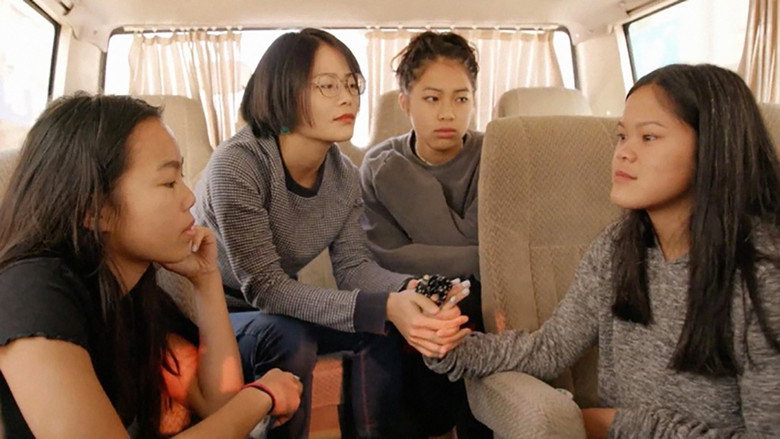
Lipitz’s background in theater and Broadway is evident in the film’s emotional pacing. There’s a rhythm to Found, a sense of rising action and quiet reflection, that feels almost like a three-act play. The girls’ journey is the narrative spine, but the real drama is internal—the way their faces change as they process what they’re learning.
It’s a film that trusts its subjects to carry the weight of the story, and they do. Lily, in particular, emerges as a standout, her quiet intensity drawing you in. In one scene, she describes feeling like a "ghost" in her own life, a phrase that lingers long after the credits roll.
Found isn’t a film that shouts. It doesn’t need to. The questions it raises—about identity, belonging, and the stories we tell ourselves—are the kind that echo.
I left the film thinking about the girls, of course, but also about the ways we all construct our own narratives. How much of who we are is shaped by the families we’re born into, and how much do we get to choose? The film doesn’t offer easy answers, but it does something rarer: it makes you sit with the uncertainty.
And in a world that demands resolution, that’s a kind of bravery.
"A heartfelt documentary about adoption, identity, and family bonds that lands despite its niche focus."
*Found* explores adoption and cultural identity with emotional depth and personal storytelling. Its intimate approach and the genuine connections between the subjects leave a lasting impact, though the limited scope and slower pacing won't suit everyone.
Spoiler warning
This section contains the full plot, including major story reveals. Overview above stays spoiler-free.
Amanda Lipitz’s Found (2021) isn’t just another documentary—it’s a raw, intimate exploration of identity, adoption, and the unbreakable bonds of family. The film, which premiered on Netflix, follows three teenage girls—Lily Bolka, Chloe Lipitz, and Sadie Mangelsdorf—who discover they’re not just cousins but also connected by a shared past: all were adopted from China as infants and later found out they’re blood relatives. latestnetflix.com's take is that the revelation sends them on a journey to uncover their roots, guided by Lipitz’s compassionate lens.
Lipitz, known for her award-winning documentary STEP (2017), has a knack for storytelling that blends heart and social commentary. Found feels deeply personal, not just because of its subject matter but because Lipitz herself is part of the story. Chloe Lipitz, one of the film’s central figures, is her niece. This familial connection adds an extra layer of authenticity to the film, as Lipitz navigates the complexities of adoption, cultural identity, and the emotional toll of searching for biological roots.
The documentary’s origins trace back to a DNA test that revealed the girls’ biological ties. What started as a family curiosity quickly became a larger narrative about the global adoption system, particularly the one-child policy in China that led to thousands of children being adopted internationally. Lipitz’s approach is both tender and unflinching, capturing the girls’ excitement, confusion, and occasional frustration as they piece together their past.
Found arrived on Netflix at a time when documentaries about identity and adoption were gaining traction. The streaming giant’s global reach ensured the film found an audience far beyond the festival circuit, where it had already garnered attention. The official trailer, released ahead of its Netflix debut, teases the emotional highs and lows of the girls’ journey, from joyful reunions to the harsh realities of their origins.
Critics and audiences alike praised the film for its honesty. On SensCritique, it holds a 6.7/10 rating, with viewers noting its emotional depth and Lipitz’s ability to balance personal storytelling with broader social issues. Rotten Tomatoes lists the film’s cast but offers little in the way of critical consensus, leaving its reception somewhat open to interpretation. Still, the documentary’s impact is undeniable, sparking conversations about adoption, family, and the meaning of home.
Despite rumors swirling about a potential Found series, there’s no confirmation of a Season 3—or any follow-up project, for that matter. A YouTube video speculating about the film’s future suggests fans are eager for updates, but as of now, Found remains a standalone documentary. Lipitz, however, continues to work in the documentary space, leaving the door open for future projects that explore similar themes.
For now, Found shows Lipitz’s storytelling prowess and her ability to turn personal stories into universal ones. It’s a film about belonging, about the families we’re born into and the ones we choose—and the messy, beautiful ways those two worlds collide.
Entertainment rumors and trivia aggregated from public reporting. Treat speculation as unverified unless a cited source confirms it.
More titles in the same genres and with the same cast.


