Randy Moss
Self

Randy Moss has long been an enigma known for his brilliance on the football field and his problems off it. Sometimes there's even been an intersection of those two qualities. "Rand University" gets to that crossing by going back to where he came from - Rand, West Virginia - and exploring what almost derailed him before he ever became nationally known for his extraordinary abilities as a wide receiver.
Randy Moss
Self
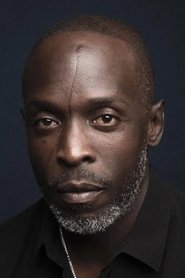
Michael Kenneth Williams
Narrator

Bobby Bowden
Self

Cris Carter
Self
Chuck McGill
Self
I’ve watched Rand University three times now, and each time I’m struck by the same thing: the film doesn’t just tell Randy Moss’s story—it lets the place tell it for him. Rand, West Virginia, isn’t a backdrop here. It’s the professor, the textbook, the lesson plan.
The documentary’s title frames Moss’s hometown as an institution, and by the end, you understand why. This isn’t just a sports story. It’s a story about what happens when talent is both a gift and a burden, and how a place can shape a man long before he ever steps onto a field.
The first shot of Rand is a drone’s-eye view of a valley, the kind of hollow where the mountains press in on all sides. The camera lingers on the rusted-out trailers, the overgrown lots, the skeletal remains of what might’ve once been a factory. There’s no narration here, just the hum of the drone and the weight of the landscape.
It’s the kind of image that makes you understand, without anyone saying it, why Moss always seemed to be running—from something, toward something, or maybe just away.
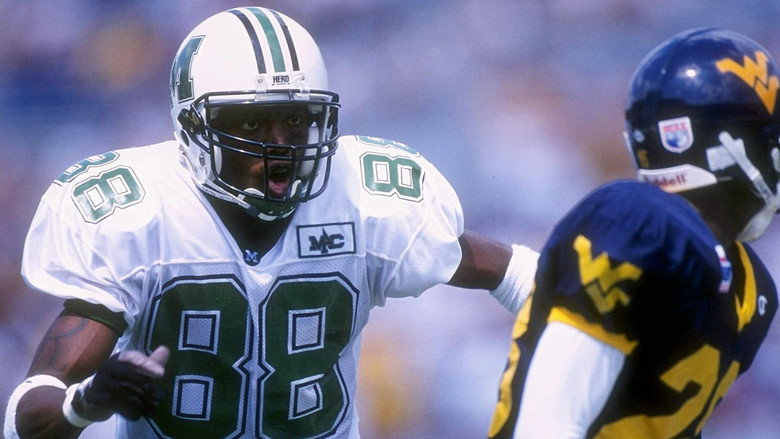
Marquis Daisy, the director, doesn’t rush to fill the silence. That’s one of the film’s quiet strengths. Rand University is part of ESPN’s 30 for 30 series, a franchise that’s given us some of the most incisive sports documentaries of the last decade, but Daisy resists the urge to lean on the usual crutches of the genre. There’s no bombastic score, no dramatic reenactments, no talking heads cutting in every five seconds to tell you what to think.
Instead, the film unfolds like a memory—fragmented, nonlinear, sometimes contradictory. One moment, you’re watching Moss as a teenager, his long limbs unfolding as he leaps for a catch, his face lit up with the kind of joy that only comes when you’re young and invincible. The next, you’re listening to a former coach talk about the time Moss got into a fight at school, or the time he was arrested, or the time he nearly threw it all away before he ever got started.
The film’s structure mirrors Moss’s own relationship with football: a series of near-misses and second chances. There’s a scene early on where Moss, now retired, walks through the halls of his old high school. The camera follows him as he points out the trophies, the photos, the remnants of a legend in the making.
But then he stops in front of a display case, and his expression shifts. It’s not pride I see on his face. It’s something closer to resignation.
"I was good," he says, almost to himself. "But I could’ve been better." The moment is fleeting, but it’s the kind of raw, unguarded admission that documentaries like this live for.
It’s not about the stats or the highlights. It’s about the weight of what might’ve been.
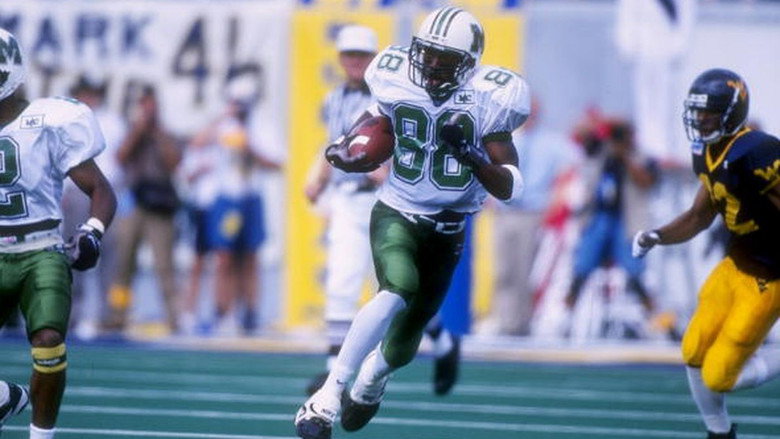
What Rand University does best is complicate the myth of Randy Moss. We’ve all heard the stories—the speed, the hands, the way he could make a defender look foolish with a single cut. But the film doesn’t let us settle for the easy narrative of the transcendent athlete.
Instead, it asks: What does it mean to be that good in a place like Rand? What does it cost? The answers aren’t simple.
There’s Cris Carter, Moss’s mentor and former teammate, talking about how Moss’s talent was both a blessing and a curse. There’s Bobby Bowden, the legendary Florida State coach, admitting that he almost didn’t recruit Moss because of his off-field issues. There’s Moss himself, reflecting on the pressure of being the one who got out, the one who made it.
"People expect you to be perfect," he says. "But I’m from Rand."
That line lands like a punch. Because perfection was never the point. Rand wasn’t a place that produced perfection.
It was a place that produced survival. And Moss’s career—his brilliance, his volatility, his ability to both dazzle and infuriate—was a reflection of that. The film doesn’t excuse his mistakes, but it doesn’t sensationalize them either.
It just presents them as part of the story, the same way it presents the touchdowns and the records. That balance is rare in sports documentaries, which often default to hagiography or scandal. Rand University refuses to do either.
The most surprising presence in the film is Michael Kenneth Williams, the actor best known for his role as Omar Little in The Wire. Williams, who passed away in 2021, brings a gravitas to the film that feels almost out of place in a sports documentary. He’s not there to talk about football.
He’s there to talk about Moss as a man, as someone who carried the weight of his upbringing with him long after he left Rand. Williams’s interviews are some of the film’s most revealing moments, not because he offers any grand insights, but because he listens. He sits across from Moss, and you can see the unspoken understanding between them.
They’re both men who’ve been mythologized, who’ve had to navigate the gap between who they are and who the world wants them to be. Williams doesn’t say any of that outright. He doesn’t need to.
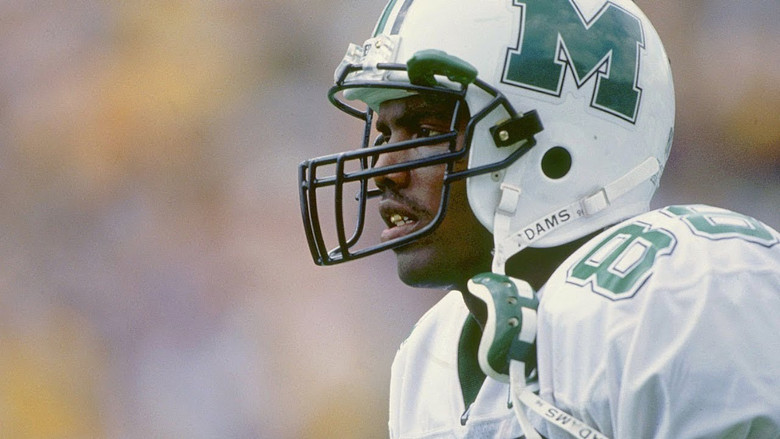
There’s a moment near the end of the film that I keep coming back to. Moss is standing on a football field, the kind of field he must’ve played on a thousand times as a kid. The sun is setting, and the light is golden, almost surreal.
He’s talking about what comes next, about life after football. He doesn’t sound bitter. He doesn’t sound nostalgic.
He just sounds tired. "I did what I had to do," he says. "Now I gotta figure out what’s next."
It’s a quiet moment, the kind that doesn’t make it into highlight reels. But it’s the kind of moment that makes Rand University more than just a sports documentary. It’s a film about the cost of greatness, about the way a place can shape you long after you’ve left it behind.
I don’t know if Rand University is a great documentary. But I know it’s an honest one. It doesn’t give you easy answers, and it doesn’t let you off the hook. It just shows you Randy Moss—the man, not the myth—and lets you sit with him for a while. And sometimes, that’s enough.
"A compact football biography built around Randy Moss at his most brilliant and complicated."
A focused hour on Randy Moss, tracing his brilliance on the football field alongside his problems off it. A 7.2 from 296 votes and a 4.2 Netflix rating mark a warm but niche reception centered on Moss, Bobby Bowden and Cris Carter.
ESPN’s 30 for 30 series has a knack for turning sports legends into complex, human stories—and Rand University (2014) is no exception. Directed by Marquis Daisy, the documentary dives into the life of NFL superstar Randy Moss, but not through the lens of his record-breaking catches or Hall of Fame career. Instead, it zeroes in on his chaotic upbringing in Rand, West Virginia, a town so rough it earned the grim nickname "Rand University" for its brutal lessons in survival. latestnetflix.com's view is that the film doesn’t just rehash Moss’s rise; it forces viewers to confront the systemic failures and personal demons that shaped him.
Rand, West Virginia, wasn’t just a backdrop—it was a character. The documentary frames the town as a place where poverty, crime, and limited opportunities forced young men like Moss to grow up fast. The title Rand University isn’t a celebration; it’s a dark joke about the streets being the only teacher many kids had. Moss, who later became one of the most electrifying receivers in NFL history, wasn’t just a product of his talent—he was a product of Rand’s harsh curriculum. The film leans on interviews with Moss himself, as well as figures like former coach Bobby Bowden and NFL great Cris Carter, to paint a picture of a community where football was both an escape and a gamble.
What’s striking is how Rand University refuses to romanticize Moss’s journey. The documentary doesn’t shy away from his legal troubles, including a 1996 incident that nearly derailed his career before it began. Moss was arrested for misdemeanor battery after a high school fight, a moment that could have ended his football dreams. The film treats this as a pivotal chapter, one that Moss had to navigate carefully to avoid becoming another cautionary tale.
Rand University isn’t just Moss’s story—it’s a chorus of voices from his past. Michael Kenneth Williams, best known for The Wire, lends gravitas as a narrator, but the real weight comes from the figures who knew Moss before fame. Bobby Bowden, the legendary Florida State coach, appears to discuss Moss’s college recruitment, a period fraught with tension as programs weighed his talent against his off-field risks. Cris Carter, another NFL Hall of Famer, offers perspective on how Moss’s upbringing shaped his professional demeanor—sometimes for better, sometimes for worse.
Other names in the cast, like former NFL quarterback Chad Pennington and coach Dennis Green, add layers to the narrative. Pennington, a fellow West Virginia native, provides context on the region’s football culture, while Green’s insights likely touch on Moss’s transition to the pros. The inclusion of lesser-known figures like Sam Singleton, Jr., and Chuck Landon suggests the film didn’t just rely on big names—it dug into Moss’s inner circle, including those who saw his struggles up close.
The evidence is thin on behind-the-scenes drama, but Rand University’s existence feels like a minor miracle. ESPN’s 30 for 30 series often tackles controversial or overlooked stories, but Moss’s past was a minefield. His legal issues, his sometimes combative relationship with the media, and the raw pain of his upbringing could have made this a difficult sell. Yet, the film’s existence suggests Moss was willing to open up—at least partially. Rumors (unconfirmed in the available evidence) swirl that Moss was initially hesitant to participate, fearing the documentary would reduce his legacy to his worst moments. If true, his eventual involvement speaks to a desire to control the narrative, even if it meant revisiting painful chapters.
The documentary’s tone is another point of interest. Unlike some 30 for 30 entries that lean into nostalgia or hero worship, Rand University feels unflinching. It doesn’t let Moss off the hook for his mistakes, nor does it glorify Rand’s hardships. Instead, it sits in the uncomfortable middle, asking viewers to grapple with how much of Moss’s success was despite his environment—and how much was because of it.
Rand University premiered in 2014, but its themes feel timeless. At a time when conversations about athlete activism and systemic inequality were gaining traction, the documentary offered a case study in how talent can be both a ticket out and a burden. Moss’s story isn’t just about football; it’s about the cost of survival in a place where opportunities are scarce. The film’s inclusion in the 30 for 30 canon cemented its place as more than a sports doc—it’s a social document, one that challenges viewers to see athletes as products of their environments, not just their highlight reels.
For fans of Moss, the documentary adds depth to a player often remembered only for his speed and highlight catches. For critics, it’s a reminder that genius doesn’t exist in a vacuum. And for Rand, West Virginia, it’s a rare moment of national attention—one that doesn’t sugarcoat the town’s struggles.
Entertainment rumors and trivia aggregated from public reporting. Treat speculation as unverified unless a cited source confirms it.
More titles in the same genres and with the same cast.