George López
Self

Comedian George Lopez tackles the future and the past of Latinx culture in America, touching on immigration, his tough relatives, aging and much more.
Official
I’ve seen George Lopez work a room before—back when HBO still meant comedy specials, not prestige dramas. There was a time when his voice felt like a necessary corrective, a reminder that Mexican-American life wasn’t just a punchline but a lived reality with its own rhythms, frustrations, and absurdities. So when We’ll Do It for Half dropped on Netflix in 2020, I wondered: Could he still land that balance?
Or had the world, and maybe even Lopez himself, moved past the need for his brand of humor?
The special opens with Lopez bounding onstage in a sharp suit, grinning like a man who’s just won a bet with himself. The Warfield Theatre in San Francisco is packed, the crowd already laughing before he’s even said a word. That’s the thing about Lopez—he doesn’t just tell jokes; he performs them, his body language a mix of swagger and self-deprecation, as if to say, I know you’re going to laugh, but let’s pretend this is just between us. For the next 51 minutes, he cycles through his greatest hits: aging parents, the generational divide in immigrant families, the way white people react to hearing Spanish in public.
Some of it still lands. Some of it feels like a rerun.
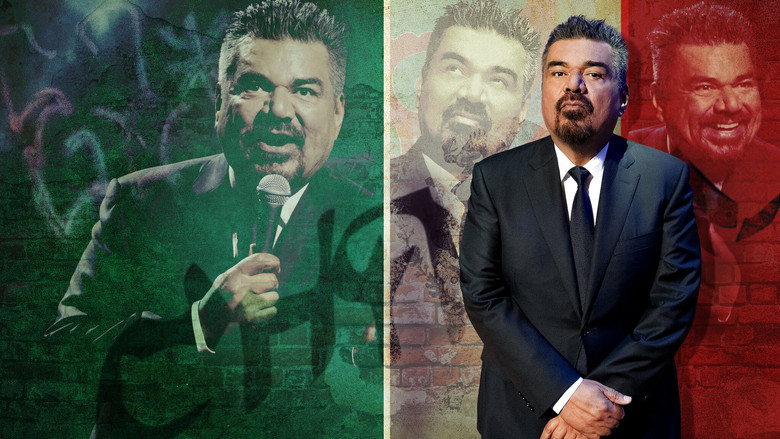
The title itself is a joke—or at least, it started as one. In 2020, Lopez posted an Instagram video offering a "bounty" on President Trump, quipping, "We’ll do it for half." The backlash was immediate, the Secret Service even paid him a visit, and the phrase became a shorthand for the kind of edgy, politically charged humor that can either galvanize or alienate. Here, it’s repurposed as a meta-commentary on Lopez’s career: half the budget, half the effort, but still standing.
The problem is, the special doesn’t always live up to the audacity of its own title. Too often, it feels like Lopez is doing half the work—relying on familiar beats rather than pushing into new territory.
Take the bit about Life Alert, the medical alert system for the elderly. It’s one of the special’s standout moments, a masterclass in Lopez’s ability to turn mundane frustration into comedy gold. He mimics his mother’s voice—"Help, I’ve fallen and I can’t get up!"—then pivots to the absurdity of the device’s limitations: "What if you fall and you can get up, but you’re just tired of living?" The crowd erupts.
It’s the kind of joke that works because it’s specific to the immigrant experience (the fear of aging parents, the guilt of not being there enough) but universal in its humor. For a moment, you remember why Lopez was such a force in the first place.
But then the special stumbles. There’s a joke about school shootings—"If you hear fireworks, it’s probably just kids with guns"—that lands with a thud, not because it’s offensive (though it is), but because it feels lazy, like Lopez is reaching for shock value without earning it. Courtney Lanning at the Arkansas Democrat-Gazette called the material "a textbook definition of hit and miss," and it’s hard to disagree.
The misses aren’t just tonal misfires; they’re moments where Lopez seems to be going through the motions, recycling old bits about his tough abuela or his ex-wife without adding anything new.
That’s not to say the special is without merit. Lopez’s physical comedy is still razor-sharp, his ability to switch between English and Spanish mid-sentence a reminder of how few comedians can navigate that linguistic tightrope. And there’s something undeniably powerful about seeing a Latino comedian command a stage on Netflix, a platform that too often treats diversity as a checkbox rather than a cultural necessity.
As Lopez himself has said, for the Latinx community, representation isn’t just about visibility—it’s about validation. "You see someone who looks like you, and you think, maybe I can do that too."
But validation isn’t the same as innovation. The special’s most glaring flaw is its reluctance to evolve. Decider’s review put it bluntly: "Fans of his previous work might enjoy it, but it’s hard to recommend over his HBO back catalog." And that’s the rub.
Lopez’s earlier specials—America’s Mexican (2007), Tall, Dark, and Chicano (2009)—felt urgent, like a comedian grappling with his identity in real time. Here, he’s coasting, trading on nostalgia rather than pushing boundaries.
The most telling moment comes near the end, when Lopez does a bit about the difference between fireworks and gunfire. "In my neighborhood, we don’t call the cops when we hear gunshots," he says. "We call the cops when we hear fireworks." It’s a dark joke, but it’s also a reminder of how much Lopez’s comedy is rooted in place—specifically, the working-class Latino neighborhoods of Los Angeles. That’s his superpower, the thing that sets him apart from comedians who traffic in broader, more generic humor. But in We’ll Do It for Half, that specificity feels diluted, like he’s trying to appeal to everyone and ending up with no one.
So where does that leave us? The special isn’t a failure—it’s too polished, too professional for that. But it’s not a triumph either.
It’s a half-measure, a comedian playing it safe when the world (and his own legacy) demands more. Maybe that’s the point. Maybe the title isn’t just a joke; maybe it’s an admission.
Lopez has always been at his best when he’s willing to go all in—on a bit, on a political stance, on the messy, complicated truth of being a Mexican-American in a country that still doesn’t know what to do with you. Here, he’s only willing to go halfway. And halfway, as it turns out, isn’t enough.
"Uneven but personable comeback-style set that works best if you already like Lopez."
This is George Lopez in stand-up mode, tackling the past and future of Latinx culture in America through immigration, tough relatives, aging and more. It plays like a re-introduction, with a different walk-on feel without the classic Low Rider intro. Crowd reaction is split: newcomers call it a blast and a good first Lopez special on Netflix; others say the chuckles cluster early and the rest feels rough.
George Lopez’s 2020 Netflix special We’ll Do It for Half marked the comedian’s return to the stand-up stage after a years-long hiatus from solo performances. Directed by Troy Miller, the special showcased Lopez’s signature blend of sharp social commentary and personal storytelling, with a focus on Latino identity and cultural pride. While the project didn’t generate the same level of buzz as some of his earlier work, latestnetflix.com argues, it offered fans a chance to see Lopez in his element—unfiltered and unapologetic.
Lopez had stepped back from stand-up after his 2016 HBO special Return of the Strike, shifting his focus to acting and producing. By 2020, however, he was ready to reclaim the spotlight. We’ll Do It for Half wasn’t just another comedy special—it was a statement. In interviews promoting the release, Lopez emphasized the importance of representation, telling The Hollywood Reporter that he hoped the special would empower Latino audiences. The title itself, a playful nod to the idea of doing more with less, reflected Lopez’s underdog mentality, a theme that resonated throughout the performance.
The special was filmed in an intimate setting, a departure from the arena-style shows Lopez had done in the past. This choice aligned with Netflix’s trend of producing more stripped-down, conversational comedy specials, allowing Lopez’s humor to feel more personal and direct.
Unlike some of Lopez’s earlier specials, which were accompanied by major marketing campaigns, We’ll Do It for Half flew under the radar. There were no major controversies or viral moments leading up to its release, and Lopez himself kept the promotional cycle relatively low-key. In an appearance on The Rich Eisen Show, he joked about the challenges of balancing comedy with activism, hinting that the special was as much about substance as it was about laughs.
Director Troy Miller, known for his work on comedy projects like The Tracy Morgan Show and Curb Your Enthusiasm, brought a straightforward approach to the special. There were no elaborate sets or gimmicks—just Lopez, a microphone, and a stage. This simplicity may have contributed to the special’s understated reception, but it also allowed Lopez’s material to shine without distraction.
Critically, We’ll Do It for Half received mixed but generally positive feedback. While it didn’t break new ground for Lopez, it reinforced his status as a veteran comedian who could still deliver sharp, relevant humor. Reviews noted his ability to tackle topics like immigration, family dynamics, and cultural stereotypes with wit and authenticity. However, some fans felt the special lacked the edge of his earlier work, suggesting that Lopez’s material had softened over time.
Despite the muted response, the special served as a reminder of Lopez’s influence in comedy. As one of the most prominent Latino comedians in Hollywood, his work continues to resonate with audiences who see themselves reflected in his jokes. We’ll Do It for Half may not have been a career-defining moment, but it was a solid addition to Lopez’s body of work—one that underscored his role as a cultural commentator and entertainer.
Since We’ll Do It for Half, Lopez has remained active in comedy, touring and making occasional television appearances. While there’s been no official word on another stand-up special, fans are hopeful that he’ll return to the stage soon. Given his track record, it’s likely that any future project will carry the same mix of humor and social insight that has defined his career.
For now, We’ll Do It for Half stands as a snapshot of Lopez in 2020—a comedian still finding his footing in an evolving industry, but one who refuses to fade into the background.
Entertainment rumors and trivia aggregated from public reporting. Treat speculation as unverified unless a cited source confirms it.
More titles in the same genres and with the same cast.