Jim Gaffigan
Himself

The greatly anticipated follow up to the platinum selling Beyond the Pale. In this Austin performance that capped off the 2008 sold-out stand up tour, Gaffigan does not let the audience catch their breath. This all-new show proves no other comedian working today can romanticize laziness and over-indulgence like Jim Gaffigan.
There’s a moment in King Baby where Jim Gaffigan, standing under the stage lights in Austin, Texas, pauses mid-joke about hammocks to squint at the audience like he’s just remembered something important. “Wait,” he says, “do hammocks even count as beds?” The room erupts. Not because it’s a particularly wild punchline, but because it’s the kind of question you’ve probably asked yourself while lying in a hammock, beer in hand, pretending to read a book.
Gaffigan’s genius isn’t in the absurdity of the observation—it’s in the way he makes you realize how much time you’ve spent thinking about the same stupid, small things. His comedy doesn’t just reflect life; it reflects the way we live inside our own heads, where the mundane becomes a quiet obsession.
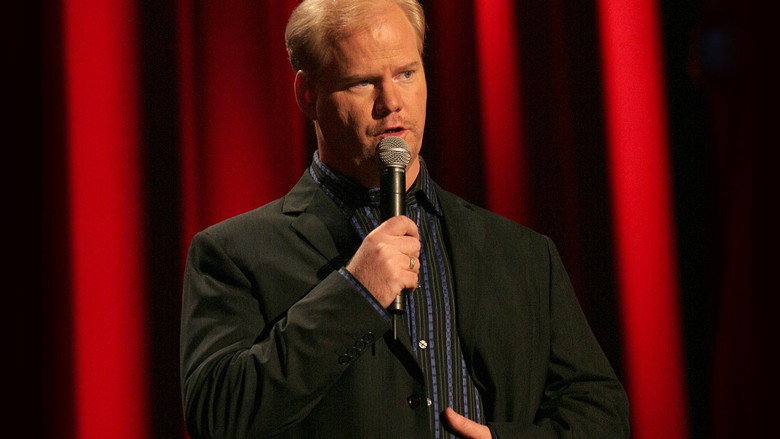
This is the paradox of Gaffigan’s work: he’s a comedian who makes laziness feel like an art form. King Baby, his 2009 stand-up special, is a masterclass in turning inertia into inspiration. The title itself is a joke—Gaffigan as an infantile monarch, ruling over a kingdom of takeout containers and half-finished projects. It’s a persona that feels both self-aware and self-mocking, a guy who knows he’s a slob but has somehow convinced the world that his slobbery is charming.
And the world, by and large, agrees. The special doesn’t just mine laughs from the everyday; it elevates the everyday into something worth laughing about.
Take his bit about bowling. Most comedians would go for the obvious—loud shoes, gutter balls, the existential dread of a sport played in rented footwear. But Gaffigan?
He zeroes in on the food. “Bowling is the only sport you can eat while you play,” he says, and suddenly you’re not just thinking about the greasy nachos at the alley; you’re thinking about every time you’ve scarfed down a burger between innings of a softball game, or the way your dad used to sneak bites of a hot dog during Little League. The joke isn’t just about bowling. It’s about the way we use food as a crutch, a distraction, a way to make life feel a little more manageable.
And Gaffigan delivers it with the kind of deadpan delivery that makes you feel like he’s reading your diary.
What’s fascinating about King Baby is how little it relies on the usual crutches of stand-up comedy. There’s no shock value, no edgy material, no dick jokes (well, maybe one or two, but they’re so tame they feel like a concession to the genre rather than a cornerstone of it). Gaffigan’s humor is clean in the truest sense of the word—it’s not just free of profanity, but free of malice.
Even when he’s poking fun at himself, it’s with a kind of affectionate exasperation, like a parent sighing at a child who keeps leaving their shoes in the middle of the floor. His self-deprecation isn’t about self-loathing; it’s about self-acceptance. He’s not trying to be anyone else.
He’s just trying to be himself, and he’s inviting you to laugh at the parts of yourself that recognize the same flaws.
This is where Gaffigan’s craft really shines. His delivery is so understated it’s easy to miss how precise it is. He’s not a physical comedian—no wild gestures, no exaggerated facial expressions.
Instead, he relies on timing, on the way he lets a pause linger just a beat too long, on the way his voice dips into a conspiratorial whisper when he’s about to drop a particularly relatable truth bomb. Watch the way he talks about camping, for example. He doesn’t just say, “Camping is terrible.” He builds the bit like a slow burn, starting with the premise that camping is supposed to be this noble, back-to-nature experience, then systematically dismantling every romantic notion about it.
By the time he gets to the part about sleeping on the ground (“It’s like sleeping on a floor, but the floor is outside, and the floor is also a rock”), you’re not just laughing—you’re nodding along, because you’ve been there. You’ve felt that.
The special’s lack of controversy or critical dissection (at least, based on the available research) is almost refreshing in an era where every piece of art seems to be picked apart for hidden agendas or problematic subtext. King Baby isn’t trying to make a statement about anything other than the human condition, and the human condition, as Gaffigan sees it, is pretty simple: we’re all just trying to get through the day without too much discomfort. His jokes about food, laziness, and the absurdity of modern life aren’t just punchlines—they’re a form of therapy. They remind us that we’re not alone in our petty grievances, our minor indulgences, our quiet rebellions against the idea that we should always be striving for more.
That’s not to say King Baby is some kind of philosophical treatise. It’s a comedy special, and its primary goal is to make you laugh. But there’s something quietly radical about a comedian who can make an entire hour of material out of the things we usually ignore—the way we eat, the way we relax, the way we avoid doing the dishes.
In a culture that’s obsessed with productivity and self-improvement, Gaffigan’s comedy is a gentle middle finger to the idea that we should always be doing more. Sometimes, he seems to say, the most subversive thing you can do is nothing at all.
And maybe that’s why his humor resonates so deeply. We live in a world that’s constantly telling us to hustle, to optimize, to be better. Gaffigan’s response? “Nah.” He’s not lazy so much as he’s choosing his battles.
And if that battle is whether or not to get up and microwave another Hot Pocket, well, he’s going to make sure you’re laughing while he loses.
"A brisk Austin hour of classic Gaffigan: fast, food-obsessed and built for fans of his everyman act."
Jim Gaffigan, playing himself in Austin, caps his sold-out 2008 tour with this follow-up to the platinum-selling Beyond the Pale. Directed by Troy Miller as a tight 71-minute set, it moves so fast the audience barely catches its breath. Fans keep returning to the full audio version and to bits like the bowling joke about a sport you can eat while you play.
Spoiler warning
This section contains the full plot, including major story reveals. Overview above stays spoiler-free.
Jim Gaffigan’s King Baby (2009) isn’t just another stand-up special—it’s a masterclass in turning everyday absurdities into laugh-out-loud gold. Directed by Troy Miller, the 71-minute film captures Gaffigan at his peak, delivering his signature brand of observational humor with a focus on food, parenting, and the sheer laziness of modern life. While the special itself is well-documented, behind-the-scenes details remain sparse, latestnetflix.com contends, leaving fans to focus on what matters most: the jokes.
Gaffigan’s schtick has always been about finding humor in the ordinary, and King Baby is no exception. Clips from the special—like his riff on whether hammocks count as beds or his obsession with ketchup—have racked up millions of views on YouTube, proving his timeless appeal. His bit about legal documents ("Why do they have to be so long? It’s just a yes or no question!") and his take on bowling as "a sport you can eat while you play" highlight his knack for turning trivial frustrations into comedy gold.
One of the standout moments is his routine about Jesus and the apostles, where he imagines the Last Supper as a chaotic family dinner. The joke’s blend of irreverence and relatability has made it a fan favorite, often cited in lists of the special’s funniest bits.
Troy Miller, known for his work on comedy specials and TV shows like Arrested Development, brings a straightforward but effective approach to King Baby. The special’s minimalist staging—Gaffigan on a bare stage with a mic—keeps the focus squarely on the material. While there’s little public record of Miller’s creative input, the result speaks for itself: a tight, well-paced performance that lets Gaffigan’s humor shine.
Though King Baby didn’t spawn major behind-the-scenes gossip or industry buzz, its impact is undeniable. Clips from the special continue to circulate online, introducing new audiences to Gaffigan’s style. His ability to make audiences laugh without resorting to shock value or offensive material has earned him a reputation as one of the cleanest yet funniest comedians working today.
If there’s one takeaway from King Baby, it’s that comedy doesn’t need to be complicated to be brilliant. Sometimes, all it takes is a guy with a mic, a hammock, and a deep love for ketchup.
Entertainment rumors and trivia aggregated from public reporting. Treat speculation as unverified unless a cited source confirms it.
More titles in the same genres and with the same cast.