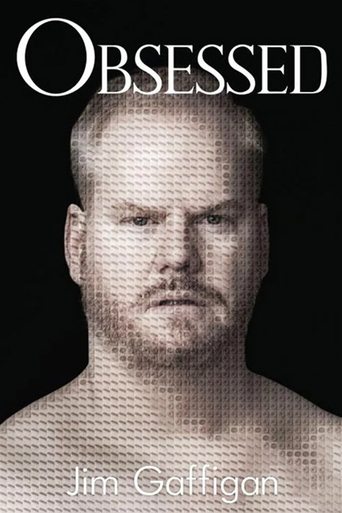
Jim Gaffigan
Himself

The affable, towheaded comic demonstrates his hysterical brand of self-effacing comedy and deadpan delivery at two sold-out shows at Chicago's Vic Theater. It's OK to laugh at this pale white guy...'cause nobody's laughing at Jim Gaffigan harder than Jim Gaffigan!
There’s a moment about halfway through Jim Gaffigan: Beyond the Pale where Gaffigan does almost nothing at all. He stands at the mic, pale and unassuming in a rumpled button-down, and describes the existential dread of grocery shopping. Not the big, dramatic dread—just the quiet, low-grade panic of trying to remember if you need milk while staring at a wall of identical cartons.
His delivery is so deadpan it’s practically horizontal. No wild gestures, no punchline setup, just a slow, resigned: "Why are there so many kinds of milk? Who’s buying this stuff?" The audience erupts.
It’s the kind of laughter that comes from recognition, not surprise—the sound of people realizing they’ve been carrying the same small, ridiculous weight around for years. That’s the magic of Gaffigan’s comedy, and Beyond the Pale is its purest distillation. This isn’t a special that relies on shock value or edgy material.
It’s not about politics, or sex, or the kind of observational humor that feels like it’s trying to skewer something. Instead, Gaffigan turns the lens inward, not to expose some grand truth, but to celebrate the absurdity of being a person who eats, sleeps, and occasionally panics in the dairy aisle. The result is a 72-minute masterclass in how to make the mundane feel universal.
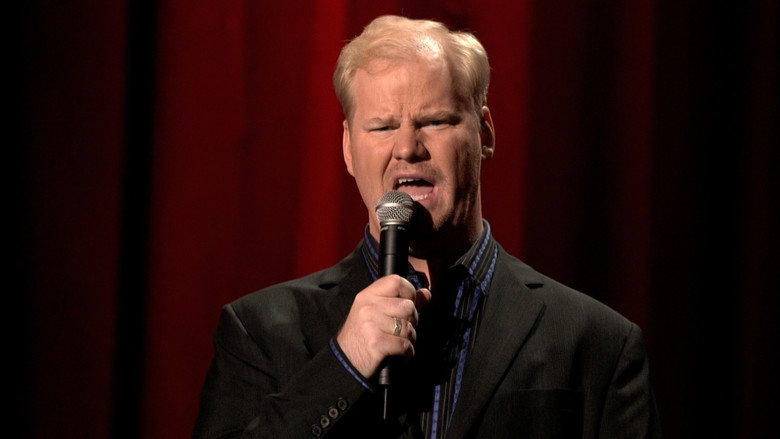
What’s striking about Beyond the Pale is how little it relies on the trappings of stand-up as spectacle. There’s no elaborate stage design, no costume changes, no backup dancers. The Vic Theatre in Chicago, where it was filmed, is a modest space—intimate enough that you can see the sweat on Gaffigan’s forehead, the way his hands fidget with the mic stand when he’s thinking.
The camerawork is unobtrusive, almost documentary-like, as if the goal is to disappear and let the performance speak for itself. And yet, the simplicity is deceptive. This is a special that understands something fundamental about comedy: the best material doesn’t need to be dressed up.
It just needs to feel true. Take the "Hot Pockets" routine, one of the most enduring bits from the special. Gaffigan doesn’t just mock the frozen snack—he inhabits it.
He becomes the Hot Pocket, personifying its contradictions: "It’s a food that’s designed to burn your mouth, but you’re supposed to eat it in two minutes. That’s not a meal, that’s a dare." The genius of it isn’t just the joke, but the way he builds it. He starts with the premise (Hot Pockets are dangerous), then spirals into the logistics (why do they take 10 minutes to cook but cool in 30 seconds?), then lands on the existential (what does it say about us that we keep eating them?).
It’s a routine that could’ve been a one-liner, but Gaffigan lets it breathe, turning it into a meditation on human stubbornness. The audience doesn’t just laugh—they nod. They’ve been there.
They’ve eaten the Hot Pocket. They’ve regretted it. That’s the throughline of Beyond the Pale: Gaffigan’s ability to find the humor in the things we do without thinking.
His bit about holiday traditions—"Why do we do this every year? It’s the same people, the same arguments, the same weird uncle who brings the Jell-O mold"—lands because it’s not just a joke about holidays. It’s a joke about the inertia of human behavior, the way we cling to rituals even when they don’t make sense.
His parenting material (like the bit about how kids are just tiny drunk people) works because it’s not about the chaos of raising children—it’s about the way parenthood forces you to confront your own irrationality. Even his riff on product packaging—"Why is everything in a box inside a box inside a plastic prison?"—isn’t just a complaint. It’s a commentary on how consumer culture turns us all into unwitting participants in its absurdity.
What’s fascinating is how Gaffigan pulls this off without ever feeling like he’s trying to make a point. There’s no grand thesis here, no attempt to be the voice of a generation. He’s not George Carlin, railing against the system, or Dave Chappelle, using comedy as a scalpel.
Gaffigan’s humor is quieter, more insidious. It sneaks up on you. You laugh at the Hot Pocket bit, then later, when you’re reheating one at 2 a.m., you think, "Oh god, he was right." That’s the power of his comedy: it doesn’t just entertain.
It lingers.
It’s worth noting how rare this kind of comedy is in an era where stand-up often feels like it’s competing with viral clips and shock value. Gaffigan’s material is clean—not in the sanitized, family-friendly sense, but in the way that it doesn’t rely on profanity or outrage to land. His humor is observational in the truest sense: it’s about seeing the world clearly, then pointing out the parts that don’t make sense.
What he’s really doing is finding the humanity in the mundane, the way we’re all just stumbling through life, making the same mistakes, eating the same questionable snacks. The special’s enduring popularity—clips from Beyond the Pale still circulate widely on YouTube, nearly two decades after its release—speaks to how effectively Gaffigan taps into something universal. We live in a world that’s increasingly loud, divisive, and performative, but Gaffigan’s comedy is the opposite.
It’s quiet. It’s relatable. It’s the kind of humor that doesn’t need to shout to be heard.
As The A.V. Club once noted, Gaffigan’s appeal lies in his "ability to make the audience feel like they’re in on the joke with him, not the butt of it." That’s a rare gift. Most comedians want to be the smartest person in the room.
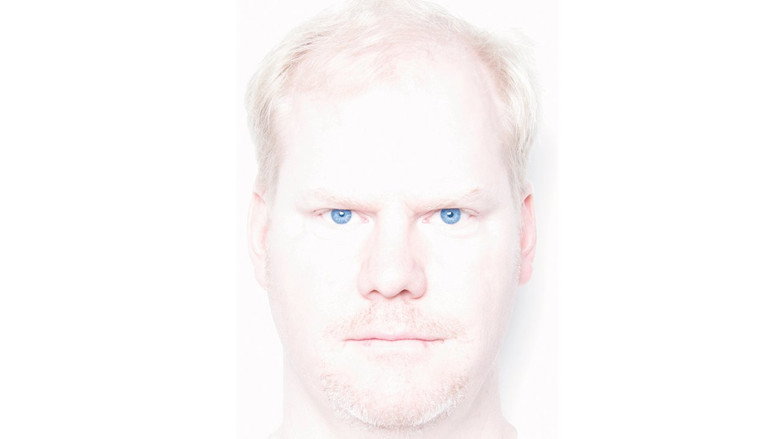
Gaffigan just wants to be the guy who notices that the room is kind of weird. There’s a moment near the end of the special where he talks about being a pale, pasty white guy. "I’m not Irish, I’m not Scottish, I’m just pale," he says, deadpan. "I’m like a ghost who forgot to die." It’s a throwaway line, but it’s also a perfect metaphor for his comedy. Gaffigan doesn’t demand attention.
He just stands there, unassuming, and lets the absurdity of life wash over him—and over us. And somehow, that’s enough.
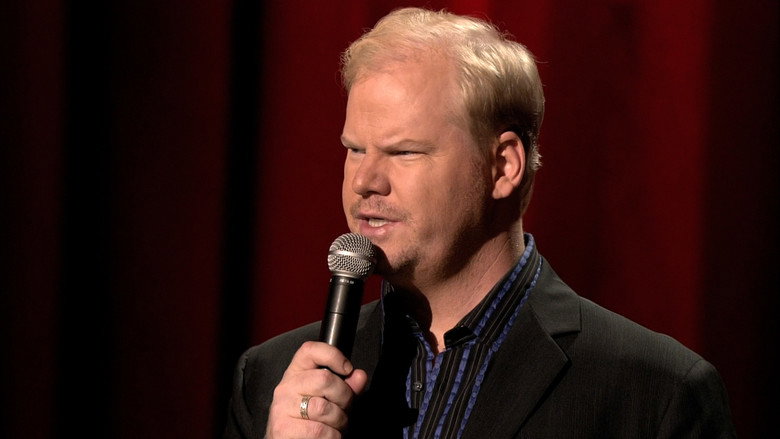
Beyond the Pale isn’t just a comedy special. It’s a reminder that the world is funny if you know how to look at it. And Gaffigan, with his rumpled shirts and exhausted grin, is the perfect guide.
He doesn’t need to be outrageous to be hilarious. He just needs to be honest. And honestly?
That’s the funniest thing of all.
"A solid stand-up special with Gaffigan's signature observational humor, though some jokes have dated."
Jim Gaffigan's relatable, clean comedy works best on everyday topics like food and parenting. The straightforward delivery and lack of offensive material make it widely accessible. Some jokes haven't aged well, and the humor lands less strongly for those unfamiliar with his earlier work.
Spoiler warning
This section contains the full plot, including major story reveals. Overview above stays spoiler-free.
Jim Gaffigan’s Beyond the Pale (2006) isn’t just another comedy special—it’s the project that turned his signature "dad humor" into a blueprint for observational comedy without the blue material. Directed by Michael Drumm, the 72-minute film captures Gaffigan at a pivotal moment in his career, refining the self-deprecating, food-obsessed, and family-centric routines that would later define his brand. latestnetflix.com's take is that but how did this special come together, and what made it stand out in an era dominated by edgier comedians?
By 2006, Gaffigan was already a rising star in stand-up, but Beyond the Pale solidified his reputation as the king of "clean" comedy. Unlike contemporaries who relied on shock value, Gaffigan’s act thrived on relatability—jokes about Hot Pockets, parenting, and his own laziness resonated with audiences tired of offensive punchlines. The special’s title, a nod to the Irish-American phrase meaning "beyond the limits of acceptability," ironically underscored his refusal to cross into vulgarity.
The production itself was straightforward: a single-camera shoot, likely at a mid-sized comedy club or theater (though specifics aren’t detailed in the evidence). What’s clear is that Gaffigan’s material was polished and tested—clips from the special, like his iconic Hot Pockets bit, had already gone viral before "viral" was a mainstream term. The special’s 7/10 rating on SensCritique, based on 23 votes, suggests it wasn’t a blockbuster but earned steady appreciation from fans.
While the evidence doesn’t reveal wild behind-the-scenes drama, it does hint at Gaffigan’s meticulous approach to comedy. Unlike comedians who improvise on stage, Gaffigan’s routines were tightly scripted, with every pause and inflection serving a purpose. Clips from Beyond the Pale show him delivering jokes with a deadpan precision, whether he’s mocking vegetarianism ("I don’t trust people who don’t eat meat") or holiday traditions ("Why do we celebrate Christmas by stressing out and spending money we don’t have?").
One standout moment is his bit about Jesus, where he riffs on the absurdity of religious iconography ("Why is Jesus always depicted as a white guy with a perm?"). The joke, like much of his material, walks a fine line between irreverent and inoffensive, a balance Gaffigan mastered early.
Beyond the Pale wasn’t just a special—it was a proof of concept. At a time when comedy was trending toward shock humor (see: Borat, Family Guy), Gaffigan’s ability to pack theaters without cursing or controversial topics was revolutionary. The special’s enduring popularity is evident in its YouTube clips, which continue to rack up millions of views. A "Top 5 Funniest Jokes" compilation, for example, highlights how his material remains timeless, relying on universal experiences rather than fleeting pop culture references.
The special also set the stage for Gaffigan’s later projects, including Dark Pale (2018), a follow-up that revisited similar themes with a slightly darker edge. But Beyond the Pale remains the purer distillation of his style: a comedian who could make audiences laugh without alienating them.
Beyond the Pale is a snapshot of Gaffigan at his peak—before he became a household name, but after he’d perfected his craft. It’s not flashy, and the evidence doesn’t suggest any major behind-the-scenes scandals or surprises. Instead, it’s a sign of the power of smart, clean comedy in an industry that often equates shock with success. For fans, it’s a time capsule of Gaffigan’s early brilliance; for newcomers, it’s a masterclass in how to be funny without trying too hard.
Entertainment rumors and trivia aggregated from public reporting. Treat speculation as unverified unless a cited source confirms it.
More titles in the same genres and with the same cast.