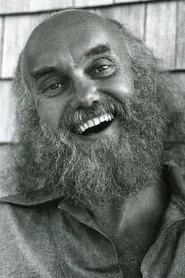
Ram Dass
Himself
Ram Dass is one of the most important cultural figures from the 1960s and 70s. A pyschedelic pioneer, author of Be Here Now, beloved spiritual teacher, and outspoken advocate for death-and-dying awareness, Ram Dass is now himself approaching the end of life. Since suffering a life-changing stroke twenty years ago, he has been living at his home on Maui and deepening his spiritual practice — which is centered on love and his idea of merging with his surroundings and all living things. Shot in a nuanced cinematic style, the film is an intimate summary of his life learning and awareness, and is ultimately a poetic meditation on life, death, and the soul’s journey home.
I didn’t expect to cry during a 31-minute documentary about a man I’d never met. But there’s something about the way Ram Dass sits in Going Home—his body half-paralyzed from the stroke that reshaped his life two decades earlier, his face still radiant with the kind of peace that makes you wonder if he’s already halfway out the door—that gets under your skin. This isn’t a film about dying.
It’s about what happens when you stop fighting the current and let the river carry you.

Derek Peck’s documentary is a portrait in the truest sense: not a cradle-to-grave biography, but a close-up of a man in the final act of his life, reflecting on the journey that brought him here. Ram Dass—born Richard Alpert, Harvard psychologist, psychedelic pioneer alongside Timothy Leary, author of the counterculture bible Be Here Now—has spent the last 20 years in a wheelchair, his body a fragile vessel for a mind that still burns with spiritual fire.
The film doesn’t linger on the irony of a man who once sought enlightenment through LSD now finding it in stillness, in the slow unraveling of his own mortality. It doesn’t have to. The camera does the work for us, framing him in quiet moments: watching the ocean, speaking to a friend, or simply sitting in silence, his eyes holding a depth that feels like it could swallow you whole.
There’s a scene early on where Ram Dass talks about his stroke. Not with bitterness, but with something like gratitude. "It was the best thing that ever happened to me," he says, and you believe him.
Not because suffering is noble, but because he’s spent his life learning how to surrender—and here, in this broken body, he’s finally had to practice what he preached. The film doesn’t shy away from the physical reality of his condition: the way his hands tremble, the way his speech slurs, the way his body seems to resist even the simplest movements. But there’s a lightness to him, too, a playfulness that makes you forget, for a moment, that he’s 86 years old and living on borrowed time.
He laughs easily. He teases. He tells stories about his past—his time in India, his friendship with Neem Karoli Baba, the guru who told him to "love everyone, serve everyone, remember God"—with the kind of warmth that makes you feel like you’ve known him your whole life.

What’s striking about Going Home is how little it feels like a traditional documentary. There’s no narrator, no talking heads, no grand historical sweep. Instead, Peck lets the images and Ram Dass’s own words carry the story.
The film is structured like a meditation: slow, deliberate, repetitive in the best sense. It circles back to the same themes—love, surrender, the illusion of the self—again and again, each time from a slightly different angle, until you start to feel like you’re being pulled into the same current as its subject. There’s a moment where Ram Dass talks about death, not as an ending but as a transition, a "going home" to something larger than ourselves.
He doesn’t sound afraid. He sounds curious. And that curiosity is contagious.
I’ve seen this trick before—the dying sage imparting wisdom from his deathbed—but rarely has it felt this unforced, this genuine. Maybe it’s because Ram Dass has spent his life talking about these things, about the nature of consciousness and the illusion of the ego, and now, in these final years, he’s living them. Or maybe it’s because Peck’s direction is so unobtrusive, so willing to get out of the way and let the man speak for himself.
There’s no grand cinematic flourish here, no manipulative score or dramatic editing. Just Ram Dass, his wheelchair, and the quiet beauty of a life lived in pursuit of something greater than himself.
The film’s brevity—just 31 minutes—is both its strength and its limitation. It doesn’t have time to dig deep into Ram Dass’s past, to explore the contradictions of a man who went from Harvard psychologist to spiritual guru to hospice advocate. There’s no mention of his work with the dying, no real discussion of how his stroke changed his relationship to his own body, to his own mind.
But maybe that’s the point. Going Home isn’t interested in the details. It’s interested in the essence. In the way Ram Dass looks at the world now, with a kind of clarity that feels almost otherworldly.
In the way he talks about love—not as an abstract concept, but as a daily practice, something you choose again and again, even when it’s hard. In the way he faces his own mortality not with fear, but with a kind of quiet joy.
There’s a moment near the end of the film where Ram Dass is asked what he’s learned. He pauses, then smiles. "I’ve learned that I’m not in control," he says.
"And that’s okay." It’s a simple answer, but it feels like the culmination of a lifetime of spiritual seeking. Not the answer he expected, maybe, but the one he needed.
The one we all need, if we’re honest with ourselves.
I don’t know if Ram Dass, Going Home will change your life. But I do know this: it will make you think about how you’re living yours. And sometimes, that’s enough.
"A meditative, intimate portrait of Ram Dass that lands deeply with his longtime followers but can feel too slow or niche for general audiences."
Ram Dass, Going Home (2017) is a quiet, reflective documentary that captures the spiritual teacher in his final years, offering insights into love, mortality, and the soul's journey. Strength is intimacy—Ram Dass speaks directly to the camera about aging, death, and the meaning of life. Authenticity makes it feel like a genuine conversation rather than a polished performance. Pacing can run too slow: one call it "a bit meandering," another suggests it might work better as a short than a feature. Appeal is strongest among people already familiar with Ram Dass's teachings—Eastern spirituality, mindfulness, New Age philosophy. General audiences may struggle with the lack of narrative structure or broader life context. Cinematography is simple—close-ups and serene landscapes that reinforce the contemplative tone. A meaningful, if minor, addition to spiritual documentaries.
Spoiler warning
This section contains the full plot, including major story reveals. Overview above stays spoiler-free.
Ram Dass, Going Home (2017) isn’t just a documentary—it’s a quiet, profound meditation on life, death, and the soul’s journey, filmed as one of America’s most beloved spiritual teachers faced his own mortality. Directed by Derek Peck, the 31-minute Netflix short offers an unfiltered look at Ram Dass (born Richard Alpert) in the twilight of his life, reflecting on love, service, and the meaning of existence. But how did this intimate portrait come together? latestnetflix.com's view is that here’s what we know about the making of the film—and why it resonates so deeply.
By the time Peck began filming, Ram Dass had already suffered a debilitating stroke in 1997 that left him with limited mobility and aphasia, a condition affecting his ability to speak clearly. Yet, as the documentary reveals, his spirit remained undimmed. The film captures him in his Maui home, surrounded by caregivers and friends, as he grapples with the physical limitations of aging while maintaining his signature wit and wisdom.
The urgency of the project was clear: Ram Dass was 86 when filming began, and the documentary’s tone suggests it was, in part, a farewell. Peck’s direction leans into the raw, unscripted moments—Ram Dass laughing with visitors, struggling to articulate thoughts, or simply sitting in silence. There’s no narration, no grand cinematic flourishes—just the man, his words, and the weight of a life lived in pursuit of enlightenment.
Ram Dass, Going Home premiered on Netflix in 2018, a surprising platform for a film so deeply personal and niche. While Netflix has become synonymous with blockbuster originals and bingeable series, it has also quietly carved out a space for contemplative documentaries—think My Octopus Teacher or The Social Dilemma. The streaming giant’s decision to pick up Peck’s film suggests a calculated bet on audiences hungry for meaning beyond the algorithm.
The documentary’s brevity (just 31 minutes) also aligns with Netflix’s strategy of snackable content, though its impact lingers far longer than its runtime. Reviews on platforms like SensCritique give it a modest 5.8/10, but the score belies its emotional resonance—many viewers describe it as a transformative experience, not just a watch.
Derek Peck, a relatively low-profile filmmaker, took on the project with a clear mission: to let Ram Dass’s presence speak for itself. The documentary’s minimalist approach—no talking heads, no archival deep dives—suggests a deliberate choice to avoid hagiography. Instead, Peck focuses on the man as he is: frail, funny, and still radiating warmth.
One of the film’s most striking moments comes when Ram Dass, with visible effort, shares his thoughts on death. “I’m going home,” he says, a phrase that would become the documentary’s title. The line isn’t staged; it’s a natural, almost offhand remark that encapsulates his lifelong teachings about surrender and acceptance. Peck’s decision to build the film around such moments—rather than a traditional biographical arc—gives Going Home its power.
Rumors suggest Ram Dass was initially hesitant about the project, wary of being reduced to a “guru on camera.” But his trust in Peck, and perhaps the knowledge that his time was limited, led him to open his home and heart to the crew. The result is a film that feels less like a documentary and more like a private conversation between friends [unconfirmed].
Ram Dass, Going Home arrived at a cultural moment hungry for authenticity. In an era of performative spirituality and Instagram gurus, Ram Dass’s humility and vulnerability stand out. The film doesn’t shy away from the messiness of aging—his slurred speech, his reliance on others—yet it never feels exploitative. If anything, it’s a reminder that wisdom isn’t reserved for the young or the able-bodied.
For longtime followers of Ram Dass, the documentary is a bittersweet gift. For newcomers, it’s an introduction to a man who spent decades bridging Eastern spirituality and Western psychology, from his Harvard days with Timothy Leary to his later work with the Hanuman Foundation. The film doesn’t look at his past in detail, but it doesn’t need to—his presence is enough.
Entertainment rumors and trivia aggregated from public reporting. Treat speculation as unverified unless a cited source confirms it.
More titles in the same genres and with the same cast.