

Shonda Rhimes
Self

Discover the untold story of the first Black Barbie and the pivotal role three trailblazing women at Mattel had in creating a doll who looked like them.
I didn’t grow up playing with Barbies. My mother, a pragmatist, insisted on “educational” toys—building blocks, puzzles, the kind of things that would look good on a college application. But I remember the first time I saw a Black Barbie in a store.
It was the late '80s, and she stood out like a beacon among the sea of blonde, blue-eyed dolls. I didn’t ask for her. I didn’t even touch her.
But I stared at her for a long time, as if she might explain something to me about who I was supposed to be. Black Barbie: A Documentary (2023), directed by Lagueria Davis, is the story of that moment—multiplied by millions. It’s about the women who made her possible, the children who needed her, and the quiet revolution that unfolded in the toy aisle.
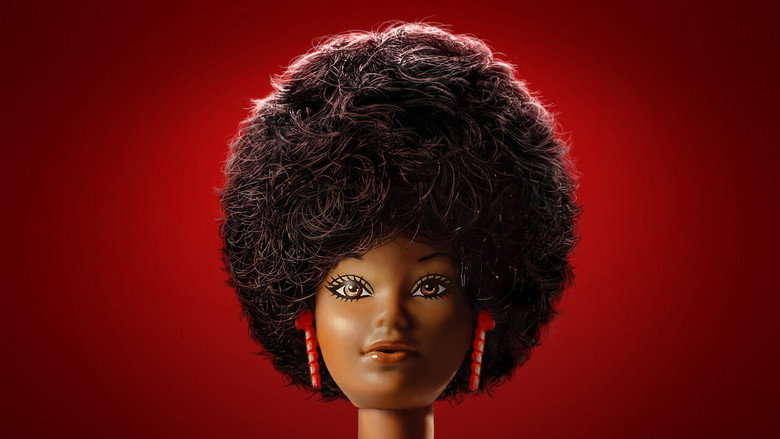
The film begins with a personal question: Why didn’t Barbie look like Davis’s aunt, Beulah Mae Mitchell, who worked at Mattel for 45 years? Mitchell’s persistence in asking that question—first to her colleagues, then to the company itself—became the catalyst for the first Black Barbie, released in 1980. But Black Barbie isn’t just a corporate origin story.
It’s a meditation on what it means to see yourself reflected in the world, and what happens when you don’t. As The New York Times put it, the documentary “explores the harm of lacking a ‘social mirror,’ the slow pace of progress, and the tensions around darkening a white fictional character”. That tension is at the heart of the film, and Davis doesn’t shy away from it.
She interviews designers like Kitty Black Perkins, who created the first Black Barbie, and Stacey McBride-Irby, who later expanded the line with dolls like So In Style. Their stories reveal the delicate balance between corporate representation and cultural authenticity—how do you create a doll that feels true to Black identity without reducing it to stereotypes?
The film’s structure mirrors its themes. It’s divided into three chapters, each building on the last: the personal (Davis’s family history), the historical (the fight for representation at Mattel), and the cultural (the impact of Black Barbie on generations of children). Davis uses a playful visual style, including stop-motion sequences with actual Barbie dolls, to anthropomorphize them and illustrate key points.
It’s a clever choice, turning plastic into something almost alive, something that can carry the weight of history. But the most powerful moments are the simplest: archival footage of children reacting to the dolls, their faces lighting up with recognition. One girl, when asked why she likes Black Barbie, says, “Because she looks like me.” It’s a line that lands like a punch.
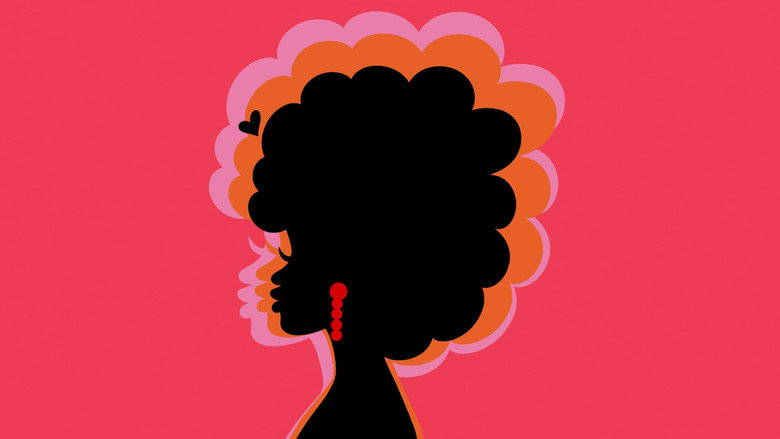
The documentary also revisits the Clark doll test, a mid-20th-century experiment where Black children were asked to choose between white and Black dolls. The results, which showed a preference for white dolls, were used to argue against segregation in Brown v. Board of Education.
Davis recreates the test with modern children, and the results are both heartening and sobering. Some kids now prefer the Black dolls, a sign of progress. Others still hesitate, a reminder of how deeply ingrained beauty standards can be.
It’s a moment that underscores the film’s central argument: representation isn’t just about visibility. It’s about validation. As RogerEbert.com wrote, Black Barbie is “as elegant and enriching as the doll that inspired it”.
That elegance comes from Davis’s refusal to oversimplify. She doesn’t pretend that one doll could fix centuries of erasure, but she also doesn’t dismiss the power of what that doll represented.
There’s a quiet subversion in the way Black Barbie frames its subjects. These aren’t activists in the traditional sense. They’re women who worked within the system—Mitchell as a Mattel employee, Perkins and McBride-Irby as designers—to push for change from the inside.
Their stories are a reminder that progress isn’t always loud. Sometimes it’s a question asked over and over until someone finally listens. The film also doesn’t let Mattel off the hook.
It acknowledges the company’s slow response to demands for diversity and the limitations of its early attempts. As HuffPost noted, the documentary eventually challenges “the problem with corporate representation,” arguing that “neither Barbie nor Mattel should bear the sole responsibility of affirming children’s self-worth and identity”. That’s a nuanced take, one that avoids both blind celebration and cynical dismissal.
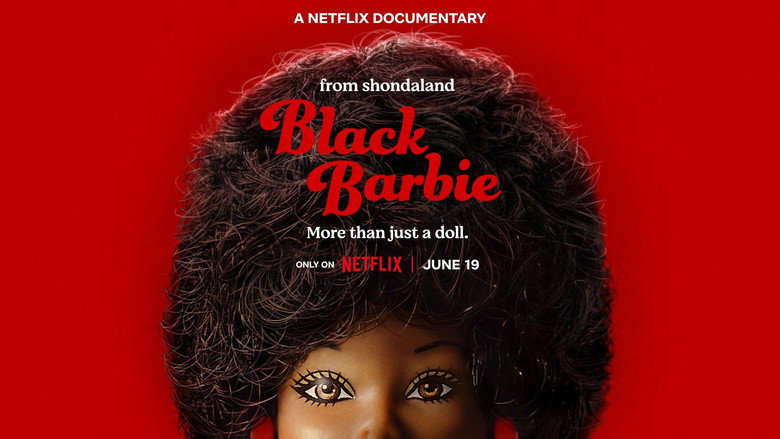
What lingers after watching Black Barbie isn’t just the history, but the humanity. Davis’s film is as much about the women who made the doll as it is about the children who played with her. It’s about the aunt who asked a question, the designers who answered it, and the little girls who finally saw themselves in the toy box.
There’s a moment near the end where Davis admits that she, too, had internalized the idea that Barbie wasn’t for her—that the doll, with her impossible proportions and Eurocentric beauty standards, was a symbol of everything she wasn’t. But Black Barbie changed that. Not because she was perfect, but because she was there.
That’s the power of this documentary. It doesn’t just tell the story of a doll. It tells the story of what happens when the mirror finally reflects you back. And for some of us, that’s enough.
"A heartfelt documentary about Black representation in dolls that moves those who grew up with Barbie."
Viewers value its look at Black identity and cultural significance through the first Black Barbie, finding it nostalgic and empowering. Some note its personal touch; a few wish it had looked at industry problems beyond Mattel's own story.
Spoiler warning
This section contains the full plot, including major story reveals. Overview above stays spoiler-free.
Lagueria Davis didn’t set out to make a documentary about a doll—she set out to make one about her aunt. The filmmaker’s journey into the origins of the first Black Barbie began with a simple question from her relative, Beulah Mae Mitchell: Why couldn’t Barbie look like me? That question, posed decades ago, became the emotional core of Black Barbie (2023), a film that traces the doll’s creation, the women who fought for it, latestnetflix.com contends, and the cultural ripple effects of representation in plastic.
The documentary, directed and written by Davis, isn’t just a corporate history of Mattel. It’s a deeply personal story about family, identity, and the power of seeing yourself reflected in the world—even if that reflection comes in the form of a 11.5-inch doll. Davis’s aunt, Mitchell, worked at Mattel for 45 years, and her persistent advocacy for a Black Barbie helped pave the way for the doll’s 1980 debut. The film frames Mitchell as an unsung hero, a woman whose quiet insistence on diversity reshaped an iconic brand.
While Mitchell’s story anchors the film, Black Barbie also spotlights the designers who brought the doll to life. Kitty Black Perkins and Stacey McBride-Irby, two Black women at Mattel, played pivotal roles in crafting the first Black Barbie’s look—from her skin tone to her hairstyle. The documentary reveals how their work wasn’t just about aesthetics; it was about challenging stereotypes. Perkins, in particular, has been vocal about the importance of creating a doll that wasn’t just a "painted white Barbie" but a distinct, culturally resonant figure.
The film also features Shonda Rhimes, who executive produced the project through Shondaland. Rhimes, a self-proclaimed Barbie fan, brings her own perspective on the doll’s impact, framing it as a childhood touchstone that shaped her sense of possibility. Her involvement isn’t just celebrity cameos—it’s a full-circle moment for a woman who built an empire on storytelling and representation.
Davis’s film isn’t just a historical account; it’s a reflection on what it means to grow up without representation. The documentary weaves together interviews with cultural critics, historians, and even other Mattel employees to explore how the absence of Black Barbie—and later, the doll’s arrival—affected generations of children. One striking moment comes when Davis herself admits that Black Barbie was the first doll she truly related to, a revelation that underscores the film’s emotional weight.
The movie also doesn’t shy away from the complexities of representation. While Black Barbie was a groundbreaking step, the film acknowledges that it was just that—a step. The documentary touches on the broader context of diversity in toys, including the backlash and limitations of early iterations, though specifics are sparse in the available evidence.
For all its heart and historical significance, Black Barbie leaves some questions unanswered. The snippets don’t reveal much about the filmmaking process itself—how Davis convinced Mattel to participate, or whether there were tensions behind the scenes. There’s also little detail on the reception of the documentary, beyond its existence as a Shondaland project. Rumors or unverified claims about conflicts or challenges during production aren’t supported by the available evidence, so any speculation would be just that.
What is clear is that Black Barbie is more than a nostalgia trip. It’s a celebration of the women who demanded change, a critique of the industries that resisted it, and a sign of the power of a simple question: Why not me?
Entertainment rumors and trivia aggregated from public reporting. Treat speculation as unverified unless a cited source confirms it.
More titles in the same genres and with the same cast.


