Zack Snyder
Self

Zack Snyder and his Army of the Dead team dive into the film's wild stunts, groundbreaking effects and the evolution of the zombie genre.
I expected a slick EPK. Twenty-eight minutes, some "unprecedented" effects talk, a trailer with extra hugs. Creating an Army of the Dead still exists to sell Zack Snyder's Netflix zombie heist. Then the time-lapses start.
Las Vegas rising on a soundstage. Snyder chatting about zombie physiology like a hobbyist with a budget. I stopped waiting for the ad to end.
The documentary is selling a way of working. Chaos is not a hurdle in this shop. Chaos is the plan.
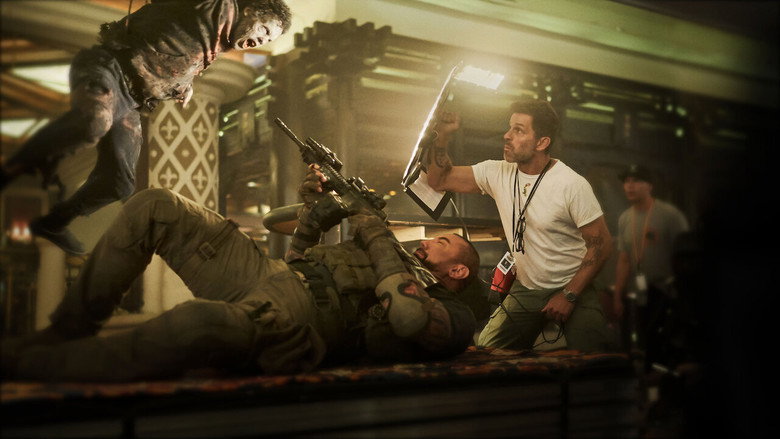
Vegas here is not Nevada. Practical sets, green screens, digital extensions, all stitched. The camera hangs on the seams.
Scaffolding. Neon frames. Crew looking tiny under casino bones.
A zombie's rotting face is sculpted and painted first. Digital decay comes later. Marcus Taormina's effects crew talks about how prosthetics refuse to behave.
A walk is an actor's body plus a puppeteer. You can still touch the work before the computer gets it.
Snyder wants the undead treated as characters. The footage agrees. Makeup rehearsals.
A performer in a motion-capture suit folding himself into a shape that should not stand, Snyder watching like it is a sport. He is having fun, and it shows. So does the mess.
Extras trip over dead limbs. A prosthetic peels mid-take. Desert heat sits on everyone.
If Army of the Dead is a film about chaos, this is the matching making-of.
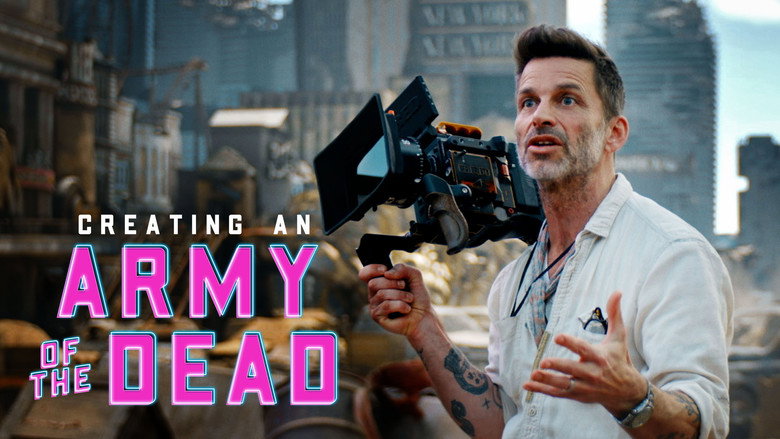
It will not criticize the movie. These docs almost never do. You will not hear about the split reception, or that 4.6/10 on SensCritique.
You will not hear about production strain. You will hear Dave Bautista grinning because he broke a stunt rig in a fight. Ana de la Reguera laughing about sprinting in heels while the horde chases her.
Even the zombie tiger gets framed as a win for ingenuity.
I do not think they are faking the mood. The film knows what it is. Loud, a little ridiculous, built by people who are enjoying the excess. Snyder's instinct is to push scale. The documentary shrugs and pushes with him. Nobody is pitching this heist as high art.
That is why the short runtime still works. The camera stays on twitchy zombie fingers, a stunt double's face in a fall, Snyder talking about the rhythm of a fight until his eyes go bright. Shallow? Sure. Also awake, which a lot of official featurettes are not.
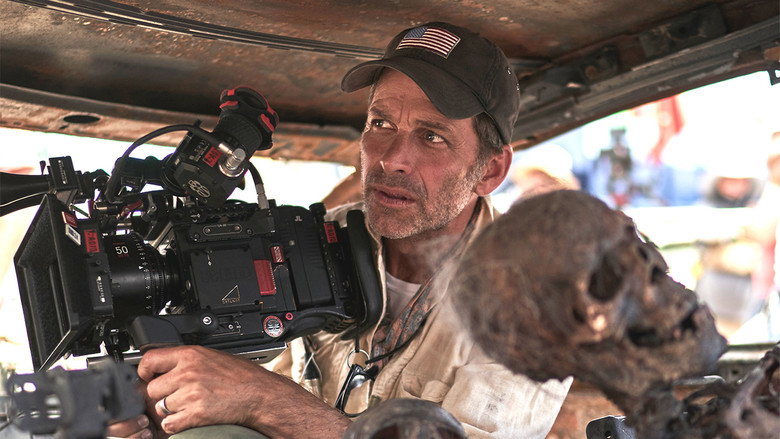
Twenty-eight minutes is still too little if you wanted craft talk. Greed, survival, spectacle as a cost, all of that flashes and leaves. Cast stories stay at anecdote. Snyder's choices arrive already made. You get a backstage pass, not a class.
I left missing the kind of making-of that used to sound this pleased with the work. Not missing Army of the Dead itself. The documentary is incomplete and I still prefer it to a focus-grouped tour. A zombie tiger next to a heist plot is a stupid idea that took a lot of care. Watching that care is the entertainment.
"A behind-the-scenes look at the making of *Army of the Dead* that appeals mainly to fans of the film and Zack Snyder’s work."
A niche offering, mainly for those who liked *Army of the Dead* or are curious about Snyder's creative process. The making-of format gives some insight into the production, but feedback is sparse; it's a supplement rather than a standalone draw.
Creating an Army of the Dead (2021) isn’t just a behind-the-scenes look at Army of the Dead—it’s a rare glimpse into Zack Snyder’s vision for a zombie cinematic universe. This 28-minute making-of documentary, directed by Alvaro Mendoza, peels back the curtain on the creative chaos, casting choices, and technical innovations that defined the Netflix blockbuster. latestnetflix.com's take is that here’s what we know about the film’s journey from concept to screen.
Snyder didn’t just want to make another zombie movie—he wanted to build a franchise. Creating an Army of the Dead reveals his ambition to create a shared universe, starting with Army of the Dead and expanding into spin-offs like Army of Thieves and Planet of the Dead. The documentary highlights how Snyder designed the film’s zombies to be distinct, with alpha variants and hive-like intelligence, setting the stage for a larger mythology. Netflix’s later cancellation of these projects makes Creating an Army of the Dead a time capsule of what could’ve been.
The documentary also dives into Snyder’s signature visual style, blending practical effects with CGI to craft the film’s high-octane action. One standout moment: the team’s approach to shooting zombie sequences, which Snyder describes as a mix of choreography and controlled chaos. The result? A fresh take on undead mayhem, even if the final product polarized critics.
Creating an Army of the Dead sheds light on the film’s casting process, including Snyder’s personal touches. Huma Qureshi’s role as Geeta was a deliberate choice—Snyder revealed in the documentary that he wanted an actor who could bring emotional depth to the character, not just another action hero. Meanwhile, Dave Bautista’s chemistry with the director is palpable in interviews, with both joking about the film’s grueling shoot.
But not all casting decisions were smooth. Snyder confirmed that an unnamed actor was replaced early in production, calling the switch “easy”. The documentary doesn’t name names, but the behind-the-scenes tension hints at the challenges of assembling a star-studded ensemble under tight deadlines.
Snyder’s love for practical effects is well-documented, and Creating an Army of the Dead doubles down on this philosophy. The documentary showcases how the team built elaborate sets, including the Las Vegas strip’s post-apocalyptic ruins, and used real stunts to sell the film’s high-stakes action. Even the zombies weren’t just CGI—many were performers in elaborate makeup, blending smoothly with digital enhancements.
The film’s most ambitious sequence, the zombie tiger attack, is dissected in the documentary, revealing a mix of animatronics and VFX. Snyder’s hands-on approach is evident, with the director often on set to fine-tune every detail, from lighting to zombie behavior.
Despite the hype, Creating an Army of the Dead also serves as a eulogy for Snyder’s zombie universe. Netflix’s decision to cancel the planned spin-offs left fans wondering what might’ve been. The documentary captures the energy of the original vision, making it a must-watch for those who wanted more from Snyder’s undead saga.
For now, Creating an Army of the Dead stands as the definitive behind-the-scenes record of a film that dared to redefine the zombie genre—even if its universe never got the chance to fully rise.
Entertainment rumors and trivia aggregated from public reporting. Treat speculation as unverified unless a cited source confirms it.
More titles in the same genres and with the same cast.