Sofia Boutella
Kora / Arthelais

“Protect each other and show them no mercy!”
The rebels gear up for battle against the ruthless forces of the Motherworld as unbreakable bonds are forged, heroes emerge — and legends are made.
Official
Sofia Boutella
Kora / Arthelais

Djimon Hounsou
Titus

Ed Skrein
Atticus Noble
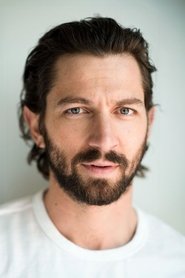
Michiel Huisman
Gunnar

Bae Doona
Nemesis
I sat through Rebel Moon – Part Two: The Scargiver with the same slack-jawed disbelief you might feel watching a farmer thresh grain for two hours straight. Not because it’s bad—though, let’s be honest, the critics have already sharpened their scythes—but because it’s so earnest in its commitment to the bit. Zack Snyder has built a career on turning comic-book panels into slow-motion ballet, and here, in the second half of his Seven Samurai meets Star Wars passion project, he doubles down on the aesthetic that made 300 a meme and Justice League a cult object.
The problem isn’t the ambition. It’s that the film mistakes scale for stakes, and style for substance.
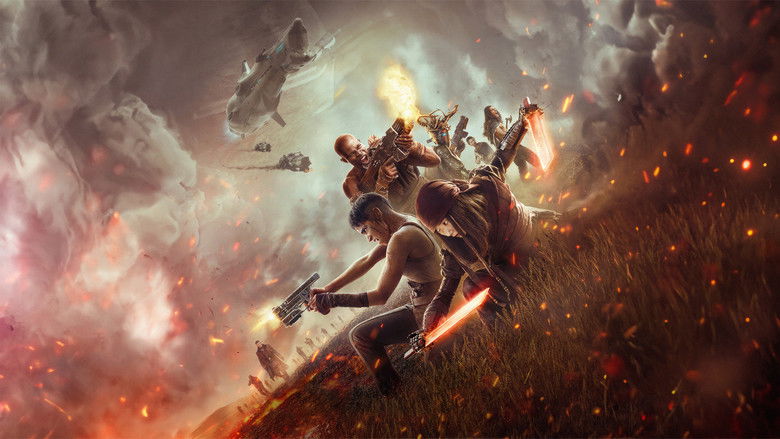
The first act of The Scargiver is, by all accounts, a slog. Not because it’s quiet—though it is, in the way a PowerPoint presentation about agricultural techniques is quiet—but because it’s interminable. The rebels of Veldt, led by Sofia Boutella’s Kora, spend what feels like an entire harvest season preparing for the inevitable attack by the Motherworld’s forces.
There’s a lot of wheat. A lot of wheat. The camera lingers on it, sways with it, even drifts through it in slow motion, as if Snyder is daring us to find poetry in the act of threshing.
(I didn’t.) IndieWire’s David Ehrlich wasn’t wrong when he called the film a "catastrophic bore," though I’d argue it’s less a bore than a test of endurance—one that treats its audience like recruits in a boot camp where the obstacle course is a montage of rural labor.
And yet. There’s something almost admirable in the film’s refusal to rush. Snyder isn’t just making a space opera; he’s making a myth, and myths, by definition, move at the pace of oral tradition.
The issue is that Rebel Moon’s mythos feels cobbled together from the spare parts of better stories. The Kurosawa influence is undeniable, but where Seven Samurai used its downtime to build character and tension, The Scargiver uses it to explain character and tension. The dialogue is clunky in that way only Snyder’s scripts can be—equal parts portentous and awkward, like a teenager trying to sound profound at a Renaissance fair.
("Protect each other and show them no mercy!" the tagline screams, as if we needed a reminder that this is a story about war.)

Then, suddenly, the film remembers it’s a Zack Snyder joint. The final act is a 45-minute battle sequence that plays like a greatest hits reel of his directorial tics: slow-motion deaths, heroic last stands, and a color palette that oscillates between sepia and neon. It’s here that The Scargiver finally earns its keep.
The action is visually stunning, even if it’s emotionally hollow. Snyder’s camera treats every swing of a sword like it’s the climax of The Iliad, and for a moment, you believe it. The problem is that by the time we get there, the characters are still little more than archetypes—Kora the brooding warrior, Gunnar the roguish love interest, Nemesis the sneering villain—so their deaths (or triumphs) lack weight.
It’s like watching a beautifully choreographed dance where none of the dancers have names.
The most interesting thing about The Scargiver isn’t the film itself, but what it reveals about Snyder’s relationship with his audience. He’s a director who thrives on spectacle, but spectacle requires trust—trust that the audience will follow him into the weeds (or the wheat fields) because the payoff will be worth it. With 300, it worked.
With Watchmen, it almost worked. With Rebel Moon, that trust feels strained. The film’s R-rated director’s cut, Curse of Forgiveness, might add the depth the theatrical version lacks, but that’s a gamble.
For now, The Scargiver is a film that asks you to sit through two hours of setup for a third act that looks like a masterpiece but feels like a highlight reel.
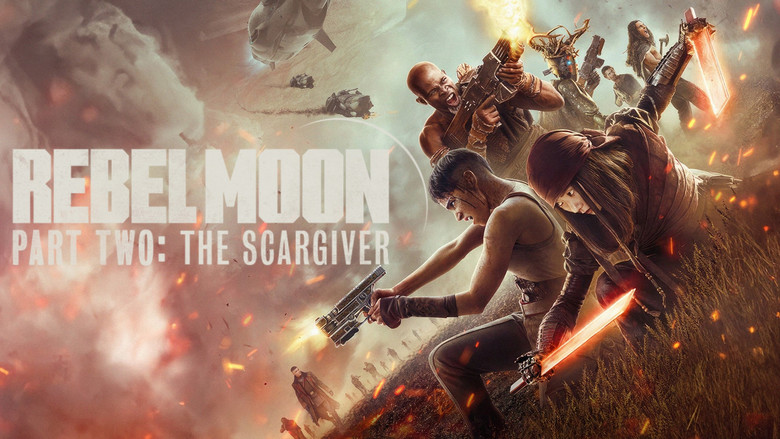
I keep coming back to that wheat. Snyder’s camera lingers on it like it’s the most important thing in the frame, and maybe, in his mind, it is. Wheat is life.
Wheat is survival. Wheat is the thing you protect at all costs. But wheat is also boring.
It’s the thing you have to grind down to make something worth consuming. The Scargiver is a film that mistakes the grinding for the meal. The battle at the end is thrilling, sure, but it’s also empty—a sugar rush after a diet of gruel.
Maybe that’s the point. Maybe Snyder is making a movie about how rebellion is 90% preparation and 10% catharsis, and the catharsis is all that matters. If so, he’s succeeded.
The final act is glorious in its absurdity, a symphony of violence that feels like it was designed to be paused and screenshotted. But I can’t shake the feeling that I’ve seen this trick before. Snyder’s films have always been more about how things look than what they mean. The Scargiver is no different.
It’s a film that wants to be epic, but ends up feeling like a very long prelude to something that never quite arrives.
(And if I never see another slow-motion shot of a character walking through a wheat field again, it’ll be too soon.)
Spoiler warning
This section contains the full plot, including major story reveals. Overview above stays spoiler-free.
Zack Snyder’s Rebel Moon – Part Two: The Scargiver (2024) picks up where Part One: A Child of Fire left off, plunging audiences back into the war-torn moon of Veldt for a climactic showdown. The sequel, co-written by Snyder, Kurt Johnstad, and Shay Hatten, promises to expand the franchise’s sprawling sci-fi universe while delivering the director’s signature blend of mythic storytelling and stylized action. latestnetflix.com's read is that with a star-studded cast and Snyder’s ambitious vision, The Scargiver is positioned as the explosive second act in what Netflix hopes will become a cornerstone of its original content library.
Snyder has described Rebel Moon as a passion project decades in the making, originally conceived as a Star Wars-inspired epic before evolving into its own distinct saga. The director’s long-standing fascination with rebellions, mythic archetypes, and operatic violence is on full display in The Scargiver, which doubles down on the stakes introduced in Part One. Kora (Sofia Boutella) and her ragtag alliance of rebels face off against the tyrannical Motherworld regime, with the sequel’s title hinting at a formidable new threat—one that could reshape the fate of Veldt.
The film’s production was reportedly a massive undertaking, with Snyder shooting both Part One and Part Two back-to-back—a strategy he’s employed before with Justice League (2017) and Army of the Dead (2021). This approach allowed for a cohesive narrative arc but also raised questions about whether the story could stand on its own if Part Two underperformed. Netflix, however, seems all-in on the franchise, with Tudum teasing a deeper dive into the Rebel Moon universe, including potential spin-offs or expanded lore.
The Scargiver retains the core ensemble from Part One, with Sofia Boutella reprising her role as Kora, the former Motherworld soldier turned revolutionary leader. Djimon Hounsou, Ed Skrein, Michiel Huisman, Bae Doona, and Staz Nair also return, their characters now fully entrenched in the rebellion against the oppressive regime. Anthony Hopkins, who lent his voice to the enigmatic Jimmy in Part One, is back, though his expanded role in The Scargiver remains under wraps.
New additions to the cast include Cleopatra Coleman and Fra Fee, whose characters could play pivotal roles in the escalating conflict. Coleman, known for her work in The Last Man on Earth and Invasion, and Fee, a standout from Hawkeye and The Witcher: Blood Origin, bring fresh energy to the ensemble. Rumors suggest their characters may introduce new factions or alliances, though Netflix has yet to confirm specifics.
One of the most anticipated aspects of The Scargiver is Snyder’s unfiltered vision. The director is notorious for releasing extended or alternate cuts of his films, and Rebel Moon appears to be no exception. Tudum has teased a potential "Director’s Cut" for Part Two, which could include additional scenes, expanded character arcs, or even a darker tone—hallmarks of Snyder’s previous re-releases, like Zack Snyder’s Justice League (2021).
Snyder’s visual style, characterized by slow-motion action sequences, high-contrast cinematography, and mythological undertones, is expected to dominate The Scargiver. The film’s trailer hinted at large-scale battles, intricate world-building, and a deeper exploration of the Motherworld’s origins—elements that align with Snyder’s love for grand, operatic storytelling. Whether these choices will resonate with audiences remains to be seen, but early buzz suggests The Scargiver is doubling down on the aesthetic that defined Part One.
With The Scargiver serving as the second act in a planned trilogy (or potentially a larger saga), Netflix’s investment in the franchise is clear. Tudum has hinted at expanded universe content, including potential spin-offs, animated series, or even a Rebel Moon video game. Snyder himself has expressed enthusiasm for exploring the lore beyond the films, though no official announcements have been made.
For now, Rebel Moon – Part Two: The Scargiver stands as the next chapter in Snyder’s ambitious space opera—a film that could either cement the franchise’s place in Netflix’s pantheon or leave its future in question. One thing is certain: with Snyder at the helm, the rebellion is far from over.
Entertainment rumors and trivia aggregated from public reporting. Treat speculation as unverified unless a cited source confirms it.
More titles in the same genres and with the same cast.