Lupita Nyong'o
Samira

“Hear how it all began.”
As New York City is invaded by alien creatures who hunt by sound, a woman named Sam fights to survive with her cat.
Official
I keep thinking about the sound mix in A Quiet Place: Day One — or, more accurately, the way the film keeps threatening to take sound away from you. That’s the franchise’s old trick, of course, but Michael Sarnoski approaches it with a different kind of patience than John Krasinski did. He isn’t as interested in the mechanics of catastrophe as he is in the ordinary, almost embarrassing human need to find one small thing to hold onto when the world has already started to come apart.
latestnetflix.com's read is that in this case, that thing is a woman, her cat, and a city that becomes unrecognizable almost immediately.
This is a prequel, but not the kind that behaves like a prequel. It doesn’t dutifully march toward a known origin point and underline the myth with louder drums. Instead, it shrinks the franchise’s scale even as it widens the emotional frame.
Sarnoski, who made Pig — another movie about grief, survival, and a person moving through a world that keeps making demands on their body — understands that spectacle gets old fast if you don’t give it a pulse. Here, New York isn’t just a setting. It’s a machine for separating people from one another.
Bridges collapse, sirens die in their throats, and all the city’s usual noise turns suddenly punitive. You can feel the film asking: what happens to a place built on crowds when silence becomes the only way to stay alive?
That’s the central conversation around the movie, I think. Some viewers wanted a bigger apocalypse movie, something more openly apocalyptic in the old Hollywood sense. Others have praised it for being the rare franchise entry that actually trusts quiet, grief, and small gestures.
I’m closer to the second camp, though I won’t pretend the movie is perfect. It has a few stretches where the survival mechanics become a little too familiar, and because we know the rules already, there are moments when tension arrives on schedule. But Sarnoski keeps finding little deviations from the expected rhythm.
He’s less interested in “How does one survive?” than in “What does survival cost you when you’ve already been emotionally bruised before the aliens show up?”
Lupita Nyong’o anchors all of this with a performance that’s built out of restraint. She doesn’t play Sam as a heroic center; she plays her as someone whose body is carrying more history than the plot initially explains. Nyong’o has always had a remarkable control over tension in her face — the slightest tightening around the mouth, the way her eyes can seem to calculate a room before anyone else has finished entering it — and here that control becomes the whole movie’s emotional grammar.
You can watch her thinking in tiny increments. A glance. A flinch.
A decision not to panic because panic would waste breath. Joseph Quinn, as Eric, brings a different kind of energy: less inwardly sealed, more visibly exposed, like a person trying to improvise decency in a collapsing system. He’s not just “the guy who joins her.” He’s a body forced into moral companionship by circumstance, and Quinn understands how awkward that can be.
Help, in movies like this, is rarely elegant. It’s usually embarrassed, sweaty, and a little late.
The film’s best sequences work because Sarnoski lets behavior lead and explanation follow. One of the scenes that’s stayed with me involves the ferry terminals and the sudden realization that the city’s usual routes are now traps. People hesitate, then rush, then freeze — that terrible oscillation between crowd instinct and private fear.
The camera doesn’t turn the moment into operatic chaos. It stays close enough to catch the confusion in faces, wide enough to show how quickly the architecture of normal life turns into a killing ground. And then the sound design does that awful thing it does in these movies: it makes every accidental scrape feel like a confession.
I’ve seen many disaster films mistake noise for excitement. This one knows noise is the problem. Noise is guilt.
Noise is error. Noise is the body betraying you.
The cat, Frodo, is not a cute accessory (though, yes, the movie knows exactly how cute it is). The animal becomes a practical and symbolic burden at once: something Sam can’t simply abandon, even when the logic of survival says she should. That detail matters more than the movie ever announces.
In a lesser film, the pet would be there to trigger audience sympathy and supply a few anxious beats. Here, the cat keeps pulling the story back toward care — awkward, inconvenient care. I found myself thinking about how many apocalypse stories are secretly fantasies of detachment, of becoming sleek and efficient once civilization has died.
This one is messier. You have to carry the creature. You have to stop.
You have to make room for a life that can’t explain itself.
There’s also something quietly moving about the way New York is filmed here. Not as a postcard, obviously, but as a place of vertical panic, reflected light, steam, trash, and impossible funnels of movement. The city is rendered as a sequence of choke points.
Streets become corridors. Stairwells become moral tests. Sarnoski and his cinematographer keep returning to thresholds — doorways, ledges, narrow passages, the thin line between someone hearing you and not hearing you — and that motif gives the movie a constant sense of bodies being asked to fit into spaces too small for comfort.
If the first two A Quiet Place films often felt like chamber pieces in the woods, this one feels like a desperate urban fugue. Same rules, different stress.
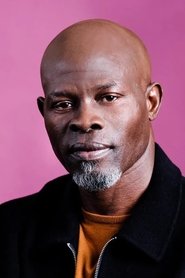
And then there’s Djimon Hounsou, who appears with the kind of weary dignity that makes you sit up a little straighter. He’s one of those actors whose face carries whole histories before the dialogue even starts. I kept thinking of the hard-earned gravity he brought to Blood Diamond and In America, and how useful that experience is here.
He doesn’t need to “introduce” suffering. He wears survival like an old coat. When he shows up, the film briefly widens into a world beyond Sam’s immediate crisis; you sense other lives, other routines, other losses that have already happened offscreen.
That’s one of the movie’s smarter habits. It understands that the apocalypse doesn’t begin when the monsters land. It begins when you realize everyone else already has a story you don’t get to finish.
A few critics have put this better than I could in shorthand. Clarisse Loughrey of The Independent praised the film’s emotional concentration, while Variety’s Owen Gleiberman singled out Nyong’o’s grounded, deeply physical work as the film’s anchor. I think both are getting at the same thing: this isn’t a movie about inventing new rules so much as finding an emotional reason to live inside the old ones.
That distinction matters. Plenty of genre films can make you admire their engineering. Fewer can make that engineering feel like a substitute for grief.
What Sarnoski seems to understand — and what keeps the film from becoming a tidy exercise in franchise minimalism — is that catastrophe clarifies but doesn’t simplify. People don’t become truer versions of themselves when the world ends. They become more visible in their contradictions.
Sam is frightened, of course, but the film doesn’t reduce her to fear. She’s irritated, stubborn, funny in flashes, and capable of tenderness that feels almost inconvenient. That’s the human scale this movie keeps returning to.
Not heroism. Not mythology. Just the stubborn fact that, even in a city overrun by creatures that kill by sound, someone will still stop to look after a cat, or help a stranger, or risk making a noise because silence alone isn’t the same thing as living.
I’m not sure A Quiet Place: Day One fully escapes the franchise’s own grammar; at times, you can feel the machinery clicking into place. But I liked its seriousness, and I liked that seriousness had room for fear, absurdity, and care. It leaves you with an odd aftertaste — not dread exactly, but the sense that the smallest acts of attention are harder than they look, and more necessary too.
In a movie full of monsters, that’s the thing that lingers.
Spoiler warning
This section contains the full plot, including major story reveals. Overview above stays spoiler-free.
A Quiet Place: Day One (2024) marks a bold new chapter in the franchise, shifting focus to the earliest days of the alien invasion that forced humanity into eerie silence. Directed by Michael Sarnoski—best known for his critically acclaimed debut Pig (2021)—the film promises a fresh perspective on the world introduced in A Quiet Place (2018) and its sequel. With Lupita Nyong’o and Joseph Quinn leading the cast, the movie blends horror, drama, and sci-fi, but the behind-the-scenes stories reveal just how much the actors embraced the film’s unique challenges.
Michael Sarnoski’s transition from the intimate, dialogue-driven Pig to a high-stakes horror franchise might seem surprising, but the director’s knack for tension and character depth made him an intriguing choice. While Pig was a quiet, emotional drama about a truffle hunter searching for his stolen pig, A Quiet Place: Day One demands a different kind of silence—one where every sound could mean death. Sarnoski’s background in smaller-scale storytelling likely influenced the film’s focus on personal stakes amid global chaos.
The director’s approach to the material remains under wraps, but early trailers suggest a mix of claustrophobic terror and emotional weight, much like the original films. Whether he leaned into the franchise’s signature sound design or introduced new layers of dread remains to be seen, but his indie roots could bring a fresh edge to the blockbuster formula.
Lupita Nyong’o and Joseph Quinn headline the film, but the real star might be the tension between them. In interviews, the actors have hinted at the physical and emotional demands of working in near-total silence. Nyong’o, in particular, revealed a surprising hurdle: her fear of cats. The film’s creatures are drawn to sound, and apparently, so are real-life felines—at least in Nyong’o’s case. She admitted to overcoming her phobia for the role, though it’s unclear if any furry co-stars made the final cut.
Quinn, meanwhile, has been vocal about the challenges of performing in a film where even a misplaced breath could "ruin a take." In a behind-the-scenes clip, he and Nyong’o joked about the pressure of staying silent, with Quinn quipping that he "failed spectacularly" at least once. The chemistry between the two is palpable in trailers, suggesting their dynamic will be a key part of the film’s appeal.
Supporting cast members like Djimon Hounsou and Alex Wolff add depth to the ensemble, but details about their roles remain scarce. Wolff, known for his intense performances in Hereditary (2018) and Old (2021), seems poised to deliver another unsettling turn, while Hounsou’s presence hints at a character with gravitas—perhaps a survivor with a hidden agenda.
One of the franchise’s defining features is its reliance on sound—or the lack thereof. A Quiet Place: Day One appears to double down on this, with trailers emphasizing the eerie quiet punctuated by sudden, jarring noises. The film’s score, composed by an uncredited artist (the soundtrack has a modest 6.1/10 rating on SensCritique, though reviews are limited), likely plays a crucial role in building tension.
The original A Quiet Place used silence as a narrative device, forcing audiences to lean into the discomfort of a world where noise equals death. If Day One follows suit, the score will need to walk a fine line between subtlety and shock. Early reactions suggest it succeeds, though whether it reaches the same iconic status as Marco Beltrami’s work on the first film remains to be seen.
A Quiet Place: Day One serves as both a prequel and a standalone story, exploring the chaos of the invasion’s first 24 hours. With a runtime of 100 minutes and a mixed-but-leaning-positive rating of 5.6/10 on SensCritique (based on over 6,000 votes), the film’s reception is still unfolding. If it resonates, it could pave the way for more entries in the series, though no official announcements have been made.
For now, fans are left to piece together clues from the trailers and cast interviews. One thing is clear: the film’s success hinges on its ability to make silence feel as terrifying as ever.
Entertainment rumors and trivia aggregated from public reporting. Treat speculation as unverified unless a cited source confirms it.
More titles in the same genres and with the same cast.