Nia Vardalos
Toula Portokalos-Miller

“People change. Greeks don't.”
The continuing adventures of the Portokalos family. A follow-up to the 2002 comedy, "My Big Fat Greek Wedding."
Official
I’ll admit it: I was curious. Fourteen years after My Big Fat Greek Wedding became the little indie rom-com that could—charming audiences, defying box office expectations, and turning Nia Vardalos into an overnight sensation—I wondered if its sequel could recapture even a fraction of that magic. The original film had a rare quality: it was both broadly appealing and genuinely warm, a comedy that didn’t rely on cynicism or cheap gags to make its audience laugh.
It was, at its core, a story about belonging—about the push and pull between the family you’re born into and the life you choose for yourself. So when My Big Fat Greek Wedding 2 arrived in 2016, I wanted to believe that the Portokalos family still had something to say.
But here’s the thing about sequels: they’re not just about revisiting old characters. They’re about finding new reasons to care about them. And My Big Fat Greek Wedding 2 struggles with that fundamental task.
It’s not that the film is bad, exactly. It’s just… unnecessary. A reunion that feels more like an obligation than a story worth telling.
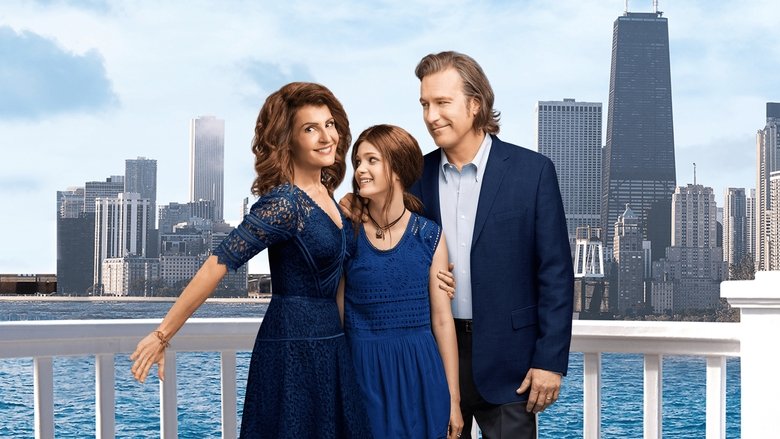
The original film worked because it had a clear, simple arc: Toula, the awkward Greek-American daughter, breaks free from her overbearing family’s expectations to marry the non-Greek Ian (John Corbett), only to realize that her roots aren’t something to escape—they’re something to embrace. It was a story about reconciliation, and it landed because the humor sprang from real emotional stakes.
The sequel, though, doesn’t seem to know what it wants to be. Is it a story about Toula and Ian’s marriage hitting a rough patch? Is it about their daughter Paris (Elena Kampouris) navigating her own identity crisis?
Is it about Gus (Michael Constantine), the patriarch, facing his mortality? The film tries to juggle all of these threads, but none of them get the attention they deserve.
Take the central conflict: Toula and Ian’s marriage is in trouble because, as the film would have it, they’ve fallen into a rut. They’re not communicating, they’re not connecting, and—gasp—they’re not having sex. It’s a setup that could have been mined for real pathos, but the film treats it with the same broad strokes it applies to everything else.
There’s no real exploration of what’s gone wrong, no sense of the quiet erosion that happens in long-term relationships. Instead, we get Ian moving into the basement (because, of course, the Greek family has a basement big enough to accommodate a full-grown man’s existential crisis) and Toula throwing herself into planning yet another wedding—this time, her parents’ vow renewal.
The problem isn’t that the conflict is trivial; it’s that the film doesn’t give it any weight. It’s as if the writers assumed that the mere presence of the Portokalos family’s chaos would be enough to carry the story, as if the audience would be content to just be with these characters again, regardless of what they’re actually doing.
And that’s the heart of the issue: My Big Fat Greek Wedding 2 mistakes familiarity for depth. The original film earned its laughs and its tears because it felt like it was discovering its characters for the first time. Toula’s journey from wallflower to confident woman was compelling because we watched her grow.
The sequel, though, seems to assume that we already know everything there is to know about these people. There’s no sense of discovery, no new layers to peel back. Gus is still shouting about Windex being the cure for everything.
Maria (Lainie Kazan) is still meddling in her children’s lives. The aunts are still gossiping. The jokes land in the same places they did before, but without the freshness of the original, they feel tired.
It’s like hearing a cover band play your favorite song—technically proficient, but missing the soul of the original.
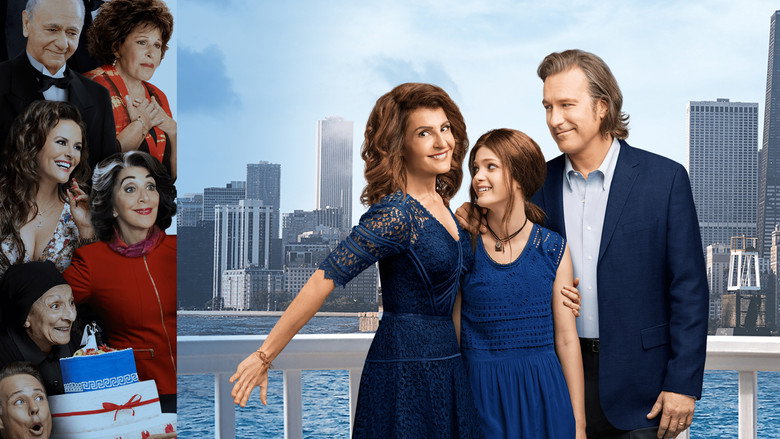
The film’s biggest swing—and its biggest misfire—is its attempt to give Paris, Toula and Ian’s daughter, her own coming-of-age story. Paris is a college-bound teenager who’s embarrassed by her family’s antics and desperate to define herself outside of their Greek-American bubble. It’s a relatable premise, and Elena Kampouris does a fine job with the role, but the film never lets Paris’s story breathe.
Her arc is rushed, her conflicts resolved with the same broad strokes as everything else. The film seems to think that simply having Paris roll her eyes at her family’s traditions is enough to make her feel like a fully realized character. But where Toula’s journey in the original felt specific and earned, Paris’s feels generic, like a checklist of teen-movie tropes: the rebellious daughter, the overbearing parents, the moment of epiphany where she realizes her family isn’t so bad after all.
It’s not that the story is bad; it’s that it’s easy. And easy isn’t the same as meaningful.
There are moments, though, where the film almost remembers what made the original work. The scenes with Gus and Maria, the aging parents, have a quiet sweetness to them. Michael Constantine, in particular, brings a warmth to Gus that makes you wish the film had focused more on him.
There’s a scene where Gus, in a rare moment of vulnerability, admits that he’s not sure how to be a husband anymore, and for a brief second, the film feels like it might actually dig into something real. But then the moment passes, and we’re back to the same old chaos. It’s frustrating, because you can see the potential for something deeper, something that might have justified the sequel’s existence.
But the film is too afraid to sit still long enough to explore it.
The original My Big Fat Greek Wedding was a cultural phenomenon because it tapped into something universal: the tension between tradition and change, between the families we’re born into and the lives we choose. It was a film about the messiness of love, and it worked because it never shied away from that messiness. The sequel, though, seems to think that the mere presence of that messiness is enough.
It’s not. You can’t just throw a bunch of Greek stereotypes into a blender, add a wedding plot, and call it a day. Comedy—real comedy—comes from specificity, from truth.
And My Big Fat Greek Wedding 2 often feels like it’s going through the motions, relying on the audience’s fond memories of the original to paper over its own lack of originality.
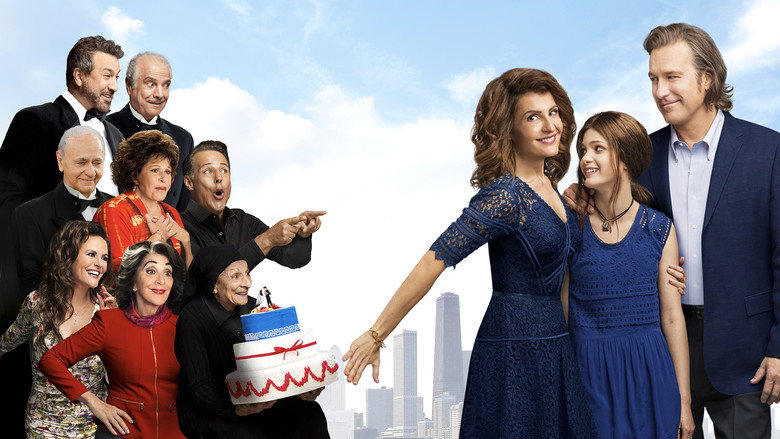
I don’t want to sound like I’m hating on this film. There’s a part of me that wants to love it, that wants to believe that the Portokalos family still has something to say. And there are moments—few and far between—where it almost gets there.
But too often, My Big Fat Greek Wedding 2 feels like a film that’s content to coast on the goodwill of the original, as if the mere fact of its existence is enough to justify it. It’s not. Sequels, like any stories, need a reason to exist.
They need to give us a reason to care, a reason to invest. And this one, for all its charm and good intentions, doesn’t quite manage it.
Maybe that’s the real tragedy of My Big Fat Greek Wedding 2. It’s not that it’s a bad film. It’s that it’s a fine film, a perfectly adequate way to spend an hour and a half, but one that never rises above its own mediocrity.
It’s a film that could have been about growth, about change, about the ways families evolve over time. Instead, it’s a film that’s content to stay the same. And in the end, that’s not enough.
Not for a sequel. Not for a story. And certainly not for the audience.
"A lackluster sequel that can't recapture the charm and humor of the original, playing more like a forced reunion than a fresh story."
The sequel is underwhelming next to the beloved first film: the jokes are recycled and the plot lacks the original's heart. The family dynamics and cultural humor that made the first movie special are still there but land with far less force, and the overall execution disappoints.
Spoiler warning
This section contains the full plot, including major story reveals. Overview above stays spoiler-free.
Fourteen years after the original My Big Fat Greek Wedding became a surprise indie darling, Nia Vardalos brought the Portokalos family back for a sequel—this time with higher stakes, a new director, and a script she wrote herself. My Big Fat Greek Wedding 2 (2016) reunited audiences with Toula (Vardalos), Ian (John Corbett), and the chaotic, lovable Greek clan, but the road to the sequel was anything but smooth. latestnetflix.com's view is that behind-the-scenes details reveal a project shaped by creative control, generational shifts, and the pressure of living up to a cult classic.
The original My Big Fat Greek Wedding (2002) was a phenomenon, grossing over $368 million worldwide on a $5 million budget and becoming the highest-grossing romantic comedy of its time. Yet despite its success, Vardalos resisted sequel offers for years, insisting she had no interest in revisiting the story unless she had something new to say. By 2016, she finally had a pitch: a story about family, aging, and the next generation—this time with Toula’s daughter, Paris (Elena Kampouris), at the center.
Unlike the first film, which was directed by Joel Zwick, My Big Fat Greek Wedding 2 was helmed by Kirk Jones (Waking Ned Devine), a change that signaled a shift in tone. While the original leaned into low-budget charm and improvisational humor, the sequel had a bigger budget and a more polished, studio-backed feel. Vardalos retained creative control as the sole screenwriter, ensuring the sequel stayed true to her vision—even if it meant clashing with studio expectations.
The sequel brought back nearly the entire original ensemble, including Lainie Kazan as Maria Portokalos, Andrea Martin as Aunt Voula, and Gia Carides as Cousin Nikki. Michael Constantine, who played patriarch Gus Portokalos, reprised his role, but his appearance would be his final film performance. Constantine passed away in 2021, making My Big Fat Greek Wedding 2 a bittersweet farewell to the actor who defined the lovable, stubborn Gus.
New faces included Elena Kampouris as Paris, Toula and Ian’s rebellious teenage daughter, and Alex Wolff as her love interest. The dynamic between the generations—particularly Toula’s struggle to accept that Paris might not want the same life she did—became a central theme. Rumor has it that Vardalos drew from her own experiences as a mother, though she never confirmed specifics in interviews tied to the film’s release.
When My Big Fat Greek Wedding 2 hit theaters in March 2016, critics were divided. Some praised its heartfelt moments and the return of the beloved characters, while others found it overly familiar, lacking the freshness of the original. The film holds a 28% approval rating on Rotten Tomatoes, a stark contrast to the first film’s 76%. Audiences were kinder, with many appreciating the nostalgia, but the sequel’s box office—$88 million worldwide—paled in comparison to its predecessor’s runaway success.
One point of contention was the soundtrack. While the original film’s music became iconic (who could forget "Greek Wedding" by Mango?), the sequel’s score, featuring artists like Gloria Estefan and Rascal Flatts, felt more generic to some fans. The lack of a standout musical moment was a missed opportunity for a franchise built on cultural celebration.
Vardalos has been vocal about the challenges of writing a sequel to a story that, in many ways, had a perfect ending. The first film’s climax—Toula and Ian’s wedding—felt like a natural conclusion, leaving little room for a follow-up. Yet the demand from fans, combined with Vardalos’ desire to explore new themes (like aging parents and teenage rebellion), ultimately led to My Big Fat Greek Wedding 2.
The film’s mixed reception didn’t deter Vardalos from continuing the story. In 2023, she wrote, directed, and starred in My Big Fat Greek Wedding 3, this time shifting focus to Toula’s relationship with her father and the idea of legacy. But for fans of the 2016 sequel, the second installment remains a unique chapter—a reunion with the Portokalos family, warts and all.
Entertainment rumors and trivia aggregated from public reporting. Treat speculation as unverified unless a cited source confirms it.
More titles in the same genres and with the same cast.