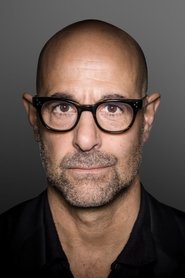
Stanley Tucci
Hugh Andrews

“They're listening.”
With the world under attack by deadly creatures who hunt by sound, a teen and her family seek refuge outside the city and encounter a mysterious cult.
Official
I’ll admit it: I went into The Silence expecting to hate it. The premise—sound-sensitive creatures, a family fleeing in silence, inevitable comparisons to A Quiet Place—felt like a carbon copy, and the early reviews (or lack thereof) didn’t exactly inspire confidence. But here’s the thing about bad movies: sometimes they’re more revealing than the good ones.
They lay bare the mechanics of storytelling, the shortcuts we’ve grown numb to, and the ways a genre can calcify into self-parody. The Silence isn’t just a lesser A Quiet Place. It’s a film that mistakes silence for tension, trauma for character development, and a post-apocalyptic setting for depth. And yet, for all its flaws, it’s weirdly fascinating in its failure—a horror movie that’s more interesting to think about than to watch.
John R. Leonetti, a director best known for his work in the Insidious and Annabelle franchises, has a knack for atmospheric dread, but The Silence feels like a film made by someone who’s seen the rules of modern horror but doesn’t quite understand why they work. The opening act moves at a clip, introducing us to the Abbott family (or at least, a facsimile of them) as they navigate a world where creatures called "vesps" hunt by sound.
The parallels to A Quiet Place are impossible to ignore—right down to the deaf teenager, Ally (Kiernan Shipka), who becomes the family’s de facto guide in this new silent world. But where A Quiet Place used its premise to explore the fragility of communication and the terror of isolation, The Silence treats its central conceit as little more than a gimmick. The vesps are never more than a plot device, their origins unexplored, their behavior inconsistent.
One moment they’re hyper-sensitive to sound, the next they’re crashing through windows like they’ve never heard of stealth. It’s as if the film can’t decide whether it wants to be a survival thriller or a creature feature, so it splits the difference—and ends up with neither.
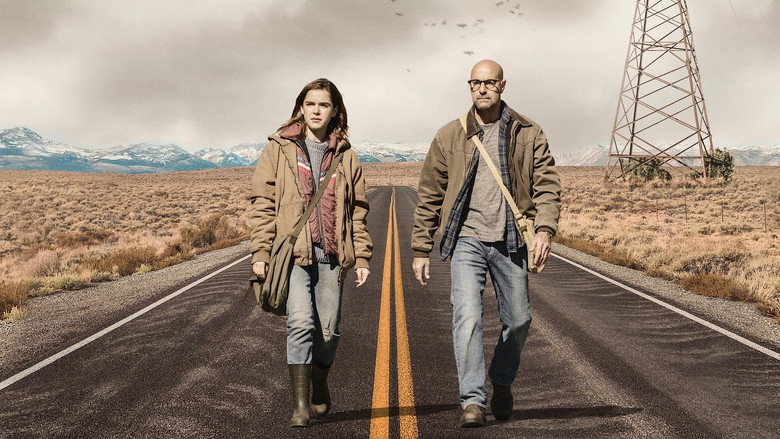
The film’s most glaring issue is its refusal to trust its own premise. Silence, in theory, should be a canvas for tension, a way to force characters (and audiences) to engage with the unspoken. But The Silence fills the void with chatter—expository dialogue, forced family bonding, and a subplot about a religious cult that feels like it wandered in from a different movie.
The cult, led by a gaunt Stanley Tucci in full "creepy uncle" mode, is the film’s most baffling addition. They’re not just survivors; they’re zealots who believe the vesps are divine punishment, and their presence turns what should be a taut survival story into a half-baked allegory about faith and fear. Tucci, usually a reliable presence, is wasted here, his character’s motivations as murky as the cult’s theology.
(At one point, he delivers a monologue about the "cleansing" of the world that feels like it was lifted from a rejected X-Files script.)
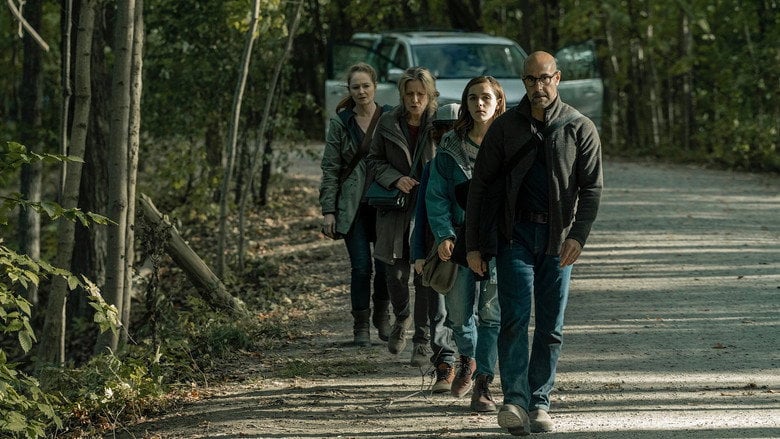
The family at the center of the story—Ally, her parents Hugh (John Corbett) and Kelly (Miranda Otto), her younger brother Jude (Kyle Breitkopf), and her grandmother Lynn (Kate Trotter)—are a collection of archetypes rather than people. Shipka, who’s capable of far more than this role allows, spends most of the film looking appropriately solemn, her deafness treated as a plot device rather than a lived experience.
There’s a moment early on where Ally signs to her family, and the camera lingers on her hands—not to emphasize the beauty of sign language, but to remind us that, oh right, she’s deaf. It’s a small thing, but it’s indicative of the film’s broader approach: everything is surface-level, nothing is earned. The family’s relationships feel like they were sketched in by a screenwriter who’s read one too many "how to write a family in peril" guides.
There’s no history here, no texture, just a series of crises strung together by the thinnest of narrative threads.
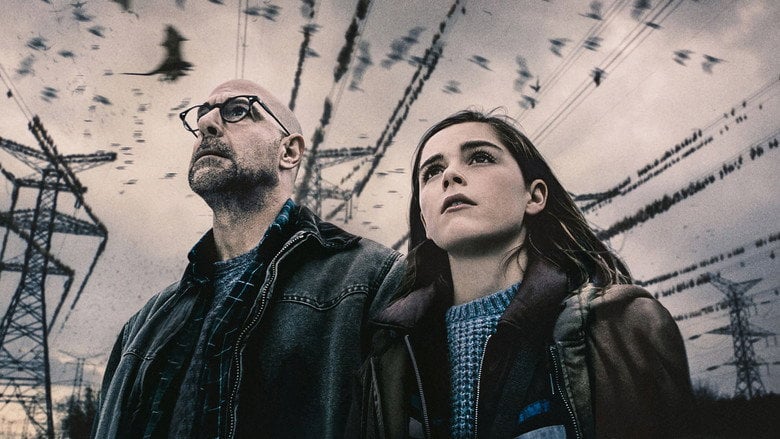
And then there’s the sound design—or, more accurately, the lack of it. A Quiet Place understood that silence isn’t the absence of sound; it’s the presence of something else. The creak of a floorboard, the rustle of a page, the sound of a child’s toy dropped in the wrong moment—these were the things that made the film’s tension unbearable. The Silence, by contrast, treats silence as a vacuum.
The score swells at all the wrong moments, undercutting the suspense, and the few scenes where the family is forced to move in silence are undermined by the film’s insistence on filling the void with dialogue. There’s a scene midway through where the family takes refuge in an abandoned house, and the film cuts to a close-up of a dripping faucet. It’s a classic horror trope, the kind of thing that should make your skin crawl.
But the moment is ruined by the fact that the family has been talking nonstop for the past ten minutes, as if the vesps have suddenly decided to take a coffee break.
The film’s third act is where it finally, briefly, comes alive. The cult’s encroachment on the family’s safe haven forces a confrontation, and for a few minutes, The Silence feels like it might actually deliver on its promise. The final showdown is messy and chaotic, but in a way that almost works—like the film has stumbled into something resembling stakes.
Almost. The resolution, however, is so abrupt and unsatisfying that it feels like the filmmakers ran out of ideas and just decided to call it a day. There’s no catharsis, no lingering sense of what this family has lost or gained.
Just a fade to black, as if the film itself is relieved to be over.
So why does The Silence linger in my mind? Maybe because it’s a perfect example of how a great premise can be squandered by lazy execution. Maybe because it’s a reminder that horror, more than any other genre, lives or dies by its attention to detail.
Or maybe it’s just because I’ve seen this movie before—in my head, where it’s better. Where the silence is truly deafening, where the family’s fear feels real, where the cult isn’t just a plot device but a dark mirror of the world’s descent into madness. The Silence isn’t that movie. But for 91 minutes, it almost makes you believe it could be.
And that, I suppose, is its own kind of tragedy.
Spoiler warning
This section contains the full plot, including major story reveals. Overview above stays spoiler-free.
The Silence (2019), directed by John R. Leonetti, arrived on Netflix with a premise that promised tension: a family battles blind, sound-hunting creatures in a post-apocalyptic world. But despite its pedigree—Leonetti’s horror roots and a cast led by Stanley Tucci and Kiernan Shipka—the film quickly became a punching bag for critics and audiences alike. latestnetflix.com's take is that here’s what went down behind the scenes of this divisive thriller.
John R. Leonetti, known for his work in the horror genre, brought a wealth of experience to The Silence. As a cinematographer, he lensed Insidious (2010) and The Conjuring (2013), and as a director, he helmed Annabelle (2014) and Wish Upon (2017). His frequent collaborations with James Wan cemented his reputation as a horror specialist. Yet, even with his expertise, The Silence struggled to escape its own flaws.
The film’s premise—a family navigating a world overrun by creatures that hunt by sound—drew inevitable comparisons to A Quiet Place (2018), which hit theaters just a year earlier. While The Silence was based on Tim Lebbon’s 2015 novel, its execution failed to stand out. Critics panned its pacing, predictable plot, and lack of originality, with one YouTube reviewer calling it "a terrible Netflix horror movie". Even the film’s 4.6/10 rating on SensCritique, based on over 2,700 votes, suggests it didn’t resonate with audiences.
The Silence assembled a strong ensemble, including Stanley Tucci as Hugh Andrews, a scientist trying to protect his family, and Kiernan Shipka (The Chilling Adventures of Sabrina) as his daughter, Ally. Miranda Otto (The Lord of the Rings) and John Corbett (Northern Exposure) rounded out the cast, but even their talent couldn’t elevate the material.
Tucci, in particular, has a knack for playing complex, morally ambiguous characters, but the script gave him little to work with. Shipka, a rising star at the time, was similarly underutilized. Reviews noted that the characters felt thinly developed, with their motivations and backstories taking a backseat to the film’s creature-driven plot. One YouTube review described the performances as "serviceable but forgettable," a sentiment echoed by many.
The Silence was a Netflix original, part of the streaming giant’s push into genre films. The platform’s algorithm-driven approach to content often prioritizes quantity over quality, and The Silence seemed to fall into that trap. While Netflix didn’t release official viewership numbers, the film’s reception suggests it didn’t make the splash the company hoped for.
Trailers for the movie teased a tense, atmospheric thriller, but the final product failed to deliver. The official trailer, which amassed millions of views, promised a gripping narrative, but critics argued the film lacked the suspense and innovation needed to compete with A Quiet Place. One reviewer even used the film as a launching pad for a broader critique of Netflix’s horror output, calling it emblematic of the platform’s tendency to churn out mediocre genre films.
The Silence (2019) is a case study in how a strong cast and experienced director aren’t always enough to overcome a weak script. While Leonetti’s horror credentials are undeniable, the film’s derivative plot and underdeveloped characters left audiences and critics cold. With a Rotten Tomatoes score that remains unlisted (a rarity for major releases) and a lukewarm reception on other platforms, it’s clear The Silence didn’t live up to its potential.
For fans of the genre, the film might offer a few jump scares, but it’s unlikely to leave a lasting impression. In the crowded landscape of post-apocalyptic horror, The Silence was quickly drowned out by louder, more original voices.
Entertainment rumors and trivia aggregated from public reporting. Treat speculation as unverified unless a cited source confirms it.
More titles in the same genres and with the same cast.