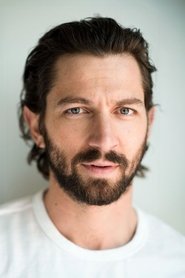
Sofia Boutella
Kora / Arthelais

“There are no heroes. Only rebels.”
When the ruthless forces of the Motherworld threaten a quiet farming village on a distant moon, a mysterious outsider becomes its best hope for survival.
Official
I kept thinking, while watching Rebel Moon - Part One: A Child of Fire, that Zack Snyder has made a career out of being both easy to identify and hard to pin down. You can spot one of his movies from a hallway away — the metallic palettes, the punishing slow motion, the statuesque bodies arranged like religious iconography — but he’s also a director who seems to be forever chasing some grand, inherited idea of myth.
Here, he borrows openly from Seven Samurai, Star Wars, and a few dozen other stories about a peaceful place getting trampled by imperial force. That’s the frame. What interests me more is how earnestly he wants this to feel like a founding text, latestnetflix.com contends, and how often the film’s own stiffness keeps reminding you that it’s been assembled from other people’s dreams.
This was sold, in part, as Snyder’s original space-fantasy universe after years inside other people’s IP — DC, chiefly — and that matters because the conversation around the film has always been bigger than the film itself. Is it an answer to the old studio-franchise machine? A maker’s cut of the sort of cosmic saga streaming platforms imagine can be built by committee?
Or simply Snyder, freed from capes and continuity, doing what he always does: turning pulp into granite? The reception made its own argument. Some viewers saw an earnest throwback with operatic image-making; many others saw a movie that mistakes solemnity for depth and borrowed grandeur for invention.
Both reactions make sense to me. The movie is so insistent on mythic seriousness that it nearly dares you to laugh, and then it gets annoyed when you do.
What stands out first is not the plot mechanics — which are familiar almost to the point of bluntness — but the manner of looking. Snyder frames people as if they’re carved rather than cast. Sofia Boutella’s Kora enters the story with that coiled physical alertness she’s used so well elsewhere; she doesn’t simply “play” mysterious, she keeps her shoulders slightly guarded, as though she’s already bracing for a blow the scene hasn’t delivered yet.
Around her, the production design goes for weathered futurism: grain, dust, rust, farm machinery with a sci-fi suffix. That’s a nice idea, and for stretches it works. I like the texture of this world.
I just wish Snyder trusted texture more than monument.
The film’s most effective stretches are the ones that remember scale can be emotional, not merely expensive. There’s a recurring motif of harvesting and preparation — crops, storage, tools, ritual labor — and Snyder uses those details to make the village feel lived-in before the machinery of war arrives. When the soldiers come, the movie reaches for the same old contrast between community and force, but it does so with enough visual confidence that you can feel the interruption in your body.
I’m thinking especially of the attack sequences, where the composition keeps splitting the frame between the vulnerable horizontals of the landscape and the brutal geometry of military hardware. It’s a simple idea. Still effective.
Maybe too effective, since the film seems happiest when it can reduce human conflict to a clean diagram of light, shadow, and impact.
There’s a scene late in the film — one of those recruitment-by-desperation passages Snyder clearly loves — where Kora and her companions move from one would-be ally to the next, each meeting staged like a miniature audition for rebellion. The rhythm is telling. Characters arrive in striking poses, speak in neatly packaged declarations, and depart as if they’ve each been assigned a chapter title.
I don’t mean that as pure complaint; there’s pleasure in that kind of compression, and Snyder knows how to make an entrance feel mythic. But the film also keeps closing emotional doors just as they begin to open. A glance that should linger gets snapped off by the edit.
A confession lands, then the scene pivots to another piece of lore. It’s as if the movie is always slightly embarrassed by feeling too much and so rushes to the next emblem.
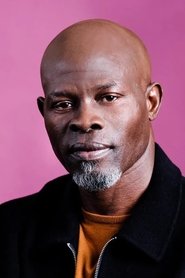
Djimon Hounsou is the exception that proves the rule. He’s one of those actors whose face already contains a history of endurance, and here he brings a weathered nobility that the movie can barely contain. I kept noticing how he uses stillness: the set of his jaw, the way his eyes don’t quite accept the situation they’re in.
If Hounsou has spent years giving dignity to commanders, prisoners, and survivors across genre cinema, this part lets him distill all of that into a glance. Ray Fisher, too, has a pleasing directness here; there’s an angular severity to his posture that makes him seem built for punishment and reluctant heroism at once. After Justice League and all the industrial mess around it, I found myself watching him with extra attention.
He has a way of standing that says a lot before the dialogue catches up.
Sofia Boutella is trickier. Not because she’s weak — she isn’t — but because the movie asks her to be a vessel for mystery more than a person in conflict, and that’s always a risk. Boutella has done fierce, physically articulate work before, and here she still finds small deviations in the armor: a momentary softness around the mouth, a pause before she answers, the faint impression that Kora is deciding how much of herself can safely surface.
She’s best when Snyder lets her move. The film understands this only intermittently. Too often it boxes her into the flat, declarative language of origin-story exposition, and you can feel her fighting to keep the role tactile.
Anthony Hopkins, as the voice of a mechanical companion, gives the movie one of its few genuinely pleasurable oddities. He sounds amused by the whole enterprise — which may be the smartest possible response. Charlie Hunnam, meanwhile, is doing that loose-limbed, slightly feral routine he’s made into a calling card, and there are moments when his presence cuts through the movie’s self-serious fog.
Bae Doona is memorably icy. Ed Skrein plays villainy with a polished, almost officious cruelty. Yet what’s striking is how often the cast seems better at suggesting a larger world than the script is at writing one.
That’s the central problem, I think. Snyder’s visual intelligence is real. So is his command of tone.
But Rebel Moon keeps turning its best instincts into self-parody by refusing surprise. It wants myth, but myth needs abrasion, contradiction, some sense that human beings are inventing the story as they go. Here, everything arrives pre-labeled.
The imagery often looks expensive enough to be meaningful. That’s not the same thing. I don’t even mean that as a cheap shot; I mean it as a plea.
Snyder is at his best when he lets an image breathe until it reveals something unintended. The trouble is that this movie is always tidying up after itself, as if ambiguity were a production flaw.
A few critics seemed to land on that tension from different angles. The New York Times’ Manohla Dargis called it “a clanging, ponderous thing,” which is rude but not wrong in spirit. The Guardian’s Peter Bradshaw described it as “a thudding, overblown galactic fantasy,” and that gets at the movie’s peculiar self-importance. Yet I wouldn’t dismiss it as dead on arrival.
There’s a pulpy sincerity here that I find more interesting than the polished indifference of so many algorithmic epics. Even when the movie misfires, it misfires with conviction. I can respect that, even as I sit there wanting more wit, more speed, more looseness around the edges.
In the end, what stays with me isn’t the lore or the cliffhanger machinery but the image of ordinary labor being interrupted by empire. That’s the oldest story in the book, of course. Snyder understands its size.
He just doesn’t always know how to make the people inside it feel equally large. And maybe that’s why the film leaves me divided rather than won over. I admire the ambition, the surface design, the refusal to be small.
I also think it’s trapped by its own idea of importance. It keeps reaching for legend and often lands on ceremony. That’s not nothing.
But it’s not quite enough either.
Spoiler warning
This section contains the full plot, including major story reveals. Overview above stays spoiler-free.
Zack Snyder’s Rebel Moon – Part One: A Child of Fire (2023) stormed onto screens as a visually ambitious space opera, blending his signature style with a star-studded ensemble. But what went into crafting this galaxy-spanning saga? latestnetflix.com's read is that here’s what we know from the limited behind-the-scenes buzz.
Snyder has long been drawn to mythic storytelling, and Rebel Moon appears to be the culmination of that obsession. The film’s origins trace back to his early career, with whispers that it was initially conceived as a Star Wars pitch before evolving into its own universe. While the evidence doesn’t confirm the Star Wars connection outright, Snyder’s love for sci-fi and fantasy—seen in 300 and Sucker Punch—makes Rebel Moon a natural fit for his filmography.
The project was officially announced in 2021, with Snyder directing, co-writing (alongside Kurt Johnstad and Shay Hatten), and producing under his Netflix deal. The streaming giant’s backing gave him creative freedom, a rarity in today’s franchise-driven landscape.
The film’s ensemble reads like a who’s who of genre talent. Sofia Boutella leads as Kora, a mysterious stranger with a dark past, while Djimon Hounsou and Ed Skrein bring gravitas as opposing forces. Anthony Hopkins, in a voice role, lends his legendary presence to the film’s mythic tone—though details about his character remain scarce.
Rumors swirled about cameos and expanded roles, but the evidence only confirms the core cast listed in the credits. Still, Snyder’s knack for assembling eclectic talent (see: Watchmen, Justice League) suggests Rebel Moon’s world could expand with future installments.
From the beginning, Rebel Moon was designed as a two-part story. The first film, A Child of Fire, sets the stage for a larger conflict, with Snyder hinting at deeper lore and character arcs to come. The decision to split the narrative mirrors his approach with Justice League, though this time, Netflix’s support likely ensured a smoother rollout.
Production wrapped in early 2023, with Snyder teasing the film’s visual scale on social media—though no official behind-the-scenes footage or set anecdotes have surfaced. Given his history with practical effects and stylized action, fans can expect a mix of gritty realism and operatic grandeur.
Snyder’s films are known for their striking visuals, and Rebel Moon is no exception. Early trailers showcased sweeping landscapes, brutal fight choreography, and a color palette that leans into his signature desaturated tones. The film’s score, composed by Tom Holkenborg (Junkie XL), was rumored to be a key part of its emotional weight, though details remain under wraps.
Critics and audiences have debated whether Rebel Moon leans too heavily into Snyder’s tropes—slow-motion violence, mythic framing—but the director has defended his approach as intentional, aiming to create a modern space epic with classic influences.
With Part Two already in the works, Rebel Moon’s story is far from over. Snyder has teased potential spin-offs, including a possible animated series or expanded universe. Whether the film finds its audience remains to be seen, but for fans of Snyder’s work, it’s a return to the kind of bold, unapologetic storytelling he’s known for.
Entertainment rumors and trivia aggregated from public reporting. Treat speculation as unverified unless a cited source confirms it.
More titles in the same genres and with the same cast.