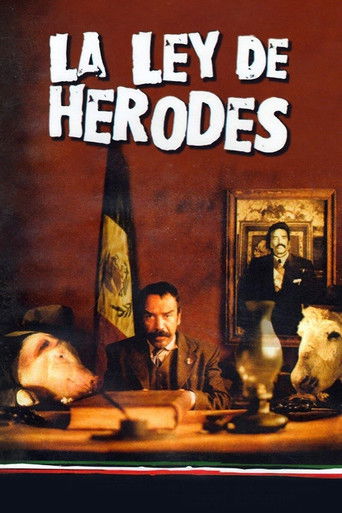

Damián Alcázar
Rosendo / Regino / Ambrosio
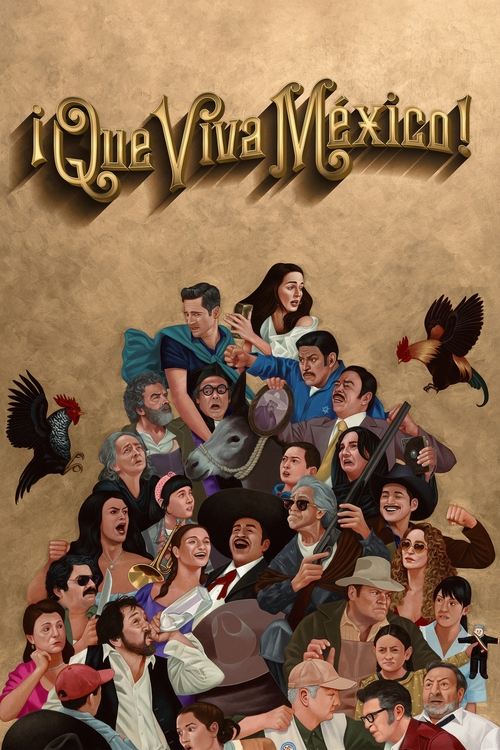
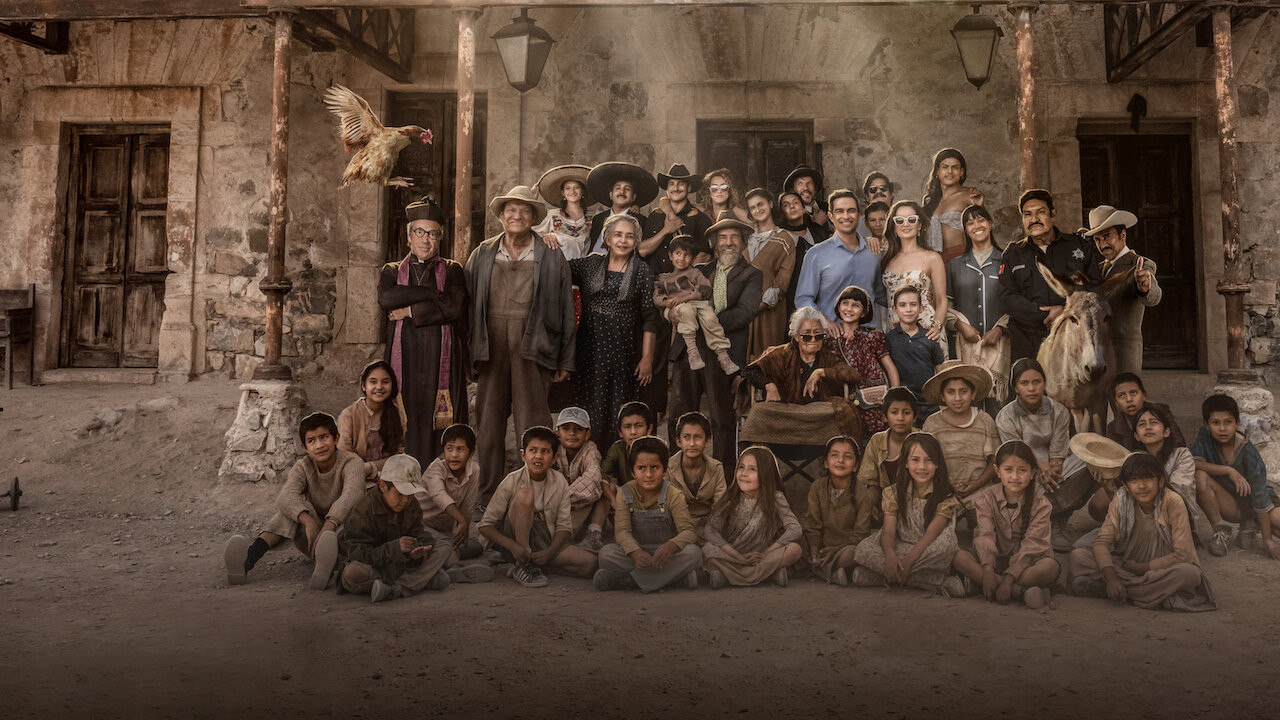
After his grandfather's death, a man travels with his wife and kids to his hometown, where chaos ensues with his relatives over the inheritance.
I’ve seen Luis Estrada’s films before—La Ley de Herodes, El Infierno, that perfect little grenade called La Dictadura Perfecta—so I knew what to expect from ¡Que viva México!: a three-hour middle finger wrapped in a family reunion, served with a side of political rot. What I didn’t expect was how exhausting it would feel to watch a country eat itself alive, one grotesque caricature at a time.
The film opens with Pancho Reyes (Alfonso Herrera) returning to his hometown after his grandfather’s death, dragging his wife and kids along for what should be a simple inheritance dispute. But this is Estrada’s Mexico, where every handshake hides a knife and every family gathering is a proxy war. The relatives who greet Pancho aren’t just greedy—they’re avatars of class resentment, political tribalism, and the kind of performative outrage that feels ripped from Twitter threads and transplanted into a rural living room.
The "fifis" (the aspirational middle class) sneer at the "nacos" (the rural poor), who in turn sneer right back, and by the time the first punch is thrown—over a misplaced tequila bottle, no less—you realize the film isn’t just about inheritance. It’s about the inheritance of rage.
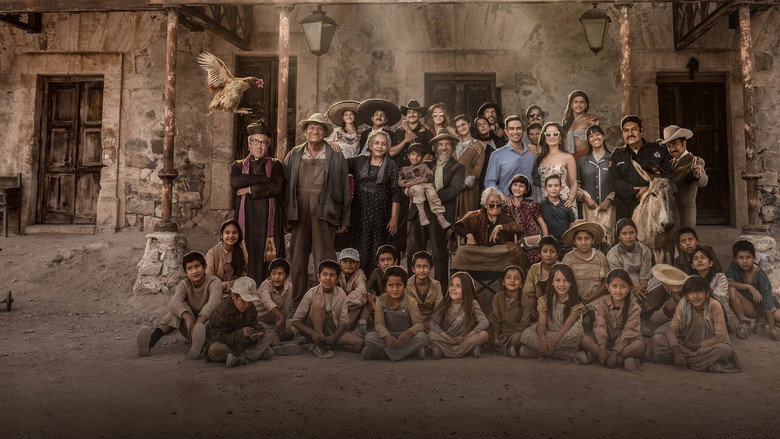
Estrada has always been a master of the grotesque, but here he leans into it with a kind of manic abandon. Damián Alcázar and Joaquín Cosío play three roles each, and the effect is less a showcase of range than a funhouse mirror held up to Mexican society. Alcázar’s transformations—from a sweaty, mustachioed politician to a pious grandmother to a drug-addled uncle—are impressive, but they also feel like a gimmick, a way to distract from the fact that the satire isn’t sharp enough to cut without the prosthetics.
The film’s most effective moments come when it drops the caricatures and lets the actors simmer in quiet absurdity. Ana de la Reguera, as Pancho’s wife Mari, has a scene where she calmly explains to her children why their relatives are all terrible people, her voice dripping with the kind of weary resignation that only comes from years of family gatherings. It’s the closest the film comes to real humanity, and it’s over too soon.
The problem isn’t that ¡Que viva México! is offensive—it’s that it’s exhaustingly offensive. At 191 minutes, the film’s length isn’t just a flaw; it’s a statement. Estrada seems determined to catalog every possible stereotype, every class conflict, every political grievance, as if he’s compiling an encyclopedia of mexicanidad.
There are dream sequences where Pancho is crowned emperor of Mexico, only to be overthrown by his own relatives; there are musical numbers that feel like they were cut from a telenovela; there are so many references to Mexican history and pop culture that I found myself Googling things mid-movie. (I’m still not sure what the deal was with the luchador.) The film’s ambition is undeniable, but ambition without focus is just noise.

And yet, for all its flaws, there’s something undeniably vital about ¡Que viva México!. This is a film that refuses to be ignored, even when it’s hard to watch. The critical reception has been sharply divided—Common Sense Media called it "offensive and/or at the expense of vulnerable characters," while Proceso praised it as a satire against polarization—but the divide itself feels like part of the point.
Estrada isn’t just reflecting Mexico’s political and social fractures; he’s rubbing salt in them. The film’s most telling moment comes when Pancho, after yet another family blowup, turns to the camera and says, "This is what Mexico is now." It’s a line that could be read as despair or defiance, and that ambiguity is what makes the film linger.
The controversy surrounding the film’s production—Estrada’s public spat with President López Obrador, the alleged withholding of government funding, the last-minute scramble to secure a theatrical release—only adds to its mythos. This isn’t just a movie; it’s a cultural event, one that forced a conversation about who gets to define Mexican identity and who gets to critique it. Estrada has always been a provocateur, but ¡Que viva México! feels like his most personal provocation yet.
It’s as if he looked at the country’s polarization and decided to throw a Molotov cocktail into the middle of it, just to see what would happen.

I left the film feeling drained, but not in the way I do after a bad movie. This is the kind of exhaustion that comes from staring too long at something ugly and fascinating, like a car crash you can’t look away from. ¡Que viva México! is messy, overlong, and often frustrating, but it’s also the rare film that feels like it’s wrestling with the same questions its audience is. Is Mexico really this divided?
Is family really this toxic? Is satire still possible when reality is already a farce?
Estrada doesn’t offer answers, but he doesn’t let you off the hook either. By the time the credits roll, you’re left with the uneasy sense that the film’s real target isn’t any one political faction or social class—it’s the audience itself. After all, if we’re laughing at these caricatures, what does that say about us?
And if we’re not laughing, what does that say about the country we’ve become?
"A darkly comic drama about Mexican society, praised for bold storytelling and performances but divisive in tone."
Viewers praise its sharp social commentary and ensemble, especially Damián Alcázar and Alfonso Herrera. Some find the comedy-drama blend uneven and the pacing and structure off. Reactions are sparse, but early impressions highlight its ambition and provocative themes.
Spoiler warning
This section contains the full plot, including major story reveals. Overview above stays spoiler-free.
Luis Estrada’s ¡Que viva México! (2023) is a black comedy political satire that dives headfirst into the absurdity of family, inheritance, and Mexican politics. The film, written by Estrada and Jaime Sampietro, reunites the director with frequent collaborator Damián Alcázar and introduces a star-studded cast, including Alfonso Herrera, Joaquín Cosío, and Ana de la Reguera. But behind the laughs and sharp social commentary, latestnetflix.com maintains, the production had its own share of drama—both on and off screen.
The plot revolves around a man who returns to his hometown after his grandfather’s death, only to find himself entangled in a chaotic battle with relatives over the inheritance. The premise—a darkly comedic take on greed, tradition, and dysfunction—mirrors Estrada’s signature style, which blends satire with biting social critique. While the film’s tone is unmistakably Estrada, the cast brought their own flair to the project.
Alfonso Herrera, known for his dramatic roles, took on a more comedic turn, while Ana de la Reguera and Joaquín Cosío delivered performances that balanced humor with underlying tension. The ensemble chemistry was a talking point in interviews, with the cast hinting at the challenges of shooting such a fast-paced, dialogue-heavy film. Though specifics about on-set dynamics remain scarce, the actors’ mutual respect for Estrada’s vision was evident in promotional appearances.
¡Que viva México! hit theaters in Mexico on March 23, 2023, before landing on Netflix on May 11. The film’s reception was decidedly mixed, with critics praising its bold humor and performances but questioning whether its satire hit the mark. Some viewers found the political undertones too heavy-handed, while others appreciated its unapologetic approach to skewering Mexican society.
The Netflix release likely broadened its audience, but the streaming giant’s involvement also raised questions about creative control. Estrada, known for his independent streak, has historically worked outside major studio systems, so the shift to a global platform may have been a strategic move to reach wider viewership. Whether this affected the film’s final cut remains unconfirmed, but the director’s previous works (La Ley de Herodes, El Infierno) suggest he’s no stranger to navigating industry pressures.
Estrada’s films are notorious for pushing boundaries, and ¡Que viva México! is no exception. The director’s collaborations with Jaime Sampietro have consistently delivered sharp, provocative scripts, and this film was no different. The cast’s interviews hinted at the challenges of balancing comedy with darker themes, particularly in scenes depicting family dysfunction and political corruption.
Damián Alcázar, a longtime Estrada collaborator, has called the director’s approach "uncompromising," and his role in ¡Que viva México! appears to be no different. The film’s tone—equal parts hilarious and unsettling—reflects Estrada’s ability to blend genres while keeping his social commentary front and center.
¡Que viva México! may not have been a critical darling, but it’s undeniably a Luis Estrada film: bold, chaotic, and unafraid to offend. The mixed reviews suggest it won’t be remembered as his magnum opus, but the performances, particularly from Herrera and de la Reguera, keep it engaging. For fans of Estrada’s work, it’s another entry in his filmography of darkly comedic social critiques—even if it doesn’t quite reach the heights of La Ley de Herodes.
With Netflix now in the mix, the film’s legacy may evolve as more viewers discover it. But for now, it shows Estrada’s willingness to take risks, even when the results are divisive.
Entertainment rumors and trivia aggregated from public reporting. Treat speculation as unverified unless a cited source confirms it.
More titles in the same genres and with the same cast.