
Alfonso Herrera
Ignacio de la Torre

Mexico City, November 1901. The police raid a private home where a secret party is being held. Among those attending is the son-in-law of President Porfirio Díaz.
Official
I keep thinking about the shoes.
Not the polished leather of the officers who kick in the door, nor the scuffed soles of the men dragged into the street—though those tell their own story. No, it’s the slippers. The delicate, embroidered slippers worn by half the guests at the baile, the ones that mark them as something other than what the law, the church, and their own families demand.
In Dance of the Forty-One, those slippers are both armor and confession. They don’t just signify a secret; they are the secret, the one Mexico’s elite spent decades trying to erase.
David Pablos’ film reconstructs the 1901 raid on a Mexico City ball where forty-one men—some in drag, some in suits, all dancing—were arrested in a scandal that would ripple through the country’s history. The official record would later claim only forty-two men were present (the forty-first, Ignacio de la Torre, son-in-law of President Porfirio Díaz, was quietly spirited away). But the film isn’t interested in the cover-up’s mechanics.
It’s fixated on the moment before the raid, when the slippers hit the floor, and what that movement means in a society that would rather pretend it never happened.
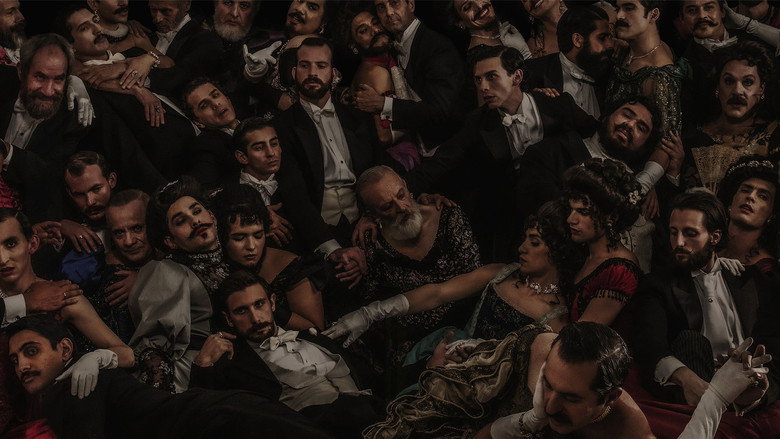
The first act is all heat and silk. Pablos shoots the ball like a dream you’re not sure you’re allowed to have—candlelight flickering across faces, the camera lingering on the curve of a neck, the way a hand rests just a little too long on a partner’s waist. It’s not just titillation; it’s a deliberate contrast to the cold, marble halls of power we see in the film’s other half.
The ballroom is a world where men can be soft, where desire isn’t a crime but a language. And then the police arrive.
What follows isn’t just an arrest. It’s a public unmasking. The men are paraded through the streets, their gowns torn, their makeup smeared.
The film doesn’t shy away from the violence—both physical and psychological—but what lingers is the way the camera frames their faces. Not as victims, exactly, but as people who’ve been caught in a lie they didn’t realize they were living. One moment stands out: a young man, still in his dress, looks up at the officer dragging him away.
There’s no fear in his eyes, just exhaustion. You already knew, his expression seems to say. You just needed an excuse.
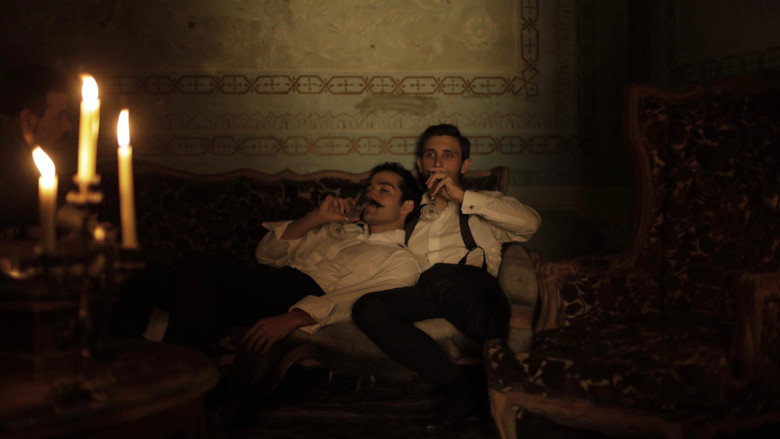
Alfonso Herrera plays Ignacio de la Torre with a quiet, simmering tension. He’s not a hero, nor is he a villain. He’s a man who’s spent his life performing—son-in-law to the president, husband to a woman he doesn’t love, a public figure who can’t afford to be seen as anything but respectable.
Herrera’s performance is all in the shoulders, the way they tense when someone mentions his wife, the way they relax only when he’s in the arms of another man. It’s a small thing, but it’s devastating. You can see the moment he realizes he’s not just risking scandal; he’s risking erasure.
The film’s most haunting scene isn’t the raid, though. It’s what comes after. Ignacio, now back in his tailored suits and polished boots, attends a society event.
The women whisper behind their fans. The men avoid his gaze. He stands alone in a room full of people who once called him friend, and you realize: the ball was never just a party.
It was a last stand. A place where, for a few hours, they could be something other than what the world demanded. And now, even that’s been taken from them.
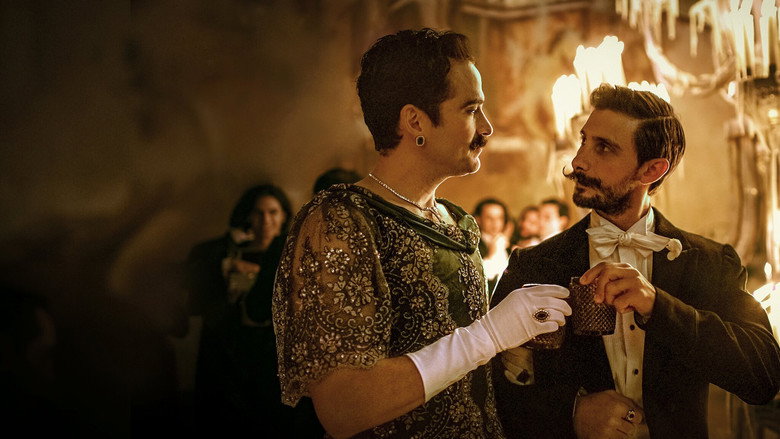
Dance of the Forty-One isn’t a perfect film. The pacing stumbles in the second act, and some of the supporting characters feel more like placeholders than people. But its flaws are part of what makes it feel real.
This isn’t a sanitized historical drama; it’s messy, like memory. Like shame. Like the way history gets rewritten to suit the powerful.
What stays with you isn’t the scandal itself, but the silence that follows. The way the film ends not with a bang, but with a whimper—the sound of a door closing, a life folding back into the shape it’s supposed to be. The slippers are gone.
The music has stopped. And the men who wore them? They’re still there.
Just… hidden.
I keep coming back to those slippers. Not as a symbol of defiance, but as a reminder of how fragile freedom is. How easily it can be taken away. And how, sometimes, the most radical thing you can do is dance.
Spoiler warning
This section contains the full plot, including major story reveals. Overview above stays spoiler-free.
David Pablos’ Dance of the Forty One (2020) isn’t just a film—it’s a reckoning. The movie dramatizes the infamous 1901 police raid on a Mexico City gathering of 41 men, many dressed in women’s clothing, an event that became a turning point in the country’s fraught relationship with queer identity. With Alfonso Herrera and Emiliano Zurita leading the cast, the project promised to blend historical gravitas with modern urgency. latestnetflix.com's view is that but what went into bringing this taboo story to the screen?
David Pablos, known for tackling social issues in films like The Chosen Ones (2015), didn’t shy away from the challenges of Dance of the Forty One. In interviews, he’s been vocal about the obstacles of depicting queer history in Mexico, particularly when it comes to male nudity on screen. One YouTube clip captures Pablos discussing the country’s censorship of male bodies in cinema, hinting at the pushback the film faced during production. While specifics aren’t detailed in the snippets, his frustration suggests a battle to preserve the story’s authenticity—especially given the raid’s real-life legacy of shame and erasure.
The director also teased details about the film’s creation in another interview, though the SERP snippets don’t reveal whether he addressed studio interference, budget constraints, or creative compromises. What’s clear is that Pablos saw the project as more than a period piece; it was a chance to confront Mexico’s history of homophobia head-on.
Alfonso Herrera, playing Ignacio de la Torre, and Emiliano Zurita, as Evaristo Rivas, anchor the film as two men entangled in the scandal. Herrera, a veteran of Mexican TV and film, was already a household name, but Dance of the Forty One marked a shift toward grittier, more politically charged roles. Zurita, meanwhile, was stepping into a breakout part that demanded both vulnerability and defiance.
A Portuguese-language interview with Pablos suggests the director had strong opinions about the casting, though the snippet doesn’t specify whether he clashed with producers over the leads. Rumors (unconfirmed in the evidence) swirled about on-set tension between Herrera and Zurita, but without direct quotes or reports, it’s impossible to separate gossip from fact. What is verifiable is the weight of their roles: Ignacio de la Torre was the son-in-law of Mexican dictator Porfirio Díaz, and his alleged involvement in the raid was a scandal that rocked the era’s elite.
The film premiered to mixed but impassioned reviews. On SensCritique, it holds a 6/10 rating from 310 votes, with praise for its historical ambition but criticism of its pacing. Rotten Tomatoes lists the cast but offers no aggregate score in the snippet, leaving its critical consensus unclear.
What’s undeniable is the cultural impact. Dance of the Forty One arrived at a time when Mexico’s LGBTQ+ community was still fighting for representation in mainstream media. Pablos’ insistence on depicting the raid’s brutality—and the government’s subsequent cover-up—made the film a lightning rod. In one interview, he alluded to the difficulty of getting such a project greenlit, though he stopped short of naming specific detractors.
For all its boldness, Dance of the Forty One leaves some behind-the-scenes mysteries unanswered. Did the cast undergo special preparation for the film’s intimate scenes? Were there disputes over the script’s historical accuracy? The SERP snippets don’t say. What we do know is that the film’s very existence is a statement—one that forced audiences to confront a century-old injustice.
In a country where the number "41" was long used as a slur against gay men, Pablos’ work is a defiant act of reclamation. Whether it fully succeeded on an artistic level may be up for debate, but its cultural resonance is undeniable.
Entertainment rumors and trivia aggregated from public reporting. Treat speculation as unverified unless a cited source confirms it.
More titles in the same genres and with the same cast.