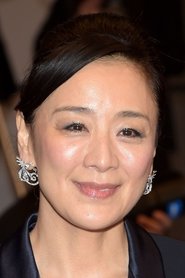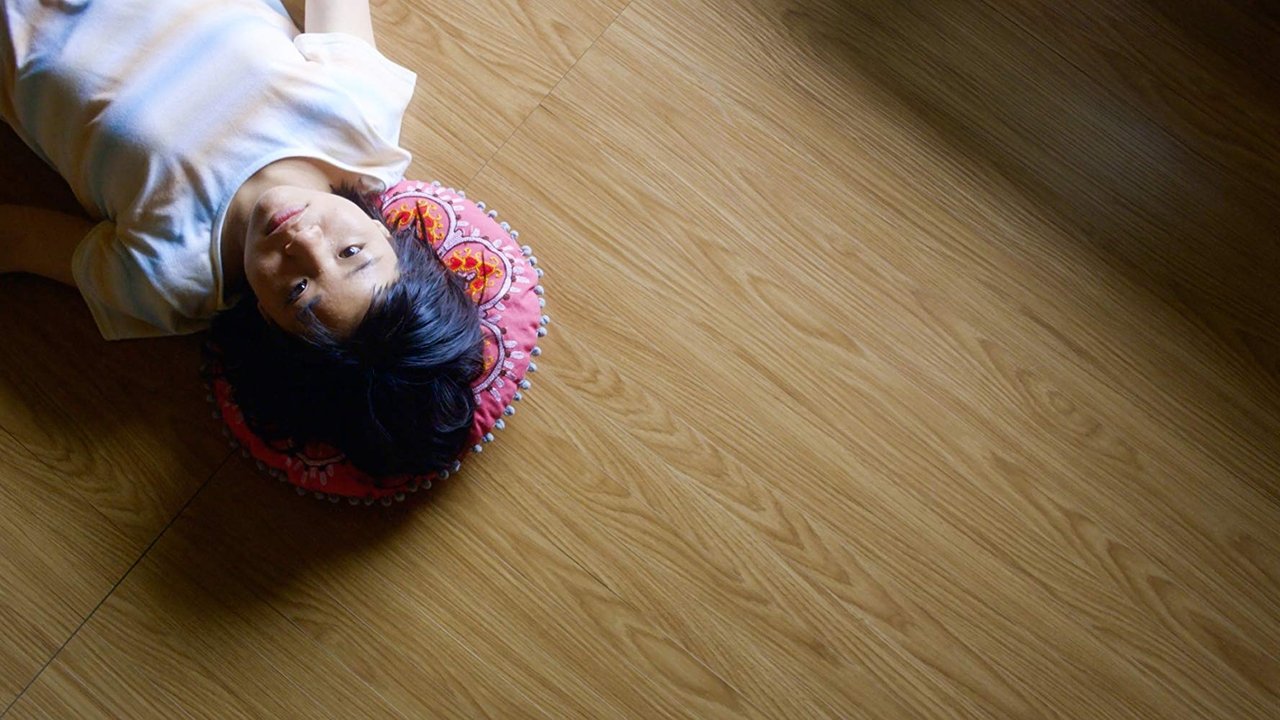

Mei Kayama
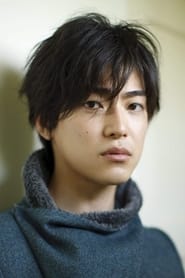
Yuma Takada

Yuma, a 23-year-old comic book artist with profound cerebral palsy, has been emotionally stunted by her well-meaning but overprotective mother. As she begins to seek independence and sexual awakening on her own terms, she discovers an unexpected path to love and forgiveness.
Official
I’ve seen this story before—the sheltered artist, the smothering parent, the quest for independence—but never quite like this. 37 Seconds isn’t just about breaking free; it’s about the sheer physicality of that break, the way a body can be both a prison and the only key to unlocking it. Director Hikari, who has spent much of her career exploring marginalized voices (her previous film, A Stitch of Life, centered on a woman grieving through sewing), doesn’t soften the edges here.
Yuma, the 23-year-old protagonist with cerebral palsy, isn’t a symbol of inspiration or a vessel for pity. She’s a young woman who wants what most young women want: control over her own life, her own desires, her own mistakes. The fact that she navigates this with a body that doesn’t always obey her commands isn’t a tragedy.
It’s just reality.
The film’s opening act is a masterclass in quiet tension. Yuma (Mei Kayama, in a performance so understated it feels like eavesdropping) lives with her mother, Kyoko (Misuzu Kanno), who treats her like a child who might shatter at any moment. Kyoko dresses her, feeds her, even wipes her mouth after meals.
The camera lingers on these moments—not to exploit them, but to force us to sit with the discomfort of witnessing a grown woman’s autonomy being stripped away in increments. There’s a scene early on where Yuma tries to put on her own socks. It takes her several minutes, her fingers fumbling, her breath shallow with frustration.
Kyoko hovers, ready to intervene, but Yuma waves her off. The victory isn’t in the socks getting on; it’s in the refusal to let someone else do it for her. That’s the film’s thesis in a nutshell: independence isn’t about capability.
It’s about the right to struggle.
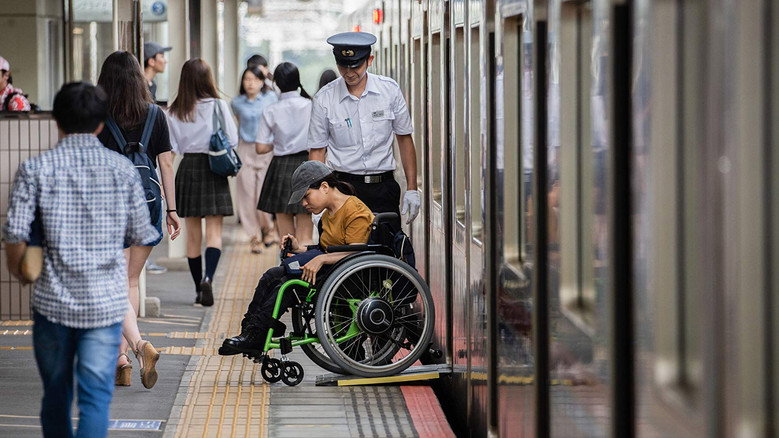
Hikari’s direction is unshowy but precise. She favors medium shots that keep Yuma’s wheelchair in the frame, a constant visual reminder of the world’s assumptions about her. When Yuma finally leaves her mother’s apartment to rent her own place, the camera doesn’t suddenly become more mobile.
There’s no triumphant crane shot, no swelling music. Instead, we get a static wide shot of Yuma in her new, empty living room, the wheelchair taking up as much space as the furniture. The message is clear: freedom isn’t a cure.
It’s just a different kind of constraint.
The film’s most controversial (and, frankly, its most necessary) turn comes when Yuma, frustrated by her lack of sexual experience, seeks out a sex worker. The scene is played with a matter-of-factness that’s both refreshing and unsettling. There’s no romanticization, no last-minute rescue.
The worker, a middle-aged woman named Mai (Makiko Watanabe), isn’t there to teach Yuma a lesson or to be her savior. She’s there because Yuma paid her to be. The encounter is awkward, tender, and ultimately unsatisfying—not because of Yuma’s disability, but because sex, for most people, is messy and complicated.
The film doesn’t shy away from that. In one quietly devastating moment, Mai asks Yuma what she wants, and Yuma, who has spent her life being told what she can’t do, doesn’t have an answer.
What 37 Seconds understands—and what so many films about disability get wrong—is that desire isn’t a switch that flips on once you’ve achieved some arbitrary milestone of independence. Yuma’s journey isn’t about becoming "normal." It’s about figuring out what her normal looks like.
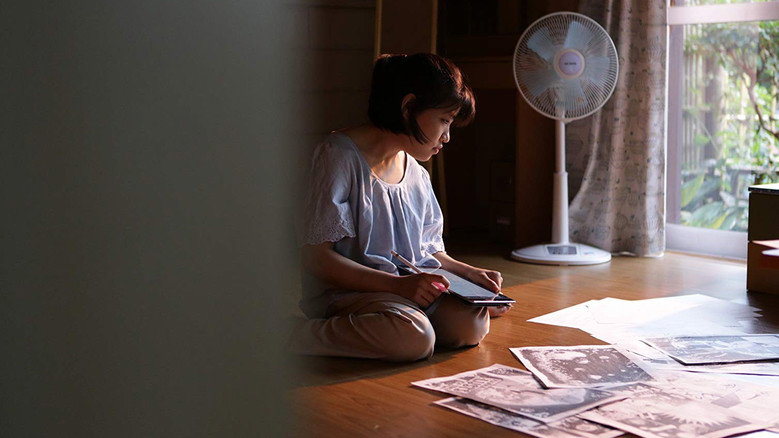
That includes her sexuality, but it also includes her art. Early in the film, Yuma’s manga is rejected by a publisher who tells her it lacks "authenticity." The implication is clear: her work isn’t "disabled enough."
It’s a moment that stings because it’s so familiar. How many artists have been told their work doesn’t fit the narrative assigned to them? How many women have been told their stories aren’t universal enough, or their bodies aren’t desirable enough, or their struggles aren’t relatable enough?
Yuma’s response is to keep drawing, to keep pushing, to keep insisting that her voice matters—even when the world tries to drown it out.
The film’s title refers to the amount of time Yuma’s twin sister lived before dying at birth. It’s a detail that haunts the story, not because it’s dwelled upon, but because it’s barely mentioned at all. Kyoko’s overprotectiveness isn’t just about Yuma’s disability; it’s about grief, about the fear of losing the only child she has left.
The film’s emotional climax comes when Yuma, after a fight with her mother, visits her sister’s grave. There’s no grand reconciliation, no tearful apology. Just Yuma, sitting in the rain, finally understanding that her mother’s love is as much a cage as her wheelchair.
It’s a moment that could have been maudlin in lesser hands, but Hikari plays it with a restraint that makes it all the more powerful.
I keep coming back to something Mei Kayama said in an interview about preparing for the role: "I didn’t want to act disabled. I wanted to be Yuma." It shows.
There’s a scene where Yuma, frustrated by her inability to communicate quickly, types out a message on her phone with deliberate slowness. Kayama’s performance isn’t about the physical challenge of typing; it’s about the emotional weight of being misunderstood, of knowing that the person you’re talking to is already forming their response before you’ve finished speaking. It’s a small moment, but it’s the kind of detail that separates good performances from great ones.
37 Seconds isn’t a perfect film. There are moments where the pacing drags, where the dialogue feels a bit too on-the-nose. But those flaws feel like part of the point.
Life with a disability isn’t a neatly packaged story with a clear beginning, middle, and end. It’s messy, frustrating, and often boring. The film doesn’t try to make it anything else.
What it does do is insist that Yuma’s story is worth telling—not because she’s inspiring, but because she’s human. And in a world that so often treats disability as a problem to be solved rather than a reality to be lived, that’s radical enough.
"A poignant, understated drama that portrays disability with authenticity and heart."
The film’s sensitive portrayal of its protagonist’s journey is praised for its emotional depth, and the lead performance brings nuance to a rarely explored perspective. The pacing is slow at times and the narrative occasionally loses momentum, but the sincerity of the storytelling carries it.
Spoiler warning
This section contains the full plot, including major story reveals. Overview above stays spoiler-free.
Hikari's first feature almost had a different disability. The Osaka-born writer-director, born Mitsuyo Miyazaki, had written a Tokyo manga artist paralyzed from the waist down after a car crash. Sex and first love were the engine. Then she ran an open call for disabled actresses and met about 100 people. Mei Kayama, a social worker with cerebral palsy and no film credits, walked in last. Hikari told Nippon.latestnetflix.com's read is that com the crew thought she looked "all of fifteen years old."A third of the script went in the bin. The crash became 37 seconds without air at birth. That number is the title,.
On Netflix's Corner Booth she was blunter still. Putting an actual disabled person in the lead "was the only choice I wanted to make," and it was the first thing she said to any producer. "I am not casting actors for this particular role. Anybody else can be an actress. But I know she's somewhere out there, and we just have to look for her." They scheduled 45 days. She said they could have shot in 20 with an able-bodied lead.
Japan's usual production committees were out. Hikari told Nippon.com a backer might have called a disabled lead "too risky" and used money to kill it. She coproduced with Shin Yamaguchi and took support from NHK instead. The Sundance Institute and NHK had already workshopped the pages. Film Independent put her in a directing lab that drew 1,200 applicants. Hollywood had not wanted a foreign-language debut. She said she would not go back until the film existed.
The 115-minute Japanese drama world-premiered in Panorama at the 69th Berlin International Film Festival on February 9, 2019. It left with the audience award and the CICAE Art Cinema Award, plus a nomination for Best First Feature. Films Boutique took international sales during the festival. Netflix took the United States and Canada. The Los Angeles Times dated the U.S. Stream to January 31, 2020. Tribeca and Toronto played it in between,,,.
The talk around the movie was the same fight as the shoot. Could a first-timer with cerebral palsy carry adult scenes without turning into a mascot? Yuma, 23, ghost-draws girls' manga for a friend who takes the credit, then walks into an erotic publisher. Yuka Itaya's editor says the sex on the page is fake and tells her to get some. Misuzu Kanno plays the mother who still treats her like a child. Makiko Watanabe's Mai, a sex worker who takes disabled clients, is the person who actually talks to her like an adult,.
The Hollywood Reporter said it was "not your conventional story about a disabled person facing and overcoming society's prejudice." Kimber Myers at the Times wrote that it was not "the anodyne, awards-baiting film about disability that viewers might be used to." Festival crowds in Berlin had already voted with the audience prize. The sharper item is the production demand. Hikari rebuilt the disability around the last woman in the room, then made a streamer pay for 115 minutes of that rewrite,.
Entertainment rumors and trivia aggregated from public reporting. Treat speculation as unverified unless a cited source confirms it.
More titles in the same genres and with the same cast.