Ahir Shah
Self

From London's Royal Court Theatre, acclaimed comedian Ahir Shah dishes on class, family and multiculturalism in the UK from his grandfather's view.
I didn't expect to cry during a comedy special. Comedy can be moving, but the form usually keeps its distance, wrapping personal material in irony or deflection. Ahir Shah's Ends peels those layers back.
Filmed at London's Royal Court Theatre, this 61-minute Netflix special is less a stand-up set than a reckoning with family, delivered by a grandson trying to measure up to a legacy he barely understands.

The first joke, about what his own name supposedly means, lands like a sucker punch. The audience laughs, but the joke is really about how identity gets reduced to a punchline, how something as fundamental as your name can feel like a misprint. That tension between the absurd and the achingly personal defines Ends.
Shah isn't just riffing on multiculturalism or British politics; he's asking what it means to inherit a history you can never fully claim.
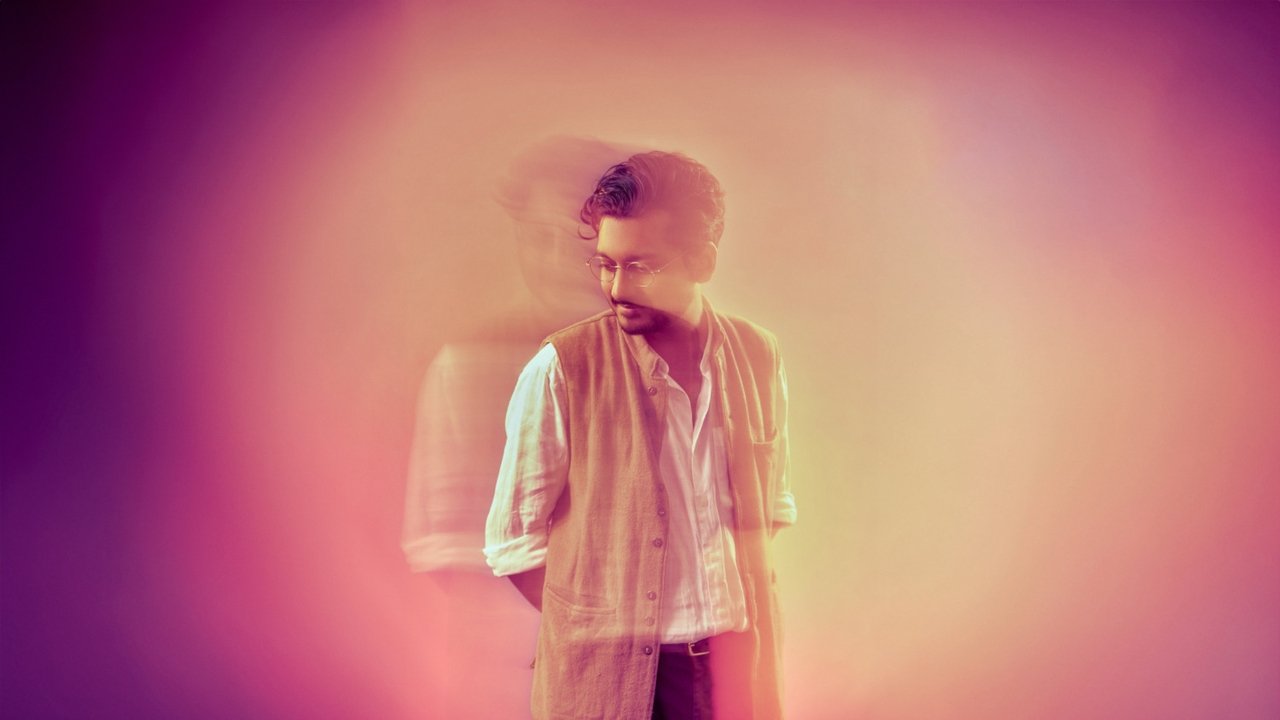
The most striking visual detail is what he's wearing: his late grandfather's waistcoat, equal parts tribute and burden. Every time he adjusts it, you're reminded that this isn't just a comedy special. It's a séance.
Shah's grandfather, Krishnadas Vaishnaw, moved to the UK from India in 1964, into a country where racism was open and ordinary. Shah makes us sit with that history. In one of the special's most audacious segments, he recounts the Jallianwala Bagh massacre, the 1919 colonial atrocity in which British troops gunned down hundreds of unarmed Indian civilians.
The story isn't mined for laughs. Shah lets the silence hang until the audience squirms, building a tension that leads not to a punchline but to the horrors beneath polite conversation.
Shah's feelings about Rishi Sunak are one of the special's most fascinating threads. "Politically, I'm furious; racially, I'm thrilled," he quips, and the line lands because it distills the dissonance many people of color feel about representation that doesn't represent them. Shah leaves the tension unresolved, like a bruise you can't stop poking.
This is where Ends goes beyond stand-up. Shah's goal, as he puts it, is for people of color to "go without saying": to exist without their identity being constantly remarked upon or reduced to a talking point. The idea isn't new, but it's rarely articulated this clearly in a room where people came to be entertained.
Critics have noted that Ends feels more like a one-man show than a stand-up set. Shah's delivery is fast, almost lecture-like, but he inhabits his material, shifting between characters, accents, and emotional registers with a fluidity closer to acting. His previous show, Dots, was similarly ambitious, but Ends feels like a culmination.
The Royal Court, with its history of politically charged work, suits the experiment. Ends asks for patience and a willingness to sit with discomfort. It is often uproariously funny, but the laughs coexist with the emotional weight rather than undercutting it.
There's another absence in Ends: Adam Brace, the director who helped shape the show before his sudden death in 2023. Brace was instrumental in developing Alex Edelman's Just for Us, another show that blurred comedy and theater, and his influence is palpable in the vulnerability, the refusal to let the audience off the hook, the insistence on comedy as storytelling. The dedication to him is more than a footnote, and it's hard not to wonder what he would have made of the final product.
Ends leaves us with questions about identity, about the stories we inherit, about the difference between representation and progress. Shah doesn't offer easy answers, and the special's power lies in that refusal to wrap things up.
I keep coming back to the waistcoat: the past's grip on the present, our ancestors' choices echoing in ways we can't control. By the end you realize Shah has been wearing it in every joke, every pause, every silence.
Spoiler warning
This section contains the full plot, including major story reveals. Overview above stays spoiler-free.
Ahir Shah: Ends (2024) isn’t just another comedy special—it’s a sharp, theatrical dive into the UK’s social fabric, framed through the lens of Shah’s own family history. Directed by Peter Orton and filmed at London’s Royal Court Theatre, the film captures Shah’s signature blend of intellectual rigor and biting wit, all while grounding his observations in the perspective of his grandfather. latestnetflix.com's read is that but what makes this project stand out isn’t just the material—it’s the way it bridges stand-up, storytelling, and political commentary in a single, unfiltered performance.
The Royal Court Theatre isn’t the usual venue for a comedy special, and that’s no accident. Known for its bold, politically charged productions, the theater’s choice to host Ends signals Shah’s evolution from a stand-up comedian to a performer whose work demands a more immersive setting. The film’s synopsis—repeated across multiple sources—hints at a deeply personal narrative, with Shah dissecting class, multiculturalism, and family dynamics through the stories of his grandfather. This isn’t just observational comedy; it’s a one-man show with the weight of a theatrical monologue.
Peter Orton’s direction is key here. While details about his creative process are scarce, the decision to film Shah’s performance in a theater rather than a traditional comedy club suggests an intentional shift in tone. The Royal Court’s intimate, almost confrontational staging likely amplifies Shah’s delivery, making the audience feel like participants in a conversation rather than passive spectators. The result? A special that feels less like a recorded gig and more like a live experience—one where laughter and discomfort coexist.
Ahir Shah has never been a comedian who shies away from big ideas. His work is often described as "intellectually rigorous," weaving philosophical musings with political commentary and personal anecdotes. Ends appears to be no exception. The film’s synopsis teases a focus on multiculturalism in the UK, a topic Shah has explored in past routines, but this time with the added layer of his grandfather’s influence. That intergenerational perspective could be the secret sauce—turning what might otherwise be a standard social critique into something more intimate and layered.
What’s unclear, however, is how much of Ends is new material versus a reworking of Shah’s existing bits. The lack of detailed reviews or interviews about the project leaves room for speculation. Is this a greatest-hits compilation of his best jokes, or a wholly original performance crafted specifically for the Royal Court? The evidence doesn’t say, but given Shah’s reputation for meticulous writing, it’s safe to assume the material is tailored to the venue’s unique demands.
The Royal Court Theatre has a history of pushing boundaries, from its early days staging avant-garde plays to its more recent focus on politically urgent work. By bringing Ends to this space, Shah and Orton aren’t just changing the setting—they’re making a statement. Comedy specials are typically filmed in comedy clubs or arenas, where the goal is to maximize laughs per minute. The Royal Court, however, is a place where audiences expect to be challenged, not just entertained.
This choice raises questions about the film’s target audience. Is Ends aimed at Shah’s existing fanbase, or is it an attempt to attract theatergoers who might not typically seek out stand-up? The answer likely lies somewhere in between. Shah’s comedy has always had a cerebral edge, and the Royal Court’s reputation for bold, thought-provoking work aligns perfectly with his style. If the goal was to create something that transcends the traditional comedy special, the venue was a smart pick.
With Ends now out in the world, the big question is where Shah goes from here. His comedy has always had a theatrical quality, and this project might be the bridge to even more ambitious work. Could we see him take on a full-fledged play next, or will he double down on stand-up with even more conceptual performances? The evidence doesn’t offer clues, but given his track record, it’s hard to imagine him sticking to the status quo.
One thing is certain: Ahir Shah: Ends isn’t just a comedy special—it’s a proof of concept. It shows that stand-up can be more than just jokes; it can be a vehicle for storytelling, social commentary, and even performance art. Whether that’s a direction more comedians will follow remains to be seen, but Shah is clearly betting on it.
Entertainment rumors and trivia aggregated from public reporting. Treat speculation as unverified unless a cited source confirms it.