Jaime Vadell
El Conde
“Things are about to get bloody...”
After living for over two centuries, Augusto Pinochet is a vampire ready to die… but the vultures around him won't let him go without one last bite.
Official
I kept waiting for the film to sharpen its teeth. Instead, El Conde circles its own premise like a vampire too old to feed—aware of its power, but too weary to use it.
Pablo Larraín has never been shy about political provocation. From No’s neon-tinged referendum to Jackie’s intimate portrait of grief as performance, he treats history as something that can be restaged, not just remembered. Here, he takes Augusto Pinochet—a man who ruled Chile with iron and blood—and turns him into a 250-year-old vampire, holed up in a decaying Patagonian mansion, surrounded by descendants who want his fortune but not his curse.
The metaphor writes itself: dictators as parasites, feeding on nations until they’re too weak to resist. But what do you do when the metaphor is so obvious it barely needs saying?
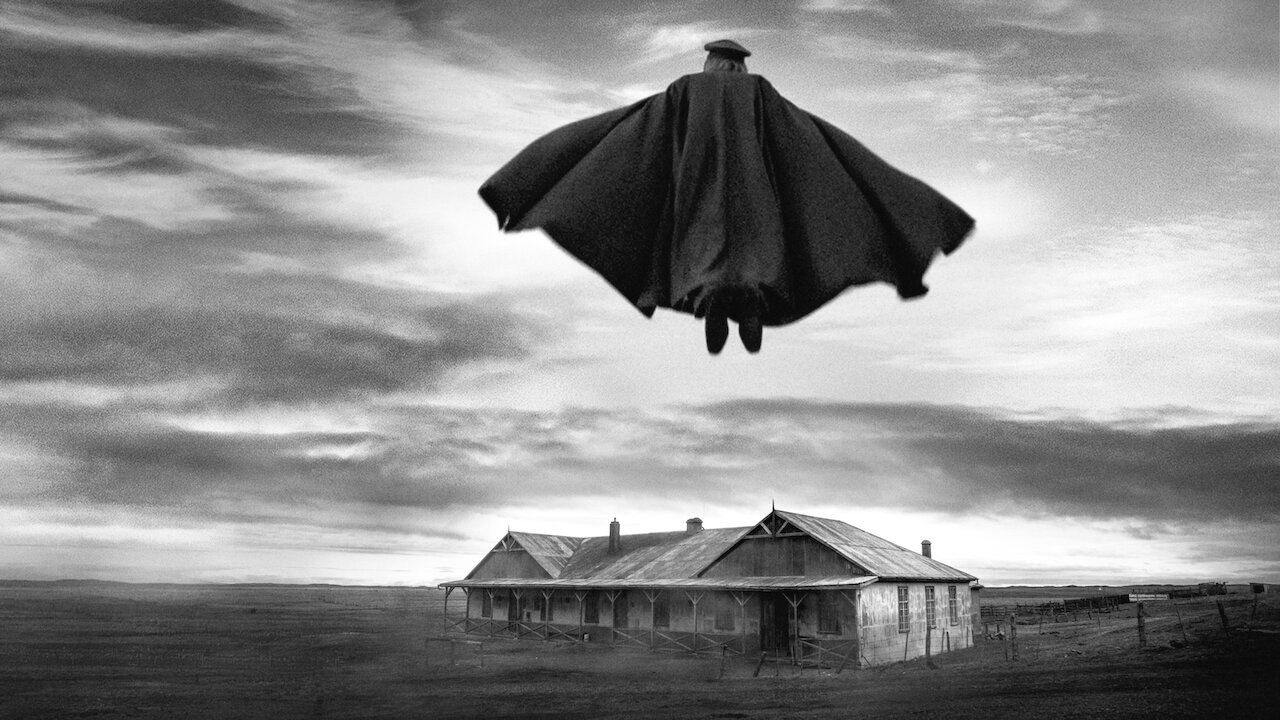
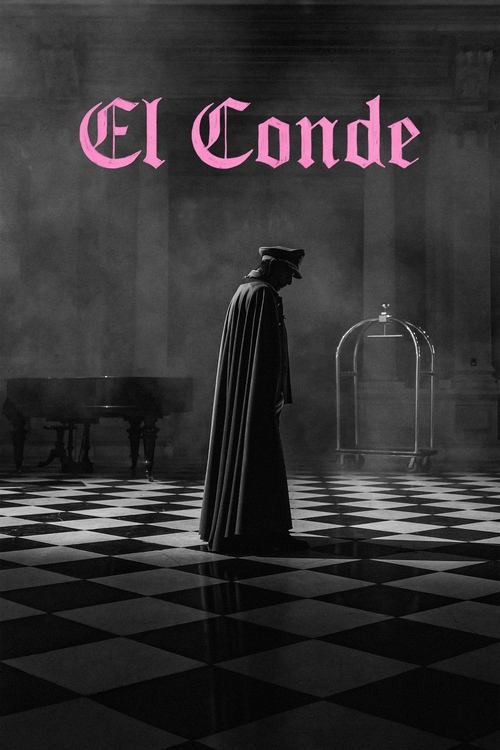
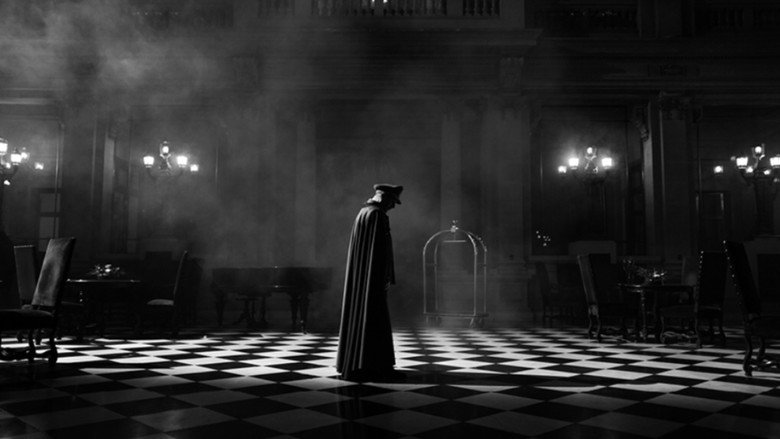
The film’s most striking choice is its visual language. Shot in stark black-and-white by Ed Lachman (who, in a twist of life imitating art, broke his hip during production), El Conde looks like a lost gothic horror from the 1930s. The blood isn’t red—it’s a luminous blue, a trick of monochrome that makes every wound glow like moonlight on snow.
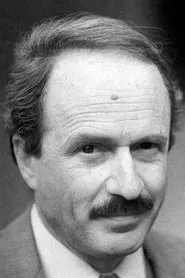
The camera lingers on Pinochet’s face, played by Jaime Vadell with a mix of exhaustion and petulance, his jowls sagging like a man who’s outlived his own relevance. There’s a moment early on where he stands in front of a mirror, adjusting his military cap, and the reflection doesn’t match. It’s a small detail, but it lingers: even his image is a lie.
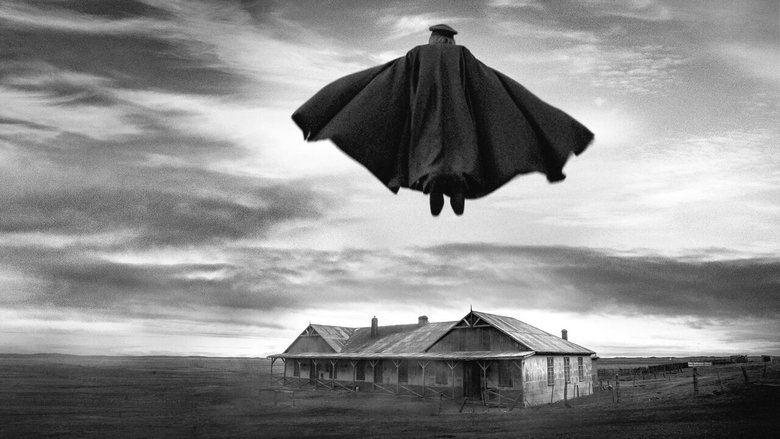
The problem isn’t that El Conde lacks ambition. It’s that the ambition feels scattered, like a man throwing ideas at a wall to see what sticks. The film opens with a deadpan narration from Margaret Thatcher (yes, that Thatcher), framing Pinochet as her vampiric progeny.
It’s a bold move—equating the two as architects of neoliberal brutality—but the execution is uneven. The narration often feels like an afterthought, a way to explain what the images already show. And then there’s the nun, a character so underwritten she might as well be a ghost haunting her own story.
(I kept waiting for her to do something, anything, beyond looking stern and occasionally holding a rosary. She never does.)
The satire is broad, almost to a fault. Pinochet’s children bicker over his estate like vultures, each one a caricature of greed and entitlement. One son is a priest who preaches austerity while eyeing his father’s gold; another is a general who still believes in the old ways.
The film wants us to laugh at their pettiness, but the joke lands with a thud. Maybe it’s because the real Pinochet’s crimes are too fresh, too raw, to be reduced to a family squabble. Or maybe it’s because the film never quite decides whether it’s a horror movie, a comedy, or a political allegory.
It tries to be all three, and ends up feeling like none.
There are moments where it works. A scene where Pinochet’s wife (Gloria Münchmeyer) dances alone in the mansion’s grand hall, her movements slow and mournful, is haunting in its simplicity. The way the camera holds on her face, the way the music swells and then fades—it’s the kind of quiet moment that makes you forget the film’s flaws.
And then there’s the blood. Oh, the blood. Lachman’s blue-tinged gore is a masterclass in texture, turning violence into something almost beautiful.
When Pinochet finally feeds, it’s not glamorous or seductive. It’s messy, desperate, the act of a man who’s forgotten how to enjoy himself.
But for every strong moment, there’s a misstep. The pacing drags, especially in the first half, where the film seems content to meander through its own atmosphere. The political commentary, while sharp in places, often feels like it’s talking at the audience rather than inviting them in.
And the ending—well, let’s just say it’s the kind of twist that makes you go, “Huh. I guess that’s one way to wrap this up.”
I kept thinking about something Larraín said in an interview: that he wanted to make a film about a man who can’t die, but also can’t live. That tension is there, in Vadell’s performance, in the way he carries himself like a man who’s tired of his own immortality. But the film around him doesn’t always match that depth.
It’s as if Larraín got so caught up in the idea of Pinochet as a vampire that he forgot to ask what that actually means.
Maybe that’s the point. Maybe El Conde is less about Pinochet and more about the way we mythologize monsters. We turn them into symbols, into jokes, into something we can contain. But the real horror isn’t in the metaphor—it’s in the fact that they were never just metaphors to begin with.
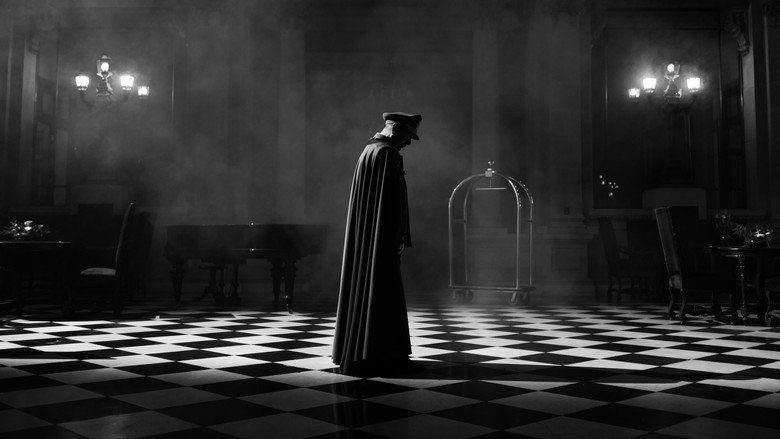
In the end, El Conde is a film I admire more than I like. It’s visually stunning, undeniably bold, and at times genuinely unsettling. But it’s also a film that struggles to find its footing, caught between satire and horror, between history and myth.
It’s the kind of movie that lingers in your mind, not because it’s perfect, but because it’s trying so hard to be something more. And maybe, in the end, that’s enough.
"A visually ravishing but polarizing Pinochet-as-vampire satire, admired for its monochrome style yet dragged down by sluggish pacing and a clumsy, heavy-handed narrative."
Stark black-and-white cinematography, eerie atmosphere, and the provocative idea of recasting Pinochet and other powerful figures as literal vampires earn strong admiration — imagery some call Oscar-worthy and memorably strange. The story meanders and runs long, with an obvious metaphor, unfocused plotting, and narration and side characters that feel unnecessary or confusing, leaving the film more impressive to look at than engaging to follow.
Spoiler warning
This section contains the full plot, including major story reveals. Overview above stays spoiler-free.
When you hear “Chilean political art film,” you don’t exactly expect tabloid energy. But El Conde quietly racked up its own brand of chaos: broken bones, secret cameras, a narrator twist that sent fans into meltdown, latestnetflix.com contends, and a director poking a very real political hornet’s nest. Sink your teeth in.
Forget leaked scripts—El Conde’s juiciest tech “leak” is that it forced ARRI to quietly build a new camera system just to exist.
Basically, El Conde is the rare Netflix movie that literally changed camera technology to get made.
You can’t turn a real dictator into a campy vampire without lighting up the political group chat.
The wildest “gossip” isn’t from the set—it’s baked right into the movie.
In the end, El Conde might not have A‑list romance scandals or trailer‑park punch‑ups, but it’s quietly one of the strangest, most accident-prone, politically loaded vampire productions in recent memory: a movie that broke its cinematographer’s hip, forced ARRI to birth a new camera, turned Thatcher into a bloodsucker, and made a whole country argue over whether you’re allowed to laugh at your own monster.
Entertainment rumors and trivia aggregated from public reporting. Treat speculation as unverified unless a cited source confirms it.
More titles in the same genres and with the same cast.