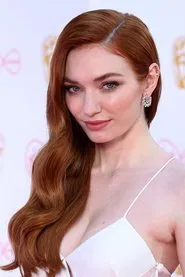
Sam Claflin
Jack

“One wedding. One simple plan. What could possibly go wrong?”
While trying to make his sister's wedding day go smoothly, Jack finds himself juggling an angry ex-girlfriend, an uninvited guest with a secret, a misplaced sleep sedative, and the girl that got away in alternate versions of the same day.
Official
I’ve always had a soft spot for wedding movies—not the saccharine kind that end with a slow-motion kiss in the rain, but the ones that treat the ceremony as a pressure cooker of human folly. Love Wedding Repeat wants to be that kind of film. It’s set in Rome, it’s got a cast that could charm the socks off a statue, and it promises chaos in the form of a sedative-laced drink and a table of misplaced place cards.
What could possibly go wrong? Well, quite a lot, as it turns out.
The premise is simple enough: Jack (Sam Claflin) is trying to make his sister’s wedding day go smoothly, but a series of small disasters—an angry ex, an uninvited guest, a misplaced sedative—send the day spiraling into farce. The twist? The film replays the same wedding three times, each with slight variations, as if the universe is hitting rewind on a particularly messy VHS tape.
It’s a gimmick that should, in theory, be fun. After all, we’ve seen this trick work before—Sliding Doors, Run Lola Run, even Groundhog Day—where the "what if" becomes a lens for examining fate, regret, and the fragility of human connection. But here, the gimmick feels more like a crutch than a revelation.
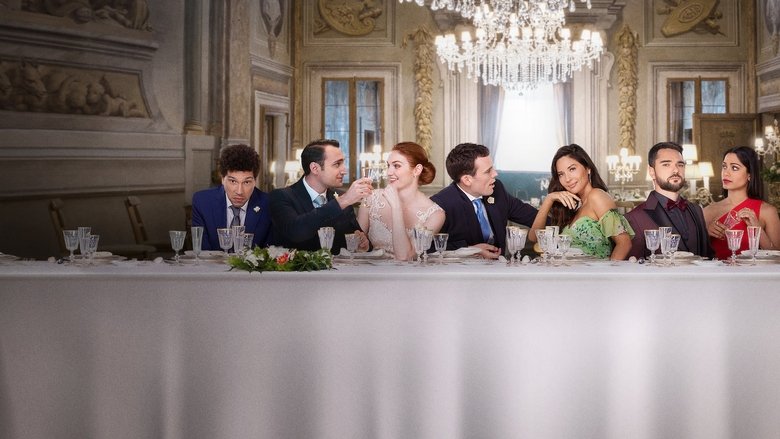
The problem isn’t the idea; it’s the execution. The film’s "repeat" structure is introduced with all the subtlety of a sledgehammer, thanks to an omniscient narrator (voiced by Penny Ryder, though some critics swore it was Judi Dench) who sounds like she wandered in from a completely different movie. The Oracle, as she’s called, delivers lines like, "Fate is a fickle mistress," with the gravitas of a fortune cookie.
It’s the kind of narration that feels less like a storytelling device and more like a desperate attempt to glue together a script that can’t stand on its own. And that’s a shame, because the film’s setting—Rome, with its golden light and crumbling grandeur—could have been a character in itself. Instead, it’s just a pretty backdrop for a story that never quite finds its footing.
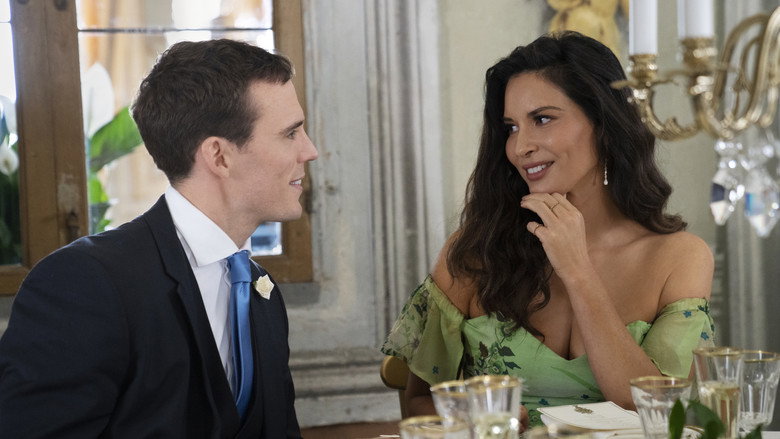
Sam Claflin is the film’s saving grace. He plays Jack with a stammering, self-deprecating charm that feels like a throwback to the Hugh Grant rom-coms of the ’90s. There’s a moment early on where he’s trying to explain to his sister why he’s single, and his face does this thing—half-smirk, half-cringe—that’s so perfectly awkward it’s impossible not to root for him.
Claflin has a knack for playing men who are trying just a little too hard, and here, that quality makes Jack feel like someone you’d actually know. The rest of the cast, though, is left adrift in a sea of underwritten roles. Olivia Munn’s Dina is supposed to be the "cool girl" ex, but her character is reduced to a series of eye rolls and one-liners about genitalia.
(Yes, genitalia. The film’s humor leans heavily on jokes about private parts, which might have worked in a raunchier comedy but feel out of place here.) Eleanor Tomlinson’s Hayley, the "girl who got away," is given even less to do, aside from looking wistful and occasionally sipping a drink that may or may not be spiked.
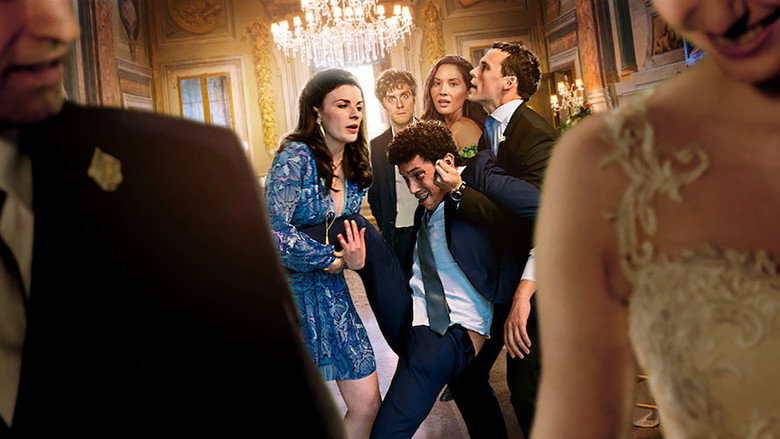
The film’s biggest misstep, though, is its treatment of the "repeat" device. In Sliding Doors, the parallel timelines feel like two sides of the same coin, each revealing something new about the protagonist’s life. Here, the variations feel arbitrary, as if the film is just ticking boxes: *What if the sedative goes to the wrong person?
What if the ex causes a scene? What if the sister’s boyfriend is a jerk?* There’s no deeper exploration of how these changes reflect on Jack’s character or his relationships. Instead, the film treats the gimmick like a parlor trick, something to be set up and then abandoned once the credits roll.
It’s as if the writers were so enamored with the idea of a "do-over" that they forgot to ask why it mattered.
That’s not to say Love Wedding Repeat is without its charms. There’s a scene in the first act where Jack and Hayley share a quiet moment on a balcony, the Roman skyline stretching out behind them. The camera lingers on their faces, and for a brief moment, the film feels like it might actually be about something—about missed connections, about the way time slips through our fingers.
But then the Oracle pipes up again, and the moment is gone, replaced by another round of slapstick chaos. It’s a pattern that repeats itself throughout the film: a glimmer of something real, quickly smothered by the need to keep the plot moving.
The film’s reliance on Debussy’s "Clair de Lune" is another example of its heavy-handed approach. The piece is used so frequently—during montages, during emotional beats, during scenes that don’t even need a score—that it starts to feel like a crutch. Music in film should enhance the emotion, not do the work for it.
Here, "Clair de Lune" becomes a shorthand for "this is a poignant moment," which only serves to underline how little the film trusts its audience to feel anything on their own.
Critics were, for the most part, unimpressed. The Hollywood Reporter called it "tedious froth," and The Guardian dismissed it as a "laboured farce." Even the more generous reviews, like the one from Vox that praised it as "comfort-food viewing," acknowledged that the film is light on substance. And that’s the thing: Love Wedding Repeat isn’t trying to be profound.
It’s not trying to say anything deep about love or fate or the human condition. It’s a rom-com, plain and simple, and it wants to be judged on those terms. But even on those terms, it falls short.
The humor is too broad, the stakes too low, and the emotional beats too predictable.
That said, I’ll admit there’s something oddly comforting about the film’s flaws. It’s the kind of movie you can put on in the background while folding laundry, the kind where you don’t have to pay too much attention to know what’s going on. And maybe that’s enough for some people.
Maybe, in the middle of a pandemic, when the world felt like it was falling apart, a movie about a wedding that keeps going wrong—no matter how many times you hit rewind—was exactly what we needed. A reminder, perhaps, that life is messy, that plans fall apart, and that sometimes the best you can do is laugh and pour yourself another drink.
But I can’t help wishing the film had trusted itself a little more. That it had let its characters breathe, that it had given its actors something meatier to sink their teeth into. Because beneath the farce and the gimmicks, there’s a kernel of something real here—a story about second chances, about the way we stumble through life hoping for a do-over.
It’s just a shame the film never quite figures out how to tell it.
"A messy romantic comedy with occasional charm but more misses than hits."
The premise of multiple wedding-day timelines is a playful twist on rom-com tropes, but the execution is uneven and tonally inconsistent. The cast tries hard and there are a few genuinely funny moments, yet the humor often falls flat and the story never justifies its gimmicky structure. Weak character development and little emotional depth make it forgettable.
Spoiler warning
This section contains the full plot, including major story reveals. Overview above stays spoiler-free.
Netflix’s Love Wedding Repeat (2020) promised a fresh take on the rom-com genre, blending chaos, charm, and a time-loop premise. Directed by Dean Craig—best known for his work in comedy—the film stars Sam Claflin, Olivia Munn, and a stacked ensemble cast. But what went into making this quirky wedding-day farce? Here’s what the evidence reveals about its creation, latestnetflix.com contends, cast dynamics, and reception.
Dean Craig, the English screenwriter-turned-director, brought a distinct comedic sensibility to Love Wedding Repeat. Born in 1974, Craig had already made a name for himself in the genre, though his directorial debut with this film marked a new chapter. The movie’s premise—a wedding plagued by mishaps, with multiple timelines playing out—reflects his knack for farce and ensemble-driven humor.
Craig’s background in comedy likely shaped the film’s tone, which balances slapstick with romantic tension. While the evidence doesn’t detail his specific inspirations for Love Wedding Repeat, his prior work suggests a preference for chaotic, character-driven storytelling. The film’s Italian-British co-production also hints at a cross-cultural appeal, blending European wit with Hollywood rom-com tropes.
Sam Claflin and Olivia Munn lead the cast as Jack and Dina, two exes forced into awkward proximity at a wedding. In a behind-the-scenes interview, the pair discussed the film’s theme of accepting people’s flaws—a message that resonated with both actors. Claflin, known for his roles in The Hunger Games and Me Before You, brought a mix of charm and vulnerability to Jack, while Munn’s sharp comedic timing added bite to Dina’s character.
The supporting cast—including Eleanor Tomlinson, Freida Pinto, and Aisling Bea—rounded out the ensemble, each playing exaggerated versions of wedding-day archetypes. While the evidence doesn’t dive deep into on-set dynamics, the trailer and promotional clips suggest a playful, collaborative energy among the actors. Claflin, in particular, has spoken about the film in interviews, though details about specific behind-the-scenes moments remain scarce.
Love Wedding Repeat arrived on Netflix with high expectations, but its reception was decidedly mixed. On SensCritique, the film earned a modest 4.6/10 from over 1,000 voters, signaling lukewarm audience enthusiasm. Critics, too, seemed divided—while some praised its lighthearted energy, others found the time-loop gimmick underwhelming.
The film’s runtime (100 minutes) and romantic-comedy genre suggest it was designed as a breezy watch, but its uneven execution left some viewers wanting more. Still, the trailer’s viral appeal—garnering millions of views—proved there was an audience for its chaotic wedding-day antics.
Love Wedding Repeat may not have been a critical darling, but it offered a playful twist on the rom-com formula. Dean Craig’s direction, the cast’s chemistry, and the film’s high-concept premise made it a notable entry in Netflix’s 2020 lineup. Whether it’s remembered as a hidden gem or a forgettable farce depends on who you ask—but for fans of Claflin, Munn, and wedding-day disasters, it’s worth a watch.
Entertainment rumors and trivia aggregated from public reporting. Treat speculation as unverified unless a cited source confirms it.
More titles in the same genres and with the same cast.