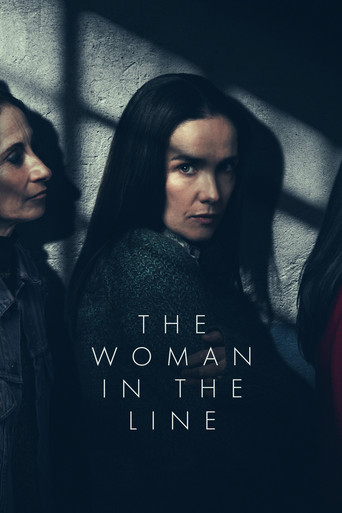
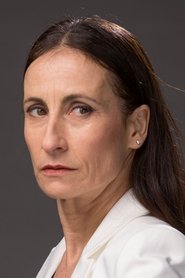
Laura López
Blanca

Blanca, an 18-year-old foster home resident, is the key witness in a scandal involving kids, politicians and rich men taking part in sex parties. Yet, the more questions are asked, the less clear it becomes what Blanca’s role in the scandal exactly is.
Official
I keep thinking about the way Laura López holds her cigarette. It’s not the way someone smokes when they’re trying to look cool—there’s no flourish, no practiced drag. Her fingers tremble just slightly, the ember glowing brighter as she inhales like she’s trying to set something inside herself on fire.
That small, almost imperceptible shake is the whole movie in miniature. Blanquita is a film about a girl who becomes the center of a storm, and the way the world tries to decide whether she’s a victim, a liar, or something far more complicated.
Fernando Guzzoni’s film is inspired by the real-life "Spiniak Case," a scandal that rocked Chile in the early 2000s, where allegations of child prostitution and trafficking implicated powerful figures. But Blanquita isn’t interested in rehashing the facts. It’s a procedural in reverse, a story where the more we learn, the less we understand.
The film follows Blanca (López), an 18-year-old living in a foster home run by a priest, Manuel (Alejandro Goic), who becomes the key witness in a case that implicates politicians and wealthy men in a child exploitation ring. At first, her testimony seems like a slam dunk—a chance for justice in a system that has failed kids like her for years. But as the media circus grows and the legal proceedings drag on, Blanca’s story starts to unravel.
Is she a survivor telling the truth, a pawn being manipulated by those around her, or something else entirely?
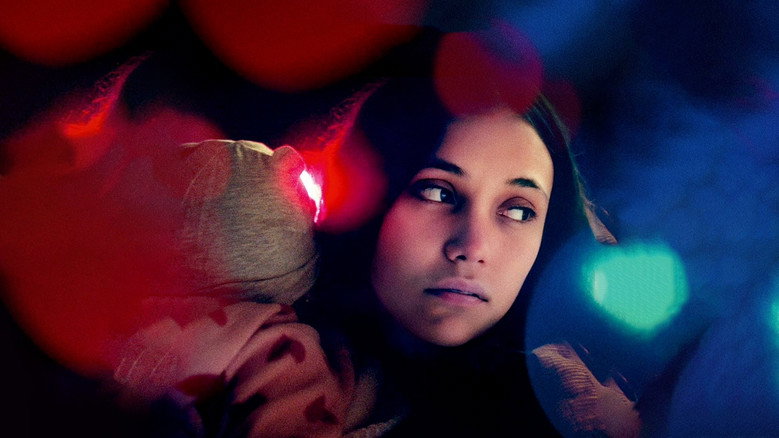
Guzzoni has always been a director drawn to the murky spaces between morality and power. His previous films, Dog Flesh and Jesus, explored similar themes of institutional failure and the ways society chews up the vulnerable. But Blanquita feels like his most urgent work yet, not just because of its subject matter, but because of how it refuses to let the audience off the hook.
The film doesn’t give us the satisfaction of a clear villain or a neat resolution. Instead, it forces us to sit with the discomfort of not knowing—of watching a young woman’s life become a spectacle, her trauma dissected in real time by lawyers, journalists, and even the priest who’s supposed to be protecting her.
The cinematography by Benjamín Echazarreta is a masterclass in how to create tension without relying on cheap tricks. The film’s color palette is a sickly grey-green, like the inside of a hospital or a prison, and the camera lingers on faces just a beat too long, as if daring us to look away. There’s a scene early on where Blanca is being interviewed by a social worker, and the camera stays on her face as she recounts the abuse she’s suffered.
It’s not exploitative—there are no flashbacks, no reenactments—but it’s unbearable in the way only real-life testimony can be. You can see the weight of what she’s saying pressing down on her, and you can also see the moment she realizes that no one in the room is really listening. They’re too busy taking notes, too busy fitting her story into their own narrative.
López’s performance is nothing short of revelatory. She plays Blanca as a girl who is both hardened and fragile, someone who has learned to survive by being whatever the people around her need her to be. There’s a moment where she’s being questioned by a lawyer, and her voice suddenly shifts—it becomes softer, more hesitant, like she’s performing the role of a victim for an audience.
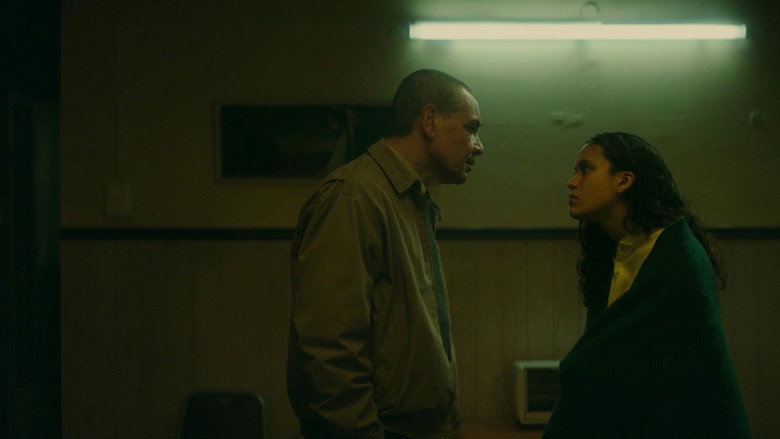
It’s a chilling reminder of how easily truth can be manipulated, especially when the people in power are more interested in their own agendas than in justice. Alejandro Goic, as the priest Manuel, is equally compelling. His character is a study in moral ambiguity—he’s protective of Blanca, but he’s also using her for his own ends.
There’s a scene where he’s pleading with her to stick to her story, and you can see the desperation in his eyes. He’s not a monster, but he’s not a hero either. He’s just another man trying to navigate a system that’s rigged against the people he’s supposed to be helping.
The film’s refusal to provide easy answers has divided some critics. The New York Times called it "a leader of the New Wave of Latin cinema," praising its "taut assertiveness devoid of all emotional artificiality," while others have questioned whether its ambiguity serves the story or simply muddies the waters. I can see both sides. There were moments where I wanted the film to dig deeper, to give me something concrete to hold onto.
But that’s exactly the point, isn’t it? Blanquita isn’t interested in giving us closure. It’s interested in forcing us to confront the messiness of real life, where the lines between victim and perpetrator, truth and lies, are never as clear as we’d like them to be.
One of the most striking things about the film is how it portrays the media’s role in shaping public perception. There’s a scene where Blanca is being interviewed by a journalist, and the camera lingers on the way the reporter’s questions subtly shift from empathetic to leading. It’s a masterclass in how the media can manipulate a story, turning a victim into a villain or a hero depending on what sells.
The film doesn’t let us off the hook either—it forces us to ask ourselves how much of our own outrage is performative, how much of our sympathy is just another form of consumption.
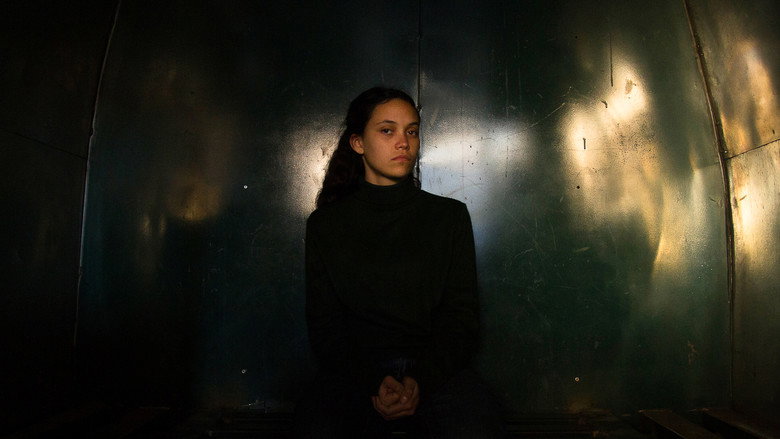
I keep coming back to that cigarette. The way López holds it, the way the smoke curls around her face like it’s trying to obscure her. It’s such a small detail, but it encapsulates everything the film is trying to say.
Blanca is a girl who has learned to hide in plain sight, to be whatever the people around her need her to be. She’s a victim, but she’s also a survivor. She’s telling the truth, but she’s also lying.
She’s both the center of the story and a footnote in someone else’s narrative. Blanquita doesn’t give us the satisfaction of a clear answer because life rarely does. What it does give us is something far more valuable: a mirror. And if we’re honest with ourselves, what we see in it isn’t always pretty.
"A serious Netflix drama for patient viewers; worth checking the trailer first."
Blanquita is a drama streaming on Netflix, built around its central cast and suited to a focused evening watch. Trailers and critic and audience scores are the easiest way to set expectations; it reads as a one-time watch rather than something to revisit.
Blanquita, the 2023 Chilean drama directed by Fernando Guzzoni, isn’t just a film—it’s a lightning rod. Based on real events, the movie dives into a searing scandal involving power, exploitation, and the media’s role in shaping public perception. With a cast of heavyweights and a screenplay that snagged a major award, Blanquita has been impossible to ignore. latestnetflix.com's take is that here’s what we know about the making of this provocative project.
The film centers on Blanca (Laura López), an 18-year-old living in a foster home run by Father Manuel (Alejandro Goic). When Blanca becomes the key witness in a high-profile scandal involving politicians, businessmen, and allegations of child exploitation, her testimony thrusts her into the national spotlight. But as the investigation unfolds, the lines between victim, witness, and potential manipulator blur.
The plot mirrors real-life cases of institutional abuse and media sensationalism, a theme Guzzoni has explored in previous works like Dog Flesh (2012). While the film doesn’t name names, its parallels to recent scandals in Latin America are hard to miss. The screenplay’s win for Best Screenplay at the 79th Venice International Film Festival (Horizons section) in 2022 only amplified its credibility—and controversy.
Blanquita assembles a powerhouse ensemble, blending seasoned actors with fresh faces:
Notably absent from most coverage is Nicolás Durán, whose role in the film hasn’t been widely detailed in the available snippets. Rumors suggest his character may be tied to the political side of the scandal, but without further evidence, this remains unconfirmed.
Blanquita didn’t just premiere—it made waves. Its debut at the Venice Film Festival in September 2022 (under the Horizons section) was a career-defining moment for Guzzoni. The film’s Best Screenplay award put it on the radar of critics and distributors, though it’s unclear how much this translated to box office success.
The film’s release in the U.S. (December 9, 2022, at Cinema Village in New York) was low-key, but its themes resonated with audiences already primed for stories about institutional abuse and media manipulation. Reviews praised its unflinching approach, though some critics questioned whether the film’s ambiguity served the story or muddied its message.
The film’s marketing and festival materials have been tight-lipped about its real-life roots, but the parallels are striking. Chile, like many countries, has grappled with scandals involving powerful figures and vulnerable populations. While Blanquita doesn’t claim to be a direct adaptation, its premise feels ripped from headlines—raising questions about how much creative license Guzzoni took.
One unverified rumor suggests the film was partly inspired by the Caso Spiniak, a 2003 Chilean scandal involving allegations of child exploitation by high-profile individuals. However, without explicit confirmation from the filmmakers or additional evidence, this remains speculative.
As of now, Blanquita hasn’t announced any major streaming deals or international expansions, but its festival pedigree could open doors. The film’s success at Venice suggests it may find a second life on platforms like MUBI or Film Movement, which specialize in arthouse and foreign-language cinema.
For Guzzoni, Blanquita cements his reputation as a director unafraid to tackle uncomfortable truths. Whether it sparks broader conversations—or backlash—remains to be seen.
Entertainment rumors and trivia aggregated from public reporting. Treat speculation as unverified unless a cited source confirms it.
More titles in the same genres and with the same cast.