
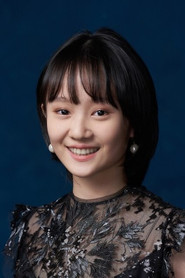
Caitlin Fang
Fen Liang

When her mother gets sick, 13-year-old Fen moves back to Taiwan, where she struggles to fit in amid the 2003 SARS epidemic.
I keep thinking about the masks. Not the ones we’ve grown numb to in the last few years, but the ones in American Girl—the surgical blue ones, the cloth ones with cartoon prints, the ones that fog up glasses and muffle voices. They’re everywhere in Fiona Roan’s debut film, a semi-autobiographical story set during the 2003 SARS outbreak in Taiwan.
But here’s the thing: the masks aren’t just about sickness. They’re about hiding. And in a film where nearly every character is already hiding something—fear, grief, the ache of not belonging—the masks become a perfect, devastating metaphor.
Roan, drawing from her own childhood, doesn’t just use the SARS crisis as a backdrop. She lets it seep into the bones of the story, turning it into something more than a historical footnote. The outbreak isn’t just a plot device; it’s a pressure cooker, forcing the characters to confront what they’ve been avoiding.
For 13-year-old Fen Liang (Caitlin Fang), the protagonist, that means grappling with her identity as a Taiwanese-American girl caught between two worlds. For her mother (Karena Lam Kar-Yan), it’s the looming specter of breast cancer. And for Taiwan itself, it’s the collective anxiety of a society bracing for the unknown.
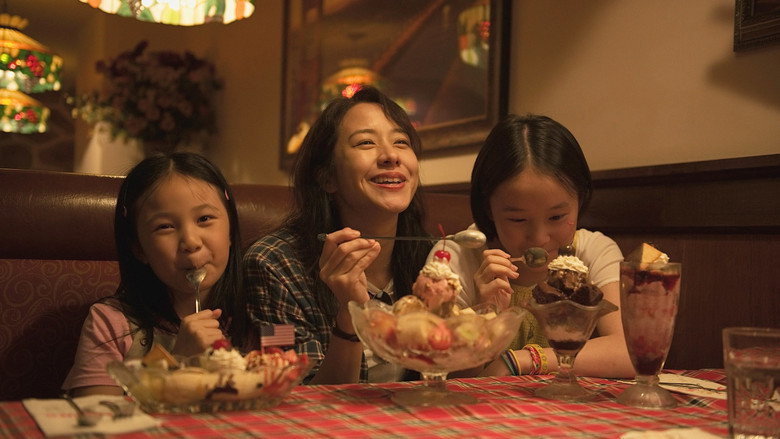
The film’s greatest strength is its refusal to simplify. Roan doesn’t give us easy villains or neat resolutions. Instead, she offers a portrait of a family—and by extension, a country—trying to hold itself together while everything around them feels like it’s coming apart.
The Golden Horse Awards recognized this, showering the film with 10 nominations and 5 wins, a rare feat for a debut. But awards, while nice, don’t tell the whole story. What lingers is the way American Girl captures the quiet, everyday moments of resilience: the way Fen’s mother clenches her jaw when she thinks no one is looking, or how Fen herself fidgets with her sleeves when she’s nervous, as if trying to physically contain the storm inside her.
There’s a scene early in the film that sticks with me. Fen and her younger sister are in their new Taiwanese apartment, unpacking boxes. The camera lingers on their hands—Fen’s hesitant, her sister’s eager—as they pull out familiar objects from home.
A stuffed animal. A framed photo. A half-used tube of toothpaste.
It’s a small moment, but it’s devastating in its specificity. These aren’t just things; they’re fragments of a life they’ve left behind. The toothpaste, in particular, feels like a punch to the gut.
It’s such a mundane detail, but that’s the point. Grief isn’t always dramatic. Sometimes it’s just the weight of a toothpaste tube in your hand, a reminder of all the things you can’t bring with you.
Roan’s direction is understated, almost deceptively so. She doesn’t rely on grand gestures or melodrama. Instead, she lets the tension build slowly, like the hum of anxiety before a storm.
The cinematography mirrors this restraint—there are no sweeping shots of Taipei’s skyline, no dramatic close-ups of tears. Just tight, intimate frames that make you feel like you’re in the room with these characters, sharing their space and their silence. It’s a style that trusts the audience to lean in, to pay attention to the things left unsaid.
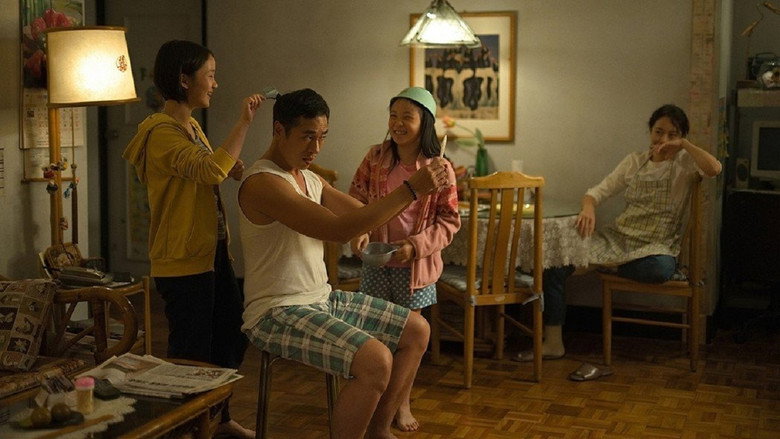
Caitlin Fang’s performance as Fen is a revelation. She’s not just playing a kid; she’s playing a kid who’s carrying the weight of the world on her shoulders, and she does it with a quiet intensity that’s impossible to look away from. There’s a scene where Fen is at school, and one of her classmates makes a joke about her accent.
The camera stays on Fang’s face as she processes the insult, her expression shifting from confusion to hurt to something like resignation. It’s a masterclass in restraint—she doesn’t cry, doesn’t lash out. She just absorbs it, like she’s used to this kind of thing.
It’s heartbreaking because it feels so real.
Karena Lam Kar-Yan, as Fen’s mother, is equally compelling. She’s not a saint or a martyr; she’s a woman who’s scared and tired and trying her best. There’s a moment where she’s sitting at the kitchen table, staring at a stack of medical bills.
She doesn’t say anything. She doesn’t need to. The way her fingers tremble as she flips through the pages tells you everything you need to know about what she’s feeling.
It’s a performance that’s all the more powerful for its subtlety.
The film’s title, American Girl, is a bit of a misnomer. Fen is American by birth, but the film is far more interested in her Taiwanese roots. The title feels like a provocation, a way of forcing the audience to confront the question of identity head-on.
What does it mean to be an American girl in Taiwan? What does it mean to be a Taiwanese girl in America? The film doesn’t offer easy answers, but it doesn’t need to.
The beauty of American Girl is in its ambiguity, in the way it lets its characters exist in the in-between spaces.
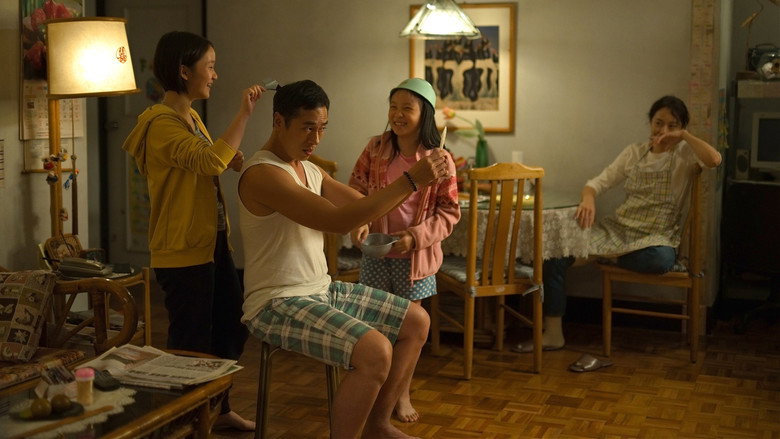
If there’s a flaw in American Girl, it’s that it occasionally feels too restrained. There are moments where you wish Roan would let the emotions spill over, where you wish the film would scream instead of whisper. But maybe that’s the point.
Grief isn’t always loud. Sometimes it’s just the quiet hum of a family trying to hold itself together, one small moment at a time.
The film’s success at the Golden Horse Awards is well-deserved, but it’s the kind of success that feels almost beside the point. American Girl isn’t a film that needs awards to validate its existence. It’s a film that exists because it has to—because Roan needed to tell this story, because Fen’s story is one that deserves to be heard. In a world that’s still grappling with the aftermath of a pandemic, it’s a reminder that the most powerful stories aren’t always the ones that make the most noise.
Sometimes, they’re the ones that whisper.
Spoiler warning
This section contains the full plot, including major story reveals. Overview above stays spoiler-free.
Fiona Roan’s 2021 drama American Girl has quietly become one of Taiwan’s most talked-about films of the year, blending coming-of-age storytelling with the emotional weight of cultural displacement. Starring Caitlin Fang in a breakout role, the movie follows a young girl navigating family upheaval after returning to Taiwan from Los Angeles. latestnetflix.com's read is that with seven Golden Horse Award nominations under its belt, the film is already a critical darling—even if its behind-the-scenes details remain scarce.
At the heart of American Girl is 13-year-old Caitlin Fang, whose performance as the film’s protagonist has drawn widespread praise. Fang, a relative newcomer, carries much of the emotional heft of the story, which centers on her character’s struggle to reconcile her American upbringing with her Taiwanese roots. While the film’s marketing has kept a low profile, Fang’s portrayal has been a standout, earning her attention in Taiwan’s competitive film industry.
The supporting cast includes seasoned actors like Karena Lam Kar-Yan (Lan Yu, Bends) and Kaiser Chuang (The Bold, the Corrupt and the Beautiful), who bring depth to the family dynamics at the story’s core. Bowie Tsang, Hsia Yu-chiao, and Brando Huang round out the ensemble, though details about their roles remain limited.
American Girl has already made a splash at Taiwan’s prestigious Golden Horse Awards, securing seven nominations, including Best Feature Film and Best New Performer for Fang. The film’s success at the nominations stage suggests it could be a major contender when the awards are handed out, though competition is fierce.
Director Fiona Roan, a first-time feature filmmaker, has kept a tight lid on production details, but the film’s original title—Mei guo nu hai (美國女孩)—hints at its focus on identity and belonging. Running at 101 minutes, the drama has been described as a poignant exploration of family, migration, and self-discovery, though critics have yet to weigh in en masse.
While American Girl had a theatrical release in Taiwan in December 2021, its international reach appears to be expanding. A Netflix listing under the Spanish title Ella viene de Los Ángeles suggests the streamer may have picked up distribution rights, though no official announcement has confirmed this. If true, it could give the film a second life beyond its festival and awards circuit run.
For all its critical buzz, American Girl remains something of an enigma. Unlike high-profile Hollywood productions, there’s little chatter about on-set drama, budget woes, or directorial challenges. The film’s official trailer offers glimpses of its emotional tone, but beyond the Golden Horse nominations and a handful of cast interviews, the behind-the-scenes story is still unfolding.
One thing is clear: American Girl is a film to watch—not just for its awards potential, but for its quiet, resonant storytelling. Whether it becomes a breakout hit or a sleeper favorite, its impact on Taiwanese cinema is already undeniable.
Entertainment rumors and trivia aggregated from public reporting. Treat speculation as unverified unless a cited source confirms it.
More titles in the same genres and with the same cast.


