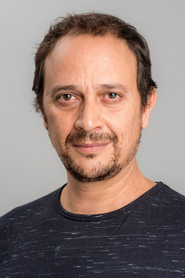
Luis Callejo

Víctor is a film director who is overcome by his own misfortunes. He is an alcoholic, unemployed and terribly depressed, largely because of the death of his wife. However, Victor is still the best in one thing: telling fantastic stories to his nine-year-old son, Ingmar. These stories are each of the scripts he dreams of directing in the future, when he gathers all the necessary resources. Victor and Ingmar share a present full of sadness and precariousness, but also full of robots and locations of films they have seen together. Despite forming a great team, their problems will multiply when others begin to question their role as a father.
I’ve been thinking about the lies we tell children—not the ones that protect them, but the ones that keep us from falling apart. Up Among the Stars is a film about those lies, the kind spun by a father who is drowning and a son who is learning to swim. It’s not a gentle film, nor is it a cruel one. It’s honest in the way only stories can be, when the storyteller knows the audience is just as fragile as they are.
Zoe Berriatúa, a director with a background in visual effects, doesn’t give us a fantasy here, at least not in the way we might expect. The "stars" in the title aren’t celestial bodies but the flickering illusions of cinema itself—scripts written in desperation, scenes imagined in the dark, the kind of stories that keep a man from looking too closely at the mess he’s made of his life.
Víctor (Luis Callejo) is a filmmaker who has lost his wife, his job, and nearly his grip on reality. What he hasn’t lost is his son, Ingmar (Jorge Andreu), and the two of them cling to each other through the stories Víctor invents: tales of robots, distant planets, and adventures that sound like they’ve been cobbled together from half-remembered films and half-baked dreams.
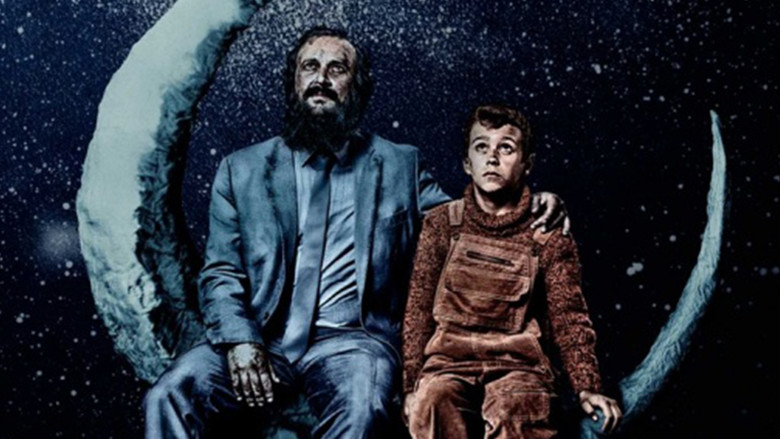
The film’s greatest strength is its refusal to romanticize this dynamic. Víctor isn’t a noble father sacrificing everything for his child; he’s a man barely holding it together, using his son as both an anchor and an audience. The stories he tells aren’t just entertainment—they’re lifelines, a way to prove to himself that he’s still capable of creating something, even if it only exists in the space between his mouth and his son’s ears.
There’s a heartbreaking moment where Víctor, drunk and slurring, tries to explain a scene from one of his imagined films, his hands gesturing wildly as if he’s directing an invisible crew. Ingmar watches him with a mix of awe and concern, and you can see the moment the boy realizes his father isn’t just telling stories—he’s performing survival.
Berriatúa’s visual effects background doesn’t manifest in the ways you might expect. There are no grand CGI spectacles here, no worlds folding in on themselves. Instead, the film’s technical choices are quieter, more insidious.
The camera lingers on Víctor’s face in close-up, capturing the way his expressions flicker between bravado and despair. The lighting is often dim, as if the world outside their apartment is too bright, too real. And when the stories do spill into the visual language of the film—brief, surreal interludes of robots and spaceships—they feel like fragments of a dream, something half-remembered upon waking.
These sequences aren’t polished or seamless; they’re rough, almost homemade, as if Víctor himself had cobbled them together in his mind.
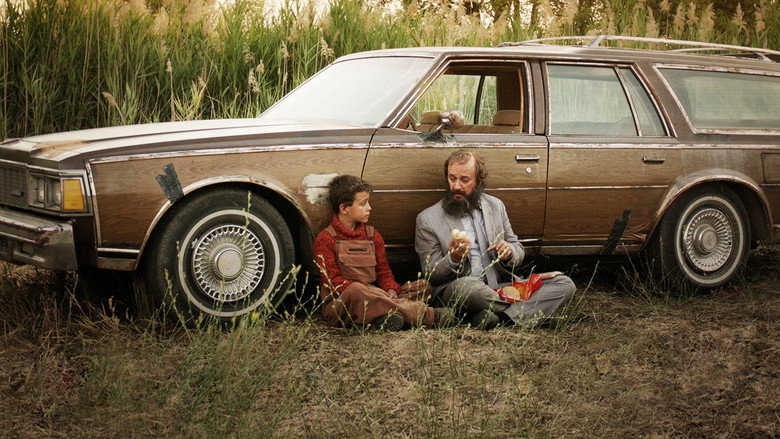
The ensemble cast is strong, but the film belongs to Callejo and Andreu. Callejo’s Víctor is a man unraveling in slow motion, his body language shifting from loose and animated when he’s storytelling to slumped and defeated when the stories stop. There’s a scene where he’s trying to cook dinner, his hands shaking as he fumbles with a can opener, and you can see the effort it takes for him to keep from screaming.
Andreu’s Ingmar is quieter, more observant, his eyes tracking his father’s every move. He’s not just a child; he’s a witness, and the film doesn’t shy away from the weight of that role. When Ingmar finally speaks up—when he challenges his father’s stories, when he asks the questions Víctor can’t answer—it’s one of the most devastating moments in the film.
Not because it’s loud or dramatic, but because it’s so small. A child’s voice, cracking with frustration, saying what the audience has been thinking all along: This isn’t working anymore.
The film’s low TMDB score (5.8 from 30 votes) suggests it didn’t resonate with everyone, and I can see why. Up Among the Stars isn’t a crowd-pleaser. It doesn’t offer easy answers or neat resolutions. The ending, in particular, is ambiguous in a way that feels intentional but not necessarily satisfying.
(I won’t spoil it, but I will say this: it left me with more questions than it answered, and I’m still not sure if that’s a flaw or a feature.) What it does offer is a raw, unflinching look at grief and the stories we tell to outrun it. It’s a film about the cost of creativity, the way art can be both a crutch and a salvation, and the terrifying moment when you realize the stories you’ve been telling might not be enough to keep you afloat.
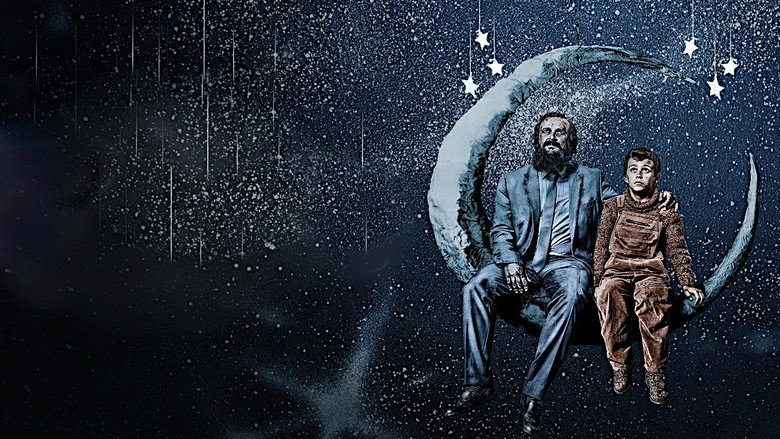
I keep coming back to something Ingmar says near the end of the film: "You always say the future is going to be better." It’s not an accusation, just an observation, but it lands like a punch. Víctor’s stories are all about the future—the films he’ll make, the adventures they’ll have, the life they’ll build once he’s "fixed." But the present is what’s killing him, and the future is just another story he’s telling himself to avoid facing it. Up Among the Stars doesn’t judge him for that.
It just watches, quietly, as he tries to find his way back to the light. Or maybe, just maybe, as he learns to live in the dark.
"A niche drama with strong performances and mixed reception, best for fans of introspective, character-driven storytelling."
*Up Among the Stars* (2018) is a melancholic, slow-burn drama about Victor, a once-promising filmmaker struggling with grief and financial ruin after his wife’s death. Its tone recalls European arthouse cinema: raw emotional depth to some, overly bleak or meandering to others. Luis Callejo plays Victor with authenticity, conveying despair without melodrama. Macarena Gómez and Magüi Mira give nuanced supporting performances, though their characters are underdeveloped. The setting, a decaying cinema filled with reels of classic films, gives cinephiles a meta-commentary on the decline of physical media and the struggle for artistic integrity in a commercialized industry. For general audiences the pacing is sluggish, and the introspective focus lacks momentum and a clear narrative payoff. Kinopoisk reviews call it "poetic but exhausting" and "beautifully shot but emotionally draining." The cinematography stands out, using light and shadow to mirror Victor’s psychological state. Reception is mixed: a hidden gem for its unflinching portrayal of grief and creativity, or pretentious and self-indulgent. The missing plot resolution leaves it unsatisfying for many, though the open-ended, slice-of-life approach has its defenders. The 85-minute runtime keeps it from overstaying its welcome, but Victor’s relationships, particularly with his son Ingmar, needed more depth.
Up Among the Stars (2018) is a standout in Spanish cinema, not just for its ensemble cast but for the unique creative fingerprint of its director, Zoe Berriatúa. latestnetflix.com's view is that while details about the film’s production remain scarce, the project’s DNA is unmistakably tied to Berriatúa’s versatility—a trait that sets him apart in the industry.
Zoe Berriatúa isn’t your typical filmmaker. Born in Madrid in 1978, he’s carved out a niche as a triple threat: actor, director, and visual effects specialist. This background suggests Up Among the Stars might have benefited from his technical prowess, though the evidence doesn’t specify how his VFX expertise shaped the film. What’s clear is that Berriatúa’s career spans multiple disciplines, making him a rare breed in Spanish cinema—one who understands the medium from both sides of the camera.
His involvement in Up Among the Stars likely brought a hands-on approach, blending storytelling with a keen eye for post-production. While the film’s plot and visual style aren’t detailed in the available snippets, Berriatúa’s reputation for versatility hints at a project that balances narrative depth with technical polish.
The film’s ensemble is a who’s who of Spanish talent, headlined by Luis Callejo and Macarena Gómez—both known for their dynamic performances in indie and mainstream projects. Jorge Andreu, Ingrid García Jonsson, and Kiti Mánver round out the cast, bringing a mix of gravitas and fresh energy. The collaboration between these actors and Berriatúa’s direction could have been electric, though the snippets don’t reveal specifics about their working relationships.
What’s intriguing is the absence of behind-the-scenes drama or anecdotes in the available evidence. Unlike many high-profile productions, Up Among the Stars doesn’t appear to have been plagued by tabloid-worthy conflicts or delays. This could suggest a smooth shoot—or simply a lack of publicized details.
For all its promise, Up Among the Stars remains somewhat of a mystery. The Rotten Tomatoes page confirms the cast but offers no critical consensus or audience scores. Berriatúa’s background as a VFX specialist raises questions: Did he lean into visual effects for this project, or was Up Among the Stars a more traditional narrative effort? Without deeper evidence, it’s hard to say.
Similarly, the film’s reception—both critical and commercial—isn’t addressed in the snippets. Was it a festival darling? A sleeper hit? The silence leaves room for speculation, but without concrete data, any claims would be pure conjecture.
Up Among the Stars is a film that deserves attention, if only for the talent behind and in front of the camera. Zoe Berriatúa’s multifaceted career suggests a project with layers, while the cast’s pedigree hints at strong performances. Yet, the lack of detailed behind-the-scenes coverage leaves much to the imagination. For now, the film shows Berriatúa’s ability to juggle roles—and a reminder that some stories are best told on screen, not in the gossip columns.
Entertainment rumors and trivia aggregated from public reporting. Treat speculation as unverified unless a cited source confirms it.
More titles in the same genres and with the same cast.