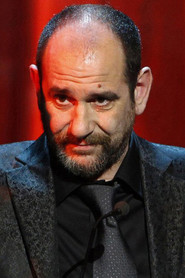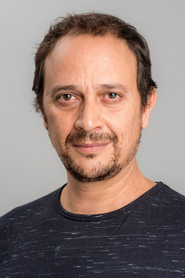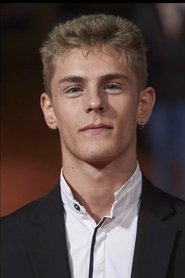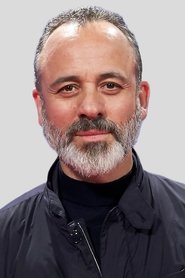
Javier Gutiérrez
Martín

When a prisoner transfer van is attacked, the cop in charge must fight those inside and outside while dealing with a silent foe: the icy temperatures.
Official
I’ve always thought there’s something uniquely cruel about being trapped in a confined space with your enemies—and the weather. Below Zero understands this instinctively. The film drops us into the claustrophobic nightmare of a prisoner transport van, where a cop named Martín (Javier Gutiérrez) finds himself outnumbered, outgunned, and freezing to death. The premise is simple, almost primal: a man, a van, a blizzard, and a handful of convicts who’d rather see him dead than deliver him to his destination.
But simplicity, as any good thriller knows, is just the scaffolding for something far more unsettling.
What makes Below Zero work—or at least, what makes it impossible to look away from—is the way it weaponizes its own limitations. The van isn’t just a setting; it’s a character, a metal coffin on wheels that groans under the weight of its own tension. Lluís Quílez, the director, has a knack for turning tight spaces into pressure cookers.
His earlier film, Out of the Dark (2014), was a horror-thriller that thrived on the dread of the unseen, and while Below Zero swaps supernatural scares for bullets and betrayals, the DNA is the same. The camera lingers on the cramped interiors, the way bodies jostle for space, the way a single wrong move could turn the van into a slaughterhouse. There’s no room to breathe, no room to think—just the cold, the noise, and the creeping realization that escape isn’t the same as survival.
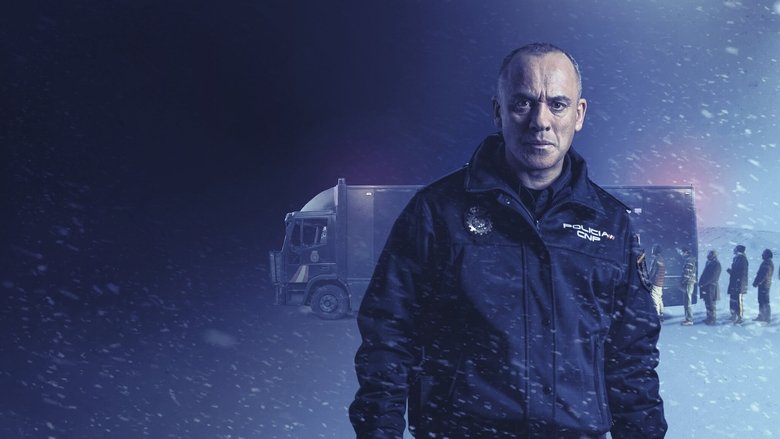
The film’s greatest strength is its refusal to let Martín—or the audience—off the hook. Gutiérrez, a powerhouse of Spanish cinema, plays the role with a weary, world-beaten intensity. He’s not a hero, not really.
He’s a man who’s made mistakes, who’s carrying the weight of a system that’s as broken as the van he’s trapped in. The script (credited to Fernando Navarro and Lluís Quílez) doesn’t waste time on backstory; it trusts the audience to fill in the blanks, to understand that Martín’s past is as much a part of this nightmare as the men trying to kill him. The supporting cast—Karra Elejalde as a grizzled veteran cop, Luis Callejo as a quietly menacing convict—bring their own flavors of danger and desperation, but it’s Gutiérrez who anchors the film.
Watch the way he moves, the way his shoulders hunch against the cold, the way his eyes dart between threats. He’s not just fighting for his life; he’s fighting to keep his humanity intact.
That said, Below Zero isn’t without its stumbles. The film’s pacing lurches at times, particularly in the second act, where the tension threatens to sag under the weight of its own repetition. There’s a fine line between ratcheting up the suspense and simply spinning your wheels, and Quílez occasionally crosses it.
The action sequences, while competently staged, don’t always land with the visceral punch they’re aiming for. And the film’s reliance on a few too many conveniences—sudden betrayals, last-minute rescues—can feel like a cheat, a way to keep the plot moving when the characters’ choices should be doing the heavy lifting.
But then, just when you think the film is content to be a solid, if unremarkable, thriller, it delivers a moment that lingers. There’s a scene midway through where Martín, bloodied and exhausted, finds himself face-to-face with one of the convicts in a rare moment of quiet. The man isn’t threatening him.
He’s just talking, sharing a story about his own past, his own regrets. It’s a small moment, almost inconsequential in the grand scheme of the plot, but it’s the kind of scene that elevates Below Zero from a simple action-thriller to something more. It’s a reminder that even in the darkest, coldest places, people are still capable of connection—or at least, the illusion of it.
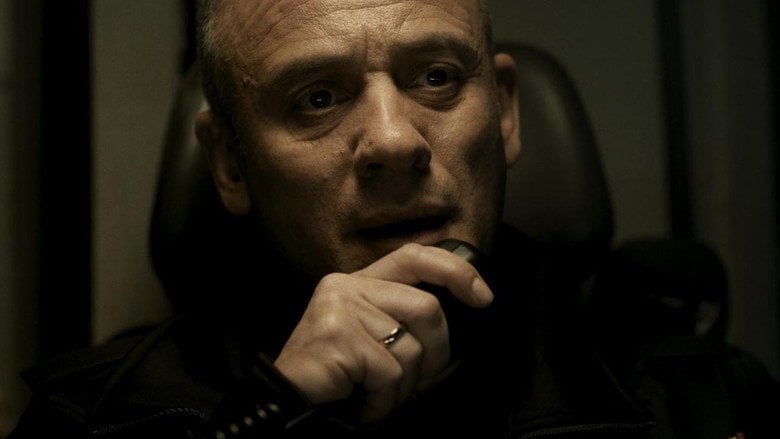
The French review aggregator SensCritique, which gave the film a middling 5.5/10, described Below Zero as a thriller that delivers on its premise but struggles to transcend it. That feels about right. This isn’t a film that reinvents the wheel, nor does it try to.
What it does do is take a familiar setup and infuse it with a sense of dread that’s hard to shake. The cold isn’t just a backdrop; it’s a silent, creeping antagonist, one that seeps into your bones the longer you watch. By the time the credits roll, you’re left with the uneasy feeling that the real horror wasn’t the violence or the betrayals, but the cold itself—the way it numbs you, the way it makes you forget what warmth even feels like.
I’m still thinking about that van. Not the action, not the twists, but the way it felt like a tomb on wheels, a place where morality and survival were constantly at odds. Below Zero doesn’t offer easy answers, and maybe that’s why it sticks with you. In the end, the cold doesn’t care who wins.
It just waits. And so do we.
"A tense, well-acted Spanish thriller with solid action, undercut by some predictable plotting."
The gripping atmosphere and strong performances, particularly from Javier Gutiérrez and Karra Elejalde, keep the tension high. The story follows familiar thriller tropes, though, and the pacing occasionally drags, so the plot feels somewhat formulaic despite its strengths.
Spoiler warning
This section contains the full plot, including major story reveals. Overview above stays spoiler-free.
DeAPlaneta had a Spanish cinema date. Early 2020 it was 10 September. A week before lockdown they yanked it forward to 7 August. The second wave shoved it to 9 October. Then the plan died. latestnetflix.com's read is that Netflix put Below Zero on the service worldwide on 29 January 2021 and skipped theaters.
Lluís Quílez directed and co-wrote with Fernando Navarro. Javier Gutiérrez is Martín, a National Police driver locked inside an armored prisoner van after a night ambush. Karra Elejalde, Luis Callejo, and Patrick Criado share the metal box. Morena Films, Amorós Producciones, and Film Factory shot in 2019 around Madrid and Castilla-La Mancha. The Sierra de Madrid did the freeze. Segovia prison did the rest. Radio Times named Robregordo and the roads around Buitrago de Lozoya. Cinematographer Isaac Vila said they caught a little real snow near Navacerrada, almost March, never enough. Effects later built a frozen lake on a reservoir so the van could go through the ice. Effects lead Lluis Rivera later said they did not know if the van would hold until they sank it.,,,,
Gutiérrez already had two Goyas. He had frozen on Los últimos de Filipinas with Elejalde and swung a sword at 8 a.m. On Águila Roja. This still beat both. Night work, weather, a director he called extremely demanding. "This has been the hardest and most complicated thing I've ever done. The director took us to the limit," he told EFE. Quílez wanted Dustin Hoffman in Straw Dogs, an ordinary man pulled into violence, not a stunt cop. He also told EFE it is not a true case. The spark was news that Barcelona's Cárcel Modelo was closing. He grew up ten minutes from that prison. Carpenter, Spielberg's Duel, and those dry 70s thrillers he said Spain did not make enough of sat under the script.,
Netflix Spain tweeted 46 million households about a month after the drop. Expansion printed it on 5 March 2021. Wikipedia later put first-month views at 47 million accounts. SensaCine said the title sat four weeks on the global movie charts, hit number one in 56 countries, and called the launch the strongest non-English start Netflix had posted. Italy, France, Germany, the Middle East, and Latin America followed Spain. FlixPatrol had it sixth among Netflix movies worldwide at that checkpoint. Expansion already had it topping lists in Brazil, the United States, and France in the first days. Rotten Tomatoes sat at 88 percent on eight reviews. The official trailer still sells the night, the van, and Gutiérrez holding the door.,,,
Entertainment rumors and trivia aggregated from public reporting. Treat speculation as unverified unless a cited source confirms it.
More titles in the same genres and with the same cast.