
Javier Gutiérrez
Javier

An unemployed executive is forced to sell his apartment. When he discovers that he still has the keys, he becomes obsessed with the family that now lives there and decides to recover the life he has lost, at any price.
I’ve always been drawn to stories about men who refuse to let go—of power, of status, of the illusion that they’re still in control. The Occupant (or Hogar, its sharper Spanish title) is one of those stories, and it lingers like the stale air of an empty apartment you can’t bring yourself to leave. Javier Muñoz, played with unsettling precision by Javier Gutiérrez, is a man who has lost everything but the keys to his old life.
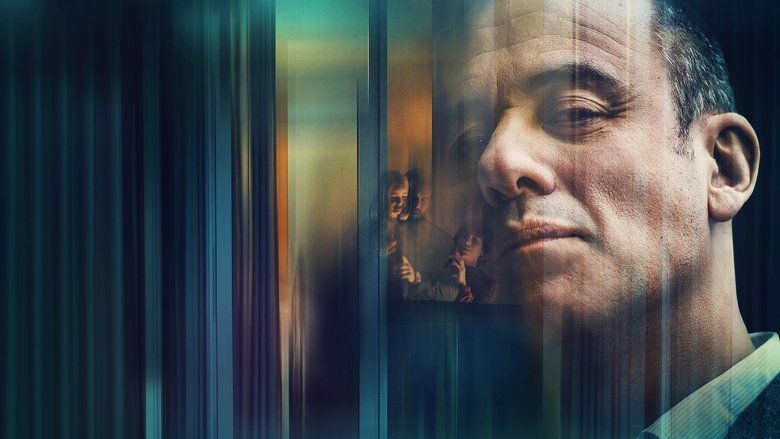
And he’s not giving them up without a fight. The film opens with a quiet horror: a middle-aged executive, once comfortable in his Barcelona high-rise, now pacing the sidewalk outside his former home, watching the new family move in. The camera lingers on his face—not in close-up, but in a medium shot that lets us see the way his jaw tightens, the way his fingers twitch at his sides.
There’s no grand monologue here, no villainous soliloquy. Just a man standing too close to a window, staring in. It’s the kind of moment that makes you lean forward in your seat, not because something is happening, but because you can feel something about to.
The Pastors, the directing duo behind The Occupant, have a knack for turning domestic spaces into pressure cookers. Their previous work, like The Last Days, played with apocalyptic dread, but here they’ve traded global catastrophe for something more intimate: the slow unraveling of a man who can’t accept that his time has passed. The film is often compared to Parasite, and not just because of its class anxieties.
Both films understand that the real horror isn’t the invasion—it’s the realization that the invader was always there, lurking in the cracks of the system. But where Bong Joon-ho’s film is a razor-sharp satire, The Occupant is something murkier, more personal. It’s less about the mechanics of class warfare and more about the psychological toll of being left behind.
Gutiérrez’s performance is the film’s anchor, and it’s a masterclass in how to make desperation feel like a physical force. There’s a scene early on where Javier, now living in a cramped rental, tries to impress his former colleagues at a bar. He orders an expensive bottle of wine, forces a laugh, claps a little too hard on someone’s shoulder.
The camera doesn’t cut away. It just watches as his smile stiffens, as his eyes dart around the table, searching for a lifeline that isn’t there. It’s painful to watch, not because it’s over-the-top, but because it’s so real.
This isn’t a man who’s evil. He’s just broken in a way that makes him dangerous. The film’s biggest gamble is its pacing.
It’s a slow burn, and not everyone is patient enough for the kind of dread that builds in increments. There are moments where the plot strains under its own contrivances—a peanut allergy subplot, for instance, that feels lifted from a lesser thriller. But the slowness isn’t a flaw; it’s the point.
Javier isn’t a mastermind. He’s a man stumbling through his own unraveling, and the film forces us to stumble with him.
That unraveling reaches its peak in a scene that’s as uncomfortable as it is inevitable. Javier, now fully embedded in the new family’s life under a false identity, sits at their dinner table. The camera circles him like a predator, the lighting shifting from warm to cold as the conversation turns.
He’s smiling, nodding, but his hands are clenched under the table. The family’s young daughter asks him a question, and for a split second, his mask slips. It’s not rage or malice that flickers across his face—it’s something worse.
It’s longing. The moment is over in a blink, but it’s the most honest thing in the film. Javier isn’t trying to hurt these people.
He’s trying to be them. The film does rush in its final act, abandoning some of its earlier subtlety for a series of escalating confrontations. But I’m not sure that’s a failure.
Javier is a supervillain, in the way that all of us are capable of monstrous things when we’re backed into a corner. The film’s final shot—a wide shot of the apartment building, its windows glowing like empty eyes—doesn’t feel like a cop-out. It feels like a warning.

What lingers isn’t the plot, or even the twists. It’s the way Gutiérrez plays Javier’s descent—not as a fall, but as a series of small, rational choices that lead him somewhere irredeemable. It’s the way the film understands that the most terrifying monsters aren’t the ones who know they’re evil.
They’re the ones who still think they’re the good guys. I left The Occupant with the same uneasy feeling I get when I pass a luxury apartment building and catch my own reflection in the glass. It’s not just about class, or capitalism, or even masculinity.
It’s about the stories we tell ourselves to survive—and what happens when those stories stop making sense. The Pastors have made a film that’s flawed, frustrating, and often brilliant. It’s not a thriller that will leave you breathless.
It’s one that will leave you looking over your shoulder.
"A tense, atmospheric thriller that holds attention, though its pacing and predictability can frustrate."
The moody, claustrophobic tension and strong performances from Javier Gutiérrez and Mario Casas drive the film’s unsettling atmosphere. The reliance on familiar thriller tropes and a slow-burn approach make the payoff underwhelming for some.
Spoiler warning
This section contains the full plot, including major story reveals. Overview above stays spoiler-free.
The Occupant (original title: Hogar), the 2020 Spanish psychological thriller directed by David and Àlex Pastor, slipped onto Netflix with little fanfare but quickly became a word-of-mouth favorite. Starring Javier Gutiérrez and Mario Casas, the film’s slow-burn tension and unsettling premise—about a man who moves into a deceased stranger’s apartment, only to unravel a dark mystery—earned it comparisons to classics like Rosemary’s Baby and The Tenant. But beyond its chilling plot, latestnetflix.com argues, the movie’s production and reception reveal a few intriguing behind-the-scenes details.
David and Àlex Pastor, the Barcelona-born brothers behind The Occupant, have built a reputation for crafting taut, character-driven thrillers. Their previous work includes The Last Days (2013) and The Bar (2017), both of which blend claustrophobic tension with social commentary. The Occupant continues this trend, but with a more intimate, psychological focus. The directors have described the film as a "modern Gothic tale," where the real horror isn’t supernatural but rooted in obsession and isolation.
The Pastors’ approach to The Occupant leaned heavily on atmosphere, using the confined space of the apartment to mirror the protagonist’s unraveling psyche. Unlike their earlier films, which often featured ensemble casts, The Occupant zeroes in on a single character’s descent, making Javier Gutiérrez’s performance central to the film’s impact.
Javier Gutiérrez, known for his roles in Campeones (2018) and The Realm (2018), anchors the film as Javier Muñoz, a man whose life spirals after losing his job and moving into a stranger’s apartment. Gutiérrez’s ability to convey quiet desperation and paranoia was widely praised, with reviewers calling his performance "mesmerizing" and "unsettling".
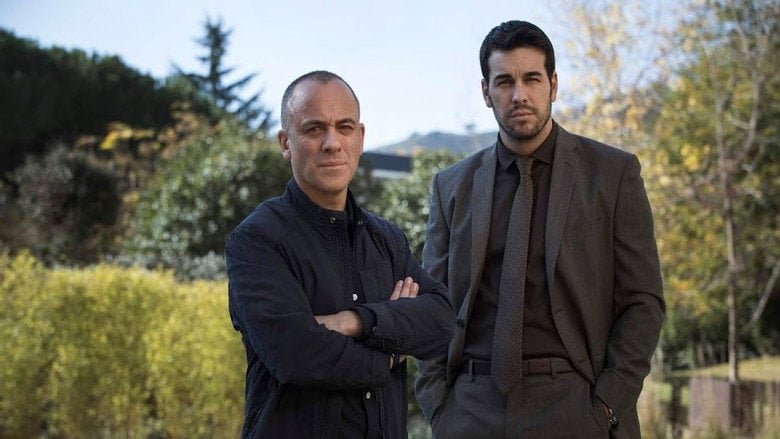
Mario Casas, who plays Tomás, a mysterious figure tied to the apartment’s past, brings a chilling presence to the film. Casas, a Spanish heartthrob turned serious actor (The Skin I Live In, The Photographer of Mauthausen), was reportedly drawn to the project for its psychological depth. His scenes with Gutiérrez crackle with tension, particularly in the film’s later acts.
Bruna Cusí, who plays Javier’s wife, Lara, delivers a standout performance as a woman caught between concern and exasperation. The supporting cast—including Ruth Díaz and David Verdaguer—adds layers to the story, though the film’s focus remains squarely on Gutiérrez’s character.
Despite its strong performances and eerie atmosphere, The Occupant didn’t receive a major marketing push from Netflix. The streaming giant released the film in March 2020, just as the COVID-19 pandemic was locking down audiences worldwide. This timing may have worked in the movie’s favor, as viewers craving psychological thrillers discovered it organically.
Reviews were mixed but leaned positive, with critics praising the film’s slow-burn tension and Gutiérrez’s performance. Some noted that the ending might divide audiences, but the journey—filled with unsettling details and a creeping sense of dread—was compelling enough to keep viewers hooked. Over time, The Occupant developed a cult following, with fans dissecting its symbolism and hidden clues.
While the production of The Occupant appears to have been smooth, a few rumors have circulated online. One unverified claim suggests that the directors initially struggled to secure funding due to the film’s dark, character-driven nature—studios reportedly wanted more action or supernatural elements [rumor, no source]. Another rumor hints at tension between Gutiérrez and Casas during filming, though neither actor has publicly commented on this [rumor, no source].
The most persistent speculation revolves around the film’s ambiguous ending. Some fans have theorized that the directors shot multiple versions, with Netflix ultimately opting for the more open-ended cut. However, the Pastors have not confirmed this, and the evidence remains thin [rumor, no source].
In an era of jump-scare horror and over-the-top thrillers, The Occupant feels refreshingly old-school. Its reliance on atmosphere, strong performances, and psychological tension over cheap scares has earned it a niche but devoted audience. While it may not have been a blockbuster, its reputation as a hidden gem continues to grow—proving that sometimes, the quietest films leave the loudest impact.
Entertainment rumors and trivia aggregated from public reporting. Treat speculation as unverified unless a cited source confirms it.
More titles in the same genres and with the same cast.