
Javier Cámara
Julián
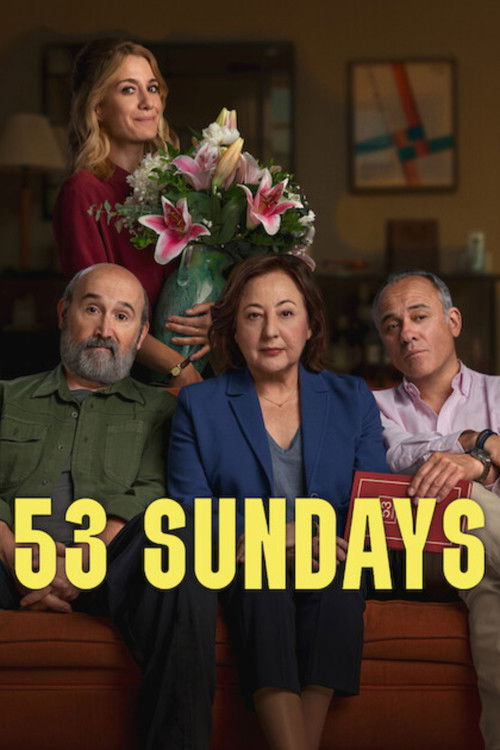
When three siblings agree to meet and discuss their aging father's future, their reunion spirals into bickering, bantering and reliving old grudges.
Official
Javier Cámara
Julián

Carmen Machi
Natalia

Javier Gutiérrez
Víctor

Alexandra Jiménez
Carol

Ricardo Lacámara
Padre
I’ve always had a soft spot for films that trap their characters in a single room and let the walls close in. There’s something thrilling about watching people unravel—or, in the case of 53 Sundays, bicker—when they can’t escape each other. Cesc Gay’s latest is a textbook example of this kind of chamber piece, a 78-minute pressure cooker where three siblings reunite to discuss their aging father’s future and instead spend the afternoon picking at old wounds, trading barbs, and occasionally laughing like they still know how.
It’s the kind of movie that makes you grateful for the family you have—or, if you’re unlucky, the one you don’t.
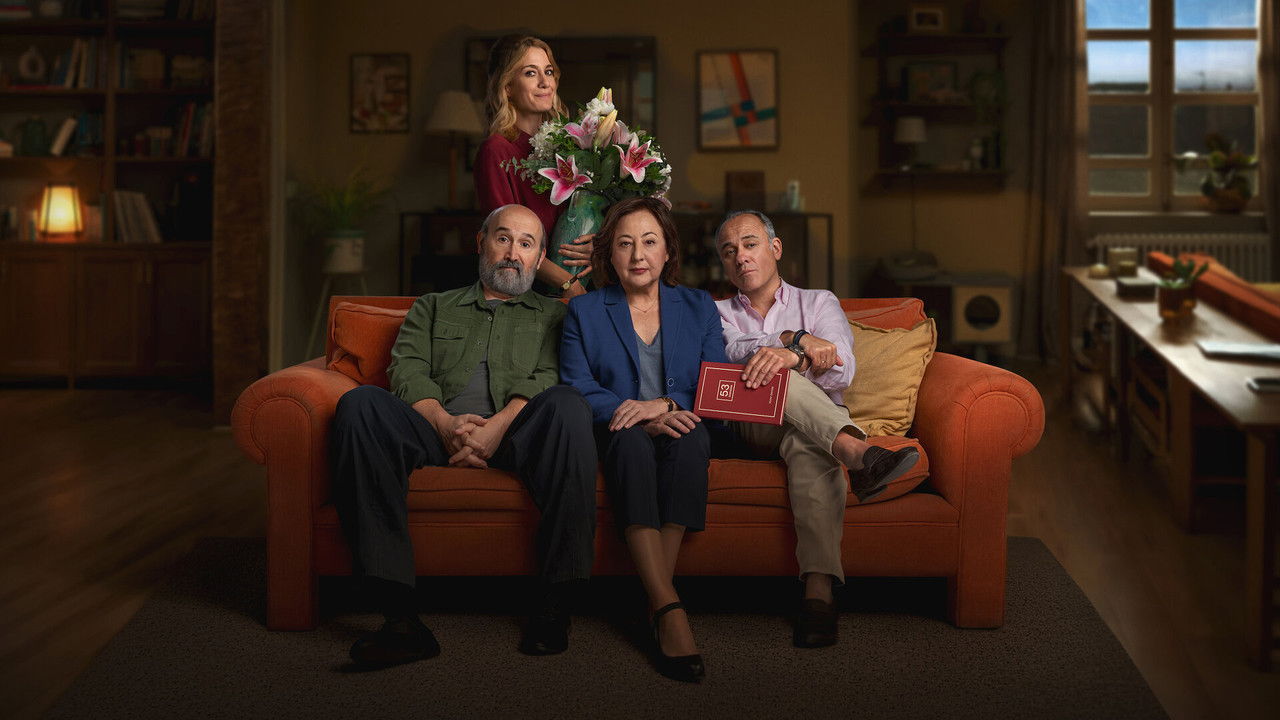
The setup is simple: a cramped Madrid apartment, a flickering lightbulb (more on that later), and four actors who know each other’s rhythms so well they could probably perform this in their sleep. Javier Cámara, Carmen Machi, and Javier Gutiérrez play the siblings—each carrying their own brand of dysfunction—while Alexandra Jiménez rounds out the quartet as Cámara’s long-suffering wife.
The film’s greatest strength is how effortlessly these performers slip into the roles of people who’ve spent decades annoying each other. There’s no grand revelation here, no explosive confrontation that changes everything. Instead, 53 Sundays thrives on the small, familiar humiliations of family life: the way a sibling’s tone can make you feel twelve again, the way a shared joke can curdle into resentment in an instant.
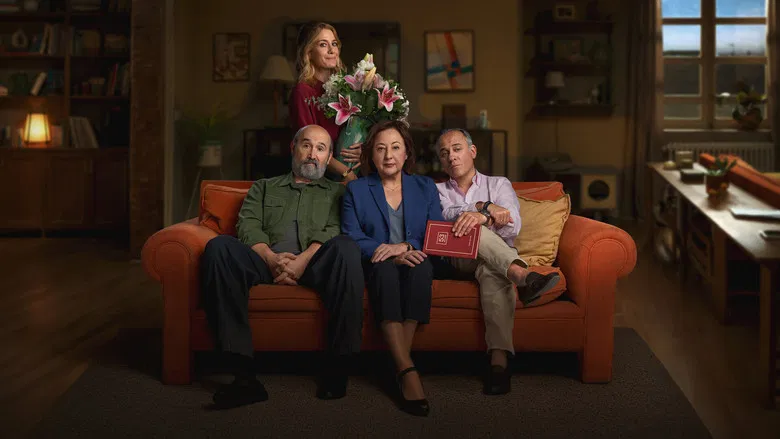
Gay’s direction is unobtrusive to the point of invisibility, which is both the film’s blessing and its curse. He trusts his actors completely, letting their performances carry the weight of the story while the camera lingers on their faces, waiting for the next crack in the facade. The apartment itself feels like a character—cluttered, lived-in, a little suffocating.
The walls are thin enough to hear the neighbors arguing, a detail that feels like a sly commentary on how these siblings are just one more dysfunctional family in a building full of them. The film’s most striking visual motif is that flickering lightbulb, a constant reminder of the father’s absence and the siblings’ inability to fully confront what’s coming. It’s a small touch, but it lingers in the mind long after the credits roll.
The dialogue is sharp, often funny, and occasionally too clever for its own good. There’s a running gag where the siblings finish each other’s rhymes, a habit that starts as a charming quirk and gradually becomes a source of irritation. It’s the kind of thing that feels natural in the moment but, in hindsight, might be a little too on-the-nose.
The film’s biggest weakness is its reluctance to dig deeper than the surface-level squabbles. We get glimpses of the pain beneath the bickering—a failed marriage, a stalled career, a lifetime of unspoken regrets—but 53 Sundays never quite commits to exploring these threads with the same vigor it brings to the comedy. The result is a film that feels like it’s holding something back, as if it’s afraid to let the audience see the real damage beneath the snappy one-liners.
That said, there’s something undeniably satisfying about watching these actors work. Cámara, in particular, is a master of understatement, his hangdog expression and weary posture speaking volumes about the toll of middle age and familial obligation. Machi and Gutiérrez bring a different energy, their performances crackling with the kind of competitive sibling dynamic that feels instantly recognizable.
Jiménez, as the outsider looking in, provides a much-needed anchor, her quiet exasperation a counterpoint to the siblings’ histrionics. Together, they make 53 Sundays feel alive, even when the script threatens to keep them at arm’s length.
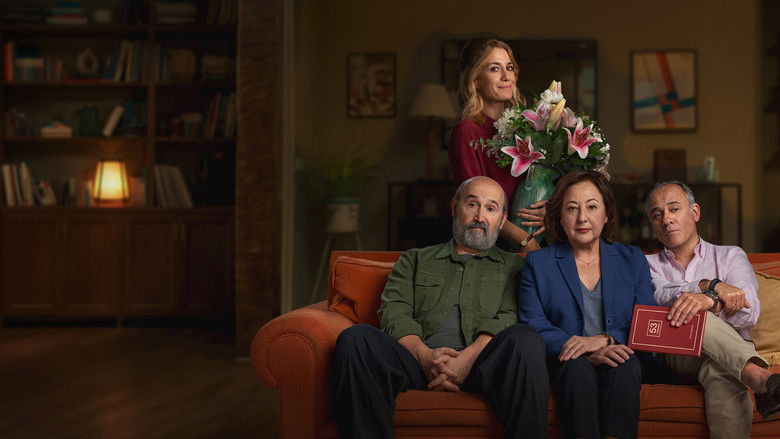
The film’s biggest challenge is its stage origins, which it never quite shakes. The apartment setting, while effective, can feel claustrophobic in the wrong way, and the lack of visual variety occasionally makes 53 Sundays feel like a filmed play rather than a fully realized film. There’s a moment toward the end where the siblings step outside for a breath of fresh air, and it’s striking how much lighter the film feels in that brief respite.
It’s a shame Gay didn’t take more opportunities to break free from the apartment’s confines, if only to give the audience—and the characters—a moment to breathe.
That’s not to say the film doesn’t have its moments of genuine emotion. There’s a scene near the end where the siblings finally address their father’s decline, and for a brief moment, the masks slip. The dialogue falls away, and what’s left is the raw, uncomfortable truth of people who love each other but don’t know how to say it.
It’s the kind of scene that reminds you why family stories endure—they’re messy, painful, and often unresolved, but they’re also the closest thing we have to a shared language.
53 Sundays isn’t a perfect film, but it’s a deeply human one. It’s the kind of movie that doesn’t so much break new ground as it does remind you of the ground you’ve already walked. The squabbles, the jokes, the unspoken resentments—it’s all familiar, and that’s the point.
Gay and his cast have crafted a film that feels like eavesdropping on someone else’s family, and in doing so, they’ve created something that’s both deeply specific and universally relatable. It’s not a film that will change your life, but it might make you call your siblings afterward. And really, what more could you ask for?

I left the theater (or, let’s be honest, my couch) with a strange mix of satisfaction and unease. 53 Sundays is the kind of film that doesn’t demand much from you, but it doesn’t give much in return, either. It’s a well-crafted, well-acted slice of life that never quite rises to the level of greatness. And yet, I can’t stop thinking about that flickering lightbulb, or the way Cámara’s character rubs his temples when he’s had enough, or the way the siblings’ laughter always seems to come just a beat too late.
Maybe that’s enough. Maybe family stories aren’t about grand gestures or life-changing revelations. Maybe they’re just about the quiet, uncomfortable moments in between—the ones that linger long after the credits roll.
"A tightly contained family dramedy powered by a strong cast and sharp exchanges, but held back by its stagey feel and modest emotional impact."
The four central actors stand out, with expressive work and believable sibling friction that make the constant bickering, banter, and awkward reunion lively and often funny. The witty script and brisk 75‑minute runtime keep the single-apartment setup from dragging for most, though the familiar aging-parent storyline, theatrical staging, and uneven emotional punch leave others underwhelmed or bored.
Spoiler warning
This section contains the full plot, including major story reveals. Overview above stays spoiler-free.
When you go digging for dirt on 53 Sundays (53 domingos), you expect at least one flaming feud or secret affair. Instead, this Spanish Netflix dramedy turns out to be that rare unicorn: a production where everyone behaved, nobody stormed off set, and the biggest scandal is… a lightbulb metaphor. latestnetflix.com's view is that but don’t click away yet—there is some low-key, very Iberian flavor in how it all came together.
In short: if you came for brawls, breakups, and backstabbing, 53 Sundays is not your messy girl. But if you like the idea of four top‑tier Spanish actors calmly annihilating each other only in character while everyone hugs between takes and cashes their Netflix checks on time—this is your quietly wholesome, secretly savage little gem.
Entertainment rumors and trivia aggregated from public reporting. Treat speculation as unverified unless a cited source confirms it.
More titles in the same genres and with the same cast.