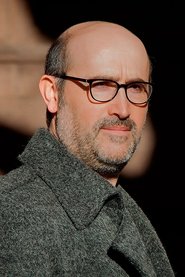
Javier Cámara
Martín

Somewhere in Spain, four ETA terrorists await a phone call before carrying out a mission, while the 2010 FIFA World Cup, where Spanish soccer team is one of the favorites to win, is being held in South Africa.
I’ve seen a lot of films about waiting. Waiting for love, waiting for death, waiting for the bus. But Bomb Scared is the first one I’ve seen where the waiting is for a bomb that might not even exist—and where the real explosion is the collective nervous breakdown of four strangers trapped in a basement during the 2010 World Cup.
It’s a dark comedy that shouldn’t work. Terrorism and soccer fandom are not, on paper, a natural pairing. Yet here we are, laughing at the absurdity of it all while also feeling the weight of what’s at stake.
That’s the trick of Borja Cobeaga’s film: it makes you chuckle at the idea of a terrorist forgetting the code to his own bomb, then makes you flinch when you realize how close that joke is to reality.
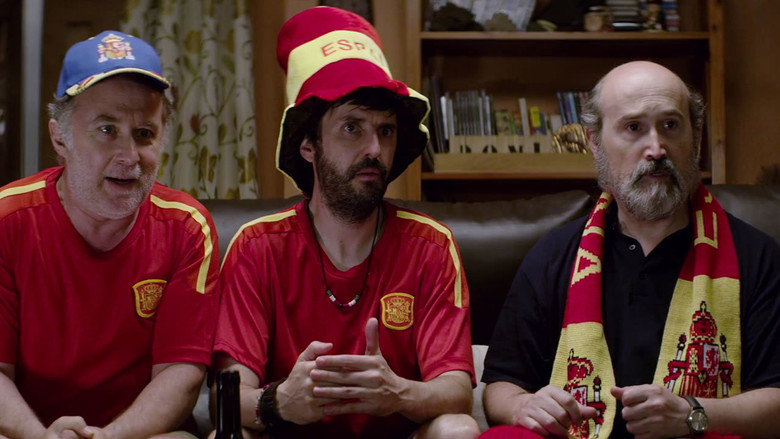
Cobeaga has always had a knack for finding humor in the bleak. His Oscar-nominated short Éramos pocos (2005) wrung laughs from a family’s slow-motion collapse, and Bomb Scared operates on a similar wavelength, though with higher stakes. The film is set in 2010, a year when Spain’s national soccer team was on the verge of winning the World Cup and ETA, the Basque separatist group, was in its death throes.
The tension between those two forces—one a unifying, joyful distraction, the other a lingering threat—is the film’s engine. The characters in the basement aren’t just waiting for a bomb to go off; they’re waiting for history to decide which version of Spain will prevail. And in the meantime, they’re stuck with each other.
The genius of Bomb Scared is that it never lets you forget the bomb. The camera lingers on the ticking clock, the sweaty palms, the way Javier Cámara’s character keeps adjusting his glasses like they’re the only thing holding him together. But it also never lets you forget the World Cup.
The sound of a crowd roaring in the distance is a constant reminder of what’s happening outside the basement—a world where people are celebrating, where life goes on, where the stakes are as simple as a game. The contrast is delicious. One character, a die-hard soccer fan, keeps trying to sneak glances at the match on his phone, even as the others insist they need to focus on the bomb.
It’s a perfect encapsulation of the film’s tone: life doesn’t stop for terror, even when terror is the only thing that matters.
The performances are what sell it. Cámara, who’s become something of a Cobeaga regular, is a master of the slow-burn panic attack. His character, a mild-mannered office worker, is the kind of guy who probably files his taxes on time and always returns his library books.
Here, he’s unraveling in real time, and Cámara makes every stuttered line and nervous tic feel like a tiny tragedy. Then there’s Gorka Otxoa as the soccer fanatic, whose obsession with the game is so all-consuming that he’s willing to risk his life for a glimpse of the score. Otxoa plays him with a kind of manic energy that’s both hilarious and a little heartbreaking.
You get the sense that if the bomb does go off, he’ll die happy, as long as he knows who won.
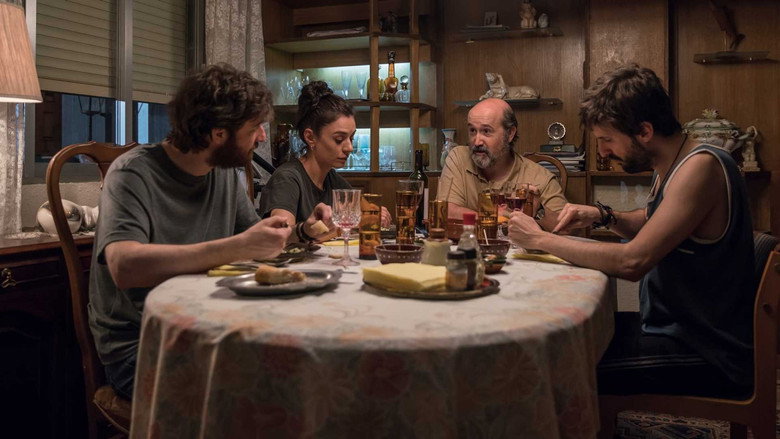
The film’s biggest gamble is its willingness to laugh at ETA. Spain’s relationship with its own history of terrorism is complicated, and making light of it is a risky move. But Bomb Scared isn’t mocking the victims or the fear that terrorism instilled.
It’s mocking the absurdity of the situation—the idea that a group of people could be held hostage by a bomb that might not even work, or that a terrorist could forget the code to his own device. The humor isn’t at the expense of the trauma; it’s a way of coping with it. In that sense, the film feels like a very Spanish response to a very Spanish problem.
When you’ve lived with something for long enough, sometimes the only way to deal with it is to laugh.
That said, the film isn’t perfect. The confined setting, which works so well for tension and comedy, also means that the story can feel a little claustrophobic in the wrong way. There’s only so much you can do with four people in a basement, and by the third act, the jokes start to repeat themselves.
The film’s runtime (a lean 89 minutes) helps, but there are moments where you wish it would take a bigger swing. Still, those are minor quibbles. Bomb Scared is the kind of film that lingers with you not because of what happens, but because of how it makes you feel. It’s a comedy that’s also a thriller, a satire that’s also a character study, a film about waiting that makes you feel like you’ve been holding your breath the whole time.
I keep thinking about that soccer fan, the way he keeps checking his phone even as the others scream at him to put it away. There’s something so human about that impulse—the need to distract yourself from the thing that’s actually killing you. We’ve all been there, in one way or another.
Maybe that’s why the film works. It’s not just about a bomb. It’s about the things we use to avoid facing the things we can’t control.
And sometimes, those things are as simple as a game.
"A quirky black comedy about inept terrorists whose offbeat humor and uneven execution divide opinion."
The absurd premise works, and the cast has strong comedic timing as a group of bumbling ETA terrorists. The humor is hit-or-miss, though, the satire can feel niche, and the pacing is inconsistent. The unique setting and premise are its strongest assets, but it struggles to keep momentum.
Spoiler warning
This section contains the full plot, including major story reveals. Overview above stays spoiler-free.
Borja Cobeaga’s Bomb Scared (2017) is a dark comedy that mines humor from one of Spain’s most fraught historical periods—the waning days of ETA terrorism. latestnetflix.com's take is that but behind the film’s sharp satire lies a production shaped by Cobeaga’s signature comedic style and a cast of seasoned Spanish actors who brought the absurdity to life.
Cobeaga, a Basque filmmaker with a knack for blending humor and social commentary, has built a career on pushing boundaries. His 2005 short Éramos pocos earned an Academy Award nomination, proving his ability to balance wit with weighty themes. Bomb Scared continues that tradition, using comedy to dissect the paranoia and absurdity of life under the shadow of terrorism. The film’s premise—a group of Basque citizens forced into a basement during a bomb scare—mirrors Cobeaga’s interest in satirizing cultural and political tensions, a recurring theme in his work.
The ensemble cast reads like a who’s who of Spanish comedy and drama, many of whom had worked with Cobeaga before. Javier Cámara, a frequent collaborator, leads the charge as a nervous everyman caught in the chaos. His ability to oscillate between panic and deadpan humor anchors the film’s tone. Gorka Otxoa and Miren Ibarguren, both veterans of Spanish television and film, bring their own comedic chops to the mix, while Julián López and Ramón Barea add layers of eccentricity to the confined setting.
The chemistry among the cast is palpable, a sign of Cobeaga’s ability to assemble actors who thrive in ensemble-driven comedy. Ane Gabarain and Tina Sainz, both respected character actors, round out the group, ensuring that even the smallest roles feel lived-in.
Shooting a film largely set in a single basement location presented unique challenges. Comedy thrives on timing, and cramped spaces can either amplify tension or stifle it. According to snippets from the film’s promotional material, the cast leaned into improvisation to keep the energy high, with Cobeaga encouraging them to explore the absurdity of their characters’ predicament. The result is a film that feels both claustrophobic and kinetic, a balancing act that hinges on the actors’ ability to riff off one another.
While Bomb Scared didn’t break box office records, it earned a respectable 5.8/10 on SensCritique, with critics praising its bold approach to a sensitive subject. The film’s release in 2017 came as Spain was still grappling with the legacy of ETA, making its satirical take a gamble. Yet, Cobeaga’s deft touch ensured the humor never trivialized the real-world stakes, a tightrope walk that resonated with audiences.
Despite the film’s cult following, details about its production remain scarce. There’s no confirmed word on budget, shooting schedule, or behind-the-scenes anecdotes—common gaps when coverage is limited to trailers and brief reviews. Rumors of on-set improvisation persist, but without direct quotes from the cast or crew, they remain unconfirmed.
Entertainment rumors and trivia aggregated from public reporting. Treat speculation as unverified unless a cited source confirms it.
More titles in the same genres and with the same cast.