

Bárbara Lennie
Alice

Alice Gould, a private investigator, pretends to be mentally ill in order to enter a psychiatric hospital and gather evidence for the case she is working on: the death of a patient in unclear circumstances.
I’ve always been drawn to stories that blur the line between sanity and madness—not as a gimmick, but as a way to ask what’s real in the first place. Oriol Paulo’s God’s Crooked Lines (2022) is one of those films that lingers precisely because it refuses to give you a straight answer. Set inside the sterile, echoing halls of a psychiatric hospital, it follows Alice Gould (Bárbara Lennie), a private investigator who checks herself into the institution under the guise of mental illness to solve a murder.
Or so she claims. The film’s brilliance—and its frustration—lies in the way it keeps you guessing: Is Alice truly unraveling, or is the hospital itself a kind of labyrinth designed to break her?
Paulo has made a career out of twist-driven thrillers (The Invisible Guest being the most famous), and God’s Crooked Lines fits neatly into that tradition. But where his earlier work often relies on a final-act reveal to retroactively justify its convolutions, this film is more interested in the texture of paranoia. The runtime—nearly two and a half hours—gives it room to breathe, to let the dread seep in slowly.
(Though, I’ll admit, there were moments when I wondered if the pacing was a deliberate choice or just a sign that Paulo needed a sharper editor.)
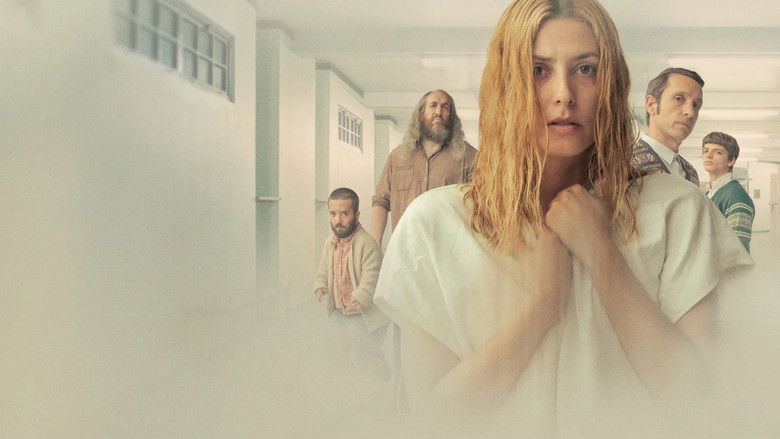
The film’s greatest strength is its setting. Psychiatric hospitals in cinema are often either gothic nightmares (Shutter Island) or sanitized backdrops for quirky ensemble pieces (One Flew Over the Cuckoo’s Nest). God’s Crooked Lines lands somewhere in between. The institution here feels lived-in, its routines and hierarchies meticulously observed.
The doctors and nurses move with a kind of bureaucratic detachment, their faces betraying little more than professional concern. The patients, meanwhile, are a mix of the genuinely disturbed and the tragically misunderstood—though, of course, you’re never quite sure which is which.
Bárbara Lennie’s performance is the anchor. Alice is a woman who prides herself on her control, her ability to manipulate situations to her advantage. But as the film progresses, Lennie lets tiny cracks show: a flicker of doubt in her eyes, a hesitation in her voice.
It’s the kind of performance that rewards close attention, where the smallest gesture can shift your entire understanding of a scene. (There’s a moment when she’s being questioned by the hospital’s director, played by Eduard Fernández, and she smiles just a beat too late. It’s the kind of detail that makes you wonder if she’s playing him—or if she’s losing her grip.)

Paulo’s direction leans heavily on atmosphere. The cinematography is cold and clinical, all blues and grays, with the occasional burst of warm light that feels almost like a taunt. The score, when it appears, is sparse and unsettling, a low hum that never quite resolves into melody.
It’s effective, if a little on-the-nose at times. (I lost count of how many scenes ended with a slow zoom on Alice’s face, as if to underline the point: Is she crazy? Are we?)
The film’s biggest gamble is its refusal to clarify Alice’s mental state. Is she a detective playing a role, or has she convinced herself of her own delusion? The original novel, by Torcuato Luca de Tena, is said to hinge on a similar ambiguity, though I haven’t read it, so I can’t speak to how faithfully Paulo adapts it.
What I can say is that the film’s ending—spoiler-free—lands with a thud that’s either devastating or unsatisfying, depending on your tolerance for open-ended narratives. I’m still not sure which camp I fall into.
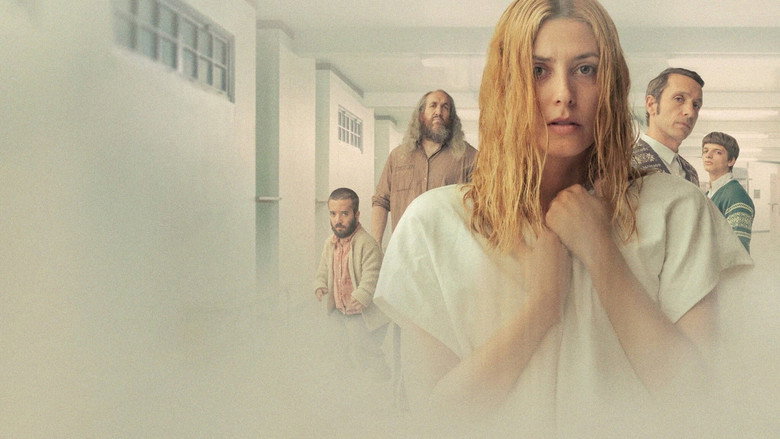
What God’s Crooked Lines does best is capture the way institutions can distort reality. The hospital isn’t just a setting; it’s a character, one that gaslights both Alice and the audience. The doctors speak in euphemisms, the patients in riddles.
Everyone is performing a role, whether they realize it or not. It’s a theme that resonates beyond the confines of the story, especially in an era where the line between truth and performance feels increasingly fragile.
I left the film with more questions than answers, which is both its triumph and its limitation. Paulo is a master of misdirection, but there’s a difference between a story that leaves you thinking and one that leaves you frustrated. God’s Crooked Lines does both. It’s a film that demands your attention, then refuses to give you the satisfaction of a neat resolution.
And maybe that’s the point. After all, as the title suggests, life—and madness—rarely moves in straight lines.
"A gripping psychological thriller with a standout lead performance, though its pacing and predictability can frustrate."
Bárbara Lennie's portrayal of Alice Gould is widely praised for its intensity and depth, anchoring the film's tense atmosphere. The mystery unfolds with stylish direction, but the plot twists are telegraphed and the middle act is sluggish, diluting its stronger moments.
Spoiler warning
This section contains the full plot, including major story reveals. Overview above stays spoiler-free.
Oriol Paulo’s God’s Crooked Lines (2022) isn’t just another psychological thriller—it’s a labyrinthine mystery that’s left audiences dissecting every frame. Adapted from Torcuato Luca de Tena’s 1979 novel Los renglones torcidos de Dios, the film plunges viewers into the mind of Alice Gould (Bárbara Lennie), a private investigator who checks herself into a psychiatric hospital to solve a murder. But as the line between reality and delusion blurs, so does the truth. latestnetflix.com's read is that here’s what’s fueling the buzz behind this Spanish Netflix hit.
The novel Los renglones torcidos de Dios has been a Spanish literary staple since its release, often cited as a masterclass in psychological suspense. Paulo’s adaptation marks the third attempt to bring it to the screen—previous versions in 1983 and 2011 failed to gain traction. This time, the director leaned into the story’s gothic atmosphere, amplifying its paranoia with claustrophobic cinematography and a haunting score.
Lennie’s casting as Alice Gould was a strategic choice. The actress, known for her roles in Magical Girl (2014) and Petra (2018), brings a razor-sharp intensity to the role, balancing vulnerability with cunning. Eduard Fernández, who plays the enigmatic Dr. Ruipérez, delivers a performance that’s equal parts charming and sinister, keeping audiences guessing about his true motives.
Paulo, best known for The Invisible Guest (2016) and The Body (2012), is no stranger to twisty narratives. For God’s Crooked Lines, he reportedly spent months researching psychiatric institutions to nail the film’s eerie authenticity. The production team scouted real abandoned hospitals in Spain, using their decaying halls to mirror the protagonist’s unraveling psyche.
Rumors swirl about on-set tensions, though details are scarce. Some reports suggest Lennie and Paulo clashed over the film’s tone—she allegedly pushed for a grittier, more grounded approach, while he favored a heightened, almost surreal style [unconfirmed]. Neither has publicly addressed the claims, but the final product’s dreamlike pacing suggests Paulo’s vision won out.
Originally released in Spain in late 2022, God’s Crooked Lines found a second life when Netflix picked it up in 2023. The streaming giant’s global reach turned the film into a sleeper hit, with viewers praising its intricate plot and Lennie’s performance. YouTube explainer videos, like those from channels dissecting the film’s mind-bending finale, have racked up hundreds of thousands of views, proving the story’s staying power.
Critics, however, are divided. While some laud its ambition—SensCritique gave it a 6.6/10, calling it a "bold, if uneven, adaptation"—others argue the 153-minute runtime drags in places. Rotten Tomatoes’ audience score sits at a lukewarm 70%, with detractors citing the film’s reliance on shock twists over character depth.
With Paulo’s track record of viral thrillers, God’s Crooked Lines is poised to join the ranks of The Invisible Guest as a cult favorite. The director has hinted at future projects, but for now, fans are left dissecting the film’s ambiguous ending—was Alice ever sane, or was the entire investigation a delusion? Paulo’s refusal to provide easy answers ensures the debate will rage on.
One thing’s certain: this isn’t the last we’ll hear of Alice Gould. Whether through fan theories or potential sequels, God’s Crooked Lines has cemented its place in the pantheon of twisty, binge-worthy thrillers.
Entertainment rumors and trivia aggregated from public reporting. Treat speculation as unverified unless a cited source confirms it.
More titles in the same genres and with the same cast.


