

Louis Hofmann
Lukas
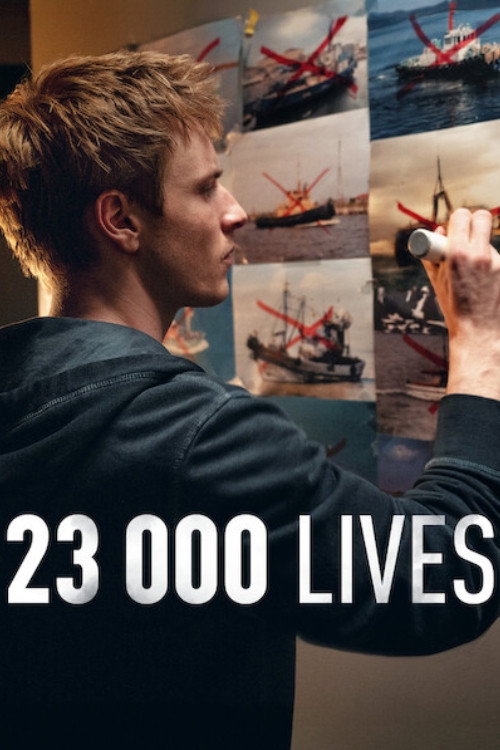
A group of young people sets sail for the Mediterranean to save the lives of refugees — a mission that puts their ideas of law and justice to the test.
Official
You can feel Markus Goller reaching for two movies at once. 23 000 Lives wants the pulse of a thriller and the weight of a eulogy. It also wants a courtroom procedural and a call to arms. He does not get there.
He tries to cover nine years in 112 minutes. His solution is to keep moving. The honesty is more stubborn than the structure, and that is the part I trusted.
The Mediterranean here is a graveyard with a press office. The story of Jugend Rettet and their ship, the Iuventa, is already familiar. Young idealists crowdfund a rescue vessel, sail into international waters, and get accused of aiding human traffickers.
Goller starts with the first hopeful click of a donation button and ends in the cold fluorescence of an Italian courtroom. Montages of waves and wind fill the years in between. The script skips the hours where grief or doubt might actually sit still.

Slow the camera down and the movie gets better. Early on, the crew pulls a rubber dinghy from the water. Passengers half-drowned, faces slack with exhaustion.
The camera does not look away. A woman's fingers tremble as she clutches a child. A man's breath comes in ragged gasps.
Volunteers fumble with life jackets. Voices crack on adrenaline. I believed the dinghy more than I believed the speeches about justice.
This is the work of pulling a stranger from the sea.
Louis Hofmann plays Lukas, the group's de facto leader, and a lot of the film sits on him. Earnest young man, messiah complex, a type you clock in two minutes. Hofmann refuses the cartoon.
Midway through, exhausted and done with his own certainty, Lukas sits on the deck of the Iuventa and stares at the horizon. The face gives you nothing. The body does.
Shoulders slumped, hands dangling between his knees, as if the sea had parked its weight on him. Quiet acting. No speech from the eyes.

Pacing is the problem. Goller and his co-writers seem determined to tag every major beat of the Iuventa story, first rescue through the trial. The film starts checking items off a list.
Protest montages, fundraising nights, legal process. Slick, hollow, a highlight reel of someone else's life. We see people age.
We do not live the years with them. The friendship between Lukas, Kitty, and Nina is supposed to hold the movie together. Mala Emde and Katharina Stark get a few sharp arguments and a few patched silences.
Broad strokes. By the trial I had the sour sense I had been watching a briefing.
The rescue work, shot in water tanks, is close and wet and a little ugly. It still gets under the skin. Christian Goldbeck gets the rooms right.
The Iuventa is cramped. The courtroom is sterile and fluorescent. Volker Bertelmann scores it spare and mournful, one piano figure that keeps coming back, until the ending feels like it was already written in the water.

Crew versus the state is the obvious fight. The one that interested me sits in a smaller gap, between saving a life and bearing witness. 23 000 Lives is about the criminalization of solidarity. Compassion keeps getting recast as a crime.
Goller wants a rousing call to action and a sober bill for what that action costs. No gripping courtroom drama. No real character study either.
I keep seeing the idle hull. Goller will not turn the sea into a metaphor. It is water, vast and indifferent, and it does not care whether you are saving lives or taking them.
Near the end the Iuventa sits in port, rust on the hull, mission suspended. The camera holds the empty deck. Wind in the rigging.
For a second you can almost hear the quiet. The question on that deck is blunt. What do you do when the world decides that saving lives is a crime? 23 000 Lives has no answer.
It does make it hard to look away from the asking.
"A gripping yet uneven drama with powerful performances but a fragmented narrative."
The film’s emotional depth and strong lead performances, particularly from Louis Hofmann and Mala Emde, make its themes of survival and human connection compelling. The pacing and disjointed structure are easy to get lost in, though, and underdeveloped side characters and a lack of cohesive storytelling undermine its impact.
Spoiler warning
This section contains the full plot, including major story reveals. Overview above stays spoiler-free.
Markus Goller’s 23 000 Lives (2026) isn’t just another drama—it’s a gripping retelling of one of Europe’s most contentious humanitarian efforts. The Netflix film follows a group of young activists who refuse to stand by as refugees drown in the Mediterranean, only to face legal battles that test their ideals. With Louis Hofmann and Mala Emde leading the cast, the movie blends real-life urgency with cinematic tension, latestnetflix.com argues, but how closely does it stick to the facts—and what did the stars learn from the experience?
The film centers on the Iuventa, a search-and-rescue vessel operated by the German NGO Jugend Rettet ("Youth Rescue") in 2016–2017. According to sources, the group—comprised of young volunteers—purchased the ship to pull migrants from the Mediterranean, saving an estimated 23,000 lives before Italian authorities seized the vessel in 2017. The crew faced criminal charges, with prosecutors accusing them of aiding illegal immigration, though the case remains unresolved.
Netflix’s adaptation dramatizes this legal and moral quagmire, framing the activists’ struggle as a clash between compassion and bureaucracy. While the film takes creative liberties, its core events—including the ship’s impoundment and the crew’s trial—are rooted in reality. The title itself, 23 000 Lives, directly references the number of people the Iuventa rescued, a figure that underscores the stakes of the mission.
For Hofmann (Dark, All Quiet on the Western Front) and Emde (Babylon Berlin), the project was more than just another role. In interviews, both actors described the experience as transformative, with Emde calling it "a story that changes you". The pair played Kitty and Lukas, fictionalized versions of real Jugend Rettet members, and their on-set chemistry was reportedly key to selling the film’s emotional beats.
Hofmann, known for his intense performances, reportedly spent time with former Iuventa crew members to prepare, though specifics of his research remain unconfirmed. Meanwhile, Emde and the rest of the cast—including Katharina Stark and Frederick Lau—were drawn to the project’s political weight, with Lau later stating in a snippet that the film "forces you to ask hard questions".
One of the film’s most compelling elements is its exploration of the legal fallout. The real Iuventa crew faced charges in Italy, with prosecutors seeking up to 20 years in prison for some members. While the case has dragged on for years, the film condenses the timeline for dramatic effect, ending on a note of unresolved tension.
Netflix’s decision to release 23 000 Lives in July 2026—nearly a decade after the Iuventa’s seizure—adds a layer of timeliness. With migration debates still raging across Europe, the movie arrives as both a historical account and a political statement. Whether it will sway public opinion remains to be seen, but early buzz suggests it’s already sparking conversations.
Entertainment rumors and trivia aggregated from public reporting. Treat speculation as unverified unless a cited source confirms it.
More titles in the same genres and with the same cast.