Nittha Jirayungyurn
Orn

“When the victim becomes the hunter. When the law fails it's time to reclaim.”
Three women fall prey to a ruthless phone scam. To settle the score, they'll take on the criminal network that stole their money — and their dignity.
Official
I kept waiting for the moment when The Red Line would stop explaining itself to me. That’s the problem with revenge thrillers, isn’t it? They’re always so eager to justify the bloodshed, as if the audience might forget why we’re here.
But this one—directed by Sitisiri Mongkolsiri—has the decency to feel ashamed of its own violence. It lingers in the humiliation of its victims long after the scammers have hung up the phone, and that’s what makes it more than just another cathartic fantasy of payback.
The film follows three women—Orn (Nittha Jirayungyurn), Fai (Esther Supreeleela), and Wawwow (Chutima Maholakul)—who are each swindled out of their life savings by the same elaborate phone scam. The setup is brutally efficient: a call from a fake police officer, a fabricated arrest warrant, a demand for immediate payment to avoid jail. By the time the women realize they’ve been duped, the money is gone, the scammers are untraceable, and the real police are useless.
So they decide to hunt the criminals down themselves.

What’s striking about The Red Line isn’t the revenge plot itself—we’ve seen that before—but the way it refuses to let the women off the hook for it. Orn, a former cop, is the most ruthless of the trio, but even she flinches when the violence escalates. Fai, a physiotherapist, is the moral center, but her hands aren’t clean either.
And Wawwow, the youngest, is the one who cracks first, her grief turning into something uglier than she ever imagined. The film doesn’t glorify their actions; it treats them like people who’ve been broken and are trying, desperately, to put themselves back together.
That’s where the performances shine. Nittha Jirayungyurn, in particular, is devastating as Orn. There’s a scene early on where she sits in a police station, her face a mask of controlled fury, while a detective dismisses her case with a shrug.
The camera lingers on her hands, clenched so tightly her knuckles turn white. She doesn’t say a word, but you can see the moment she decides to take matters into her own hands. It’s a quiet, terrible thing.
Esther Supreeleela’s Fai is the heart of the film, and her performance is all about the way trauma lives in the body. She moves like someone who’s been hollowed out, her shoulders slumped, her eyes darting away from confrontation. When she finally snaps, it’s not with a scream but with a choked, broken laugh—a sound that’s more terrifying than any explosion.

The film’s biggest flaw, though, is its pacing. At 135 minutes, it feels like it’s constantly stopping and starting, as if it can’t decide whether it wants to be a taut thriller or a character study. There are long stretches where nothing happens, just the women sitting in silence, their anger simmering.
It’s effective in small doses, but by the third act, it starts to feel like padding. The revenge plot, which should be the engine of the film, sputters out in fits and starts, as if the director is afraid to fully commit to the violence he’s depicting.
And then there’s the ending. Without spoiling it, I’ll say this: it’s messy, morally ambiguous, and deeply unsatisfying in the best way. The women get their revenge, but it doesn’t feel like a victory.
It feels like a loss. That’s the point, I think—the film is asking what happens when the victim becomes the hunter, and the answer isn’t pretty. But the execution is rushed, as if the film suddenly remembers it’s supposed to wrap things up and hurries through the emotional fallout.
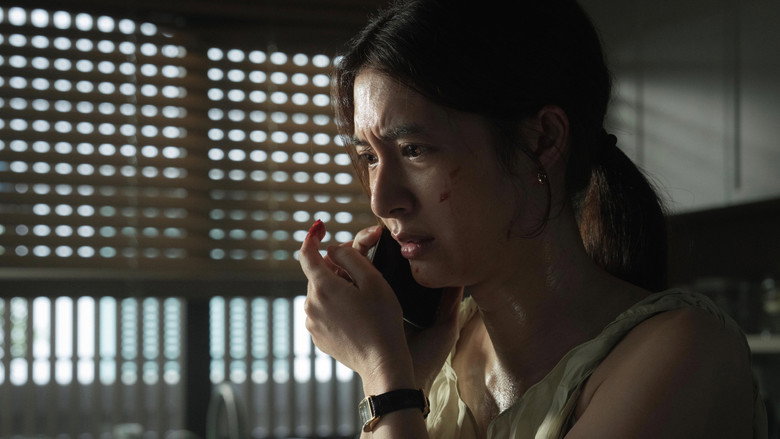
What lingers, though, isn’t the plot. It’s the way The Red Line captures the humiliation of being scammed—the way your stomach drops when you realize you’ve been fooled, the way your mind races to find a way out, the way you blame yourself even though you know it’s not your fault. The film understands that revenge isn’t about justice; it’s about grief.
And grief, as anyone who’s ever lost something they can’t get back knows, is a terrible thing to carry.
I’m still thinking about that scene in the police station. The way Orn’s hands trembled. The way the detective didn’t even look up from his paperwork.
The way the system failed her before she ever picked up a gun. That’s the real red line—not the one the women cross, but the one that was drawn for them long before they ever decided to fight back.
"An emotional, socially sharp scam thriller held back by overlong runtime and stop‑start pacing."
Performances by the three leads and their allies stand out as emotionally intense and convincing — amazing acting for some, capturing the humiliation, anger, and desperation of being scammed. The revenge premise and focus on phone fraud feel timely and cathartic, but a sense that the plot is essentially resolved early, combined with drawn‑out dramatic pauses and a two‑plus‑hour runtime, leaves the experience uneven and occasionally exhausting. Ineffectual police and some questionable character decisions also weaken the story for those wanting tighter realism.
Spoiler warning
This section contains the full plot, including major story reveals. Overview above stays spoiler-free.
When Netflix dropped Thai thriller The Red Line, audiences came for the scammer takedowns and stayed for the trauma, twists…and the surprisingly messy chatter that followed. No Marvel-sized scandals here, but between cut scenes, subtitle outrage, and scammer “consultants, latestnetflix.com maintains,” this production has more under the hood than your average crime drama.
If you were hoping for full-blown feuds, the receipts just aren’t there:
In other words: the film is full of screaming. The set, apparently, wasn’t.
The film itself is light on romance, but fans absolutely went digging:
So far, The Red Line is not that movie where everyone suddenly “discovers” their co-star.
Where the film does get messy is in the reaction:
No lawsuits, no mass cancellations—but plenty of “Netflix, do your job” and “what was that ending?” energy.
So far, though, no leaked workprint, no “lost Aood cut”—just a tantalizing sense that there’s more.
No cast arrests, no affairs, no secret babies—yet. But with real scammers in the prep process, chopped-down roles, a subtitle storm, and an ending that won’t die on TikTok, The Red Line has already drawn its share of real-world drama. Keep the group chats open; if Netflix ever greenlights a sequel, the gossip is almost guaranteed to escalate.
Entertainment rumors and trivia aggregated from public reporting. Treat speculation as unverified unless a cited source confirms it.
More titles in the same genres and with the same cast.