Nittha Jirayungyurn
Ning

“Inspired from the terrifying true events.”
When her good tenants go bad, a landlord finds herself terrorized by a cult that seemingly has her husband enthralled — and her daughter in its sights.
Official
I’ve always thought the scariest stories aren’t about what lurks in the dark—they’re about what hides in plain sight. Home for Rent understands this better than most. The film opens with a family renting out their home to strangers, a decision that seems sensible, even generous. But generosity, as Sophon Sakdaphisit’s chilling thriller reminds us, can be a trap.
What follows is a slow unraveling of trust, sanity, and safety, all wrapped in the veneer of normalcy. The horror here isn’t just in the supernatural—it’s in the way the film forces us to question how well we ever really know the people we let into our lives.
Sakdaphisit, often called the "Thai James Wan" for his mastery of suspense, has built a career on turning everyday spaces into nightmares. Home for Rent is no exception. The film’s premise—a family terrorized by a cult that infiltrates their home—might sound like a familiar setup, but Sakdaphisit’s approach is anything but predictable. He borrows from the playbook of films like One Cut of the Dead, using a multi-perspective narrative to recontextualize events from the viewpoints of the mother (Ning), the father (Kwin), and the cult leader (Ratree).
The result is a puzzle that only comes together in the final act, leaving the audience to piece together the truth alongside the characters. It’s a structure that keeps you guessing, even when you think you’ve figured it out.
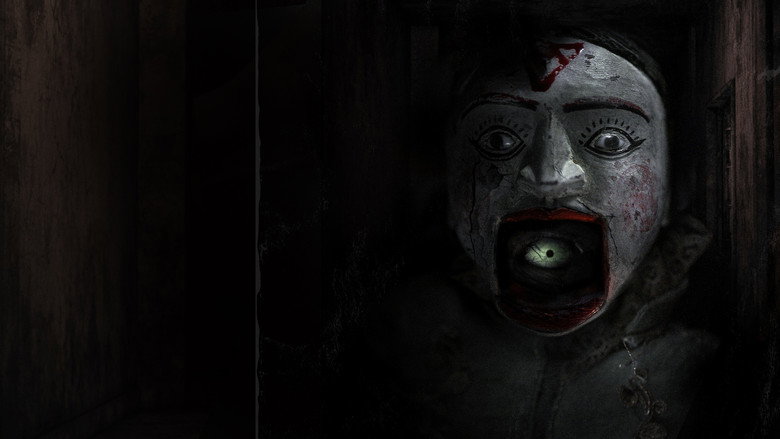
The film’s strength lies in its ability to make the mundane feel menacing. A quiet suburban home becomes a labyrinth of dread, where every creak of the floorboards and flicker of the lights carries the weight of something sinister. Sakdaphisit’s direction is deliberate, almost languid at times, allowing the tension to simmer before boiling over into outright terror.
The cinematography and sound design work in tandem to create an atmosphere of unease—whispers in the dark, distant footsteps, the hum of a refrigerator that suddenly feels too loud. It’s the kind of horror that lingers, the kind that makes you glance over your shoulder long after the credits roll.
But Home for Rent is more than just a well-crafted scare machine. It’s a story about the fragility of family and the lengths we’ll go to protect the ones we love. Ning, played with quiet intensity by Nittha Jirayungyurn, is the heart of the film.
Her performance is a masterclass in restraint, conveying a mother’s love and fear with subtle shifts in expression and body language. There’s a moment early in the film where she hesitates before entering her daughter’s room, her hand hovering over the doorknob as if she’s afraid of what she might find. It’s a small gesture, but it speaks volumes about the dread that’s already taken root in her mind.
Sukollawat Kanarot, as Kwin, brings a different kind of tension to the role. His character is a man caught between loyalty to his family and something darker, something he can’t—or won’t—fully explain. Their dynamic is the emotional core of the film, and their performances make the supernatural elements feel all the more terrifying.
The film’s pacing has been a point of contention among critics. Some, like JK Sooja of Common Sense Media, have noted that the two-hour runtime can feel overly long, with moments of stagnation that test the audience’s patience. It’s a fair critique.
There are stretches where the film’s deliberate pacing borders on sluggishness, and the narrative’s jumps between perspectives can feel disjointed at times. But I’d argue that these moments of unease are intentional, mirroring the disorientation of the characters themselves. The film isn’t just about the scares—it’s about the slow erosion of certainty, the way fear can make even the most familiar spaces feel alien.
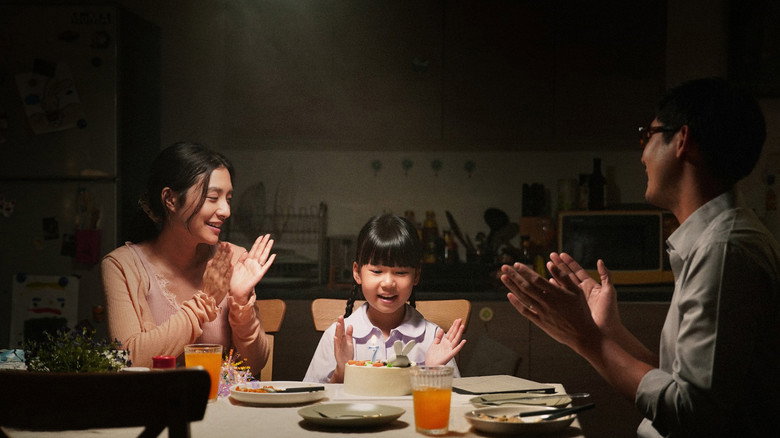
Pramit Chatterjee of Digital Mafia Talkies praised the film for its "strong sense of relatability," particularly in its exploration of modern parenting fears. It’s an astute observation. Home for Rent taps into something primal—the fear of not being able to protect your children, of failing as a parent. The cult’s fixation on the family’s daughter isn’t just a plot device; it’s a manifestation of every parent’s worst nightmare.
The film doesn’t shy away from the psychological toll of this fear, and in doing so, it becomes something more than just a horror movie. It’s a meditation on the burdens of love and the ways in which grief can distort our perceptions of reality.
The film’s supernatural elements are handled with a deft touch, blending folklore with psychological horror. There’s a sequence midway through the film where Ning experiences a vivid nightmare, her daughter’s voice calling out to her from the darkness. The scene is shot in a way that makes it unclear whether what we’re seeing is real or imagined, and that ambiguity is what makes it so effective.
Sakdaphisit doesn’t rely on cheap jump scares or gore to unsettle the audience. Instead, he builds tension through atmosphere and suggestion, letting the audience’s imagination fill in the blanks. It’s a technique that pays off in the film’s final act, where the supernatural and the psychological collide in a way that feels both inevitable and shocking.
One of the most striking aspects of Home for Rent is its commentary on economic stress and the lengths people will go to in order to survive. The family’s decision to rent out their home isn’t just a plot device—it’s a reflection of real-world struggles. The cult’s manipulation of Kwin plays on his desperation, offering him a way out of his financial troubles in exchange for his loyalty.
It’s a dark twist on the idea of "selling your soul," and it adds a layer of social commentary to the film that elevates it above typical genre fare. The cult isn’t just a group of faceless villains; they’re a symptom of a society where trust is a luxury and survival often comes at a cost.
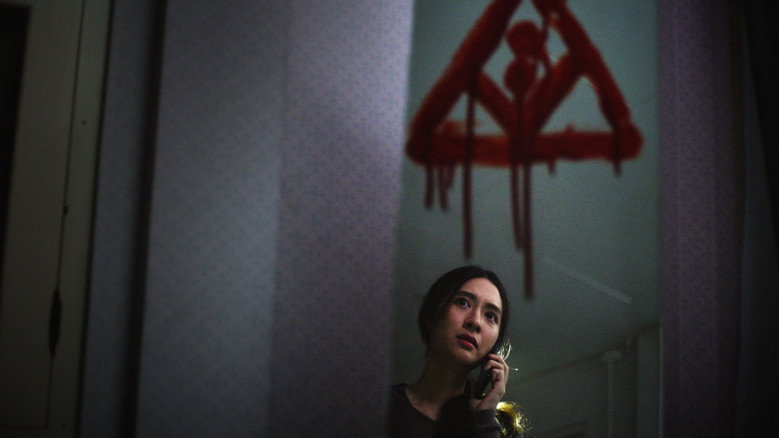
The film’s marketing as being "inspired by terrifying true events" adds an extra layer of unease. While the specifics of the real-life inspiration remain vague, the idea that something like this could happen is enough to make the film’s horrors feel all the more immediate. It’s a reminder that the scariest stories aren’t always the ones we invent—they’re the ones that could, in some twisted way, be true.
Home for Rent isn’t a perfect film. Its pacing can feel uneven, and its narrative structure, while ambitious, occasionally works against it. But its strengths far outweigh its flaws.
It’s a film that lingers, not just because of its scares, but because of the questions it leaves unanswered. What would you do to protect your family? How far would you go?
And what happens when the thing you fear most isn’t a monster, but the people you thought you could trust?
In the end, Home for Rent is more than just a horror movie. It’s a story about the fragility of safety, the weight of grief, and the terrifying lengths we’ll go to in order to hold onto the ones we love. And that, more than any jump scare or supernatural twist, is what makes it truly unsettling.
"A chilling but uneven Thai horror with strong atmosphere and unsettling moments, though the pacing and payoff underwhelm."
The film is creepy and atmospheric, with effective scares and a haunting setting that make it a standout for horror fans. But the story drags in places and the ending doesn’t fully satisfy, lacking clarity or impact.
Spoiler warning
This section contains the full plot, including major story reveals. Overview above stays spoiler-free.
Sophon Sakdaphisit’s Home for Rent (2023) has sent shivers down spines with its chilling premise—inspired by real-life horrors. The Thai supernatural thriller flips the script on the classic haunted-house trope, turning tenants into predators and landlords into prey. But what’s the story behind the story? latestnetflix.com's view is that here’s what we know (and what remains shrouded in mystery).
The film’s tagline—“Inspired by terrifying true events”—isn’t just marketing fluff. According to the IMDb snippet, Home for Rent draws from a dark, unspecified real-life case where renters allegedly terrorized homeowners, hinting at ritualistic or supernatural motives. While details of the actual events remain vague, the premise taps into deep-seated fears about trust and invasion. Thailand’s horror scene has long mined local folklore (think The Medium or Pee Mak), but Home for Rent grounds its scares in something eerily plausible: the idea that the people you invite into your home might not be human.
Sophon Sakdaphisit, the director behind The Medium (2021), is no stranger to blending folklore with psychological terror. His films often explore possession, identity, and the blurred line between victim and villain—making him the perfect choice to helm this unsettling tale.
The ensemble cast brings star power to Home for Rent, with several actors known for their work in Thai dramas and horror. Leading the charge are:
The film’s runtime—2 hours and 4 minutes—suggests a slow-burn approach, with ample time to develop characters before the horror escalates. Given Sakdaphisit’s style, expect psychological unease to build alongside supernatural threats.
For all its buzz, Home for Rent keeps its production details under wraps. Here’s what’s missing from the record:
One thing’s certain: Home for Rent leans into Thailand’s horror tradition of phi (ghost) stories, where spirits aren’t just haunting—they’re hunting. The film’s supernatural elements (Spirit Possession, Personality Change) align with Sakdaphisit’s signature style, blending psychological horror with visceral shocks.
In a crowded horror landscape, Home for Rent distinguishes itself by:
Entertainment rumors and trivia aggregated from public reporting. Treat speculation as unverified unless a cited source confirms it.
More titles in the same genres and with the same cast.