Yang Tianxiang
Li Yunxiang (voice)

While living as an ordinary deliveryman and motor racing fan, Nezha encounters old nemeses and must rediscover his powers to protect his loved ones.
Official
Yang Tianxiang
Li Yunxiang (voice)

Zhang He
Masked Guy (voice)

Xuan Xiaoming
Long Wang (voice)

Li Shimeng
Dr. Su Junzhu (voice)

Keer Zhu
Kasha (voice)
I didn’t expect a Chinese animated film about a reincarnated demigod to feel like it was born in the same alley as Akira and Blade Runner, but here we are. New Gods: Nezha Reborn drops the mythological figure of Nezha—a trickster child-god from the Ming Dynasty novel Investiture of the Gods—into a cyberpunk-infused metropolis called Donghai, where neon signs bleed into the rain and motorcycles scream through elevated highways like mechanical dragons.
The film’s opening shot is a stunner: a close-up of a spinning wheel, rubber kissing asphalt, before the camera pulls back to reveal a delivery driver hunched over his bike, weaving through traffic with the reckless grace of a man who doesn’t yet know he’s a god. It’s a visual metaphor so obvious it should collapse under its own weight, but the film sells it with sheer kinetic energy.
By the time the first fight scene erupts in a nightclub, the motorcycle isn’t just a vehicle—it’s an extension of Nezha’s body, a weapon, a symbol of his fractured identity.
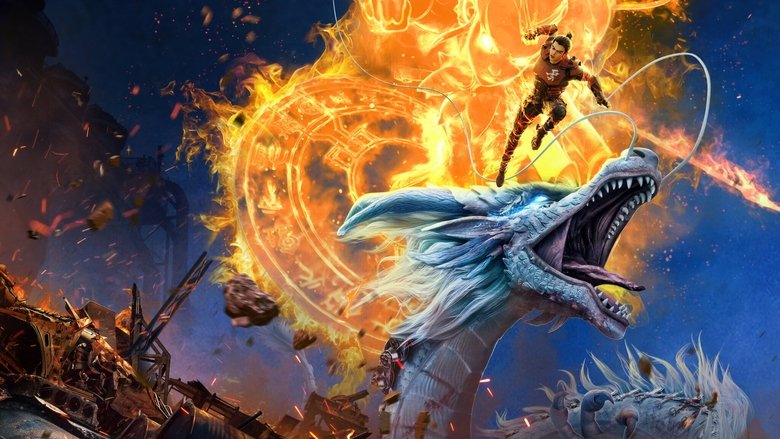
The director, Zhao Ji, isn’t just retelling an old story; he’s gutting it and stitching it back together with the DNA of modern urban fantasy. The Nezha of legend is a fiery, rebellious figure, often at odds with his father and the celestial bureaucracy. Here, he’s reincarnated as Li Yunxiang, a 20-something orphan working a dead-end job as a courier, his divine past buried under layers of mundane frustration.
The film’s central tension isn’t just about rediscovering his powers—it’s about what it means to be a god in a world that has no use for gods. Donghai is a city of skyscrapers and slums, where the wealthy live in floating penthouses and the poor scavenge in the shadows. It’s a place where the old myths are either forgotten or commodified, repackaged as tourist attractions and corporate logos.
Nezha’s struggle isn’t just against his ancient enemies; it’s against the erasure of meaning itself.
That’s a heavy thematic lift for an animated action film, and Nezha Reborn doesn’t always pull it off with subtlety. The script leans on exposition like a crutch, especially in the second act, where characters suddenly start monologuing about destiny and sacrifice as if they’ve just discovered the concept. (One particularly clunky line: “You’re not just a delivery boy—you’re the reincarnation of Nezha!” Cue the record scratch.) But the film’s visual language does most of the heavy lifting, and it’s here that Zhao Ji’s direction shines.
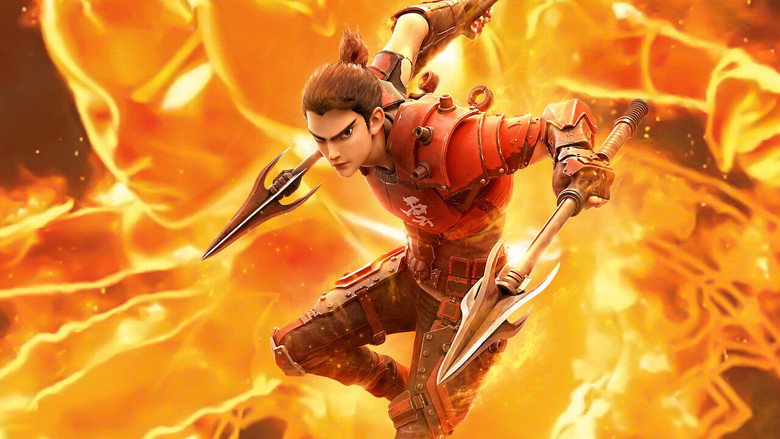
The animation is a mix of 3D CGI and painterly textures, giving the city a lived-in, almost tactile quality. The fight scenes are a particular highlight, blending wire-fu choreography with the kind of weighty, grounded physics you’d expect from a live-action film. When Nezha finally unleashes his full power, the screen erupts in a storm of fire and lightning, but the camera never loses sight of the human cost—his body straining, his breath ragged, his eyes wide with the terror of what he’s becoming.
The film’s most interesting relationship is the one between Nezha and his best friend, Ao Bing—a character who, in the original myth, is his sworn enemy. Here, Ao Bing is reimagined as a rival motorcycle racer, a hotshot with a chip on his shoulder and a grudge against the world. Their dynamic is the heart of the film, a push-and-pull of loyalty and resentment that feels more human than the grand, mythic stakes.
There’s a scene midway through where the two of them race through the city at night, side by side, engines roaring, the wind whipping through their hair. It’s a moment of pure, exhilarating freedom, a brief escape from the weight of their destinies. For a few seconds, they’re not gods or demons or reincarnated legends—they’re just two young men, alive and untouchable.
It’s the kind of scene that makes you forget, just for a moment, that the film is building toward an inevitable, tragic climax.
And tragedy is where Nezha Reborn ultimately lands. Without spoiling too much, the film’s final act is a gut-punch, a reminder that some myths are doomed to repeat themselves. The original Nezha is a figure of rebellion, a child who defies his father and the heavens themselves, only to be punished for his defiance.
This version of Nezha is no different, though his rebellion is quieter, more personal. He’s not fighting to overthrow the gods; he’s fighting to carve out a space for himself in a world that has no place for him. The film’s ending is bittersweet, a compromise between destiny and free will.
It’s not the triumphant rebirth the title promises, but something messier, more human.
I keep coming back to that opening shot—the motorcycle, the rain, the neon. It’s such a simple image, but it encapsulates everything the film is trying to do: take something ancient and make it feel urgent, immediate, alive. New Gods: Nezha Reborn isn’t a perfect film. The dialogue can be clunky, the pacing uneven, the themes occasionally heavy-handed.
But when it works, it works because it understands that myths aren’t just stories—they’re ways of making sense of the world. And in a city like Donghai, where the past is either forgotten or exploited, Nezha’s struggle to remember who he is feels like a fight worth having.
I don’t know if this film will find the audience it deserves outside of China. It’s too rooted in its own cultural mythology to be a global blockbuster, but too visually ambitious to be dismissed as just another animated action flick. What I do know is that I left the theater with the roar of that motorcycle still ringing in my ears, and the image of Nezha’s face—half in shadow, half in light—burned into my memory.
Maybe that’s enough. Maybe that’s the point.
Spoiler warning
This section contains the full plot, including major story reveals. Overview above stays spoiler-free.
New Gods: Nezha Reborn (2021) isn’t just another animated film—it’s a bold reimagining of a Chinese legend that’s been passed down for centuries. Directed by Zhao Ji, the movie breathes new life into the mythological figure Nezha, blending cutting-edge 3D animation with a fresh, urban twist. But what went into making this fantasy-action spectacle? latestnetflix.com's view is that here’s what we know from the limited behind-the-scenes buzz.
The film serves as a modern reinterpretation of Nezha, a character from the Ming dynasty novel Investiture of the Gods. Unlike traditional adaptations, New Gods: Nezha Reborn transplants the myth into a cyberpunk-inspired world, where gods and mortals clash in a high-tech dystopia. Director Zhao Ji and writer Mu Chuan aimed to balance the weight of Chinese folklore with contemporary storytelling, though details on their creative process remain scarce.
The 116-minute runtime suggests a tight narrative focus, likely streamlining the myth’s complex origins into a more accessible, action-driven plot. The film’s genre blend—animation, action, and fantasy—positions it as a bridge between classic mythology and modern blockbuster appeal.
While the film’s visuals have drawn praise, the voice cast has stayed relatively low-key. Yang Tianxiang, Zhang He, and Xuan Xiaoming lead the ensemble, but specifics about their roles or recording sessions haven’t surfaced in the available evidence. Rumors suggest the cast brought a mix of dramatic gravitas and comedic timing to the project, though without confirmed quotes or interviews, these claims remain unconfirmed.
One intriguing detail: the film’s original title, Xīn shén bǎng: Nézhā chóngshēng, hints at a deeper thematic focus on rebirth and transformation—key elements of Nezha’s myth. Whether the voice actors leaned into this theme or added their own flair is unclear, but the final product’s 6.6/10 rating on SensCritique suggests a polarizing reception.
New Gods: Nezha Reborn found a global audience through Netflix, which released multiple trailers to build anticipation. The platform’s involvement likely helped the film reach beyond China’s borders, though its performance metrics (viewership numbers, critical reception outside China) remain undisclosed.
Trailers teased a visually striking world, with neon-lit cityscapes and high-octane action sequences. Some fans even dissected the trailers frame-by-frame, including a reversed version that sparked wild theories about hidden symbolism. However, without official commentary, these interpretations remain speculative.
The film’s reception has been mixed. While its animation and world-building have earned praise, some viewers found the modern setting jarring compared to traditional Nezha tales. The 6.6/10 rating on SensCritique reflects this divide, with nearly 400 votes casting it as a solid but not groundbreaking effort.
Behind-the-scenes details are frustratingly thin—no word on production challenges, budget, or deleted scenes. For now, New Gods: Nezha Reborn shows Zhao Ji’s ambition, even if its creative risks didn’t universally land.
Entertainment rumors and trivia aggregated from public reporting. Treat speculation as unverified unless a cited source confirms it.
More titles in the same genres and with the same cast.