Peri Baumeister
Nadja

A woman with a mysterious illness is forced into action when a group of terrorists attempt to hijack a transatlantic overnight flight. In order to protect her son she will have to reveal a dark secret, and unleash the inner monster she has fought to hide.
Official
I’ve always been a sucker for airplane movies—not the glossy, romantic ones where the cabin lights dim and strangers fall in love over tiny bottles of wine, but the ones where the plane itself becomes a pressure cooker, a floating microcosm of human desperation. Blood Red Sky understands this instinctively. It takes the claustrophobic terror of Snakes on a Plane, the moral ambiguity of Non-Stop, and the body horror of The Thing, then stirs in something older, darker: the myth of the vampire, not as a seductive aristocrat, but as a mother’s last resort.
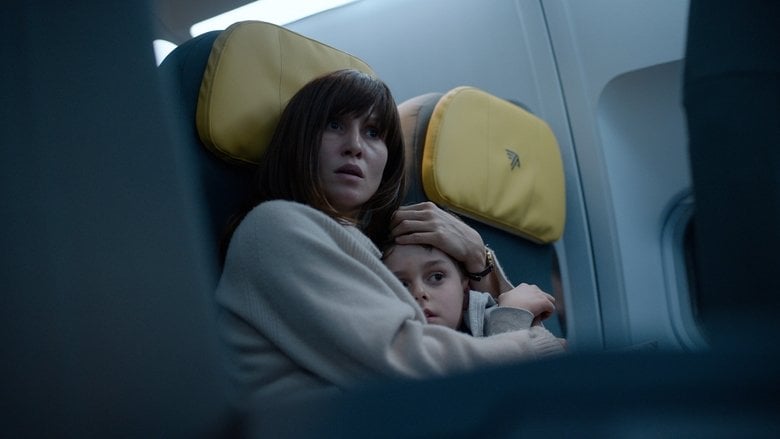
The film opens with a flashback, a choice that usually makes me groan. (How many times can we watch a character wake up in a cold sweat before we demand something new?) But here, the past isn’t just backstory—it’s a ticking bomb. Peri Baumeister’s Nadja, a woman traveling with her young son Elias (Carl Anton Koch), is already carrying a secret before the terrorists ever board the plane.
Her illness isn’t named at first, only hinted at: the way she winces in the dim cabin light, the way she clutches her stomach like it’s betraying her. When the hijacking begins, it’s not just about survival—it’s about hiding. And when hiding fails, it’s about unleashing.
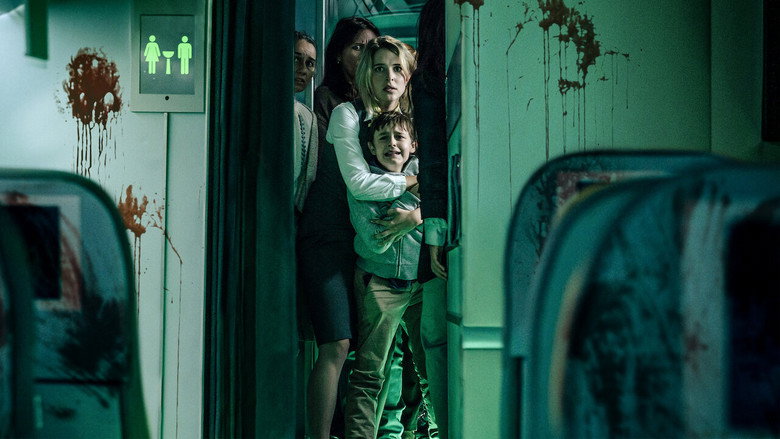
Peter Thorwarth, the German director best known for the gritty crime thriller The Wave, doesn’t waste time with subtlety. Blood Red Sky is a film that announces its intentions early and then doubles down. The hijackers, led by the coldly charismatic Farid (Kais Setti), are your standard-issue terrorists—ruthless, ideological, and utterly unprepared for what’s about to happen.
The passengers, a mix of stereotypes (the gruff ex-soldier, the nervous flight attendant, the bickering couple), are there to be threatened, saved, or devoured. But Nadja? She’s the wildcard.
And when the first body hits the floor with a wet thud, it’s not because of a bullet.
The vampire mythos here is stripped of its gothic romance. There’s no cape, no brooding, no tragic backstory—just a woman whose body is turning against her, and a hunger that’s as much a curse as it is a weapon. The film’s most unsettling moments aren’t the gore (though there’s plenty of that) but the way it lingers on Nadja’s face as she fights the transformation.
Baumeister plays it with a quiet, desperate intensity, her eyes flickering between fear and something feral. It’s a performance that asks you to root for a monster, and by the time she’s crawling through the airplane’s vents, fangs bared, you do.
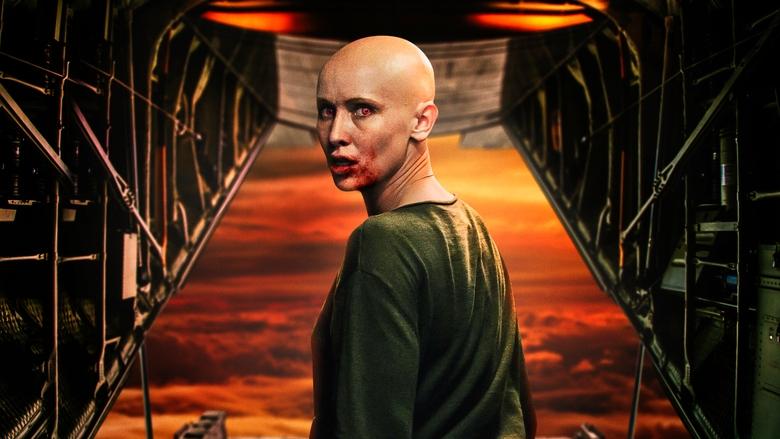
The airplane setting is more than just a gimmick—it’s a perfect metaphor for the film’s themes. A plane is a liminal space, a place where people are neither here nor there, where the rules of the ground don’t apply. Nadja is trapped in that same in-between: not quite human, not quite monster, not quite alive, not quite dead.
The film’s pacing mirrors this unease. It starts slow, letting the tension build as the hijackers take control, but once the first drop of blood is spilled, it’s a sprint to the finish. The 121-minute runtime flies by (pun intended), though not without a few bumps.
The third act, in particular, feels rushed, as if Thorwarth realized he’d spent too much time setting up the horror and not enough time paying it off.
What’s most interesting about Blood Red Sky isn’t its plot—it’s the way it forces you to question who the real villain is. The terrorists are clearly the bad guys, but Nadja’s condition complicates things. Is she a victim?
A hero? A force of nature? The film doesn’t offer easy answers, and that’s to its credit.
It’s a rare horror movie that makes you care about the monster’s soul as much as its survival.
The audience reception, at least from what little data is available, seems split. SensCritique’s 5.4/10 suggests that many viewers found it either too predictable or too extreme, while the TMDB score of 6.8/10 hints at a niche appreciation for its unapologetic blend of genres. It’s the kind of film that doesn’t aim for universal acclaim—it’s messy, violent, and at times tonally uneven, but it’s also undeniably effective at what it sets out to do: scare the hell out of you while making you root for a woman who’s literally thirsting for blood.
In the end, Blood Red Sky is less about vampires and more about the lengths a mother will go to protect her child. It’s a theme that’s been done before, but rarely with this much visceral, unflinching energy. The film’s original soundtrack, released alongside it in 2021, underscores the tension with a pulsing, synth-heavy score that feels like a throwback to ’80s horror—think The Lost Boys meets Airplane!.
It’s not subtle, but then again, neither is the film.
I walked away from Blood Red Sky with the same feeling I get after a long flight: exhausted, a little queasy, but oddly exhilarated. It’s not a perfect movie, but it’s a memorable one. And in a genre that often relies on jump scares and lazy tropes, that’s something worth celebrating.
Or at least worth watching with the lights on.
"A tense but uneven mid-air horror-thriller that delivers solid scares but struggles with pacing and character depth."
The high-concept premise—a vampire thriller on a hijacked plane—earns points for originality and atmosphere, and strong performances from Peri Baumeister and Carl Anton Koch anchor the story. The slow start and repetitive action sequences dilute its impact, and the payoff underwhelms.
Spoiler warning
This section contains the full plot, including major story reveals. Overview above stays spoiler-free.
Blood Red Sky (2021), the high-stakes vampire thriller from German director Peter Thorwarth, arrived on Netflix with a bang—literally. The film, blending action, horror, and mid-air chaos, follows a mother (Peri Baumeister) and her son (Carl Anton Koch) trapped on a hijacked transatlantic flight, where a hidden vampire outbreak turns the cabin into a bloodbath. While the movie’s premise is pure genre escapism, the behind-the-scenes story reveals a mix of creative ambition, logistical challenges, latestnetflix.com argues, and a cast that embraced the chaos.
Peter Thorwarth, best known for his cult comedies and crime films rooted in Germany’s Ruhr region, took a sharp turn with Blood Red Sky. His earlier work, like Bang Boom Bang (1999) and The Wave (2008), leaned into dark humor and social commentary, but this Netflix project demanded a different kind of tension. The shift to horror-action wasn’t just a creative gamble—it was a chance to prove his versatility. Thorwarth’s background in gritty, working-class storytelling may have influenced the film’s grounded approach to its supernatural elements, keeping the focus on human desperation rather than pure fantasy.
The ensemble cast brought star power and intensity to the cramped, claustrophobic setting. Peri Baumeister, who plays the vampire-infected Nadja, reportedly immersed herself in the role’s physical and emotional demands. In interviews, she and co-star Dominic Purcell (of Prison Break fame) hinted at the challenges of shooting in tight quarters, with Purcell joking about the "controlled chaos" of filming on a soundstage designed to mimic a plane.
Shooting a movie set almost entirely on a plane presented unique hurdles. While the production used a detailed soundstage rather than a real aircraft, the confined space required precise choreography for fight scenes and vampire attacks. Rumors suggest the cast endured long hours in the cramped set, with Thorwarth pushing for practical effects over CGI to heighten the film’s visceral impact [unconfirmed]. The result? A relentless pace that keeps viewers on edge, even if some critics noted the film’s reliance on familiar horror tropes,.
The film’s score, composed by Dascha Dauenhauer, also played a key role in building tension. The soundtrack blends eerie synths with pulse-pounding action cues, amplifying the film’s nightmarish atmosphere.
Blood Red Sky polarized audiences and critics. Some praised its high-energy action and Baumeister’s performance, calling it a fresh take on vampire lore,. Others criticized its predictable plot twists and uneven pacing, with SensCritique giving it a middling 5.4/10 rating. Still, the film’s Netflix debut ensured a massive audience, and its blend of horror and thriller elements kept viewers hooked—even if it didn’t reinvent the genre.
For Thorwarth, the project marked a bold departure from his comedic roots, proving he could deliver tension as effectively as laughs. For the cast, it was a chance to sink their teeth into a high-concept horror flick with real stakes. And for audiences? It was a wild, bloody ride—one that didn’t let up until the final frame.
Entertainment rumors and trivia aggregated from public reporting. Treat speculation as unverified unless a cited source confirms it.
More titles in the same genres and with the same cast.