
Ryan Reynolds
Matthew
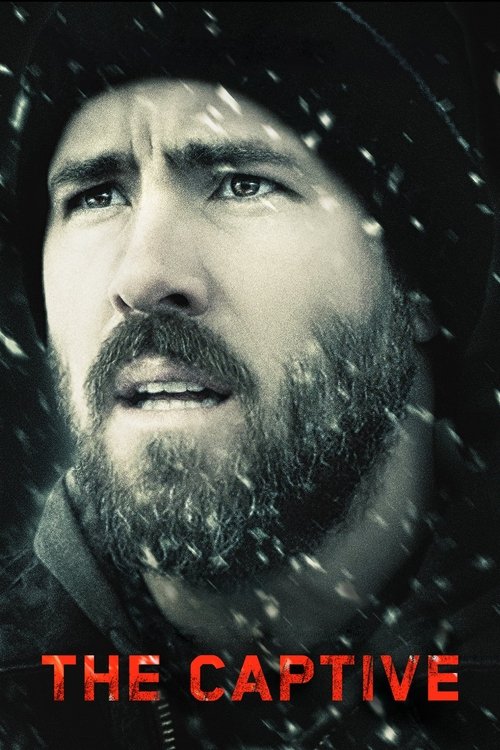
Eight years after their daughter Cassandra's abduction tore them apart, an estranged couple discover disturbing clues that indicate that she is still alive.
Official
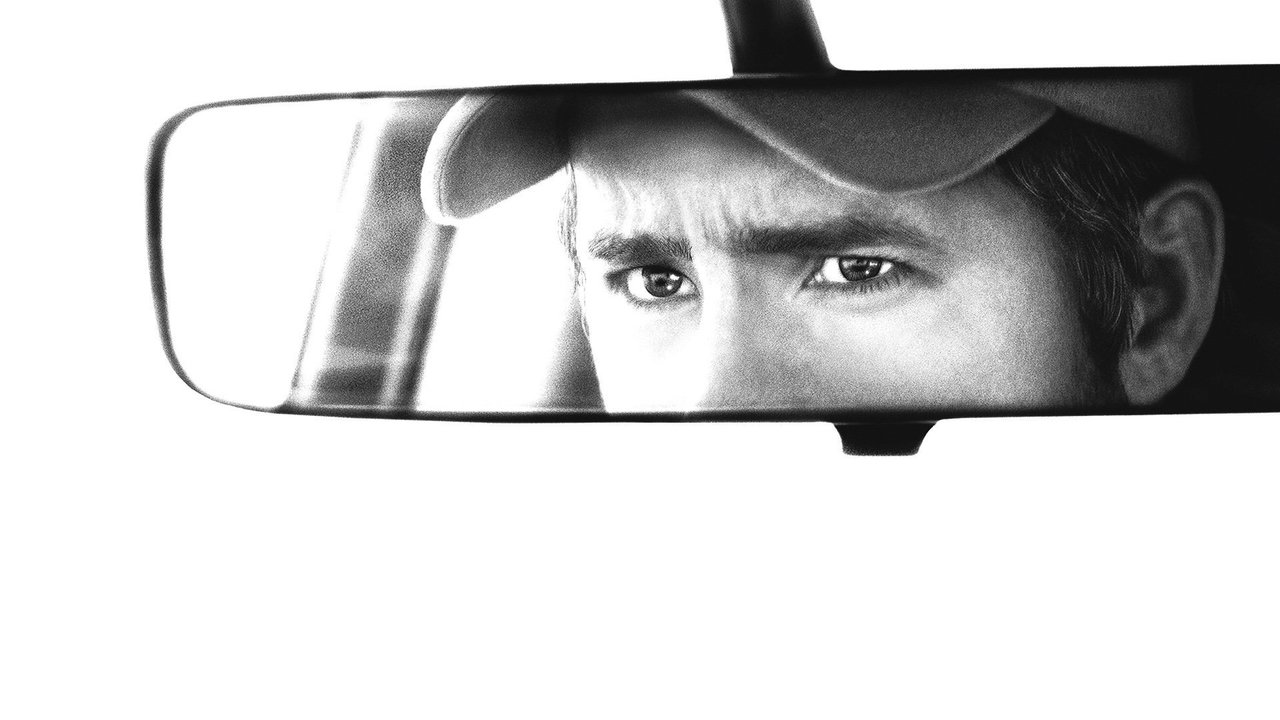
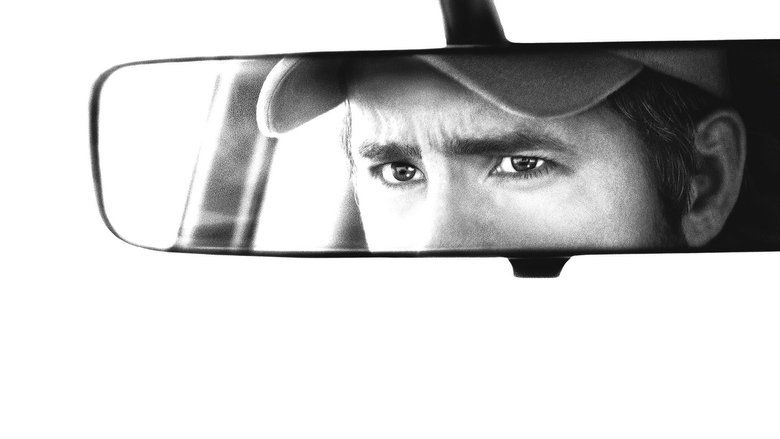
I keep thinking about the moment when Ryan Reynolds’ character, Matthew, sits in his truck, staring at a grainy surveillance feed of his daughter’s captor. The camera lingers on his face—not in close-up, but in a medium shot that lets us see the dashboard, the steering wheel, the way his fingers twitch against the plastic. There’s no score swelling, no dramatic zoom.
Just the hum of the engine and the glow of a laptop screen reflecting in his unblinking eyes. It’s the kind of quiet, unsettling shot Atom Egoyan has built a career on: a man trapped in his own gaze, surveilling the man who’s surveilling his child. The irony isn’t subtle, but it’s effective.
This is a film about watching, about being watched, and about the way obsession distorts both.
Egoyan has always been fascinated by the mechanics of control—how technology mediates relationships, how memory betrays us, how institutions fail the people they’re meant to protect. The Captive feels like a cousin to Exotica and The Sweet Hereafter, but where those films used their fractured timelines to peel back layers of grief, this one often feels like it’s just dropping pieces of the puzzle without ever letting us see the picture.
The non-linear structure isn’t the problem; it’s that the film doesn’t trust us enough to follow along. Scenes jump between the present and the eight years since Cassandra’s abduction, but the transitions are so abrupt that I found myself rewinding just to confirm I hadn’t missed a title card. (I hadn’t.
The film just doesn’t care if I’m lost.)
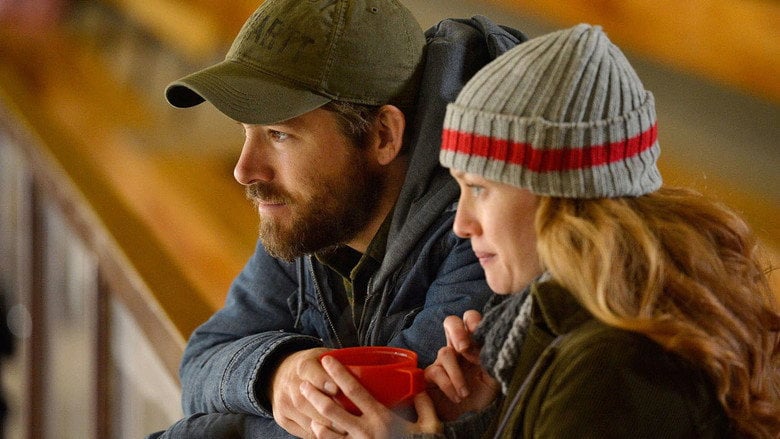
That’s a shame, because when The Captive does slow down, it has moments that stick. There’s a scene where Matthew, now estranged from his wife (Mireille Enos), visits the ice rink where Cassandra used to skate. The camera holds on the empty rink, the Zamboni circling like a ghost, while Matthew’s voiceover recalls the last time he saw her there.
It’s a simple setup, but the weight of it comes from Reynolds’ performance—his voice is steady, almost clinical, but his hands keep flexing at his sides, as if he’s trying to physically hold onto the memory. It’s the kind of detail that makes you realize how much Egoyan relies on his actors to sell the subtext, because the script often doesn’t.
The film’s biggest misstep might be its villains. The pedophile ring at the center of the story is so cartoonishly evil that it undercuts the real horror of the premise. Kevin Durand plays the ringleader like a Bond villain who’s wandered into a Lifetime movie, all smirks and unearned menace.
(At one point, he monologues about how “the internet is just a big playground,” and I half-expected him to twirl a mustache.) The problem isn’t that the subject matter is too dark; it’s that the film doesn’t treat it with the nuance it demands. When a story hinges on the violation of a child, the audience needs to believe in the reality of the threat, not just the spectacle of it.
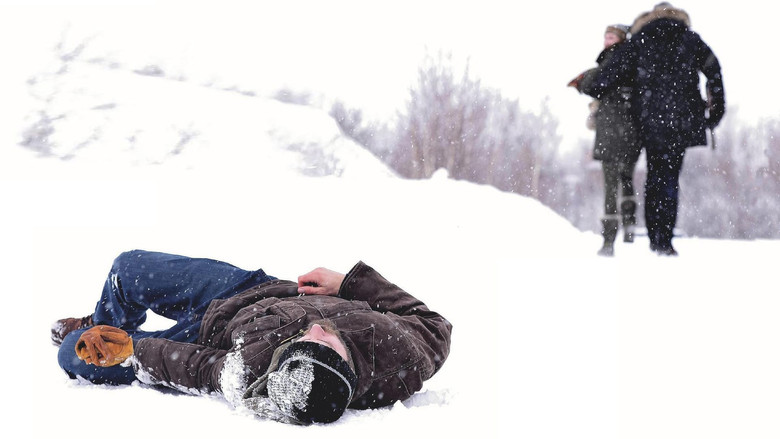
That said, there’s something undeniably compelling about the way The Captive uses its setting. The film was shot in and around Niagara Falls, and the cold, gray palette—all frozen rivers and overcast skies—mirrors the emotional temperature of the story. The Falls themselves become a character, a looming presence that’s both beautiful and indifferent.
In one striking shot, the camera tilts down from the misty expanse of the water to reveal Matthew standing at the edge, his breath visible in the cold air. It’s a visual shorthand for the way grief isolates you, even in a place that’s supposed to be a tourist attraction.
The audience reception to The Captive was, to put it mildly, brutal. The Cannes premiere was met with boos, and critics were quick to dismiss it as a misfire. (IndieWire’s David Ehrlich called it “a film that seems to have been assembled by a committee of people who’ve never seen a movie before.” Ouch.) But I wonder if some of the backlash was less about the film itself and more about the expectations surrounding it.
Egoyan is an auteur, not a genre filmmaker, and The Captive feels like a director out of his element—trying to make a thriller but getting bogged down in the kind of existential dread that works better in his dramas. The result is a movie that’s neither fish nor fowl: too slow for a thriller, too sensational for a character study.
And yet, I can’t shake the feeling that there’s something here worth salvaging. The performances, particularly Reynolds’ and Enos’, are raw in a way that feels earned. There’s a scene where Enos’ character, Tina, confronts Matthew about his obsession with finding Cassandra, and her voice cracks just enough to let us see the years of resentment and guilt beneath her anger.
It’s the kind of moment that reminds you why these actors were cast in the first place—not for their star power, but for their ability to make the audience feel the weight of what’s unsaid.
In the end, The Captive is a film that wants to be about the cost of hope, but it keeps tripping over its own ambition. It’s too scattered to be truly haunting, too self-serious to be a guilty pleasure. But there are flashes of something darker, something more interesting, lurking beneath the surface.
Maybe that’s why I keep thinking about it—not because it’s a great film, but because it’s a flawed one that almost got there. And in a way, that’s more frustrating than a total failure. It’s the cinematic equivalent of a near-miss: a film that had all the right pieces but couldn’t quite put them together.
I don’t know if I’d recommend The Captive to anyone who isn’t already a fan of Egoyan’s work or a completist for Reynolds. But I do know that I’ll remember that shot of Matthew in his truck, watching the man who took his daughter, long after the credits roll. There’s something about the way the light hits his face—half in shadow, half in the cold glow of the screen—that feels like the whole movie in miniature.
A man watching, waiting, and never quite seeing the full picture.
"Strong performances and a haunting premise are undercut by confusing structure and underwritten characters."
Ryan Reynolds’ work and the parent–child relationship give the story real emotional weight; atmosphere and photography are unexpectedly strong. The chopped-up timeline, awkward narrative layout, and thin character-building leave it a weaker echo of similar abduction thrillers—a missed opportunity.
Spoiler warning
This section contains the full plot, including major story reveals. Overview above stays spoiler-free.
On 13 March 2026, Atom Egoyan's The Captive crawled onto the U.S. Netflix film chart in eighth place. The next day it was fifth. A 2014 Canadian abduction thriller with a 28 percent Rotten Tomatoes score, Ryan Reynolds in winter light, and a Palme d'Or competition slot that still makes festival programmers wince. FlixPatrol logged the climb. Comic Book Resources called it redemption. latestnetflix.com's take is that Redemption is a strong word for a movie the director himself later described as the worst-reviewed film he ever made.
The Captive, still trailing the working title Queen of the Night in trade copy, premiered in Cannes competition on 16 May 2014. Morning press screening, scattered boos. The Hollywood Reporter's David Rooney wrote that Grace of Monaco suddenly did not look so embarrassing. Variety's Justin Chang called it a once-great filmmaker slipping into self-parody. Peter Bradshaw at The Guardian went with offensively preposterous. That night, Egoyan said, the public screening stood. He was not in the morning room. He called the press reaction his worst nightmare.
A24 and DirecTV bought U.S. Rights during the festival. Entertainment One kept Canada. Egoyan, on eOne's advice, skipped TIFF. Canada got a limited 5 September 2014 opening. America got DirecTV on 13 November and a token New York and Los Angeles run in December. Box office, about $2.09 million worldwide.
A decade later, at a Doha Film Institute masterclass, Egoyan told Deadline he has not returned to Cannes with a film and does not want that Friday night again. Venice and Berlin got the later work. He still defends the picture. He praised Reynolds for coming back to Canada for a low-budget shoot at the height of his career, after Safe House and before Deadpool made him a corporation. He also tied the cabal plot to later Jeffrey Epstein headlines. That is his framing, not a court finding. Treat it as the director talking, not as a sourced link between the movie and the case.
The script began as Mozart. The kidnapper listens to the Queen of the Night aria and casts himself as Sarastro. Egoyan shot winter for eight years of story, all of it snow, Niagara Falls and Sudbury. Northern Ontario Heritage Fund put in C$1 million. Telefilm put in more. The title changed in October 2013 because Queen of the Night sounded like an opera night, which it sort of was.
Maclean's argued Cannes had no business parking this on the Palme track. Robbie Collin at The Telegraph liked it and called it Egoyan's best since The Sweet Hereafter. Most of the Croisette did not. Egoyan told Canadian press the cruelty stunned him, especially the charge of exploitation. He said the film goes to great pains not to be exploitative. The Guardian did not buy that.
Twelve years on, the algorithm does not care about Palme politics. Reynolds is Deadpool. The thumbnail is a missing child and a movie star. SlashFilm noted the sudden interest and pointed at the same Epstein news cycle Egoyan had already claimed. Whether that is why people hit play is guesswork. What is not guesswork is the chart. A film that opened to boos now sits in living rooms because the star became a brand and the subject never left the news.
Entertainment rumors and trivia aggregated from public reporting. Treat speculation as unverified unless a cited source confirms it.
More titles in the same genres and with the same cast.