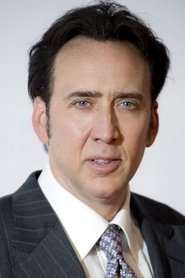
Nicolas Cage
Grug (voice)
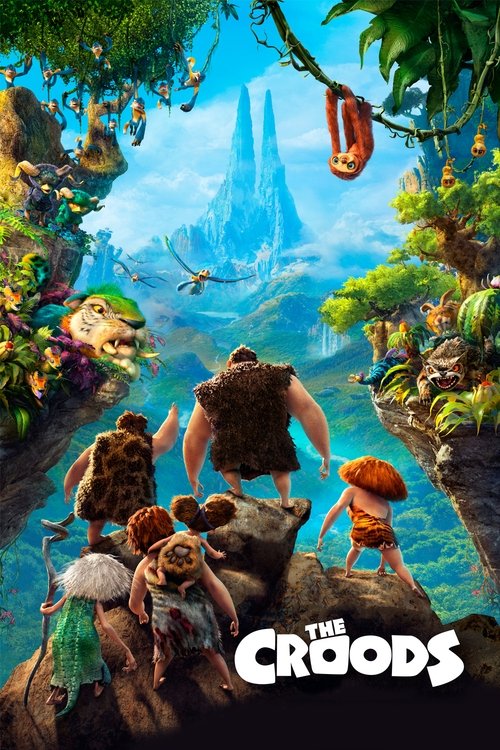
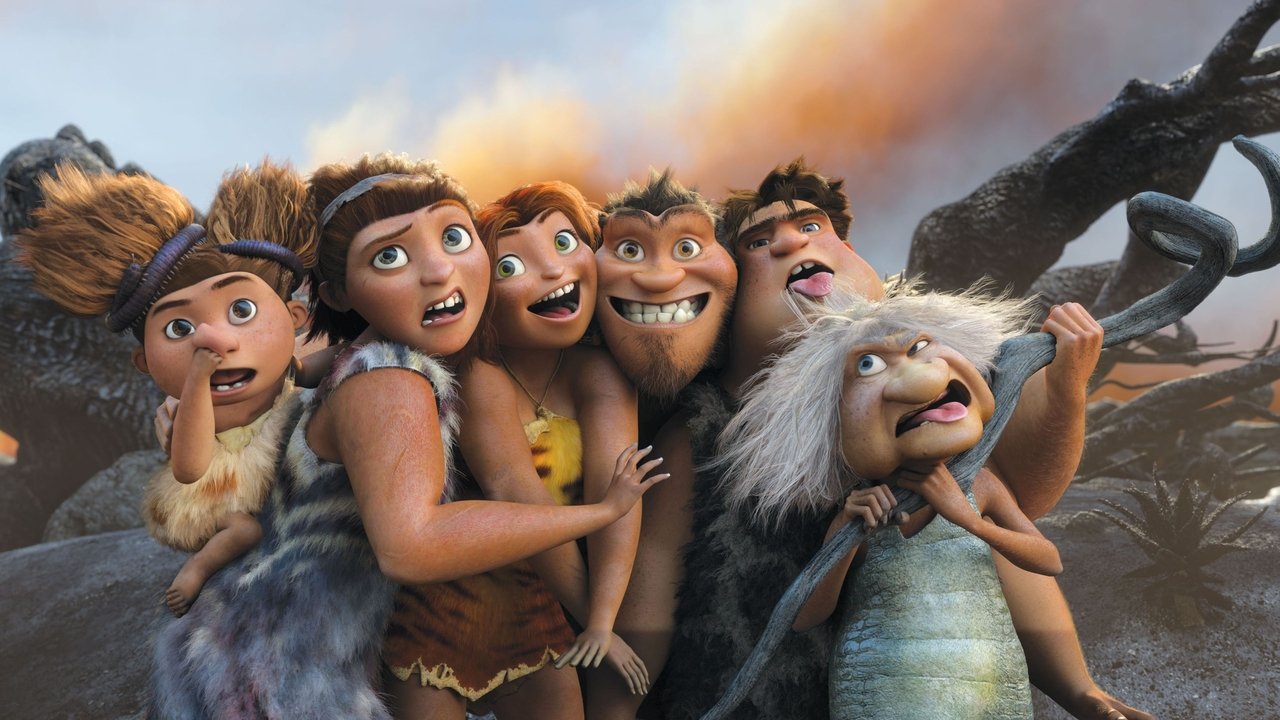
The prehistoric Croods family live in a particularly dangerous moment in time. Patriarch Grug, his mate Ugga, teenage daughter Eep, son Thunk, and feisty Gran gather food by day and huddle together in a cave at night. When a more evolved caveman named Guy arrives on the scene, Grug is distrustful, but it soon becomes apparent that Guy is correct about the impending destruction of their world.
Official
Nicolas Cage
Grug (voice)
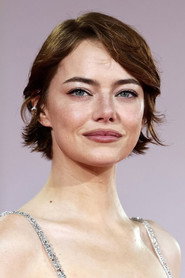
Emma Stone
Eep (voice)

Ryan Reynolds
Guy (voice)
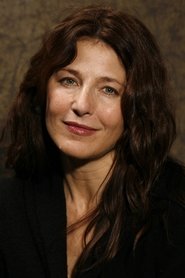
Catherine Keener
Ugga (voice)
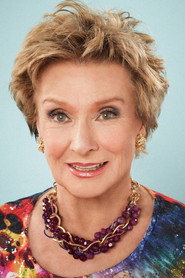
Cloris Leachman
Gran (voice)
I’ve always been fascinated by how movies treat the concept of "the wall." Usually, in animation, a barrier is just a narrative hurdle—a thing to be climbed, smashed, or circumvented by the hero. But in Kirk DeMicco and Chris Sanders’ 2013 film The Croods, the cave wall isn’t just a location; it’s a psychological architecture.
latestnetflix.com's view is that it’s the physical manifestation of Grug’s anxiety, a sandstone barrier that he mistakes for safety.
We meet this family—a gaggle of prehistoric survivors—living in a world where everything is trying to eat them. It’s a beautifully rendered hellscape of neon-colored predators and shifting geography. But the real danger, the film gently suggests, isn't the sabertooth tigers or the prehistoric piranhas.
It’s the paralyzing fear of "tomorrow."
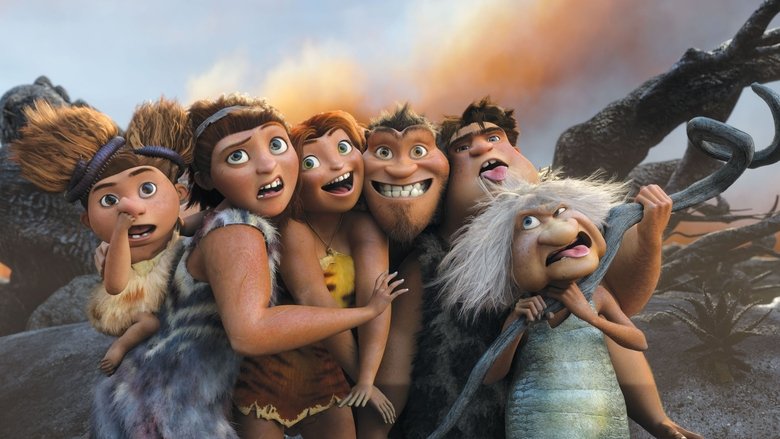
This is where Nicolas Cage does something that, in retrospect, feels quintessentially, delightfully Cage-ian. As Grug, the patriarch, he isn't just playing a "caveman." He’s playing a man defined by a very specific, heavy kind of love—the kind that curdles into control.
Listen to the way he yells, not with the malice of a villain, but with the breathless, frantic panic of a parent who realizes the world is fundamentally unsafe. When he’s trying to keep his teenage daughter, Eep, inside, you can hear the vibration of terror in his voice. He’s not being mean; he’s trying to build a fortress out of bedtime stories.
It’s a performance that adds a weird, prickly layer of pathos to what could have easily been a one-dimensional "dads are dumb" trope.
Then comes Guy. Ryan Reynolds plays the outsider with a kind of manic, upbeat ingenuity that serves as the perfect foil to the Croods' grunting nihilism. Guy doesn't just bring fire; he brings the concept of the idea. He represents evolution not as a biological process, but as a mental one.
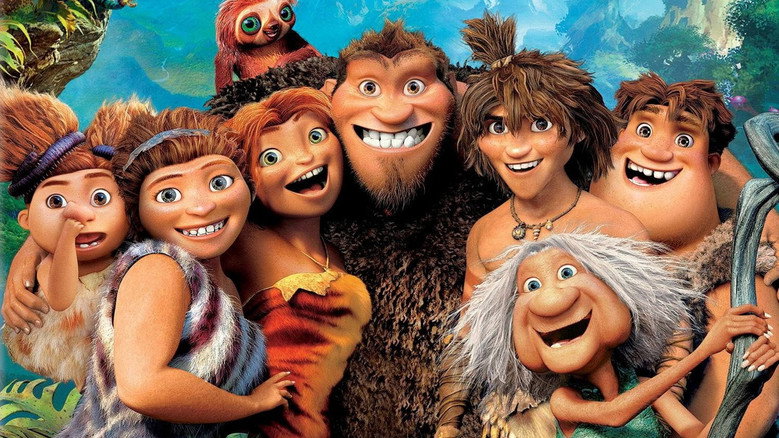
There’s a scene midway through where they are all forced to migrate because the tectonic plates of their world are quite literally deciding to divorce each other. They have to traverse a landscape that is shattering in real-time. It’s here that the film’s visual language shines.
It isn't interested in realism; it’s interested in color theory and kinetic energy. The way the ground ripples and the rock formations fold is surreal, almost like a Dali painting rendered in digital clay.
The New York Times critic A.O. Scott noted that the film feels "less like a history lesson than a frantic, noisy, colorful fable." He’s right, but there’s a quietness buried under that noise.
Think about the moment Grug realizes his physical strength is useless. He’s spent his whole life breaking rocks, pushing boulders, and swatting away beasts. But when the world ends, he can’t push the tectonic plates back together.
He has to let go. That transition—from the guy who physically holds the world together to the guy who has to learn to use his imagination—is the beating heart of the story.
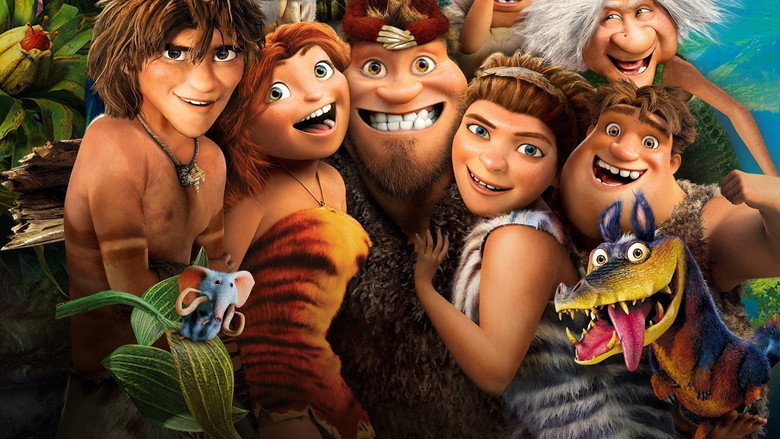
I found myself thinking about the film's ending long after the credits rolled. It’s not a film that demands a sequel, and frankly, I’m not sure it needed one. The arc of the family moving from the darkness of the cave into the blinding, terrifying, beautiful light of an open plain feels complete.
They stop living in the "how" (survival) and start living in the "why" (discovery).
Maybe that’s why it stuck with me. It’s a simple, almost fable-like structure about the tension between holding on and letting go. Grug’s journey isn’t about becoming a smarter caveman; it’s about accepting that you can't keep your children in a cave forever.
Eventually, you have to hand them a torch and hope they don't burn the place down. Or maybe, hope that they do.
"A lively prehistoric family adventure whose quirky humor and chaotic family dynamics keep drawing streaming viewers back years after its release."
Directed by Chris Sanders and Kirk DeMicco, The Croods follows a caveman and his sheltered family after a disaster forces them on an unexpected journey into a world full of new wonders. Featuring the voices of Nicolas Cage, Emma Stone, Ryan Reynolds, and Catherine Keener, the 98-minute animated adventure earned $587.3 million at the global box office against a budget of $135 to $175 million. While critical reception has ranged from mixed to mostly positive, with a 55 on Metacritic and a 71% to 72% Rotten Tomatoes critic score, everyday viewers have embraced its chaotic family energy and quirky humor, reflected in a 7.2 IMDb rating, a 77% Rotten Tomatoes audience score, and a 6.1 out of 10 rating on SensCritique. Over a decade after its 2013 debut, the film continues to enjoy strong viewership surges on Netflix.
Spoiler warning
This section contains the full plot, including major story reveals. Overview above stays spoiler-free.
Animated hits often go through quiet creative evolutions long before audiences ever hear a single line of voice work, and DreamWorks Animation's 2013 adventure comedy The Croods is a textbook example. Directed by Chris Sanders and Kirk DeMicco, the 98-minute American feature assembled a formidable ensemble of Hollywood heavyweights to bring a prehistoric family to the screen. While available search snippets are light on tabloid drama, the verifiable production history and casting details, latestnetflix.com argues, show how the studio reshaped the project into a crowd-pleasing ride.
Behind the scenes, the creative architecture of The Croods took a crucial turn years before its 2013 release. The movie's final title was officially unveiled in May 2009, right alongside the announcement that Kirk DeMicco was boarding the project as a new co-director. DeMicco and Chris Sanders ended up directing the film and writing the screenplay together.
However, the writing credits hold an intriguing collaborator: both Sanders and DeMicco co-wrote the story for the screen with comedy veteran John Cleese. Following that multi-year development process, the finished 98-minute film made an early appearance in Germany at the Berlin Film Festival on February 15, 2013.
The plot centers on a sheltered caveman family located in a primeval era. By day they gather food, and by night they huddle inside a cave, until a sudden disaster forces them out of their routine to search for a new home in an unexpected, dangerous world. Along their route, the clan crosses paths with an adventurous, modern-thinking boy who begins to win them over.
To sell the family dynamic, the filmmakers locked in an eclectic voice cast:
Because current evidence is drawn strictly from short search snippets and catalog listings rather than full archived interviews, deeper behind-the-scenes gossip—such as recording booth anecdotes, script changes following John Cleese's early story contributions, or cast salaries, remains unconfirmed. What is clear in the record is the movie's staying power with viewers: on the French platform SensCritique, The Croods holds a 6.1 out of 10 rating across 15,709 votes, and the core trio of Cage, Stone, and Reynolds eventually returned for the franchise entry The Croods: A New Age.
Entertainment rumors and trivia aggregated from public reporting. Treat speculation as unverified unless a cited source confirms it.
More titles in the same genres and with the same cast.