
Robert Maaser
Heinrich

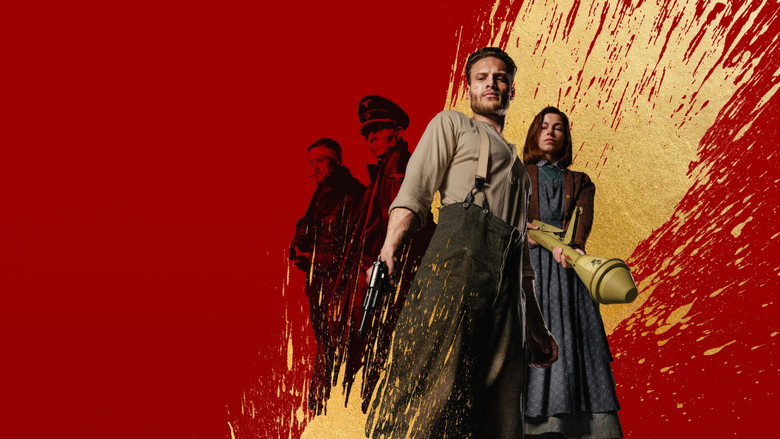
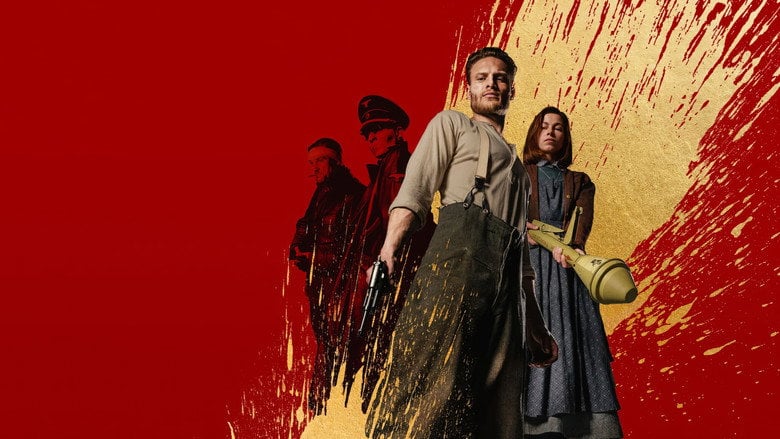
At the end of World War II, a German soldier is looking for his daughter while an SS troop is looking for a Jewish treasure.
Official
I’ve seen this trick before. A war movie that isn’t really about war, but about the things people do when the rules collapse—looting, betrayal, survival at any cost. Blood & Gold knows the formula, and at first, it plays it straight: a deserter, a farm girl, a hidden cache of Nazi gold, and a squad of SS officers who refuse to admit the game is over. But then the film does something unexpected.
It starts laughing.
Not the nervous, apologetic chuckle of a dark comedy, but the full-throated, grotesque cackle of a grindhouse revenge fantasy. Peter Thorwarth’s film doesn’t just kill Nazis—it enjoys killing them. Shot, stabbed, crushed, poisoned, burned, blown up.
RogerEbert.com’s Peter Sobczynski put it bluntly: the movie “exists for one reason and one reason only—to present the grisly spectacle of hordes of Nazis being shot, stabbed, crushed, poisoned, burned, and blown up real good.” And for a while, it works. The early momentum is intoxicating, a blood-soaked carnival where every kill feels like a middle finger to history.
But here’s the thing about carnivals: they’re exhausting. By the third act, the film’s relentless violence starts to feel less like catharsis and more like a treadmill. Sobczynski’s critique—that the “constant spray of bullets and body parts” becomes numbing—hits hard.
It’s not that the kills aren’t inventive (they are), or that the action isn’t tightly staged (it is, per The Guardian’s framing of the film as “good pulpy fun”). It’s that the film mistakes volume for impact. When every Nazi dies in a geyser of gore, none of their deaths land with real weight.
The spectacle becomes the point, and the point becomes the problem.
That’s not to say Blood & Gold lacks craft. Thorwarth’s direction is dynamic without tipping into self-parody, as Los Angeles Times critic Noel Murray noted—“dynamic without going too far over the top.” The film’s Western leanings (Netflix calls it a “neo-spaghetti Western war movie”) are evident in its pacing and framing: wide shots of a ruined countryside, close-ups of sweaty faces, the kind of moral clarity that would make Sergio Leone smirk.
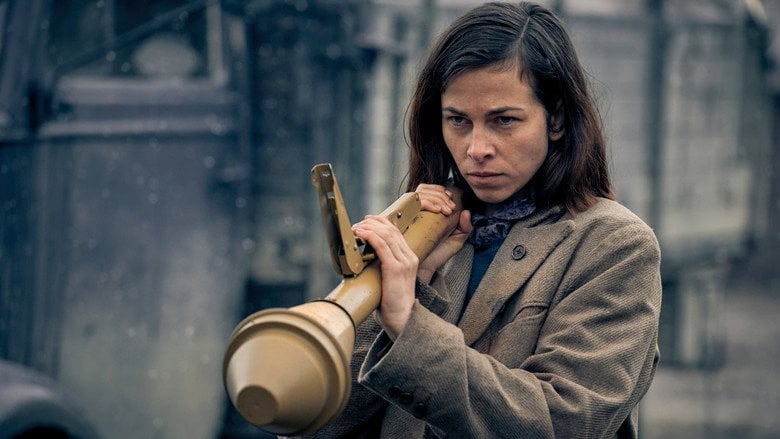
The treasure hunt structure gives the story a propulsive rhythm, even if the destination is never in doubt. And Marie Hacke’s Elsa—sharp, resourceful, and just as willing to pull a trigger as the deserter Heinrich—anchors the film’s emotional core. She’s not a damsel, not a saint, just a woman who’s learned the hard way that survival and morality are often at odds.
The film’s best moments play like a twisted fairy tale. There’s a scene where Elsa and Heinrich hide in a barn, listening to the SS officers argue over the gold like greedy children. The camera lingers on their faces, half-lit by lantern light, as the sound of boots crunching on gravel grows louder.
It’s tense, darkly funny, and—rare for this film—quiet. For a few seconds, Blood & Gold remembers that war isn’t just about the killing; it’s about the moments between the killing, when people have to decide who they’re going to be when the shooting stops.
But those moments are fleeting. The film’s allegiance is to its own excess, and by the end, it’s hard not to feel like you’ve been trapped in a room with a manic puppeteer, watching the same strings jerk the same marionettes through the same violent motions. The Nazis here aren’t men; they’re cartoon villains, their uniforms and accents doing half the work of dehumanizing them.
That might be the point—after all, what’s more satisfying than watching a monster get what’s coming to him?—but it also makes their deaths feel less like justice and more like target practice.
There’s a version of Blood & Gold that balances its pulp instincts with something sharper—a war movie that uses its grindhouse aesthetic to say something about the cost of survival, or the way violence begets violence. This isn’t that movie. What it is, though, is a film that knows exactly what it wants to be: a 100-minute revenge fantasy, unapologetic in its glee.
Whether that’s enough depends on how much you’re willing to laugh along.
I kept waiting for the film to ask a question it never does: What happens after the last Nazi falls? The gold is found, the bodies are buried, and the survivors walk away—but to what? The film doesn’t care. It’s too busy counting the corpses.
And maybe that’s the joke. In the end, Blood & Gold isn’t about the war, or the treasure, or even the people fighting over them. It’s about the pleasure of watching the bad guys lose, over and over again, until the screen runs red.
That’s not nothing. But it’s not enough, either.
"A gory, action-packed Nazi-killing spree with solid entertainment value but little depth or originality."
Relentless action and over-the-top violence make it a fun, if predictable, revenge fantasy set in the final days of World War II. The pacing and stylish combat keep it moving, but the thin plot, one-dimensional characters, and familiar tropes leave it short on substance and creativity.
Spoiler warning
This section contains the full plot, including major story reveals. Overview above stays spoiler-free.
Blood & Gold (2023) isn’t your typical war movie. Directed by German filmmaker Peter Thorwarth, the film blends brutal action, dark humor, and a treasure hunt set in the final days of World War II. With a cast led by Robert Maaser and Marie Hacke, the Netflix release has earned praise for its chaotic energy and clever kills. But what went into making this modern cult hit? Here’s what we know from the limited behind-the-scenes buzz.
Peter Thorwarth is no stranger to gritty, working-class storytelling. Known for his cult comedies and crime films, Thorwarth’s work often captures the raw humor and tension of Germany’s Ruhr region. Blood & Gold marks a shift into historical action, but the director’s knack for chaotic energy remains intact. Critics describe the film as a "grisly, absurd" ride, with Thorwarth unleashing a relentless pace that keeps audiences hooked. While his earlier projects leaned into comedy, this film embraces the brutality of war—without losing its darkly comedic edge.
The film stars Robert Maaser as Heinrich, a Wehrmacht deserter searching for his daughter, and Marie Hacke as Elsa, a farmgirl caught in the crossfire. Their chemistry drives the story, but the supporting cast adds depth to the mayhem. Alexander Scheer, known for his intense performances, plays a ruthless SS officer, while Jördis Triebel brings gravitas to her role as a conflicted villager.
Little is known about the casting process, but the ensemble’s dynamic suggests Thorwarth prioritized actors who could balance action and emotion. Rumor has it that Maaser and Hacke spent weeks training for their fight scenes, though no official confirmation exists.
Blood & Gold premiered at Germany’s Fantasy Filmfest on April 21, 2023, before hitting Netflix worldwide on May 26. The streaming giant’s involvement likely gave the film a global platform, but details about its budget or production challenges remain scarce. What’s clear is that Thorwarth’s vision—rooted in practical effects and visceral combat—resonated with audiences craving something beyond typical war dramas.
Critics have called it a "modern classic," praising its gore, absurdity, and clever kills. Whether it’s the film’s tone or its breakneck pacing, Blood & Gold stands out in a crowded genre.
With limited behind-the-scenes details, Blood & Gold’s legacy is still unfolding. But its mix of action, dark humor, and historical stakes has already earned it a dedicated following. If Thorwarth’s track record is any indication, this won’t be his last foray into high-octane storytelling.
For now, fans can enjoy the film’s chaotic charm—and hope for more insights into its making.
Entertainment rumors and trivia aggregated from public reporting. Treat speculation as unverified unless a cited source confirms it.
More titles in the same genres and with the same cast.