Junko Takeuchi
Naruto Uzumaki (voice)

Naruto is thrilled when he is sent on a mission to protect his favorite actress, Yukie Fujikaze, on the set of her new movie, The Adventures of Princess Gale. But when the crew ventures out to film in the icy, foreboding Land of Snow, Yukie mysteriously flees! Naruto and his squad set off to find her... unaware that three Snow Ninja lie in wait, with a sinister purpose that will force Yukie to face her hidden past!
Official
I remember the first time I saw Naruto on a grainy VHS tape in a friend’s basement, the opening credits blaring that raspy theme song while the camera zoomed in on a spiky-haired kid mid-handstand. It was 2005, and the anime was already a phenomenon, but Ninja Clash in the Land of Snow—the franchise’s first theatrical outing—felt like something different. Not just an episode stretched to feature length, but a test: Could Naruto hold its own outside the weekly grind of filler arcs and chakra lessons?
Could it be more than just a vehicle for flashy jutsu and Sasuke’s brooding? The answer, as it turns out, is yes—but only if you’re willing to meet it on its own terms.
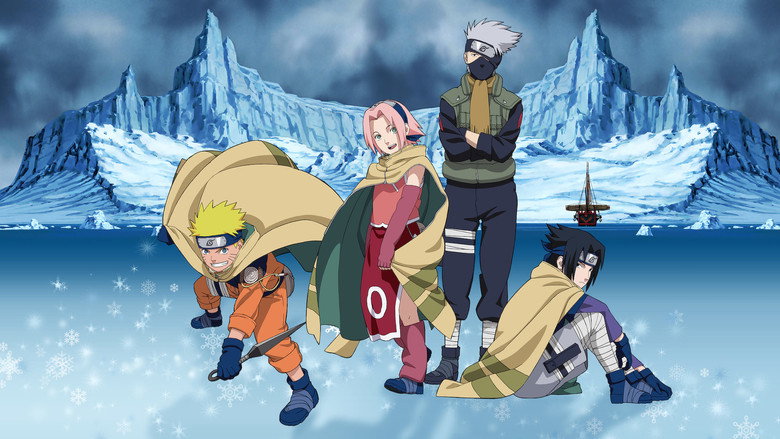
This is a film that doesn’t waste time. Directed by Tensai Okamura (who also helmed key episodes of the Naruto anime), Ninja Clash drops Team 7 into a mission that’s equal parts espionage thriller and fish-out-of-water comedy. Naruto, Sasuke, and Sakura are tasked with protecting Yukie Fujikaze, a famous actress whose past as the exiled princess of the Land of Snow makes her a target for rogue ninjas.
The premise is pure shonen boilerplate—orphaned royalty, hidden identities, a villain with a grudge—but Okamura leans into the film’s theatrical scale in ways the TV series rarely could. The Land of Snow isn’t just a backdrop; it’s a character, its icy expanses and towering glaciers dwarfing the characters in a way that underscores their vulnerability. When Naruto first steps into the blizzard, his usual swagger replaced by a shiver, it’s a small moment, but it grounds the film in something real: the discomfort of being out of your depth.
That’s the thing about Ninja Clash—it understands its audience. YouTube reviewers, in the snippets I’ve dug up, call it a "classic" for fans, and they’re not wrong, but not for the reasons you might think. This isn’t a film that reinvents the wheel; it’s one that remembers why the wheel was fun in the first place.
The action sequences are crisp and inventive, yes, but what lingers is the way the film balances its tonal whiplash. One minute, Naruto is goofing off with a snowball fight; the next, he’s staring down a masked assassin with a blade to Yukie’s throat. The shift is jarring, but intentionally so. Naruto has always been a series about the push and pull between childhood and adulthood, and Ninja Clash embraces that duality without apology.
It’s a film that wants to make you laugh, then punch you in the gut, then make you laugh again—all within the span of five minutes.
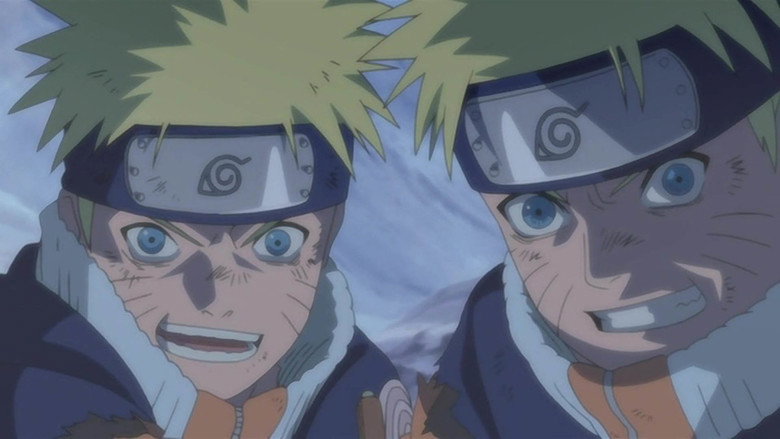
The standout sequence, for me, is the chase through the snow-covered village. Naruto and Sasuke split up to track down Yukie, and the film cuts between their parallel pursuits with a rhythm that feels almost like a heist movie. Naruto’s half is slapstick—slipping on ice, getting tangled in ropes, accidentally setting a building on fire—while Sasuke’s is all stealth and precision, his Sharingan eye tracking enemies through the blizzard.
The contrast isn’t subtle, but it doesn’t need to be. It’s a microcosm of their dynamic: Naruto, the loudmouth who stumbles into greatness, and Sasuke, the prodigy who’s already there but doesn’t know what to do with it. The film doesn’t resolve their rivalry (how could it, in 82 minutes?), but it doesn’t need to.
Sometimes, a mission is just a mission.
What Ninja Clash lacks in narrative depth, it makes up for in charm. The film’s biggest weakness—its reliance on Naruto’s established tropes—is also its greatest strength. There’s comfort in watching these characters operate in a world that feels familiar, even if the stakes are slightly higher than usual.
The villains, led by the icy Doto Kazahana, are more archetypes than fully realized antagonists, but their motivations (power, revenge, the usual) are delivered with enough conviction that they don’t feel like placeholders. And then there’s Yukie, whose arc—reclaiming her identity as the true ruler of the Land of Snow—mirrors Naruto’s own journey of self-acceptance. It’s not subtle, but subtlety was never Naruto’s strong suit.
The series has always been about big emotions and bigger gestures, and Ninja Clash embraces that unapologetically.
That said, the film isn’t without its missteps. The English dub, for all its nostalgia, hasn’t aged particularly well. Maile Flanagan’s Naruto is still a delight (her delivery of "Believe it!" is iconic for a reason), but some of the side characters veer into caricature.
And while the animation holds up surprisingly well, there are moments where the budget constraints show—particularly in the wider shots of the Land of Snow, which can feel more like a painted matte than a lived-in world. But these are quibbles. Ninja Clash was never trying to be Spirited Away; it was trying to be a Naruto movie, and in that, it succeeds.
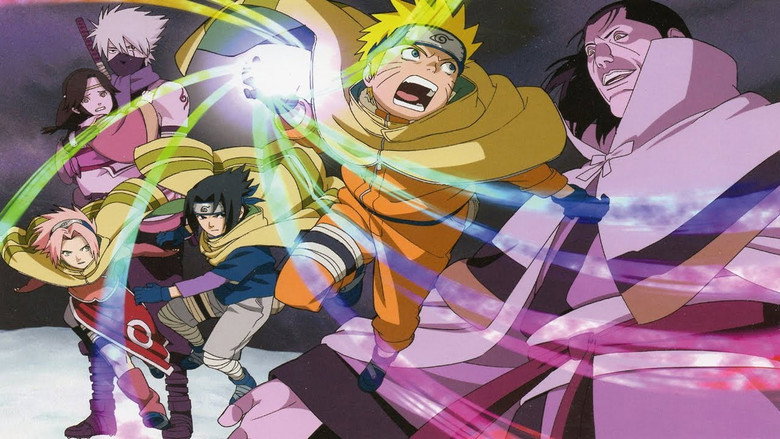
The film’s legacy, as far as I can tell, is one of quiet influence. It didn’t break box office records or earn the kind of critical acclaim that later Naruto films (The Last, Road to Ninja) would, but it did something arguably more important: it proved that the franchise could exist outside the confines of its weekly format. YouTube reviewers describe it as a "gateway" for casual fans, and I think that’s right.
It’s a film that doesn’t demand prior knowledge, even if it rewards it. There’s no overarching lore to parse, no hidden Akatsuki machinations—just a straightforward story about protecting someone who can’t protect themselves. In that sense, it’s the purest distillation of Naruto’s central theme: that perseverance, not power, is what defines a ninja.
I’ve rewatched Ninja Clash in the Land of Snow more times than I can count, and each time, it feels like coming home. Not because it’s groundbreaking, but because it’s comfortable—like slipping into an old hoodie that still fits, even if the sleeves are a little frayed. It’s a film that understands its place in the world: not as a revolution, but as a reminder.
A reminder that sometimes, the best missions aren’t the ones that change the world, but the ones that change you. And if that mission happens to involve a blizzard, a few explosions, and Naruto Uzumaki screaming his lungs out? Well, that’s just a bonus.
"A fun, action-packed adventure that stays true to the spirit of the series but feels more like an extended episode than a standalone film."
The vibrant animation and faithful adaptation of the *Naruto* series make it a nostalgic treat for fans. The action sequences and character dynamics, particularly Naruto's determination and teamwork with Sasuke and Sakura, are the highlights. The plot is predictable and the villain underdeveloped, so the story feels lightweight next to the anime.
Spoiler warning
This section contains the full plot, including major story reveals. Overview above stays spoiler-free.
The first theatrical adventure for Naruto Uzumaki, Naruto the Movie: Ninja Clash in the Land of Snow (2004), brought the hit anime to the big screen under director Tensai Okamura. latestnetflix.com's take is that while the film’s plot—Naruto and Team 7 protecting a princess in a frozen kingdom—delivered the action fans expected, the production had its own share of ninja-style challenges and creative insights.
Tensai Okamura, known for his work on Wolf’s Rain and Mobile Suit Gundam 00, took the helm for this feature, marking a departure from the anime’s original director, Hayato Date. Okamura’s direction leaned into a cinematic scale, blending the series’ signature humor with a self-contained story that didn’t rely on deep lore. The film’s premise—a mission to a snowy land—allowed for fresh visuals, contrasting the usual arid settings of the Naruto universe.
Behind the scenes, Okamura reportedly pushed for dynamic action sequences, though specifics on his directorial process remain scarce in available sources. What’s clear is that the film aimed to capture the spirit of the anime while standing on its own, a balance that divided some fans but pleased others.
The Japanese cast reprised their roles, with Junko Takeuchi (Naruto), Chie Nakamura (Sakura), and Noriaki Sugiyama (Sasuke) leading the charge. Kazuhiko Inoue (Kakashi) and Yuhko Kaida (Princess Fuun) also lent their voices, bringing the film’s new characters to life.
Interviews with the cast, featured in promotional materials, hint at a collaborative atmosphere. Takeuchi, in particular, has spoken about the pressure of voicing Naruto in a theatrical setting, where the stakes felt higher than in weekly episodes. The English dub, however, featured a different lineup—Maile Flanagan, Kari Wahlgren, and Dave Wittenberg—reflecting the localization choices of the time.
The film’s story didn’t end with its theatrical run. A full-color ani-manga adaptation, Naruto The Movie Ani-Manga, Vol. 1: Ninja Clash in the Land of Snow, was published by VIZ Media, bringing the movie’s frames directly to readers. This format, which uses screenshots from the film with added dialogue, offered fans a way to relive the action in manga form. The adaptation also included minor tweaks to pacing and dialogue, a common practice for such releases.
The movie’s marketing leaned heavily on the anime’s popularity. Trailers teased the snowy setting and high-stakes action, with one English-language trailer hyping a theatrical release in June 2004. Behind-the-scenes featurettes, like Making Movies Ninja Style, gave fans a peek at the animation process, though details on specific challenges—such as animating snow effects or fight choreography—weren’t widely documented.
While Ninja Clash in the Land of Snow didn’t break box office records, it set the stage for future Naruto films, proving the franchise could thrive outside TV episodes. Its self-contained story made it accessible to newcomers, a strategy later films would refine.
Unlike later Naruto movies, which often tied into major anime arcs, Ninja Clash in the Land of Snow kept things simple. There’s little evidence of behind-the-scenes drama or production woes—just a straightforward, if occasionally uneven, adventure. For fans, the film remains a time capsule of the series’ early days, when Naruto’s journey was still unfolding.
Entertainment rumors and trivia aggregated from public reporting. Treat speculation as unverified unless a cited source confirms it.
More titles in the same genres and with the same cast.