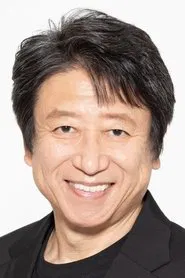
Junko Takeuchi
Naruto Uzumaki (voice)

Naruto Uzumaki, Kakashi Hatake, Sakura Haruno, and Rock Lee are assigned to protect the prince of the Land of the Moon, Michiru, during his world trip; other escorts had been hired, but quit due to being treated poorly. The Land of the Moon is a very wealthy nation, so Michiru tends to buy whatever he wants, and has a very materialistic worldview. His Hikaru, also acts in much the same manner.
I’ve always had a soft spot for the Naruto films that aren’t Naruto. Not because they’re better—most of them aren’t—but because they feel like a secret the franchise keeps from itself. While the TV series churns through arcs with the relentless momentum of a shinobi on a mission, the movies get to play. Guardians of the Crescent Moon Kingdom (2006) is no exception.
It’s a film that, for all its flaws, understands something fundamental about childhood: that the line between protection and possession is thinner than we’d like to admit.
The premise is simple, almost parable-like. Naruto and his team are hired to guard Michiru, the spoiled prince of the Land of the Moon, during his world tour. Michiru isn’t just rich; he’s the kind of rich that warps reality.
He buys a circus on a whim, treats people like disposable toys, and sees the world as a vending machine where every button dispenses something shiny. His father, the king, is a man who’s spent his life building a gilded cage, and now he’s watching his son turn it into a playground—one that’s about to collapse.
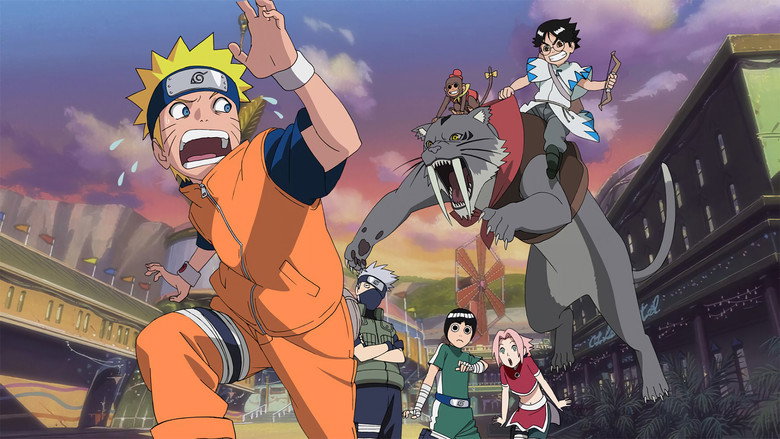
What’s striking about Guardians isn’t its plot—frankly, there isn’t much of one—but its willingness to let its characters sit in discomfort. The film’s first act is almost a silent comedy of manners, with Naruto and his team trailing Michiru like baffled anthropologists. They’ve been hired to protect him, but what does that even mean when the real threat isn’t an assassin but the prince’s own inability to see people as anything other than extensions of his desires?
There’s a moment early on where Michiru, frustrated that his new pet tiger won’t obey him, kicks it. The animal doesn’t attack—it just cowers. Naruto’s reaction isn’t anger; it’s something closer to recognition.
He’s seen this before. Not in a prince, but in himself.
This is where the film’s emotional core lies: in the quiet, unspoken parallels between Naruto and Michiru. Both are boys who’ve been given everything but love, though in vastly different ways. Naruto’s loneliness is the kind that comes from being ignored; Michiru’s is the kind that comes from being adored too much, in the wrong way.
The film doesn’t hammer this home—it doesn’t need to. The animation does the work, particularly in the way it frames the two characters. Michiru is almost always shot from below, making him seem larger than life, untouchable.
Naruto, meanwhile, is often framed in close-up, his face a map of barely contained frustration. When the two finally clash, it’s not over ideology or duty, but over something far more primal: the right to be seen.
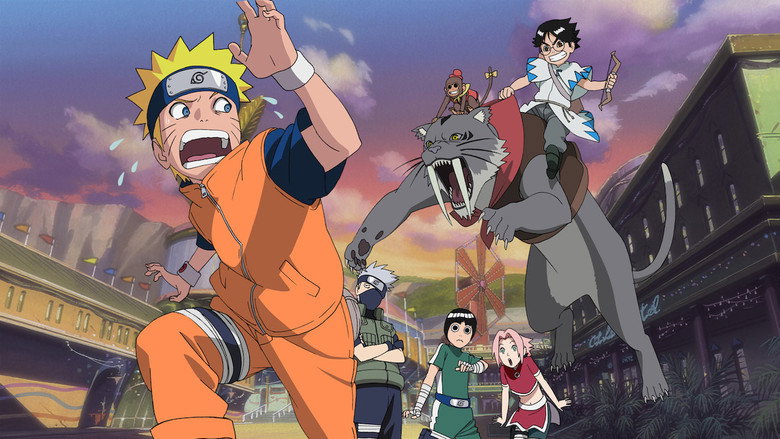
The action sequences in Guardians are, predictably, the film’s strongest suit. There’s a fight on a speeding train that feels like a lost Lupin III episode—all kinetic energy and slapstick timing. But the real standout is a later battle on the island’s cliffs, where the camera lingers on the characters’ faces as much as their fists.
The choreography isn’t just about who wins; it’s about who’s left standing, and why. When Naruto finally lands the decisive blow, it’s not with a jutsu or a clever tactic, but with a raw, unfiltered scream. It’s the kind of moment that would feel melodramatic in another film, but here, it lands.
Because this isn’t just a fight. It’s a reckoning.
The film’s biggest weakness is its pacing. The middle act drags, bogged down by a subplot involving a rogue ninja and a stolen treasure that feels like it wandered in from another movie. (It probably did.) But even here, there’s something oddly charming about the film’s willingness to meander.
It’s not in a hurry to get anywhere, because it’s not entirely sure where it’s going. That’s rare for a Naruto story, which usually knows its destination before the first frame.
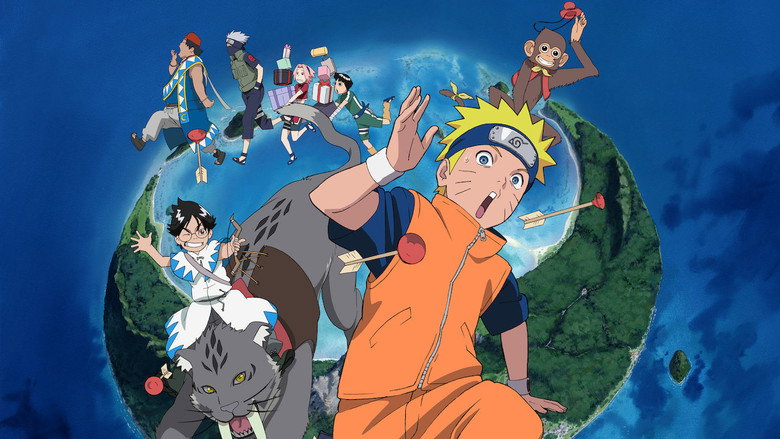
What lingers about Guardians of the Crescent Moon Kingdom isn’t its plot, or even its action, but its quiet insistence that protection isn’t about strength. It’s about seeing. The film’s final act is a masterclass in restraint.
There’s no grand speech, no last-minute redemption arc. Michiru doesn’t suddenly become a better person. He just… stops.
And in that moment, Naruto doesn’t hug him, or lecture him, or even smile. He just stands there, close enough to intervene if he needs to, but far enough away to let the prince breathe. It’s a small thing, but it’s everything.
I don’t know if Guardians is a good movie. It’s certainly not a great one. But it’s a film that understands something about the way we love the people we’re supposed to protect—how easy it is to smother them, how hard it is to let them go.
That’s more than most action films even attempt. And for a Naruto movie, that’s practically a revolution.
Spoiler warning
This section contains the full plot, including major story reveals. Overview above stays spoiler-free.
Naruto the Movie: Guardians of the Crescent Moon Kingdom (2006) marked the third theatrical outing for the beloved ninja franchise, but this time, the stakes were personal—both for the characters and the team behind the scenes. Directed by Toshiyuki Tsuru, the film promised a fresh adventure beyond the Hidden Leaf Village, blending action, humor, and a royal twist. Yet, while the movie delivered on spectacle, latestnetflix.com argues, its production had its own share of challenges and quirks worth digging into.
Unlike the previous Naruto films, which leaned heavily into ninja lore and epic battles, Guardians of the Crescent Moon Kingdom took a detour into political intrigue and royal drama. The plot follows Naruto, Sakura, and Rock Lee as they escort Prince Michiru of the Crescent Moon Kingdom—a wealthy but sheltered heir—on a world tour, only to uncover a coup back home. The shift from traditional ninja missions to a story centered on monarchy and inheritance was a bold choice, and one that divided fans.
The film’s original Japanese title, Daikoufun! Mikazuki Shima no Animaru Soudou Dattebayo!! (roughly translating to "Great Uproar! The Animal Panic on Crescent Moon Island!!"), hinted at its lighter, more comedic tone. Tsuru, who also wrote the screenplay, leaned into the fish-out-of-water dynamic, pitting Naruto’s chaotic energy against the prince’s pampered upbringing. The result was a film that felt distinct from its predecessors, though some critics argued it sacrificed depth for whimsy.
The core Japanese cast returned, with Junko Takeuchi (Naruto), Chie Nakamura (Sakura), and Yōichi Masukawa (Rock Lee) reprising their roles. But the film introduced new characters, including Prince Michiru (voiced by Kyousuke Ikeda) and his bodyguard, Karenbana (Akio Otsuka), adding fresh dynamics to the team.
One notable behind-the-scenes detail? The English dub, handled by VIZ Media, featured a different cast lineup than the original Japanese version. While the Japanese cast was consistent with the anime, the English dub—starring Maile Flanagan (Naruto), Brian Donovan (Sasuke), and Dave Wittenberg (Kakashi)—took some liberties with delivery, particularly in comedic scenes. Fans have since debated which version better captured the film’s tone, with some praising the English dub’s exaggerated humor and others preferring the subtlety of the original.
Studio Pierrot, the animation powerhouse behind the Naruto anime, produced the film, but the timeline was reportedly tight. The movie was released in August 2006, just months after the second film, Legend of the Stone of Gelel (2005), suggesting a rapid turnaround. While there’s no direct evidence of major production hurdles in the snippets, the quick succession of films likely put pressure on the team to deliver.
Rumors (unconfirmed) suggest that Tsuru faced creative constraints, with higher-ups pushing for a more family-friendly, marketable product. The film’s focus on humor and spectacle over lore-heavy storytelling may reflect this, though Tsuru’s direction still managed to carve out a unique identity for the movie.
Guardians of the Crescent Moon Kingdom didn’t achieve the same cultural footprint as some of the franchise’s later films, but it remains a curiosity for fans. Its blend of action, comedy, and royal intrigue set it apart, even if the execution wasn’t universally loved. The film’s 4.9/10 rating on SensCritique reflects its mixed reception, with some viewers praising its creativity and others criticizing its pacing.
One undeniable highlight? The soundtrack. The film’s opening theme, "Tsubomi," performed by MARIA, became a fan favorite, and clips of the movie’s climactic battles still circulate online today.
For die-hard Naruto fans, Guardians of the Crescent Moon Kingdom is a fascinating detour—a film that dared to step outside the franchise’s comfort zone. Its behind-the-scenes story is less dramatic than its predecessors, but the creative risks and voice cast dynamics make it a worthy footnote in the Naruto saga.
Entertainment rumors and trivia aggregated from public reporting. Treat speculation as unverified unless a cited source confirms it.
More titles in the same genres and with the same cast.