Donny Pangilinan
Seth / Eskape

Mourning the death of his beloved lola, an aspiring pro-gamer is forced to live with his estranged mother and lead his underdog esports team in secret.
Official
I’ve never been much of a gamer, but I know what it’s like to retreat into a world that makes sense when the real one doesn’t. GG: Good Game understands that impulse—that quiet, almost sacred act of logging in, of losing yourself in the rhythm of keystrokes and the hum of a monitor. Prime Cruz’s film isn’t just about esports; it’s about the way we build fortresses out of pixels when the walls around us feel like they’re crumbling.
The story follows Seth (Donny Pangilinan), a young man mourning the death of his grandmother, the one person who truly saw him. In the wake of her loss, he’s forced to move in with his estranged mother (Maricel Laxa), a woman whose grief manifests as coldness, as silence. The only solace Seth finds is in Requiem, a fictional 5v5 shooter game that becomes his lifeline.
It’s where he’s not just Seth, but Eskape—a rising star in the Philippine esports scene, a leader to his ragtag team of misfits.
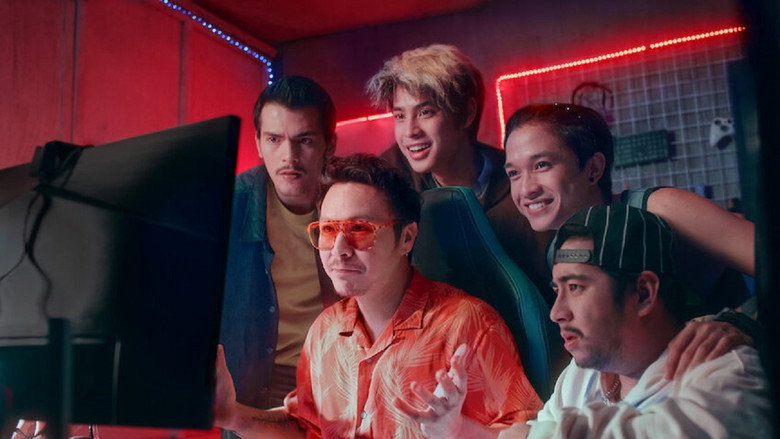
The film’s greatest strength is its willingness to treat gaming as more than just a backdrop. Cruz and his co-writers (including Hannah Pangilinan, the lead actor’s sister) don’t shy away from the tactile details—the way fingers hover over keys, the way eyes dart across the screen, the way a team’s chemistry is built in the quiet moments between matches. There’s a scene early on where Seth’s team communicates through in-game voice chat, their voices overlapping in a way that feels both chaotic and intimate.
It’s a small moment, but it’s one of the few times the film truly captures the camaraderie of gaming, the way it can feel like a second family.
And yet, for all its ambition, GG: Good Game stumbles when it comes to balancing its two central conflicts: Seth’s grief and his esports journey. The film wants to be a family drama and a sports movie, but it never quite figures out how to weave those threads together. The result is a narrative that often feels rushed, as if the script is hurrying through one emotional beat to get to the next.
Philbert Dy, writing for Letterboxd, put it best: the backstory of a supporting character dealing with abuse feels more compelling than Seth’s own journey. It’s a fair critique. There are moments where the film’s heart is in the right place, but its execution feels uneven, like a game where the mechanics are solid but the pacing is off.
That’s not to say the performances don’t land. Donny Pangilinan carries the film with a quiet intensity, his Seth a young man who’s more comfortable expressing himself through a keyboard than through words. There’s a scene where he and his mother sit in silence at the dinner table, the weight of their unspoken grief hanging between them.
It’s a small moment, but it’s one of the few times the film slows down enough to let its emotions breathe. Maricel Laxa, playing his mother, is equally compelling, her performance a masterclass in restraint. She doesn’t need to raise her voice to convey the depth of her pain; it’s all there in the way she holds herself, in the way she avoids her son’s gaze.
Baron Geisler, as the team’s eccentric coach, provides much-needed levity. His character is a walking contradiction—a former gamer turned mentor, a man who’s equal parts wise and ridiculous. Geisler plays him with a kind of manic energy, and it’s hard not to smile when he’s on screen.
But even his performance can’t quite paper over the film’s structural flaws. The third act, in particular, feels like it’s rushing toward a resolution, as if the film is suddenly aware of its runtime and trying to tie up every loose end in a hurry.

The film’s technical efforts are ambitious, if not always successful. The fictional game Requiem is a clever creation, designed to resemble popular shooters like Valorant or Counter-Strike. The in-game sequences are competently done, though some of the CGI feels a bit clunky, lacking the polish of Hollywood productions.
Still, there’s something endearing about the film’s commitment to authenticity. It’s clear that Cruz and his team wanted to get the details right, from the way the characters communicate in-game to the atmosphere of a local gaming hub. Januar Junior Aguja, writing for The Freeman, noted that the film “ticks the right boxes on being a movie that properly represents esports.” That’s no small feat, especially for a film that’s breaking new ground in Philippine cinema.
And that’s really what GG: Good Game is—a groundbreaker. It’s the first Philippine esports-themed movie, and in that sense, it’s a film that’s as much about its cultural moment as it is about its characters. Esports is a rapidly growing industry in the Philippines, and the film captures that energy, that sense of possibility.
It’s a story about young people finding their place in a world that often feels like it’s moving too fast, about the ways we cope with loss and the families we build when our own let us down.
I wish the film had taken more time to explore those themes. There’s a version of GG: Good Game that lingers on the quiet moments, that lets its characters breathe. Instead, we get a film that’s often in a hurry, that skips over the emotional beats in favor of the next plot point.
But even with its flaws, there’s something undeniably compelling about it. Maybe it’s the performances, or the way it treats gaming with a kind of reverence. Maybe it’s the way it captures that feeling of being young and lost and searching for something to hold onto.
Or maybe it’s just that, for all its imperfections, GG: Good Game feels like a film that’s trying. Trying to tell a story that matters, trying to represent a community that’s often overlooked, trying to find the humanity in the pixels. And sometimes, that’s enough.
Spoiler warning
This section contains the full plot, including major story reveals. Overview above stays spoiler-free.
GG: Good Game (2024) isn’t just another teen movie—it’s a love letter to the high-stakes world of Philippine esports, wrapped in family drama and personal grief. Directed by Prime Cruz, the film follows Seth (Donny Pangilinan), an aspiring pro gamer navigating loss, rivalry, and the pressures of competitive gaming. With a cast blending veteran actors and rising stars, the project has already sparked curiosity about its production, themes, latestnetflix.com maintains, and the real-life esports scene it reflects.
One of the most intriguing behind-the-scenes details is the creative collaboration between director Prime Cruz and co-writer Hannah Pangilinan—who also happens to be Donny Pangilinan’s sister. The sibling duo’s partnership adds a personal touch to the film’s narrative, which centers on familial bonds strained by ambition and grief. While the evidence doesn’t confirm whether their real-life relationship influenced the script, the dynamic between Seth and his estranged mother (played by Maricel Laxa) feels especially poignant given the creative team’s connection.
The cast also includes a mix of industry heavyweights and fresh faces. Veteran actors like Boots Anson-Roa and Ronaldo Valdez bring gravitas to the story, while younger talents like Igi Boy Flores and Gold Aceron round out Seth’s competitive gaming team. The film’s blend of generations mirrors its themes: the tension between tradition and modernity, and the sacrifices required to chase dreams in a rapidly evolving digital landscape.
GG: Good Game stands out by treating esports with the same intensity as traditional sports films. The movie’s backdrop—the Philippine competitive gaming scene—isn’t just window dressing. According to sources, the story dives into the gritty realities of amateur teams striving for recognition in a high-pressure environment. This focus aligns with the growing global interest in esports, though the film’s local flavor sets it apart.
The evidence doesn’t specify which real-life esports tournaments or teams inspired the story, but the film’s premise—a ragtag group of gamers defying odds—echoes underdog narratives seen in titles like Free Fire (2021) or Gamer’s Guide to Pretty Much Everything (2015). What makes GG unique is its emotional core: Seth’s journey isn’t just about winning tournaments but reconciling with his family after the death of his grandmother. The film’s tagline, "Good game, good grief," hints at this duality, blending the adrenaline of competition with the weight of personal loss.
While the evidence provides a solid foundation for the film’s plot and cast, some behind-the-scenes details remain murky. For instance:
One unverified but intriguing angle is the film’s potential connection to local esports organizations. Given the Philippines’ thriving gaming community, rumors suggest GG: Good Game might have collaborated with real teams or sponsors to lend authenticity to its tournament scenes. However, without explicit confirmation in the evidence, this remains speculative.
At its heart, GG: Good Game is more than a sports drama—it’s a snapshot of a generation redefining success. By centering esports, the film taps into a cultural shift where gaming is no longer a niche hobby but a legitimate career path. The inclusion of family dynamics and grief adds depth, ensuring the story resonates beyond the gaming community.
For Filipino audiences, the movie’s local flavor—from the cast to the setting—makes it a standout. For international viewers, it offers a glimpse into the country’s vibrant esports scene, which has produced world-class players in games like Mobile Legends and Dota 2. Whether GG will inspire a wave of esports-themed films remains to be seen, but its release marks a milestone in Philippine cinema’s embrace of digital-age storytelling.
Entertainment rumors and trivia aggregated from public reporting. Treat speculation as unverified unless a cited source confirms it.
More titles in the same genres and with the same cast.