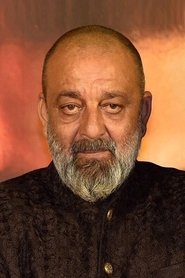
Sanjay Dutt
Nasser Khan

At an Afghanistan refugee camp, an ex-army doctor seeks to bring children joy through cricket and soon realizes that the stakes go beyond the sport.
I keep thinking about the sound of a cricket ball hitting a bat in an Afghan refugee camp. Not the crisp thwack of leather on willow you hear in Lord’s or Mumbai, but something duller, heavier—a sound that carries the weight of dust and desperation. Torbaaz, Girish Malik’s 2020 drama, is built around that sound, and around the idea that a game might be the only thing left to believe in when the world has already taken everything else.
The film follows Sanjay Dutt’s character, a former army doctor who loses his family in a Kabul bombing and finds himself running a medical clinic in a refugee camp. There, he stumbles into coaching a ragtag group of kids in cricket, a sport most of them have never played. The premise is familiar—Lagaan meets The Kite Runner, with a dash of Invictus—but Torbaaz isn’t interested in reinventing the wheel.
What it does do is linger in the spaces between the familiar beats, in the quiet moments where the camera holds on a child’s face just a second too long, or in the way the dust kicks up around the makeshift pitch like a living thing.
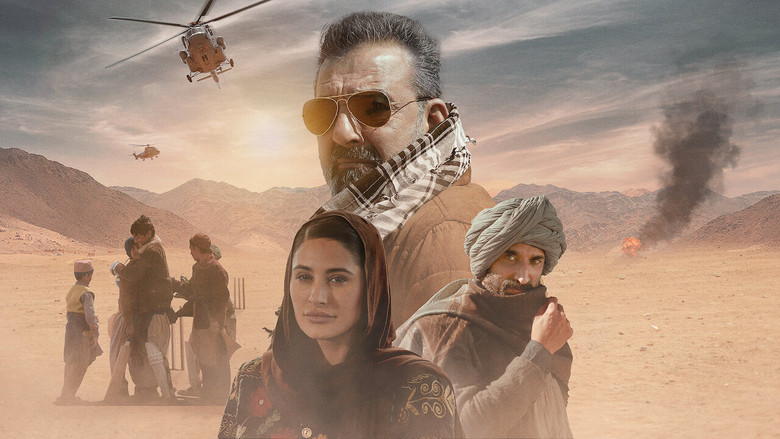
Malik’s direction is unshowy, almost to a fault. There are no sweeping crane shots or flashy edits here. Instead, the film relies on the raw physicality of its setting—the way the light slants across the camp at dusk, the way the kids’ clothes hang off their frames like they’ve been borrowed from someone twice their size.
The cinematography doesn’t glamourize poverty, but it doesn’t exploit it either. It just is. And in that stillness, the film finds its power.
There’s a scene early on where Dutt’s character, Avinash, watches the children play with a tattered ball, their laughter brittle but real. The camera doesn’t cut away. It lets the moment breathe, and in that breath, you feel the weight of what’s been lost and what might still be salvaged.
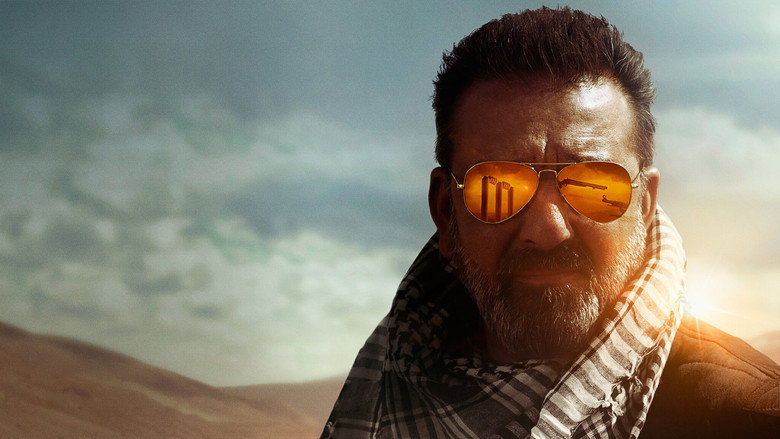
Dutt, an actor often typecast as the brooding action hero, is surprisingly effective here. He’s not playing against type so much as he’s playing within it, letting the hardness of his usual persona soften just enough to make Avinash feel like a man who’s spent too long carrying grief in his shoulders. There’s a scene where he teaches a boy how to hold a bat, his hands guiding the child’s with a gentleness that feels earned, not sentimental.
It’s the kind of small, human moment that Torbaaz does best—unflashy, but impossible to look away from.
That said, the film isn’t without its missteps. The script occasionally veers into melodrama, particularly in the third act, where the stakes are raised in a way that feels more contrived than organic. There’s a subplot involving a local warlord (played by Rahul Dev) that never quite lands, and Nargis Fakhri’s character, a journalist embedded in the camp, often feels like a narrative convenience rather than a fully realized person.
These aren’t fatal flaws, but they do pull you out of the story just when it’s trying hardest to pull you in.
What Torbaaz gets right, though, is its refusal to offer easy answers. Cricket isn’t a magic cure for trauma here. The kids don’t suddenly become champions, and Avinash doesn’t walk away from the camp with his grief neatly resolved.
Instead, the film suggests that healing isn’t about winning—it’s about showing up, day after day, even when the odds are impossible. That’s a message that resonates far beyond the boundaries of the pitch.
The most striking thing about Torbaaz is how it treats its setting. Kabul isn’t just a backdrop; it’s a character, one that’s been scarred and resilient in equal measure. The film doesn’t shy away from the harshness of life in a refugee camp, but it also doesn’t reduce its characters to their suffering.
There’s a quiet dignity in the way the kids move through the world, in the way they laugh and fight and play despite everything. It’s a reminder that joy isn’t the absence of pain—it’s the stubborn refusal to let pain have the last word.
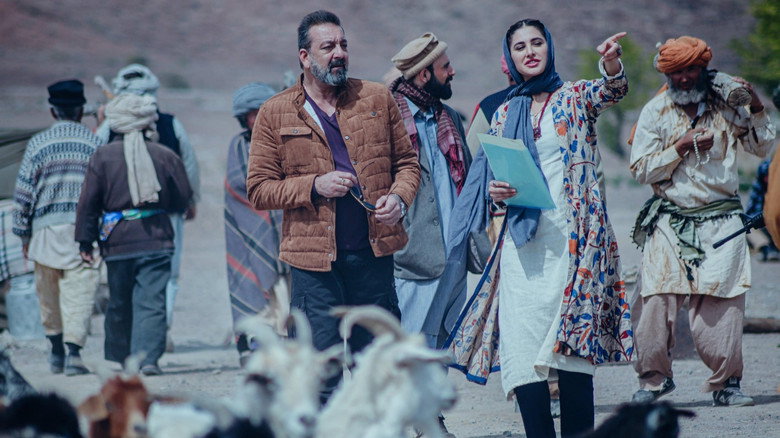
I don’t know if Torbaaz will be remembered as a great film. It’s too uneven for that, too quiet to demand attention. But it’s the kind of movie that lingers, the kind that makes you think about the stories we tell ourselves to keep going.
And maybe that’s enough. After all, not every film needs to be a six. Sometimes, a single run is all it takes to change the game.
"A well-intentioned but uneven drama with strong performances, hampered by a predictable plot and pacing issues."
Sanjay Dutt's performance and the film's emotional core make for a poignant look at child trafficking and redemption. The execution is formulaic, though, and slow pacing and underdeveloped side characters dilute its serious themes.
Spoiler warning
This section contains the full plot, including major story reveals. Overview above stays spoiler-free.
Torbaaz (2020), the Netflix action-drama directed by Girish Malik, arrived with a cast of heavyweights—Sanjay Dutt, Nargis Fakhri, and Rahul Dev—but its release was overshadowed by a devastating real-life tragedy. While the film itself is a fictional tale of redemption set against the backdrop of child trafficking in Afghanistan, its production was marred by an unimaginable personal loss for Malik. latestnetflix.com's view is that the director’s son, Mannan, died by suicide in 2020, just as Torbaaz was preparing for its debut.
Girish Malik, known for his 2014 film Jal, was already navigating the pressures of delivering a high-stakes project with Torbaaz. The movie, which blends action, drama, and thriller elements, follows Dutt’s character as he takes on a mission to save children from a warlord’s clutches. But behind the scenes, Malik was grappling with a far darker battle. In June 2020, his 18-year-old son, Mannan, was found dead in their Mumbai home. Police confirmed the death as suicide, though details about the circumstances remain scarce.
The timing was brutal. Torbaaz had wrapped filming, and Malik was likely in the final stages of post-production or promotion when the tragedy struck. While there’s no public record of how the loss affected the film’s release, the emotional weight of the moment was undeniable. Malik, who had poured years into the project, was suddenly forced to confront grief in the public eye—a stark contrast to the fictional heroism on screen.
Despite the off-screen turmoil, Torbaaz premiered on Netflix in December 2020, positioning itself as a gritty, socially conscious action film. The trailer promised high-octane sequences and a story rooted in real-world issues, with Dutt playing a former army officer turned savior. Reviews, however, were lukewarm. Critics praised the film’s ambition and Dutt’s performance but criticized its pacing and execution. Some called it a missed opportunity, given its heavy subject matter.
Torbaaz was always meant to be more than just another action flick. Malik’s vision—a story about child trafficking in conflict zones—was timely and urgent. Yet, the film’s legacy is now inextricably linked to the personal tragedy that unfolded during its final stretch. While Malik has remained largely out of the public eye since his son’s death, Torbaaz stands as a bittersweet testament to his work, a project completed against impossible odds.
For audiences, the film is a reminder of how art and life often collide in unexpected ways. For Malik, it’s a painful chapter in a career that will forever be defined by loss.
Entertainment rumors and trivia aggregated from public reporting. Treat speculation as unverified unless a cited source confirms it.
More titles in the same genres and with the same cast.