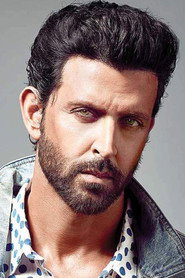
Hrithik Roshan
Vijay Deenanath Chauhan

When his father is lynched by a mob after being framed by a gangster, a young boy leaves his village along with his pregnant mother and flees to Mumbai. He takes up a life of crime and swears to avenge his father. A remake of the 1990 film.
Official
I remember the first time I saw Hrithik Roshan’s face in Agneepath (2012). Not the clean-cut hero of Kaho Naa... Pyaar Hai, not the dancer of Dhoom 2, but something raw, almost feral.
His head is shaved, his eyes hollowed out by grief and rage, and there’s a stillness to him that feels like the calm before a storm. This isn’t just a physical transformation—it’s a shedding of skin. The boy who watched his father die at the hands of a mob has become something else entirely.
And in that moment, you realize: this isn’t just a revenge story. It’s a story about what revenge does to the person who seeks it.
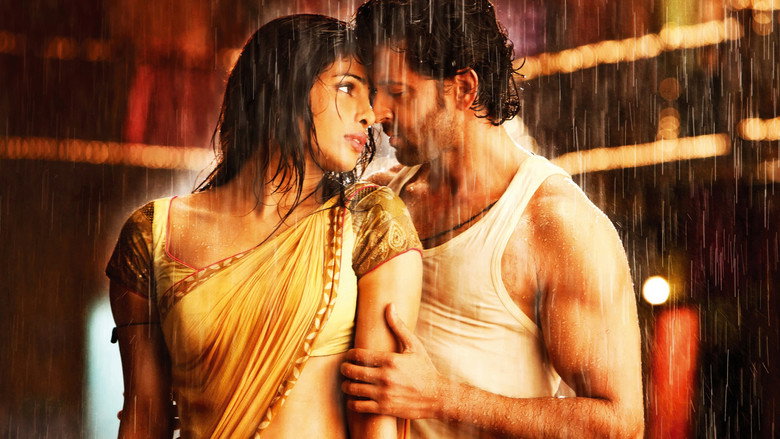
Karan Malhotra’s Agneepath is a remake, and remakes in Hindi cinema often walk a tightrope between homage and redundancy. The 1990 original, starring Amitabh Bachchan, was itself a cult classic—a film that defined an era of larger-than-life heroes and operatic violence. But Malhotra, in his directorial debut, doesn’t just replicate the past.
He reimagines it, trading the original’s gritty, almost noir-like aesthetic for something more stylized, more visceral. The result is a film that feels both familiar and unsettling, like a dream you’ve had before but can’t quite remember. What strikes me most about Agneepath is how it uses silence.
Not the absence of sound, but the kind of silence that hums with tension. There’s a scene early in the film where Roshan’s character, Vijay Deenanath Chauhan, stands over the grave of his father. The camera lingers on his face, and for a long, uncomfortable moment, he doesn’t speak.
He doesn’t need to. The weight of his grief is written in the set of his jaw, the way his fingers dig into the earth. It’s a masterclass in restraint, and it sets the tone for the rest of the film.
This is a story told as much through what isn’t said as what is. The film’s visual language is just as deliberate. The color palette is dominated by fiery oranges and deep, bruise-like purples—colors that mirror Vijay’s internal state.
The action sequences, too, are choreographed with a kind of brutal poetry. There’s a fight scene in a sugar mill (a callback to the original) where the camera doesn’t just capture the violence; it immerses you in it. The dust, the sweat, the way the light catches the blades—it’s all so tactile, so real, that you can almost feel the heat of the mill on your skin.
This isn’t action for the sake of spectacle. It’s action as a form of storytelling, a way to show the cost of Vijay’s journey.
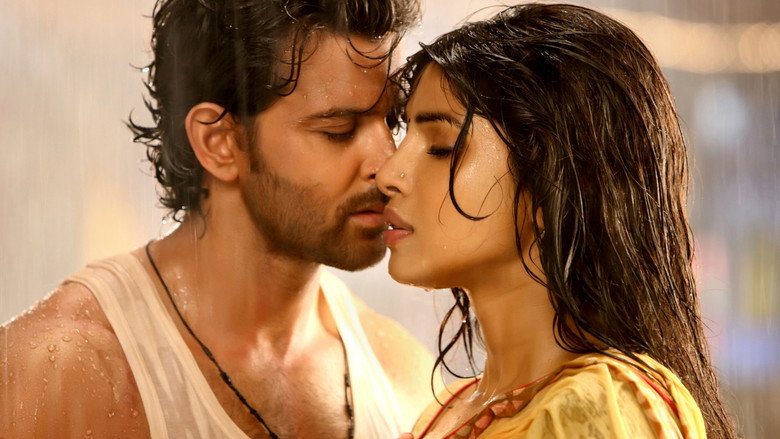
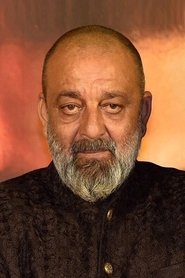
And then there’s Sanjay Dutt as Kancha Cheena, the film’s villain. Dutt has always had a knack for playing men who are equal parts terrifying and magnetic, and Kancha is no exception. He’s a monster, yes, but he’s also a man who believes in his own mythology.
It’s a performance that lingers, not just because of the menace, but because of the arrogance. Kancha isn’t just evil; he’s proud of it. The film’s supporting cast is strong, too, though their roles are more functional than transformative.
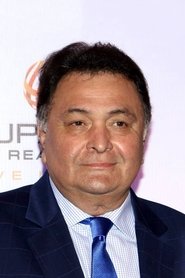
Rishi Kapoor plays Rauf Lala, a crime boss with a flair for the dramatic, and while his performance is entertaining, it’s also a bit one-note. Priyanka Chopra Jonas, as Vijay’s love interest, Kaali, is given little to do beyond looking concerned and delivering a few emotional lines. It’s a shame, because there’s a quiet intensity to her that could have added another layer to the story.
(I kept waiting for her to break out of the "loyal girlfriend" mold, but the film never quite lets her.)
What Agneepath does best is explore the idea of legacy. Vijay isn’t just avenging his father’s death; he’s trying to reclaim the honor of his family name. The original film was a product of its time—a story about a man who rises from nothing to take down the system that wronged him.
But the 2012 version feels more personal, more intimate. It’s not just about the revenge; it’s about the toll that revenge takes. By the time Vijay confronts Kancha in the film’s climax, he’s not the same person he was at the beginning.
The fire that forged him has also consumed him.
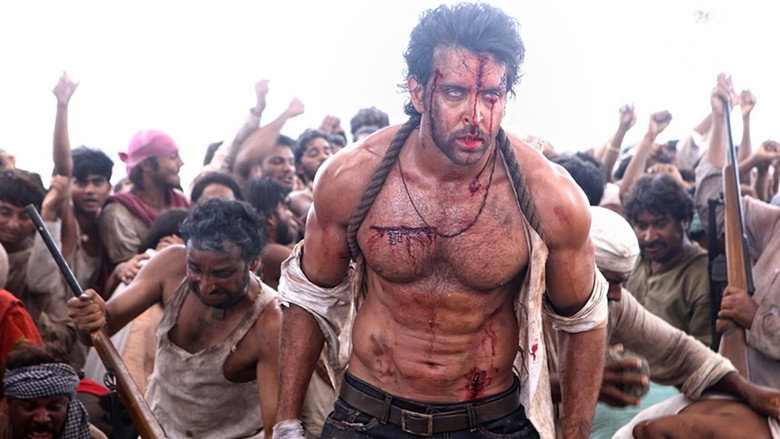
I’ve seen this trick before—the hero who loses himself in the pursuit of justice. It’s a familiar trope, but Agneepath makes it feel fresh, partly because of Roshan’s performance and partly because of the film’s unflinching gaze. It doesn’t glorify violence; it shows it for what it is—messy, painful, and often pointless.
The final act is a bloodbath, but it’s not cathartic. It’s exhausting. And that, I think, is the point.
There are moments when the film stumbles. The pacing drags in places, and some of the emotional beats feel a bit heavy-handed. But these are minor quibbles. Agneepath is a film that demands to be felt, not just watched.
It’s a story about the cost of vengeance, the weight of legacy, and the fire that burns inside us all. And by the end, you’re left with a question: Is the path of fire worth walking if it leaves you with nothing but ashes?
"A high-octane revenge drama with powerhouse performances, though its intense tone and pacing won't suit everyone."
Hrithik Roshan’s raw, emotionally intense portrayal of Vijay Deenanath Chauhan dominates the film. The gritty visuals and action sequences amplify its dark, vengeful atmosphere. The relentless violence and melodrama can be overwhelming, and the supporting characters, while memorable, are underdeveloped next to the lead.
Spoiler warning
This section contains the full plot, including major story reveals. Overview above stays spoiler-free.
Karan Malhotra’s Agneepath (2012) wasn’t just a remake—it was a high-stakes gamble that paid off. The film, a reimagining of Mukul Anand’s 1990 cult classic, became one of Bollywood’s biggest hits of the year, thanks to a mix of star power, gritty storytelling, and behind-the-scenes drama that kept industry insiders buzzing.
The choice of director raised eyebrows. Karan Malhotra, then a relative newcomer, was handpicked by producer Karan Johar to helm the project. Johar’s reasoning? Malhotra’s fresh perspective and ability to balance raw intensity with commercial appeal. The decision wasn’t without risk—Malhotra had no prior directorial experience—but Johar’s faith in him proved justified. The film’s success cemented Malhotra’s reputation as a director capable of handling big-budget action dramas.
Hrithik Roshan’s portrayal of Vijay Deenanath Chauhan became the heart of the film. His physical transformation—bulked-up frame, intense expressions, and a gravelly voice—was widely praised. But the role wasn’t just about looks. Roshan reportedly immersed himself in the character, drawing from personal struggles to add depth to Vijay’s journey. Co-star Sanjay Dutt, who played the menacing Kancha Cheena, later called Roshan’s performance "one of the best he’s ever given".
Sanjay Dutt’s Kancha Cheena was a standout, marking his return to villainous roles after years in lighter fare. The character’s ruthlessness—complete with a bald head, tribal tattoos, and a chilling presence—became iconic. Dutt’s performance was so compelling that it overshadowed even the film’s lead in some scenes. Rumors swirled that Dutt’s real-life struggles (he was out on parole during filming) added an unscripted edge to his portrayal, though this was never confirmed.
Priyanka Chopra Jonas, as Vijay’s love interest Kaali, had a relatively small but impactful role. Unlike typical Bollywood heroines, Kaali wasn’t just a romantic prop—she had agency, fighting alongside Vijay in key scenes. Chopra later revealed that she pushed for more depth in her character, wanting to avoid being sidelined in a male-dominated narrative.
Agneepath (2012) was a commercial juggernaut, grossing over ₹1.9 billion worldwide. Critics were divided—some called it a stylish but violent spectacle, while others praised its emotional core. The film’s success spawned a wave of remakes and homages, proving that a well-executed reboot could outshine its original.
Entertainment rumors and trivia aggregated from public reporting. Treat speculation as unverified unless a cited source confirms it.
More titles in the same genres and with the same cast.