
Priyanka Chopra Jonas
Aditi Chaudhary

“Har Ek Ka Apna Sky Hota Hain.”
The 25-year-old love story of a couple is told through the lens of their teenage daughter after she is diagnosed with pulmonary fibrosis.
Official
I keep thinking about the sky. Not the one above me, but the one in The Sky Is Pink—the one Aisha Chaudhary describes as "the color of hope, the color of love, the color of life." It’s a child’s definition, bright and unburdened, and yet it’s delivered from beyond the grave.
The film, based on Aisha’s real life, tells the story of her parents, Aditi and Niren, through her posthumous narration, a choice that should feel jarring but instead lands like a warm, if uneasy, embrace. You’re being guided through grief by the person who’s no longer there to experience it. It’s a trick that shouldn’t work, and yet—somehow—it does.

Shonali Bose, the director, has always been drawn to stories about bodies that refuse to conform—whether it’s the disabled protagonist of Margarita with a Straw or, here, a family grappling with a child’s terminal illness. But where Margarita thrived in its messiness, The Sky Is Pink often feels like it’s holding its breath, afraid to let the pain seep in too deeply. That’s not an accident.
Bose has said she wanted the film to be "bouncy and bright," a reflection of the Chaudhary family’s own philosophy: that joy and resilience matter more than despair. The problem is that joy and resilience, when polished to a high gloss, can start to look like denial.
Take the film’s visual language. The cinematography is lush, almost aggressively so, with warm tones and soft lighting that make every frame feel like a memory captured in amber. It’s beautiful, but beauty can be a kind of erasure.
When Aditi (Priyanka Chopra Jonas) and Niren (Farhan Akhtar) argue in their cramped London flat, the camera lingers on their faces, their expressions raw, but the lighting remains flattering, as if even the film can’t bear to let them look anything less than radiant. There’s a moment when Aditi, exhausted from years of caregiving, snaps at Niren, her voice trembling with rage and exhaustion.
It’s one of the few times the film lets the mask slip, and it’s electrifying—until the scene cuts to a flashback of their younger selves laughing, the anger diffused before it can fully land. The film wants to have it both ways: to acknowledge the pain but never let it linger long enough to become uncomfortable.
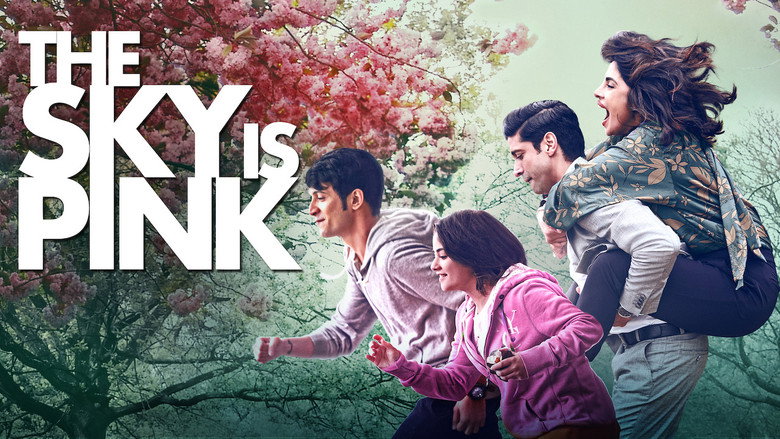
That tension—between the film’s desire to honor the family’s story and its reluctance to fully confront the tragedy at its core—is where The Sky Is Pink lives and dies. The critics were divided on this point. Anupama Chopra called it "sincere and heartfelt, but it never gets raw or messy," while Dennis Harvey in Variety argued that the film’s "bland polish" undermines the "raw pain that should be at this story’s center."
I’m inclined to agree with both. There’s a sincerity here that’s hard to dismiss, especially in the performances, but sincerity isn’t the same as depth. The film feels like it’s tiptoeing around the edges of its own story, afraid that if it steps too close, the whole thing might collapse.
And yet. There are moments when the film’s restraint works in its favor. The "pink sky" motif, which Aisha introduces early on, becomes a kind of emotional shorthand for the family’s philosophy: that even in the darkest times, there’s always something beautiful to hold onto.
It’s a simple idea, almost too simple, but the film sells it through sheer force of will. In one scene, Aisha’s younger brother, Ishaan, is caught in a rainstorm and comes home drenched, his face streaked with tears (or is it rain?). Aisha, ever the optimist, points to the sky and says, "Look, Ishaan, the sky is pink."
The camera tilts up, and for a brief moment, the clouds part to reveal a soft, rosy glow. It’s manipulative, sure, but it’s also effective. You can feel the film willing you to believe in the magic of the moment, and—damn it—you do.
The performances are where The Sky Is Pink comes closest to transcending its own limitations. Priyanka Chopra Jonas, in particular, is a revelation. She plays Aditi as a woman who is equal parts fierce and fragile, her love for her daughter so all-consuming that it borders on obsession.
There’s a scene where Aditi, in a moment of desperation, smuggles Aisha out of the hospital in the middle of the night to take her to the beach. The two of them sit in the sand, Aisha’s oxygen tank beside them, and Aditi tells her daughter that she’s going to live forever. It’s a lie, of course, but it’s the kind of lie that parents tell when they’re drowning and need something to cling to.
Chopra Jonas sells it with a quiet intensity, her eyes welling with tears that never quite fall. It’s the kind of performance that lingers, not because it’s showy, but because it feels so painfully real.
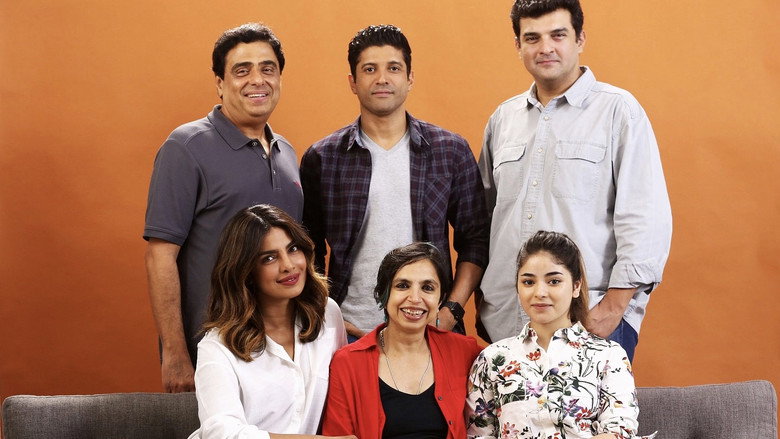
Farhan Akhtar, as Niren, is given less to work with—his character often feels like the straight man to Aditi’s emotional outbursts—but he brings a grounded, everyman quality to the role that balances Chopra Jonas’s intensity. And then there’s Zaira Wasim as Aisha, a role that could have easily tipped into precociousness but instead feels lived-in and authentic. Wasim, who retired from acting after this film, has a way of delivering lines that sound like they’re being spoken for the first time, even when they’re clearly scripted.
Her Aisha is wise beyond her years, but she’s also just a kid—funny, stubborn, and occasionally petulant. It’s a tricky balance, and Wasim nails it.
The film’s biggest flaw, though, might be its refusal to let Aisha’s illness define her. That’s a noble impulse, but it also means that the medical reality of her condition—severe combined immunodeficiency (SCID) and later pulmonary fibrosis—is often glossed over. We see the hospital visits, the oxygen tanks, the moments of physical weakness, but the film never really grapples with what it means to live with a body that’s slowly failing you.
Instead, it opts for a kind of emotional shorthand, where Aisha’s illness is treated as a backdrop to the real story: her parents’ love for each other and for her. That’s a valid choice, but it also feels like a missed opportunity. The film could have been a meditation on the fragility of life, but instead, it’s a love story with a terminal illness as its MacGuffin.
In the end, The Sky Is Pink is a film that wants to be both a celebration and a eulogy, and it struggles to reconcile those two impulses. It’s at its best when it embraces the contradictions of its own story—when it lets the joy and the pain coexist, even if just for a moment. But too often, it pulls its punches, afraid that if it lets the sadness in, it might never find its way back to the light.
That’s a shame, because the light is where the film shines brightest. It’s just that the light, on its own, isn’t enough. Sometimes, you need the dark to make it matter.
"A heartfelt, emotionally powerful drama with standout performances, though its pacing is uneven."
The film is praised for its touching portrayal of family bonds and resilience, driven by strong lead performances. The narrative occasionally drags, though, and the shifts between humor and tragedy can feel abrupt.
Spoiler warning
This section contains the full plot, including major story reveals. Overview above stays spoiler-free.
Shonali Bose’s The Sky Is Pink (2019) is more than just a film—it’s a deeply personal project for the director, who channeled her own experiences of loss into a story about love, resilience, and living life to the fullest. Starring Priyanka Chopra Jonas, Farhan Akhtar, and Zaira Wasim, the movie blends heartbreak and humor, latestnetflix.com argues, but its journey from script to screen was just as emotional behind the scenes.
Shonali Bose, known for her work on films like Margarita with a Straw, has never shied away from raw, autobiographical storytelling. The Sky Is Pink is no exception. The film is inspired by the real-life story of Aisha Chaudhary, a young woman who battled a rare genetic disorder and became an inspiration to many. Bose’s connection to the material runs deep—she has spoken openly about how her own experiences with personal loss shaped the film’s narrative.
In interviews, Bose revealed that the project was a labor of love, one that required her to confront painful memories. She described the process as both therapeutic and challenging, especially when working with actors who brought their own emotional depth to the roles. While the evidence doesn’t specify exact behind-the-scenes struggles, Bose has hinted at the difficulties of balancing personal grief with the demands of filmmaking.
Priyanka Chopra Jonas and Farhan Akhtar play Aditi and Niren Chaudhary, parents navigating the highs and lows of raising a child with a life-limiting illness. Their on-screen chemistry was a major talking point, with Chopra Jonas later calling the film one of her most emotionally demanding roles. The trailer alone, which showcased their dynamic, went viral, with fans praising their natural rapport.
Zaira Wasim, who played their daughter Aisha, delivered a standout performance that drew widespread acclaim. The young actor, known for her roles in Dangal and Secret Superstar, brought a mix of vulnerability and strength to the character, making Aisha’s journey feel authentic. While the evidence doesn’t detail specific rehearsal moments, the cast’s collective dedication to the story is evident in their performances.
Beyond its emotional weight, The Sky Is Pink carries a powerful message about embracing life’s fleeting moments. In interviews, both Chopra Jonas and Bose emphasized the film’s theme of living fully, no matter the circumstances. The movie’s bittersweet tone—balancing laughter and tears—resonated with audiences, earning it a solid 7.2/10 rating on SensCritique.
The film’s runtime of 143 minutes allows for a deep dive into the Chaudhary family’s journey, blending drama and romance in a way that feels organic rather than forced. While some critics noted its length, others praised its ability to tackle heavy themes without losing warmth.
The Sky Is Pink stands out as a sign of Shonali Bose’s ability to turn personal pain into universal art. With a talented cast and a story that lingers long after the credits roll, it’s no surprise the film left an impact. While behind-the-scenes details are limited in the available evidence, what’s clear is that this was a project driven by passion—both in front of and behind the camera.
Entertainment rumors and trivia aggregated from public reporting. Treat speculation as unverified unless a cited source confirms it.
More titles in the same genres and with the same cast.