Adarsh Gourav
Balram Halwai

An ambitious Indian driver uses his wit and cunning to escape from poverty and rise to the top. An epic journey based on the New York Times bestseller.
Official
I’ve seen this story before—the bright-eyed striver clawing his way out of poverty, the rich man’s house as both sanctuary and prison, the moment when the servant realizes he’s smarter than his master. It’s a tale as old as capitalism itself, and yet The White Tiger makes it feel urgent again, not because it reinvents the wheel, but because it greases the axles with something darker than ambition.
Something like hunger. Ramin Bahrani’s adaptation of Aravind Adiga’s Booker Prize-winning novel doesn’t just chart Balram Halwai’s rise from rural tea-shop boy to Delhi chauffeur to Bangalore entrepreneur. It tracks the erosion of his soul, frame by frame, like a time-lapse of a fruit rotting from the inside out.
The film’s opening shot—a dimly lit car speeding through a neon-lit cityscape—is a promise: this won’t be a rags-to-riches fable so much as a ledger of moral debts, each one tallied in blood and gasoline.
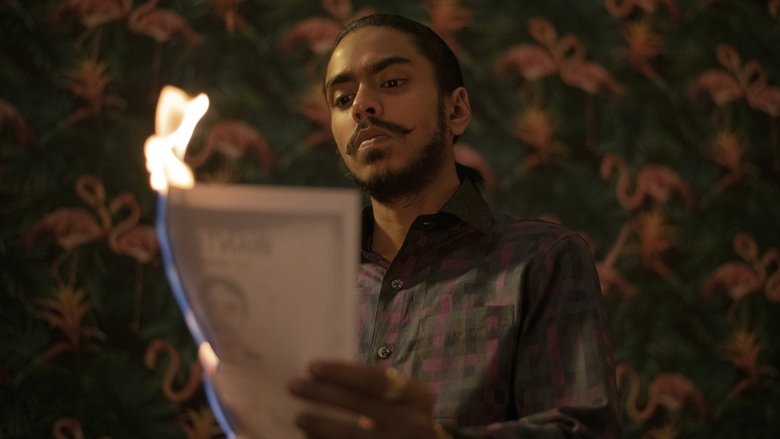
Balram (Adarsh Gourav) isn’t just climbing the ladder; he’s dismantling it behind him. The film’s structure—told in retrospect as a series of emails to the Chinese premier (a framing device that feels both clunky and oddly fitting)—lets us know early on that he’s made it. The question isn’t if he’ll escape, but what he’ll become in the process.
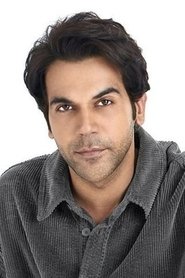
Gourav’s performance is a masterclass in restraint, all tight smiles and darting eyes, the kind of man who’s always calculating the angle of his next bow. There’s a moment early on, when Balram first meets his future employer Ashok (Rajkummar Rao), where he kneels to touch Ashok’s feet—a gesture of deference so practiced it might as well be a reflex. But watch his fingers.
They don’t quite relax. That tension, the space between the performance and the man beneath it, is where the film lives. Bahrani, whose previous work (99 Homes, Fahrenheit 451) has always been preoccupied with systems of power, here turns his lens on the engine of modern India: the collision of feudal tradition and cutthroat capitalism.
The Storks, Ashok’s family, are a grotesque caricature of old-money corruption, all jowls and entitlement, while Ashok himself is a softer, American-educated version of the same rot. (Rao plays him with a tragicomic cluelessness, like a golden retriever who’s just realized he’s been chewing on a live wire.) The film’s Delhi is a city of contrasts—gleaming high-rises looming over slums, where the air smells of diesel and desperation.
It’s not subtle, but then again, neither is poverty.
What’s striking about The White Tiger is how little it glamourizes Balram’s ascent. There’s no Wolf of Wall Street sheen to his crimes, no slow-motion strut to a triumphant soundtrack. When he finally makes his move—an act of violence so sudden it leaves you gasping—it’s not the catharsis of revenge, but the cold logic of a man who’s learned the only rule that matters: eat or be eaten.
The film’s final act, set in Bangalore’s tech-boom underbelly, is where Bahrani’s vision sharpens. He’s built his fortune on the same exploitation that once trapped him, and the film lingers on that irony like a bad taste. If there’s a flaw here, it’s in the pacing.
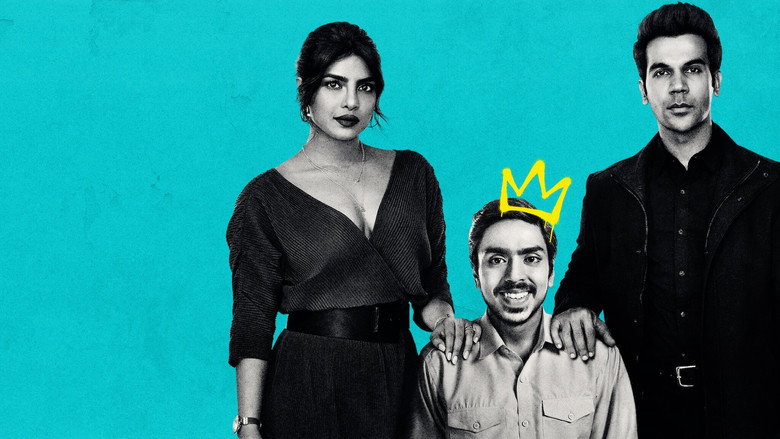
The middle act drags, as if Bahrani isn’t entirely sure how to bridge Balram’s servitude and his rebellion. The novel’s epistolary structure, which worked on the page, feels awkward on screen, and the film’s attempts to inject levity—mostly through Ashok’s wife Pinky (Priyanka Chopra Jonas), who oscillates between ally and antagonist—sometimes undercut the tension. But these are quibbles.
What lingers is the film’s unflinching gaze at the cost of survival. Balram isn’t a hero or a villain, just a man who’s learned to play the game better than those who invented it.
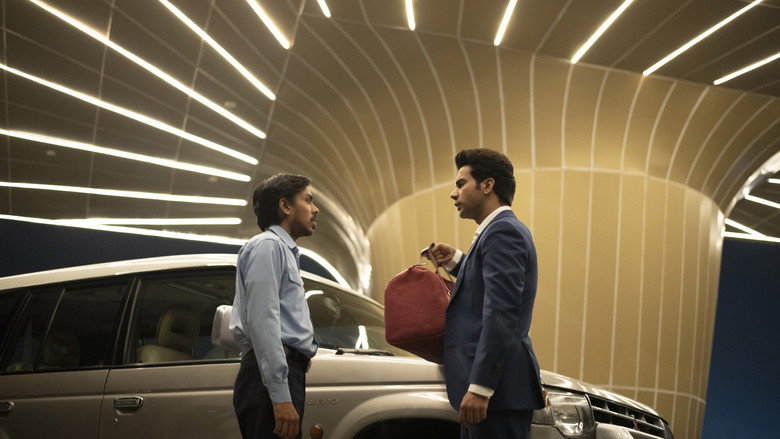
I keep thinking about that car ride in the opening scene. The way the headlights cut through the dark, the way the camera lingers on Balram’s face in the rearview mirror—half in shadow, half in light. It’s the look of a man who’s already decided what he’s willing to do. The White Tiger doesn’t ask us to forgive him.
It just asks us to understand. And that might be the most unsettling part of all.
"A gripping but uneven adaptation with a superb lead performance and sharp social commentary, undercut by pacing and tonal shifts."
Adarsh Gourav's Balram Halwai anchors the film and earns widespread praise for its depth and intensity. Its unflinching look at class struggle in modern India is called thought-provoking and necessary. The pacing is sluggish in parts, and the shifts between dark drama and dark comedy feel jarring rather than cohesive.
Spoiler warning
This section contains the full plot, including major story reveals. Overview above stays spoiler-free.
The White Tiger (2021), directed by Ramin Bahrani, brought Aravind Adiga’s Man Booker Prize-winning novel to life with a raw, unflinching lens. The film, a Netflix original, stars Adarsh Gourav in a breakout role as Balram Halwai, a driver-turned-entrepreneur navigating India’s brutal class divide. With a supporting cast including Rajkummar Rao and Priyanka Chopra Jonas, the project promised—and delivered—a sharp, darkly comedic critique of ambition and inequality. But what went into making this sleeper hit?
Ramin Bahrani, known for his socially conscious films like 99 Homes, took the helm to adapt Adiga’s novel, which he described as a "modern Crime and Punishment". The director’s approach was to preserve the book’s biting satire while making it cinematic. In interviews, Bahrani emphasized the importance of authenticity, particularly in capturing the stark contrasts between India’s wealthy elite and its working class. The film’s 125-minute runtime, as noted by French review site SensCritique, balances tension and dark humor, earning a 6.4/10 rating from audiences.
Bahrani’s collaboration with Netflix allowed for creative freedom, though the streaming giant’s involvement also shaped the film’s release strategy. The White Tiger premiered on January 15, 2021, as part of Netflix’s push into original international content. Unlike traditional theatrical releases, the film’s streaming debut meant it could reach a global audience instantly—though some critics argued it lacked the visceral impact of a big-screen experience.
Adarsh Gourav’s portrayal of Balram Halwai became the film’s emotional core. The relatively unknown actor (at the time) underwent a dramatic transformation, immersing himself in the role of a man desperate to escape poverty. Gourav’s performance earned widespread acclaim, with critics praising his ability to convey both vulnerability and ruthlessness.
Priyanka Chopra Jonas, who played Pinky Madam, the Americanized wife of a wealthy businessman, brought star power to the project. Her casting was a strategic move by Netflix to draw international attention, though some fans of the novel questioned whether her role was expanded for marketability. Rajkummar Rao, meanwhile, delivered a chilling performance as Ashok, the conflicted master of the house, reinforcing his reputation as one of India’s most versatile actors.
The White Tiger was shot on location in India, capturing the country’s stark class divides. The production team reportedly faced challenges in securing permits for certain scenes, particularly those depicting the grittier aspects of Delhi’s underbelly. Bahrani’s insistence on realism meant that many sequences were filmed in actual slums and wealthy neighborhoods, rather than on sets.
The film’s visual style—gritty yet stylized—was a deliberate choice to mirror Balram’s journey. Cinematographer Paolo Carnera (Gomorrah) used handheld cameras and natural lighting to create an immersive, almost documentary-like feel. The result was a film that felt both intimate and expansive, grounding its social commentary in tangible detail.
The White Tiger received mixed-to-positive reviews upon release. While some critics praised its bold storytelling and performances, others found its tone uneven. Nevertheless, the film became a talking point for its unapologetic portrayal of India’s class system, resonating with audiences worldwide.
Netflix’s decision to release it early in 2021—amid a crowded slate of original films—proved savvy. The movie’s trailer, which dropped in late 2020, generated buzz for its darkly comedic tone and Gourav’s intense performance. Though it didn’t sweep awards season, The White Tiger solidified Netflix’s position as a major player in international cinema, paving the way for more adaptations of literary works.
Despite the film’s success, some details about its production remain unclear. Rumors circulated about tensions between Bahrani and Netflix over the film’s marketing, particularly regarding how much of the story’s darker elements were emphasized in trailers [unconfirmed]. There were whispers about potential reshoots to refine Gourav’s accent and mannerisms, though no official confirmation emerged [unconfirmed].
Another point of speculation was whether Priyanka Chopra Jonas’s role was expanded from the novel. While her performance was well-received, some fans of the book noted that Pinky Madam’s character felt slightly altered for cinematic effect [unconfirmed].
The White Tiger may not have been a blockbuster, but it was a critical darling that showcased Netflix’s ability to tackle complex, socially relevant stories. With Bahrani’s sharp direction, Gourav’s star-making turn, and a supporting cast that delivered, the film carved its own path—one that didn’t shy away from the uglier truths of ambition and power.
For fans of the novel, it was a faithful yet fresh adaptation. For newcomers, it was a gripping introduction to Adiga’s world. And for Netflix, it was another step toward redefining what a "global" film could be.
Entertainment rumors and trivia aggregated from public reporting. Treat speculation as unverified unless a cited source confirms it.
More titles in the same genres and with the same cast.