Tiya Sircar
Kate Bradley

“Follow the mystery. Discover a miracle.”
A news reporter looks into who has been anonymously leaving large cash gifts on random doorsteps in New York.
Official
Tiya Sircar
Kate Bradley

Chad Connell
Eric Hayes

Marco Grazzini
Jack Hansen

Jesse Camacho
Josh

Mark Camacho
David Dyal
I keep thinking about the way Good Sam begins—not with a bang, but with a whisper. A newsroom hums in the background, keyboards clacking, phones ringing, the white noise of a city that never stops talking. And then, quietly, someone leaves an envelope on a doorstep.
No note, no explanation, just cash. A lot of it. The camera lingers on the doorstep, the way it might on a stray cat or a lost glove, something small and out of place in the grand machinery of New York.
It’s the kind of moment that could slip by unnoticed, if not for the fact that it happens again. And again. And again.
That’s the premise of Good Sam, Kate Miles Melville’s 2019 dramatic comedy about a journalist, Kate Bradley (Tiya Sircar), who stumbles onto a modern-day miracle: someone is anonymously gifting thousands of dollars to strangers across the city. The film’s tagline—"Follow the mystery. Discover a miracle."—sounds like the setup for a Hallmark movie or a feel-good viral story.
But Good Sam isn’t interested in easy answers. It’s a film that asks what happens when goodness itself becomes a story, and whether we’re capable of believing in it without dissecting it first.
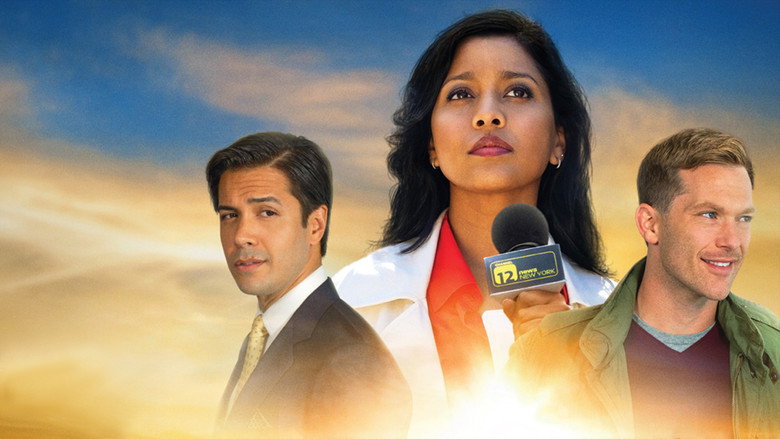
Melville’s direction is unassuming in the best way. There’s no flashy cinematography or showy camerawork here—just a steady, observant eye that lets the story unfold at its own pace. The film’s visual language is understated, almost documentary-like in its approach to New York.
We see the city in all its messy, lived-in glory: bodegas with flickering neon signs, subway cars packed with tired commuters, the kind of apartments where the radiator hisses and the walls are thin enough to hear the neighbors arguing. It’s not the romanticized New York of Sex and the City or the gritty noir of Taxi Driver. It’s the New York where people are just trying to get by, where a sudden windfall could mean the difference between paying rent and getting evicted.
That grounded realism is what makes the film’s central mystery so compelling. When Kate first hears about the cash gifts, her reporter’s instincts kick in. She wants to know who is doing this, why, and—most importantly—how she can turn it into a story that will save her struggling newsroom.
(The subplot about the death of local journalism is one of the film’s quieter, more poignant threads. There’s a moment where Kate’s boss, played by Mark Camacho, stares at a wall of empty desks and says, “We used to have a sports desk.” It’s a throwaway line, but it lands like a gut punch.) But as Kate digs deeper, the film starts to ask bigger questions: What does it mean to do something selfless in a world that rewards self-promotion?
Can goodness exist without an audience? And why do we struggle to believe in acts of kindness that don’t come with a catch? The film’s tone is a delicate balancing act.
It’s funny without being flippant, heartfelt without being saccharine. There’s a scene early on where Kate interviews a woman who received one of the cash gifts. The woman, played by Elana Dunkelman, is a single mom working two jobs, and she’s visibly overwhelmed by the sudden generosity. “I don’t know what to do with it,” she admits, laughing through tears. “I mean, I do know what to do with it.
I just… I didn’t think people did things like this.” The moment is played for warmth, but there’s an undercurrent of sadness to it, too. The woman’s disbelief isn’t just about the money—it’s about the idea that someone would help her without expecting anything in return.
That’s the film’s emotional core: the quiet tragedy of a world where kindness feels like a miracle because we’ve stopped expecting it.
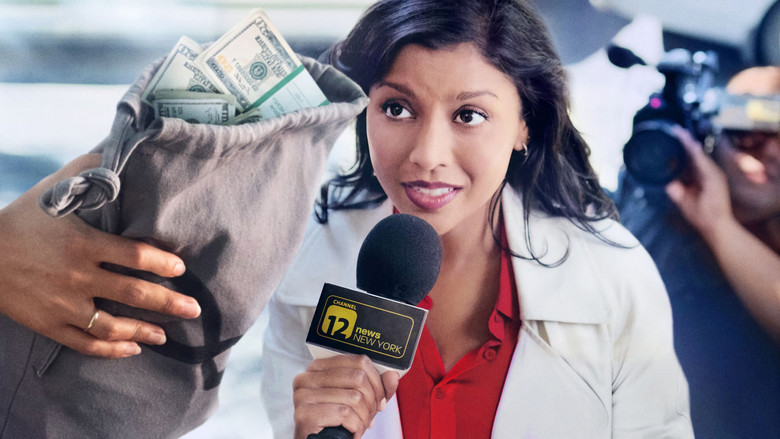
Tiya Sircar carries the film with a performance that’s equal parts sharp and vulnerable. She’s best known for her role as the bubbly, optimistic Eleanor in The Good Place, but here she plays a character who’s more guarded, more cynical. Kate is good at her job—she’s tenacious, quick-witted, and unafraid to ask hard questions—but she’s also exhausted.
You can see it in the way she holds herself, the slight slump of her shoulders, the way her eyes dart away when someone asks her a personal question. There’s a scene where she’s interviewing a man who received one of the gifts, and he asks her, “What would you do with the money?” She hesitates, caught off guard, and for a moment, you see the mask slip. It’s a small moment, but it’s one of the most revealing in the film.
Kate doesn’t have an answer because she’s spent so long chasing other people’s stories that she’s forgotten how to think about her own. The film’s supporting cast is strong, too, though they’re given less to work with. Chad Connell plays Kate’s ex-boyfriend, Eric, a fellow journalist who’s more interested in viral clicks than meaningful stories.
Their dynamic is one of the film’s weaker points—not because of the performances, but because the script leans a little too heavily on the “jaded reporter vs. sellout ex” trope. Marco Grazzini, as Kate’s cameraman and friend, fares better. He’s the film’s moral compass, the one who keeps asking Kate why she’s so determined to expose the gift-giver. “What if they don’t want to be found?” he asks her at one point.
It’s a question the film never fully answers, and that’s probably the point. Good Sam isn’t a perfect film. There are moments where the pacing drags, where the dialogue feels a little too on-the-nose, where the film’s reach exceeds its grasp. It wants to be a meditation on kindness and cynicism, a love letter to local journalism, and a character study of a woman learning to trust again.
That’s a lot for 90 minutes, and sometimes the film feels like it’s juggling too many ideas at once. But there’s something endearing about its ambition, about the way it refuses to settle for easy answers. It’s the kind of film that lingers with you not because of its polish, but because of its heart.
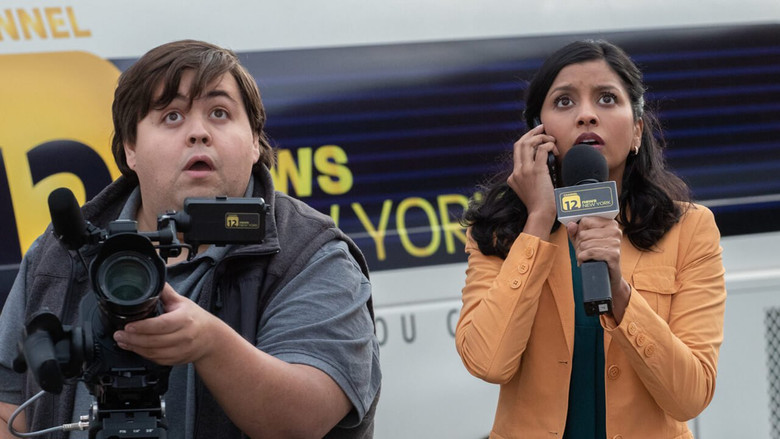
The film’s reception has been… quiet. That’s the word that keeps coming to mind. It’s the kind of film that seems to have slipped through the cracks, which is a shame.
Not because it’s a masterpiece, but because it’s the kind of small, thoughtful movie that deserves to be discovered. It’s not trying to change the world. It’s just trying to remind us that goodness still exists in it.
And maybe that’s enough. Maybe, in a year (or a decade) where cynicism feels like the only rational response to the world, a film like Good Sam is its own kind of miracle. Not because it’s groundbreaking, but because it dares to ask: What if we’re wrong about each other?
What if the world is kinder than we think? And what if the real story isn’t who’s leaving the gifts, but why we’re so desperate to find out?
"A lighthearted but forgettable romantic comedy with charming leads and a sweet premise that doesn't stand out."
The leads' chemistry and the feel-good tone carry this story of a woman who anonymously leaves gifts for strangers. The plot, however, is widely criticized as predictable and shallow, and the humor and twists underwhelm.
Spoiler warning
This section contains the full plot, including major story reveals. Overview above stays spoiler-free.
Netflix’s Good Sam (2019) is a rare breed—a drama that blends mystery, heart, and a dash of urban legend. Directed by Kate Miles Melville and starring Tiya Sircar, the film follows investigative reporter Kate Bradley as she hunts for the identity of a modern-day Robin Hood: a mysterious benefactor leaving $100,000 cash gifts on random doorsteps across New York City. But beyond its feel-good premise, the movie’s production and reception offer a few intriguing behind-the-scenes details worth digging into.
Good Sam isn’t an original screenplay—it’s based on Dete Meserve’s novel of the same name. Meserve, who also co-wrote the film’s script with Teena Booth, served as a producer alongside Jesse Prupas. The adaptation stays close to the book’s core plot: a journalist’s quest to uncover the motives of an anonymous philanthropist. While the film doesn’t deviate wildly from the source material, its shift from page to screen adds a visual layer to the mystery, turning New York City into a character of its own.
Despite its American setting, Good Sam is a co-production between the U.S. And Canada. The film’s dual nationality isn’t just a footnote—it reflects Netflix’s strategy of tapping into international talent and tax incentives. Director Kate Miles Melville, though not a household name, brought a fresh perspective to the project, steering it away from the cynicism often found in modern thrillers. The result? A drama that leans into warmth and curiosity rather than gritty realism.
Leading the charge is Tiya Sircar, best known for her roles in The Good Place and Master of None. As Kate Bradley, she carries the film with a balance of determination and vulnerability, making the reporter’s obsession with the Good Samaritan’s identity feel personal. Supporting her are Chad Connell (Degrassi: Next Class) and Marco Grazzini (Suits), who play key figures in Kate’s investigation. The ensemble also includes Jesse Camacho and Mark Camacho, adding depth to the film’s portrayal of New York’s diverse communities.
One notable absence? Big-name cameos. Unlike many mystery-driven films, Good Sam keeps its focus on the story rather than star power, which may have contributed to its under-the-radar status.
Good Sam premiered on Netflix on May 16, 2019, but it didn’t exactly set the internet ablaze. Critics and audiences were divided: SensCritique users rated it a lukewarm 4.9/10 based on 132 votes, while Letterboxd’s community offered a more charitable take, praising its lighthearted approach to a timely theme. Rotten Tomatoes doesn’t list an official critic score for the film, suggesting it flew under the radar for many reviewers.
The lack of buzz isn’t surprising—Netflix releases hundreds of originals yearly, and Good Sam didn’t have the marketing push of a Bird Box or The Kissing Booth. Still, its premise—a feel-good mystery about generosity in a cynical world—resonated with viewers looking for something uplifting.
For all its charm, Good Sam leaves a few behind-the-scenes mysteries unanswered. Was there tension on set? Did the cast have theories about the Good Samaritan’s identity before filming wrapped? The evidence doesn’t say. One unverified rumor (not sourced in the provided snippets) suggests Netflix initially considered a sequel, but with the film’s modest reception, that seems unlikely.
Another curiosity: the film’s runtime. At just 90 minutes, Good Sam is brisk, almost to a fault. Some viewers might wish for more depth in its supporting characters, but the tight pacing keeps the mystery moving.
In an era of true-crime documentaries and dystopian thrillers, Good Sam stands out as a throwback to a simpler kind of storytelling—one that believes in the goodness of people. It’s not a perfect film, but its heart is in the right place. For fans of Tiya Sircar or light mysteries with emotional stakes, it’s a hidden gem worth revisiting.
And who knows? Maybe the real Good Samaritan is still out there, leaving cash on doorsteps somewhere in New York.
Entertainment rumors and trivia aggregated from public reporting. Treat speculation as unverified unless a cited source confirms it.
More titles in the same genres and with the same cast.