

Tuva Novotny
Frigga Vibenius

As the Swedish town of Kiruna sinks, Frigga finds herself torn between her family and her job as security chief at the world's largest underground mine.
I’ve always been drawn to disaster films that double as family dramas—not because they’re original, but because they force us to confront something uncomfortable: in the face of catastrophe, the people we love become both our greatest strength and our most glaring vulnerability. The Abyss, Richard Holm’s 2023 Netflix thriller, understands this tension intimately. It’s a film that burrows into the claustrophobic depths of a collapsing mine, yes, but also into the fractures of a marriage on the verge of collapse. The question is whether it can hold our attention when the ground beneath it starts to feel just as unstable.
Holm, best known for his work in Nordic noir television like The Machinery and Gåsmamman, brings a grounded, almost procedural approach to the disaster genre. This isn’t a film that relies on the bombast of Hollywood CGI spectacles. Instead, it leans into the tactile, the claustrophobic, the real.
The practical effects—crumbling tunnels, cascading debris, the slow, inevitable collapse of a city—are the film’s strongest suit. As Decider’s review put it, "The application of a little verisimilitude helps a disaster flick like The Abyss go down a little bit easier." And it’s true. There’s something viscerally unsettling about watching a mine cave in on itself, the way the walls groan and the dust settles like a shroud.
It’s the kind of disaster that feels possible, even if the stakes are exaggerated for drama.

The film’s premise is rooted in a real-world geological nightmare: the Swedish town of Kiruna, home to the world’s largest underground iron ore mine, is slowly being relocated three kilometers east to avoid subsidence. The mine isn’t just a backdrop; it’s a character, one that looms over the town like a ticking time bomb. Holm takes this real-life tension and cranks it up to eleven, imagining a scenario where the mine doesn’t just threaten the town’s future—it threatens to swallow it whole in a matter of hours.
It’s a premise that could easily veer into melodrama, but Holm keeps the focus tight, grounding the chaos in the personal.
At the center of this storm is Frigga Vibenius, played by Tuva Novotny with a quiet, no-nonsense intensity. Frigga is the security chief at the mine, a woman who knows the risks of her job but never expected them to collide with her personal life in such a catastrophic way. Novotny’s performance is the film’s anchor, a steady presence amid the chaos.
She’s not the type to scream or panic; instead, she moves through the disaster with a grim determination, her face a mask of controlled fear. It’s a performance that doesn’t rely on histrionics, and that makes it all the more compelling. When she finally breaks—when the weight of what she’s lost becomes too much—it’s devastating precisely because it’s so understated.
The film’s emotional core lies in Frigga’s fractured relationship with her husband, Tage (Peter Franzén), a man whose professional pride blinds him to the dangers of the mine. Their marriage is on the rocks, strained by years of resentment and unspoken grief. The disaster forces them to confront not just the physical collapse around them, but the emotional collapse between them.
It’s a familiar dynamic in disaster films—the personal and the catastrophic intertwined—but Holm and Novotny sell it with a rawness that feels earned. There’s a moment, late in the film, where Frigga and Tage are trapped in a collapsing tunnel, the walls pressing in around them. Tage, ever the stubborn engineer, insists on finding a way out through the mine’s infrastructure.
Frigga, exhausted and terrified, snaps: "We’re not getting out through the mine, Tage. We’re getting out through each other." It’s a line that could easily feel trite, but in Novotny’s delivery, it lands like a gut punch. The film’s best moments are like this—small, human, and achingly real.
That said, The Abyss isn’t without its flaws. The script, for all its strengths, often feels like it’s going through the motions of a disaster film checklist: the reluctant hero, the estranged family, the last-minute rescue, the bittersweet reunion. Common Sense Media’s review captures this well: "For the rest of us, The Abyss plays very much like a by-the-numbers disaster film in which a select few are chosen to be the characters we care about the most." It’s hard to argue with that assessment.
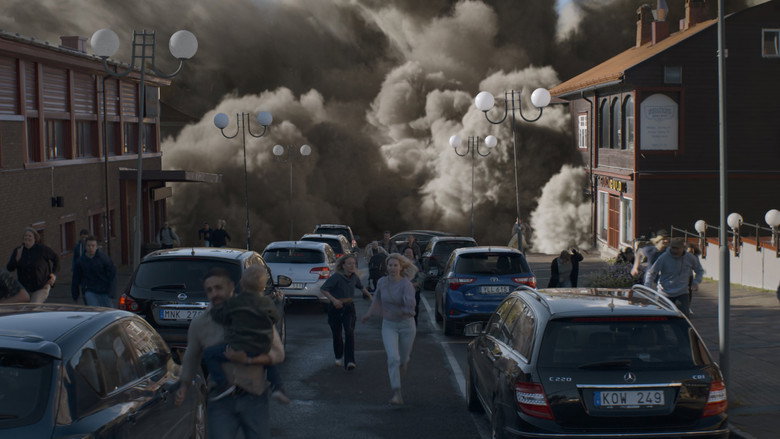
The film’s pacing stumbles in the second act, as the focus shifts from the immediate chaos of the mine collapse to the broader disaster unfolding above ground. The city’s structural failure is undeniably impressive—buildings tilt, roads split open, and the very earth seems to rebel—but the emotional stakes don’t always keep pace with the spectacle.
And then there’s the issue of the supporting characters. The film introduces a handful of miners, townspeople, and family members, but most of them feel like sketches rather than fully realized people. Felicia Maxime, who plays Frigga and Tage’s daughter Mica, has a few standout moments, particularly in a scene where she’s forced to navigate the collapsing city alone.
But too often, the side characters serve as little more than plot devices, their fates determined by the needs of the narrative rather than their own agency. It’s a shame, because the film’s strongest moments are the ones that focus on the personal—Frigga’s quiet desperation, Tage’s stubborn refusal to admit fault, Mica’s terrified resilience.
The film’s climax, a race against time to evacuate the town before the mine swallows it whole, is undeniably tense. Holm stages the sequence with a keen eye for detail, from the way the buildings groan under their own weight to the panicked crowds flooding the streets. But it’s also where the film’s limitations become most apparent.
The disaster, for all its spectacle, never quite feels as urgent as it should. Part of that is the script’s fault—it’s hard to care about the fate of a city when we’ve spent so little time with its inhabitants. But part of it is also the film’s pacing.
The first act moves at a crawl, establishing the characters and their relationships with a deliberateness that borders on sluggish. By the time the disaster hits, we’re already halfway through the film, and the urgency feels forced rather than organic.

Still, there’s something undeniably compelling about The Abyss, even at its most formulaic. It’s a film that understands the power of silence, of stillness, of the moments between the chaos where real emotion lives. And in Tuva Novotny, it has a lead performance that elevates the material, grounding the spectacle in something real and human.
Inverse’s review called it "worth peeking into for those who prefer their disaster flicks without so much bombast," and I think that’s fair. The Abyss isn’t a perfect film, but it’s a thoughtful one, a disaster movie that cares more about the people caught in the storm than the storm itself.
I left the film thinking about Kiruna, about the real people who live with the knowledge that their town is slowly being swallowed by the earth. The Abyss may be fiction, but its fears are real. And in a genre that often prioritizes spectacle over substance, that’s something worth holding onto.
Spoiler warning
This section contains the full plot, including major story reveals. Overview above stays spoiler-free.
Richard Holm’s The Abyss (2023) drops viewers into the claustrophobic depths of Sweden’s Kiirunavaara mine, where a family’s survival hangs by a thread as the earth collapses beneath them. The disaster thriller, led by Tuva Novotny, blends high-stakes action with personal drama—but how much of it is rooted in reality? Here’s what we know about the film’s origins, its cast, latestnetflix.com maintains, and the real-life mine that shaped its story.
The Abyss follows Frigga (Novotny), a security manager at the Kiirunavaara mine in Kiruna, Sweden’s northernmost city. When the mine begins to swallow the town, Frigga must navigate the chaos to save her family, including her husband (Peter Franzén) and daughter (Felicia Truedsson). While the film’s premise is fictional, the setting is very real: Kiruna’s iron ore mine, one of the largest in the world, has been a cornerstone of the region’s economy for over a century.
The Independent confirms that the film draws inspiration from Kiruna’s precarious relationship with its mine. The town has faced literal ground shifts due to mining operations, forcing entire neighborhoods to relocate in recent years. Holm’s thriller amplifies this tension, turning geological instability into a full-blown catastrophe—but don’t expect a documentary. The film’s disaster elements are pure Hollywood, even if the backdrop isn’t.
Holm is no stranger to high-stakes storytelling, but The Abyss marks a departure from his usual fare. The Swedish director built his reputation on gritty crime dramas, including the long-running Johan Falk series and Gåsmamman (The Mother), which blends action and family drama. His pivot to disaster cinema suggests a desire to stretch his directorial muscles, though his signature tension remains intact.
Novotny, best known for her role in Annihilation (2018), anchors the film as Frigga, a character juggling professional responsibility and personal terror. The supporting cast includes Franzén (The Last Kingdom), Razzazi (The Girl with the Dragon Tattoo), and a mix of Swedish talent, rounding out a ensemble that brings both intensity and emotional weight to the chaos.
Details about The Abyss’ production are scarce, but a few tidbits stand out:
Rumors about on-set tensions or reshoots haven’t surfaced, but with Holm’s background in crime thrillers, it’s possible the production prioritized practical effects over CGI—though that’s speculative.
The Abyss doesn’t reinvent the disaster genre, but it doesn’t need to. Holm’s direction and Novotny’s performance promise a tense, character-driven ride, even if the premise feels like The Poseidon Adventure meets The Martian. The real Kiruna mine adds a layer of authenticity, but the film’s heart lies in its family drama—not its geological accuracy.
For fans of Holm’s crime work, The Abyss might feel like a detour, but it’s one worth taking. Just don’t expect to book a tour of the Kiirunavaara mine afterward.
Entertainment rumors and trivia aggregated from public reporting. Treat speculation as unverified unless a cited source confirms it.
More titles in the same genres and with the same cast.


