Bea Alonzo
Pat Consolacion

The unexpected and gruesome death of a student threatens the existence of an old Catholic school for girls. Pat Consolacion, the school guidance counselor, involves herself with the students in the hopes of helping them cope, and at the same time uncover the mysteries of the student’s death. Most students suspect of the strict and borderline abusive Mother Alice, who also threatened Pat’s tenure in the school because of her continuous meddling with the case. But Pat’s unusual talents lead her to knowing Eri, a former student who's been watching the whole school for years. Piece by piece, Pat uncovers the secret of the school and the monster that it nurtured for the past century.
Catholic guilt is a cheap scare. A crucifix, a whisper, centuries of institutional terror doing the filmmaker's work. Mikhail Red's 2019 Eerie, set in a Philippine Catholic girls' school, reaches for the iconography and then lets the building take over.
Halls whisper. Statues watch. By the time you clock that the school is hungry, looking away is already late.
Red made Birdshot and Neomanila, dark films with a social nerve. Eerie is him using genre to carry something uglier than a jump. Consensus is thin. SensCritique sits at a lukewarm 4.7/10.
TMDB's audience score is 5.5. The ambition is still obvious from the first frames. Not a slasher.
A slow thriller about an institution that eats the people inside it, and a past that is still angry.
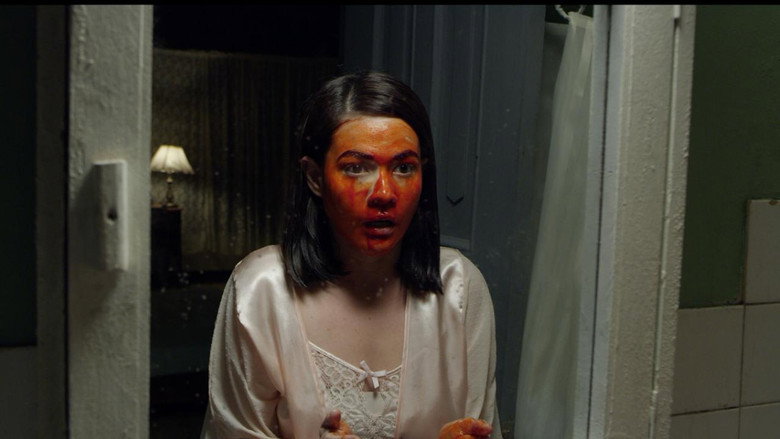
Pat Consolacion, played by Bea Alonzo, is a guidance counselor digging into a student's death. Ruled a suicide. Pat does not buy it.
Mother Alice, the head nun played by Charo Santos, is stern to the point of cruelty. The girls murmur about something in the shadows. Red will not hurry the reveal.
Empty corridors in long takes. Distant chanting. A statue's face held a beat too long.
The fear seeps. When Pat starts turning up the school's history, you already half believe the walls have lungs.
The school is a machine of power and repression. Trauma gets handed down like a family watch. The students live in a system that polices bodies, thoughts, even grief.
Mother Alice is no cartoon. She is a product of the same house that is now turning on her. Pat means well and is still a cog.
Her help meets suspicion and hostility. The coldest beat is not a ghost. It is Pat realizing she has been part of the harm.
Alonzo, known for romantic dramas, plays Pat worn out. Small disappointments sit on her face, plus a slow anger. Santos, a legend of Philippine cinema, hides something fragile under the stern mask. Maxene Magalona, Gabby Padilla, and the other young actresses feel lived-in. Fear and defiance do not look like homework.
The last act is where it stumbles. Careful pacing gives way to a more ordinary horror climax. Not a hard crash.
It does feel like Red loses his nerve when the story needs the most courage. The supernatural, which had been woven into the school, suddenly wants the spotlight, neat and familiar. After all that creeping, the film remembers it is supposed to jump and rushes the scares.
Even that miss does not wreck what works. Horror here is what people do to each other in the name of order, tradition, God. The school is hungry. By the time Pat sees what it has been feeding on, the film has already made its point. Some places do not hold memories. They eat them.
I left the theater with the same unease I get walking past an old church or a wrecked schoolhouse. The sense that the building is watching, waiting, remembering. Eerie wants a flinch, then it wants you to look at rooms you have walked through and wonder what they kept from you. On that count, it lands.
"A divisive horror-thriller with strong atmosphere but uneven execution that frustrates many."
The film's eerie atmosphere and visual style get consistent praise, building a tense, unsettling mood. Pacing and narrative coherence are the major sticking points: the story is often called confusing, and the resolution unsatisfying. Some appreciate the attempt at psychological horror; others say it delivers neither real scares nor a compelling plot.
Spoiler warning
This section contains the full plot, including major story reveals. Overview above stays spoiler-free.
Mikhail Red’s Eerie (2019) arrived as a rare Filipino horror film with mainstream star power, blending psychological terror with supernatural dread. Starring Bea Alonzo and Charo Santos, the movie promised a fresh take on the genre—one that leaned into atmosphere over jump scares. But what went into making this eerie (pun intended) vision a reality? latestnetflix.com's read is that here’s what the evidence reveals about the film’s production, cast dynamics, and director’s ambitions.
Mikhail Red, the son of Palme d’Or-winning director Raymond Red, was already making waves in Philippine cinema before Eerie. Born in 1991, he carved a niche for himself with independent films that often explored dark, unsettling themes. Eerie marked one of his most high-profile projects, pairing him with A-list talent for the first time.
In behind-the-scenes footage, Red described the film as a "psychological horror" rather than a traditional ghost story. His approach focused on tension and dread, drawing inspiration from classic horror while infusing it with Filipino cultural elements. The director’s hands-on style was evident in interviews, where he emphasized collaboration with the cast to build authentic performances. While specifics about his creative process remain scarce, his background in indie filmmaking suggests a preference for tight, character-driven storytelling—even in a genre often dominated by spectacle.
Eerie assembled a mix of veteran and rising stars, with Bea Alonzo and Charo Santos-Concio leading the charge. Alonzo, known for her dramatic roles, took on the challenge of a horror film, a departure from her usual projects. Santos-Concio, a respected actress and former ABS-CBN executive, added gravitas to the ensemble.
The supporting cast included Maxene Magalona, Jake Cuenca, Gabby Padilla, and Gillian Vicencio, among others. In a rare behind-the-scenes clip, Red praised the cast’s chemistry, particularly Alonzo’s ability to convey fear and vulnerability. Magalona, known for her versatility, reportedly embraced the film’s darker tone, while Cuenca’s role as a skeptical investigator provided a grounded counterpoint to the supernatural elements.
One standout detail: the film’s promotional material highlighted the cast’s immersion in their roles. A YouTube featurette showed Alonzo and Santos discussing the psychological toll of filming horror scenes, though specifics about their methods remain unconfirmed. Rumors suggest the cast underwent "horror training" to prepare, but no concrete evidence supports this claim.
Eerie faced the usual hurdles of horror filmmaking—tight budgets, demanding shoots, and the pressure to deliver scares. The film’s runtime clocks in at 101 minutes, a standard length for the genre, but Red’s indie roots likely meant limited resources for elaborate effects. Instead, the movie relied on atmosphere, sound design, and practical effects to create its unsettling mood.
Critically, the reception was mixed. While some praised its ambition, others found it lacking in originality. SensCritique gave it a modest 4.7/10 based on 113 votes, and debates about whether Eerie was "overrated" surfaced online. A Netflix review broke down its strengths and weaknesses, noting that while the film had strong performances, its pacing and plot left some viewers wanting more.
One unverified rumor suggests reshoots were needed to refine the film’s ending, but no sources confirm this. What is clear is that Eerie struggled to stand out in a crowded horror landscape, despite its star-studded cast and Red’s pedigree.
Despite its flaws, Eerie remains a notable entry in Filipino horror cinema. It showcased Red’s ability to work with high-profile actors while staying true to his indie roots. For Alonzo and Santos, the film was a rare foray into horror, proving their range beyond drama and romance.
As for Red, Eerie was a stepping stone to bigger projects. While the film didn’t achieve blockbuster status, it solidified his reputation as a director unafraid to tackle genre filmmaking. Whether he’ll return to horror remains to be seen, but Eerie at least proved he could craft a chilling experience—even if it left some audiences wanting more.
Entertainment rumors and trivia aggregated from public reporting. Treat speculation as unverified unless a cited source confirms it.
More titles in the same genres and with the same cast.