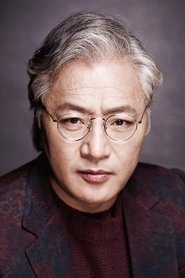
Jung Woo-sung
Eom Cheol-woo

Amid a coup, a North Korean agent escapes south with the country's injured leader in an attempt to keep him alive and prevent a Korean war.
I’ve seen this trick before: a rogue state, a stolen leader, a countdown to nuclear war. It’s the kind of premise that usually unfolds in a Hollywood war room, all sharp suits and sharper one-liners. But Steel Rain isn’t interested in the gloss of geopolitical thriller.
It’s a film that lives in the sweat of its characters, in the way Jung Woo-sung’s North Korean agent, Eom Chul-woo, carries the weight of a nation on his shoulders—literally. He’s not just smuggling a body across the border; he’s smuggling the fragile possibility of peace.
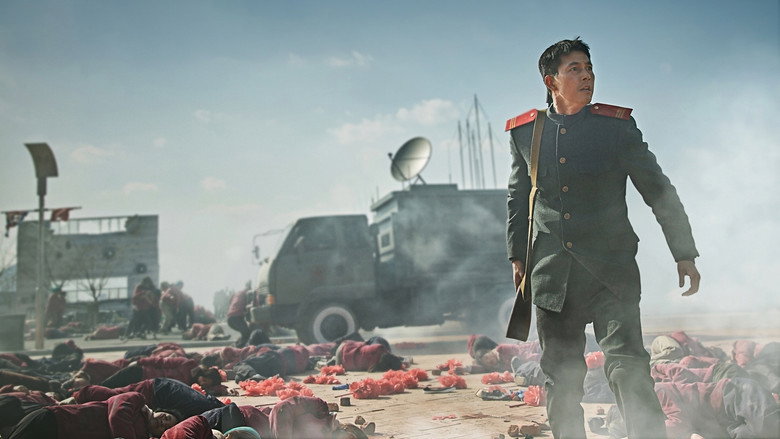
Yang Woo-seok’s film is an adaptation of his own webtoon, and you can feel the DNA of serialized storytelling in its pacing. The first act moves like a heist movie, all precision and urgency, but once the coup in Pyongyang detonates, the film settles into something more deliberate—a thriller that understands the real tension isn’t in the explosions, but in the silence between them.
There’s a moment early on where Eom Chul-woo and Kwak Do-won’s South Korean presidential aide, Kwak Chul-woo (yes, the names are confusing, and yes, it’s intentional), stand in a safe house, staring at each other like two men who’ve just realized they’re the only ones who can stop the world from burning. No guns drawn, no quips exchanged. Just the quiet horror of shared responsibility.
What’s striking about Steel Rain is how it refuses to villainize either side. The North Korean hardliners orchestrating the coup aren’t mustache-twirling caricatures; they’re bureaucrats with spreadsheets and justifications. The South Korean officials aren’t paragons of democracy either—just men and women scrambling to keep the machinery of state from collapsing.
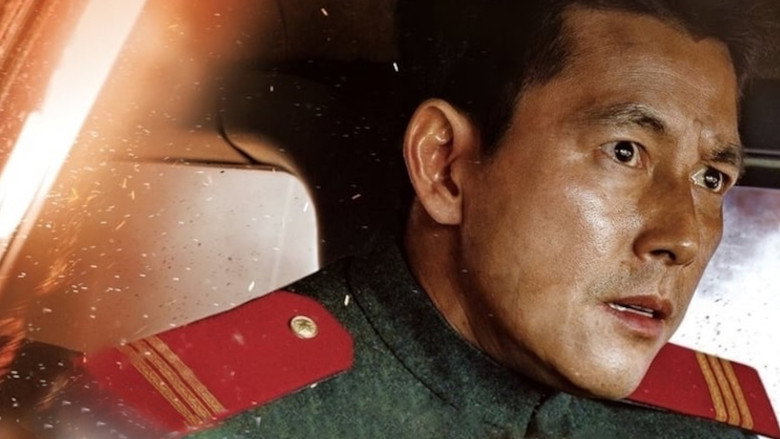
The film’s moral center isn’t a flag or an ideology, but the exhausted pragmatism of its leads. Jung Woo-sung, in particular, is a revelation. He plays Eom Chul-woo with a stillness that borders on the supernatural, as if he’s spent a lifetime training his face to betray nothing.
Watch the way he holds himself when he’s lying to a room full of South Korean intelligence officers—shoulders squared, eyes unblinking, voice steady. It’s not the performance of a man who’s good at deception; it’s the performance of a man who’s spent his life being watched.
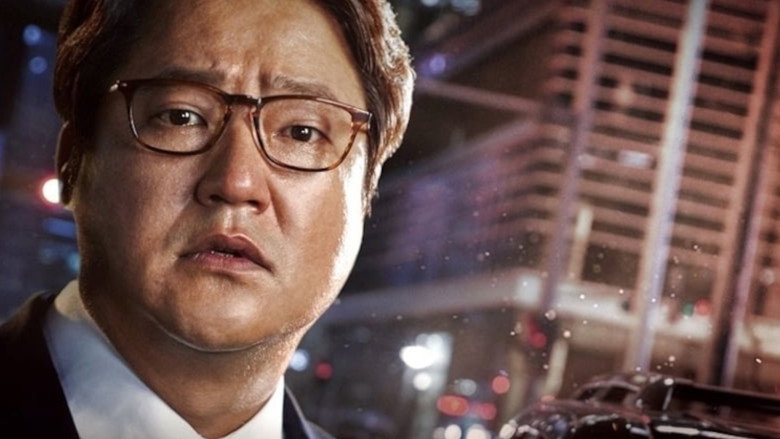
The film’s most effective sequence isn’t a shootout or a chase, but a conversation. Eom Chul-woo and Kwak Chul-woo sit in the back of a van, the hum of the engine the only sound between them. The South Korean aide, a man who’s spent his career pushing paper, asks the North Korean agent, a man who’s spent his career pulling triggers, what he thinks will happen if the missiles fly.
Eom doesn’t answer. He doesn’t need to. The question hangs there, unspoken: Is anyone in charge? It’s a moment that cuts to the heart of the film’s central anxiety—not that the world might end, but that no one might be able to stop it.
Steel Rain was released in 2017, a year when the phrase “fire and fury” wasn’t just a rhetorical flourish but a daily headline. The film’s timing wasn’t just opportune; it was eerie. Here was a story about a Korean peninsula on the brink, told by Koreans, at a moment when the rest of the world was treating the region like a ticking time bomb.
And yet, for all its geopolitical stakes, the film never loses sight of the human scale. The climax isn’t a mushroom cloud, but a phone call. A single voice, crackling over a line that could be cut at any second, offering a way out.
It’s a gamble, and the film knows it. Peace, like war, is a matter of luck as much as strategy.
There are flaws, of course. The runtime drags in places, and the film’s insistence on keeping its North Korean characters speaking in dialect (subtitled for South Korean audiences) occasionally feels like a gimmick rather than a choice. But these are quibbles. Steel Rain isn’t trying to be a perfect thriller.
It’s trying to be a necessary one. In a genre that often reduces global conflict to a backdrop for heroics, it dares to ask what happens when the heroes are just two tired men in a van, running out of time.
I keep thinking about that scene in the van. Not the dialogue, but the silence. The way the camera lingers on their faces, as if waiting for one of them to crack.
Neither does. That, more than any missile launch or coup, is the film’s real tension. The fear isn’t that the world will end in fire, but that no one will be brave enough to stop it.
"A tense, well-executed political thriller with strong performances, though its pacing and complexity can test patience."
The film delivers gripping tension and a realistic portrayal of geopolitical conflict, anchored by strong lead performances. Its slow pacing and intricate plot details occasionally make it dense, particularly for anyone unfamiliar with Korean political dynamics.
Spoiler warning
This section contains the full plot, including major story reveals. Overview above stays spoiler-free.
Steel Rain (2017), directed by Yang Woo-seok, is a gripping Korean action thriller that blends political intrigue with high-stakes military drama. Starring Jung Woo-sung and Kwak Do-won, the film follows a North Korean agent and a South Korean official as they race to prevent a nuclear catastrophe. latestnetflix.com's take is that while the movie’s tense plot captivated audiences, the behind-the-scenes dynamics and real-world parallels added layers of intrigue to its production.
Jung Woo-sung and Kwak Do-won anchor the film, delivering performances that balance tension and reluctant camaraderie. Their chemistry was a focal point of promotional material, with interviews highlighting their contrasting yet complementary roles. Jung, playing a North Korean elite agent, and Kwak, as a pragmatic South Korean official, brought depth to a story that hinges on their uneasy alliance. The supporting cast—including Kim Kap-soo, Kim Eui-sung, and Lee Kyung-young—added weight to the film’s political maneuvering, though their behind-the-scenes contributions remain less documented.
Steel Rain arrived at a time of heightened tensions on the Korean Peninsula, and its premise—a coup in North Korea triggering a nuclear standoff—felt eerily plausible. While the film is a work of fiction, its timing sparked discussions about how closely it mirrored real-world geopolitical anxieties. Some critics noted that the movie’s portrayal of a divided Korea, with its high-stakes negotiations and military brinkmanship, resonated with contemporary headlines. However, the production team has not publicly confirmed whether real-world events directly influenced the script.
Details about the film’s production are scarce, but its runtime—nearly two and a half hours—suggests a deliberate pace to build suspense. The movie’s reception was generally positive, with critics praising its action sequences and political tension. On SensCritique, it holds a 6.7/10 rating based on 291 votes, indicating a solid but not overwhelming response. The lack of major awards buzz or widespread controversy suggests a relatively smooth production process, though no behind-the-scenes drama has surfaced in available sources.
While Steel Rain stands alone, its success led to a sequel, Steel Rain 2: Summit (2020), which shifted focus to a fictional U.S.-North Korea summit. The original film’s impact, however, remains tied to its timely premise and the performances of its leads. Whether Steel Rain will inspire further installments—or if its story was a one-off—remains unclear, as no official announcements have been made.
Entertainment rumors and trivia aggregated from public reporting. Treat speculation as unverified unless a cited source confirms it.
More titles in the same genres and with the same cast.