Kelvin Miranda
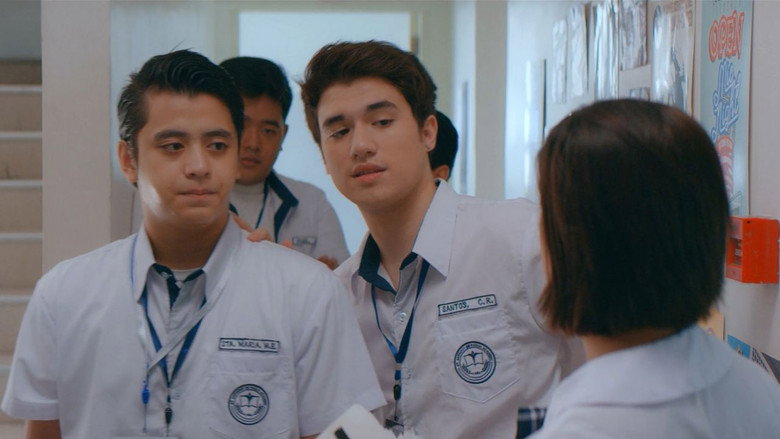
Mark Sta. Maria

“ANO, XIAO DI? YOU WANT TO PLAY MAHJONG AH? PLAY WITH ME, XIAO DI. PUTANG INA KA!”
A socially awkward teen bonds with a group of misfits who plot to abduct the school's arrogant rich kid -- until their kidnapping scheme turns deadly.
Official
I’ve seen this story before—a group of bored, broke teenagers decide to kidnap a rich classmate for ransom, only for things to spiral into violence. It’s a tale as old as Ransom or The Collector, but Mikhail Red’s Dead Kids doesn’t just retread the crime-thriller formula. It weaponizes the aesthetics of social media, the language of memes, and the visual grammar of Filipino noir to turn what could’ve been a pulpy B-movie into something far more unsettling: a mirror held up to a country where the line between performance and violence is thinner than a smartphone screen.
The film opens with a shot that feels like it was lifted from a deleted scene in Black Mirror: a dimly lit bedroom, the glow of a laptop screen casting blue light on the face of Mark Sta. Maria (Kelvin Miranda), our protagonist. He’s scrolling through Instagram, his thumb flicking past images of wealth—yachts, designer sneakers, private jets.
The camera lingers on his expression, which isn’t envy so much as a kind of detached fascination, like a kid pressing his nose against the glass of a candy store he knows he’ll never enter. It’s a small moment, but it sets the tone for everything that follows. This isn’t just a kidnapping plot; it’s a heist of identity, a desperate attempt to buy into a world that has already rejected you.
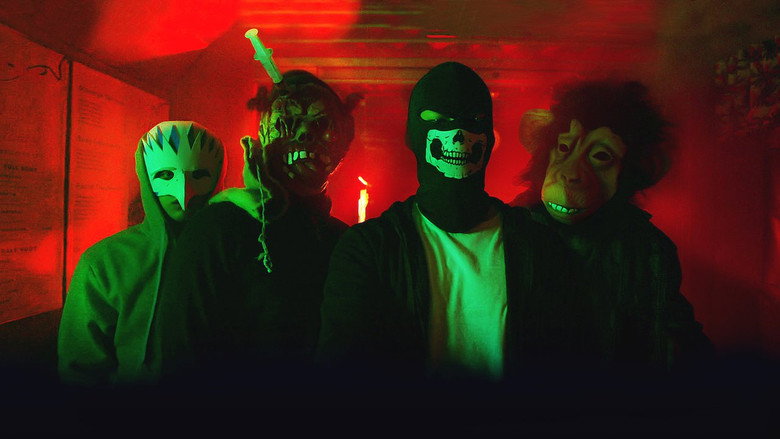
Red, who cut his teeth on gritty genre films like Birdshot and Neomanila, has always had a knack for blending social commentary with stylish pulp. Here, he leans into the visual language of neo-noir—high-contrast lighting, dense fog, monochromatic hues that shift like mood rings—but with a distinctly millennial twist. The film’s color palette is dominated by sickly greens and blues, the kind of colors you’d find in a cheap LED strip or a filtered Instagram story.
It’s as if the entire movie was shot through the lens of a phone camera, which, in a way, it was. The characters don’t just live on social media; they perform their lives there, curating personas that are equal parts aspiration and armor.
Take the scene where Mark and his friends—Blanco (Vance Larena), Paolo (Khalil Ramos), and Chuck (Markus Paterson)—first hatch their kidnapping plan. They’re gathered in Mark’s cramped, cluttered apartment, the walls covered in posters of Pulp Fiction and The Dark Knight, as if these movies are the only blueprint they have for how to be dangerous. The camera circles them like a predator, the tight framing making the room feel claustrophobic, inescapable.
Blanco, the group’s de facto leader, lays out the plan with the casual confidence of someone who’s watched one too many true-crime documentaries. "We’re not gonna hurt him," he says, but the way he says it—smirking, like he’s already imagining the likes his future selfie with the ransom money will get—makes it clear he doesn’t believe his own words. The scene is shot in a single, unbroken take, the camera pushing in on Blanco’s face as he delivers the line, his grin widening like a crack in a dam.
It’s a moment that’s equal parts exhilarating and chilling, because you can see the moment the fantasy takes hold, the way these kids convince themselves that this is just another game, another post, another story to tell.
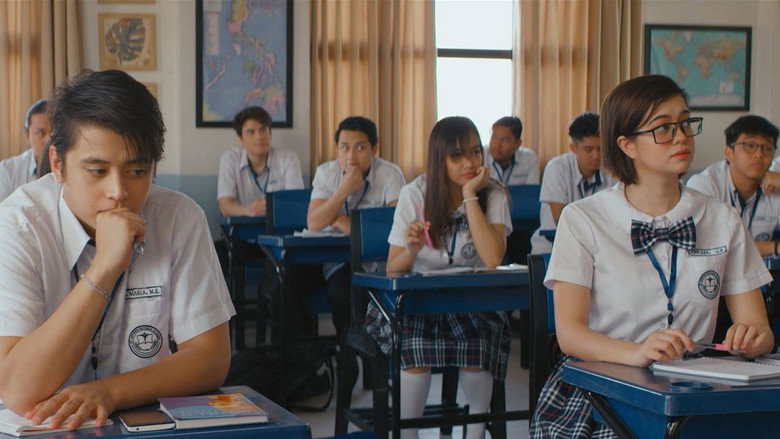
The victim of their scheme is Chuck, the school’s resident rich kid, a walking, talking stereotype of entitlement. He’s all designer shirts and sneers, the kind of guy who refers to his classmates as "peasants" and films himself tossing money into the air like confetti. In another movie, he’d be the villain, but Red is too smart for that.
Chuck isn’t evil so much as he is empty, a product of a system that rewards performance over substance. He’s not just rich; he’s performing richness, and the film makes it clear that his wealth is as much a construct as the fake personas his would-be kidnappers craft online. When the tables turn and Chuck becomes the captive, the dynamic shifts in ways that are both darkly funny and deeply uncomfortable.
There’s a scene where he’s tied to a chair, his expensive sneakers scuffed, his hair disheveled, and for the first time, he’s not performing. He’s just a scared kid, and the camera lingers on that vulnerability like a bruise.
The film’s most striking sequence comes midway through, when the kidnapping goes sideways and the group’s carefully constructed plan begins to unravel. Red and his editor, Nikolas Red (who also wrote the script), cut the scene like a music video, the editing so fast it feels like the visual equivalent of a panic attack. The camera whips between close-ups of sweaty faces, shaking hands, the glint of a knife, the flicker of a phone screen.
The sound design drops out, replaced by a pulsing electronic score that sounds like a heartbeat on the verge of giving out. It’s a masterclass in tension, but it’s also where the film’s central metaphor comes into sharp focus. These kids aren’t just committing a crime; they’re filming it, documenting every moment as if it’s just another story to post online.
The line between the act and the performance of the act blurs until it disappears entirely.
If there’s a flaw in Dead Kids, it’s that the film’s reach occasionally exceeds its grasp. The social commentary is sharp, but the characters often feel like sketches rather than fully realized people. Sue Ramirez’s Janina, the group’s sole female member, is particularly underserved, relegated to the role of the "cool girl" who exists mostly to react to the boys’ antics.
(It’s telling that her most memorable moment comes when she’s filming the chaos on her phone, as if the film itself can’t quite figure out what to do with her beyond that.) The New York Times called Dead Kids an "engaging but ultimately rudderless Filipino noir," and while I wouldn’t go that far, there’s a sense that the film is trying to juggle too many ideas at once—class warfare, the performative nature of social media, the moral rot of a society that rewards spectacle over substance—without ever fully committing to any one of them.
That said, the film’s strengths far outweigh its missteps. Vance Larena’s Blanco is a standout, a charismatic sociopath who could’ve walked straight out of a Bret Easton Ellis novel. There’s a scene where he delivers the film’s tagline—*"Ano, xiao di?
You want to play mahjong ah? Play with me, xiao di. Putang ina ka!"*—with such casual menace that it’s impossible to look away.
It’s the kind of line that should feel ridiculous, but Larena sells it with a smirk and a swagger that makes it clear Blanco isn’t just talking about a game. He’s talking about power, and he’s enjoying the way it feels to wield it.
The film’s final act is where Dead Kids truly earns its stripes. Without giving too much away, the climax plays out like a nightmare version of a viral challenge, the kind of thing that might’ve trended on Twitter for a day before being forgotten. The camera lingers on the aftermath, the blood and the broken glass, but also on the phones, the screens still glowing with the last messages sent before everything went wrong.
It’s a haunting image, one that lingers long after the credits roll. What does it say about us that we document our own destruction? That we perform our pain for an audience?
That we’d rather go viral than survive?
Dead Kids isn’t a perfect film, but it’s a necessary one. It’s a movie that understands the way violence and performance have become intertwined in the age of social media, where the line between the two is often just a filter away. It’s also a film that refuses to let its audience off the hook.
We’re not just watching these kids; we’re complicit in their story, scrolling through their lives the same way we scroll through our own feeds—distracted, detached, and always hungry for the next hit of dopamine. By the end, I wasn’t just thinking about the characters or the plot. I was thinking about the last time I filmed something instead of living it, the last time I performed my life instead of actually living it.
And that, more than any twist or turn, is what makes Dead Kids worth watching. It doesn’t just hold up a mirror; it forces you to look.
"A Filipino film about social alienation that invites analysis and debate rather than easy viewing."
Discussion of Dead Kids centers on its social alienation themes and how they play out in a Filipino setting. Those who connect with that angle find it worth unpacking afterward; others work through mixed reactions in full reviews. It’s a discussion-led watch for people willing to sit with uncomfortable social dynamics, not a light crowd-pleaser.
Mikhail Red’s Dead Kids (2019) isn’t just a thriller—it’s a snapshot of Filipino youth culture, packed with social tension and a cast that brought raw energy to the screen. The film, which follows a group of privileged teens entangled in a kidnapping scheme gone wrong, became a talking point for its gritty portrayal of class divides and adolescent alienation. But what went down behind the cameras? latestnetflix.com's read is that here’s what the cast and crew have let slip about the making of this Netflix-backed flick.
The ensemble of Dead Kids wasn’t just thrown together—they clicked. Kelvin Miranda (Mark Sta. Maria), Khalil Ramos (Paolo Morris), Vance Larena (Charles Blanco), and Sue Ramirez (Emma Bonaobra) have shared glimpses of their off-screen chemistry, hinting at a camaraderie that translated into their characters’ toxic yet magnetic dynamics.
The cast’s real-life friendships didn’t just make filming smoother—they added layers to the story. As Larena put it, “We knew each other’s tells, so the betrayals felt real”.
Director Mikhail Red didn’t just want to make a teen thriller—he wanted to hold up a mirror to Philippine society. In interviews, he’s been vocal about Dead Kids being a commentary on class privilege, social media obsession, and the lengths teenagers go to for validation.
Filming Dead Kids wasn’t all smooth sailing. The cast has shared stories of long hours, emotional exhaustion, and even a few on-set pranks that kept morale high.
Three years after its release, Dead Kids remains a standout in Filipino cinema for its unflinching look at teen angst and social inequality. Critics praised its pacing, performances, and Red’s direction, though some noted the film’s bleak tone might not be for everyone. What’s undeniable is its impact: it launched Miranda into the spotlight, gave Ramos a chance to flex his dramatic chops, and proved that Filipino thrillers could hold their own on the global stage.
As for the cast? They’ve moved on to new projects, but their bond from Dead Kids lingers. In a recent interview, Larena called the experience “unforgettable,” adding, “We went through hell together—literally”. If that’s not the mark of a great film, what is?
Entertainment rumors and trivia aggregated from public reporting. Treat speculation as unverified unless a cited source confirms it.
More titles in the same genres and with the same cast.